




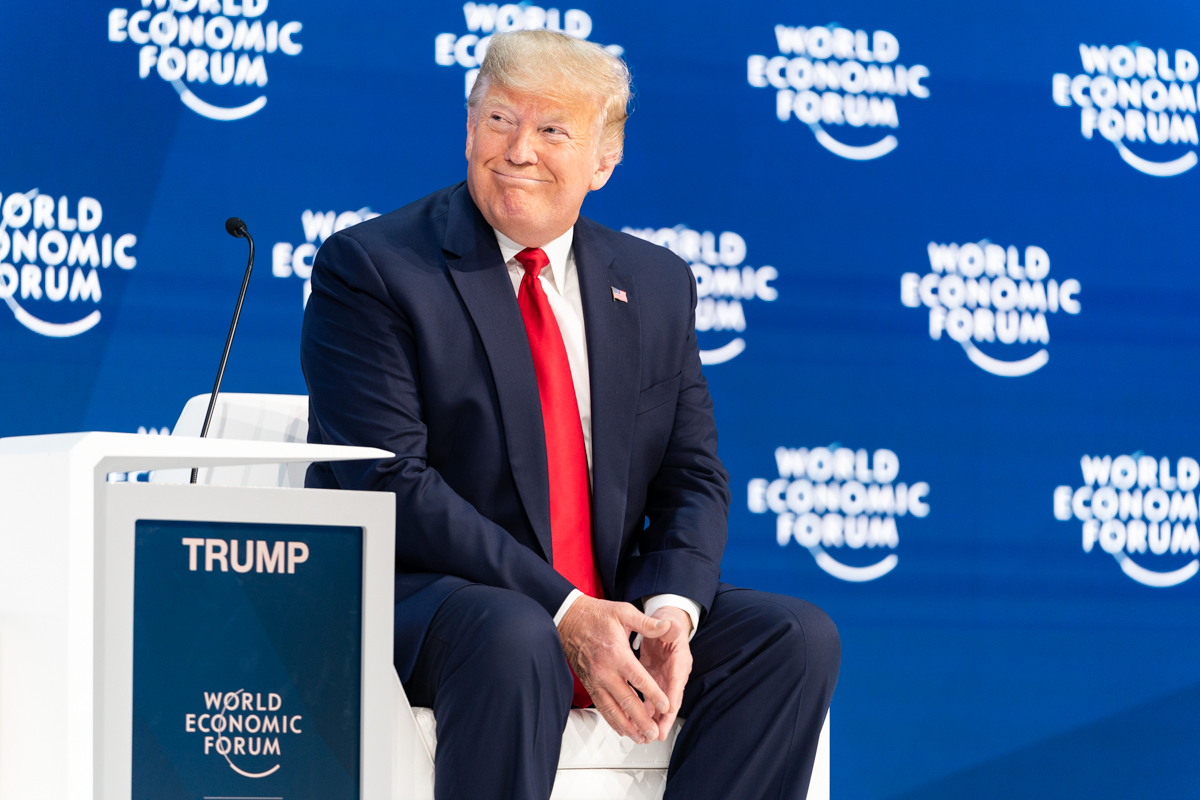
U.S. President Donald Trump at the World Economic Forum
The inaugural meeting of the U.S. president’s new international body highlights a stark financial and diplomatic divide.
WASHINGTON — When U.S. President Donald Trump’s new “Board of Peace” holds its inaugural meeting on Thursday, the guest list will feature leaders from Argentina to Indonesia, and from Kazakhstan to Kosovo.
But for the 54 nations of Africa, the invitation never arrived.
According to a finalized list of participant, the board operates under strict rules that limit membership to invited states only—no country can simply request to join.
Furthermore, even those who receive an invitation must pay a $1 billion fee for a permanent seat, a price tag that immediately places the body out of reach for most developing nations.
The Board of Peace was initially conceived by Trump in response to the Gaza conflict but has since been expanded into a global initiative.
Its leadership includes U.S.-appointed officials and private backers, prioritizing wealthy allies and strategic partners like former UK Prime Minister Tony Blair, over traditional multilateral representation, giving the board an exclusive, elite character.
The list of imvitees reveals a stark geographic and economic reality: of the 26 countries that have accepted invitations and paid the fee to become founding members, not a single one is from sub-Saharan Africa.
The only African nations set to participate are Morocco and Egypt, both North African states with deep strategic and financial ties to Washington.
Others, like Albania, Qatar, Saudi Arabia, Turkey, and the UAE, have been issued invitations but have not yet accepted or paid the fee.
However, the exclusion of the continent goes deeper than non-invitation. Several nations, including Japan, Mexico, the Netherlands, South Korea, and Ukraine, had their invitations “rescinded” for undisclosed reasons.
Meanwhile, major European powers—including France, Germany, and the United Kingdom—formally “declined” their invitations, citing concerns over the board’s expanding charter and its challenge to the United Nations.
The snub has not gone unnoticed in Africa. Kenya, a key U.S. security partner and regional mediator, has publicly dismissed the initiative, warning that creating parallel global peace mechanisms risks undermining the existing, U.N.-centered international order.
South Africa, which has had a fraught relationship with the Trump administration, was also excluded.
Pretoria described the board as a “private… body constituted of unaccountable billionaires” with an agenda to “replace and destroy the UN with a colonial style mandate system.”
The $1 billion entry fee has added another layer of criticism. Analysts argue that even if sub-Saharan nations had been invited, the cost would be prohibitive for countries already struggling with debt and development needs.
This effectively limits the board’s membership to wealthy Gulf states, emerging economies in Asia, and a handful of U.S. allies willing to pay for influence.
With the first meeting imminent, the board’s tangible impact remains to be seen. But for Africa, the message sent by its composition—and its price tag—is already clear: on Trump’s new board, there is no seat at the table.
