




A social media exchange has drawn attention after Angolan journalist Hariana Verás Victória posted a video from the White House compound seeking President Donald Trump’s reaction to the alleged violation of the Washington Accord and his administration’s plans to advance peace efforts in Sudan.
In the post, shared in English, French, and Portuguese, Verás Victória said that she had attempted to question the U.S. President as he departed for Florida. The accompanying video showed a group of journalists waiting outside the White House while President Trump left without taking questions.
“We’re at the White House, where President Trump is departing for Florida. We attempted to ask for his reaction to the alleged violation of the Washington Accord and his administration’s plans to advance peace in Sudan… We weren’t able to get a response today, but we will return and continue seeking his views,” she wrote.
Verás Victória is widely known as an Angolan journalist and producer and is recognized as the first Angolan journalist accredited as a permanent correspondent at major U.S. government institutions, including the White House, the Pentagon, the U.S. Senate, and the State Department.
She has also been described as the first African journalist to serve in the official press pool covering a U.S. President.
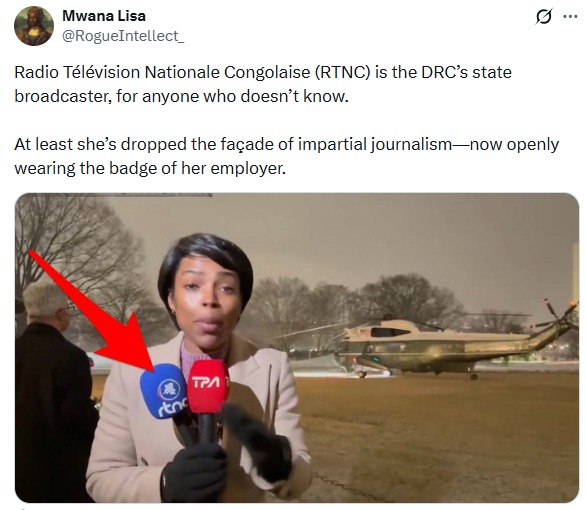
Shortly after her post, Rwanda’s Minister of Foreign Affairs and International Cooperation, Ambassador Olivier Nduhungirehe, reacted publicly. In his response, he questioned the journalist’s impartiality and raised concerns about transparency and potential conflicts of interest, citing her recent visits to Kinshasa and appearances on the Democratic Republic of Congo’s public broadcaster, RTNC.
The discussion quickly spread across social media platforms, where numerous users shared strong reactions. Some commenters directly addressed the journalist’s credibility and affiliations.
“Radio Télévision Nationale Congolaise (RTNC) is the DRC’s state broadcaster, for anyone who doesn’t know. At least she’s dropped the façade of impartial journalism—now openly wearing the badge of her employer,” wrote Mwana Lisa, pointing at images of Verás holding the RTNC microphone.
Other comments did not hesitate to reveal the connection between the Kinshasa regime and Verás.
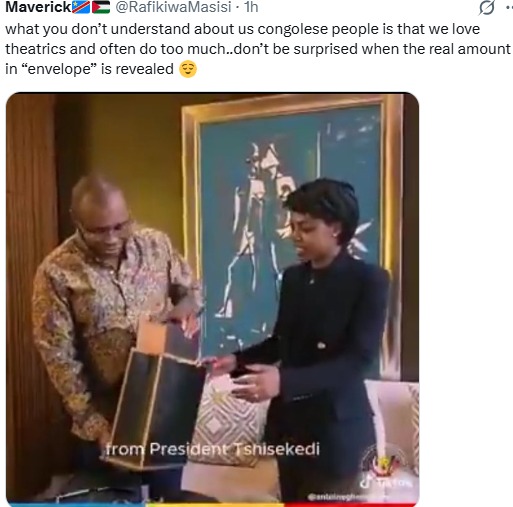
“Hariana Verás… receiving a gift from Tshisekedi. Plus the millions of dollars from the DRC that she received to buy her. She will never report that drones from the Tshisekedi regime are bombing civilians in Minembwe and Masisi,” commented Daniel Mucyo.
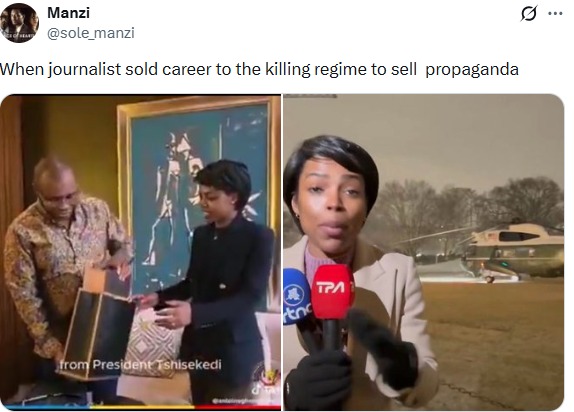
“When a journalist sold her career to the killing regime to sell propaganda,” added Sole-Manzi, again referencing her photo receiving a gift from the DRC President and holding the RTNC microphone.
The exchange unfolded at the same time Rwanda was concluding the 2026 National Dialogue Council, commonly known as Umushyikirano, held from 5–6 February. The annual event brings together Rwandans and friends of Rwanda from around the world to discuss key national development issues.
During the dialogue, President Paul Kagame reiterated Rwanda’s position on the ongoing crisis in the eastern Democratic Republic of Congo, stating that the roots of the conflict lie within the DRC itself and external actors, rather than Rwanda.
The online back-and-forth highlights how regional security issues, diplomacy, and media narratives continue to intersect on global platforms, particularly as attention remains focused on the situation in eastern DRC and the humanitarian crisis in Sudan.
Written by Oswald Niyonzima
