




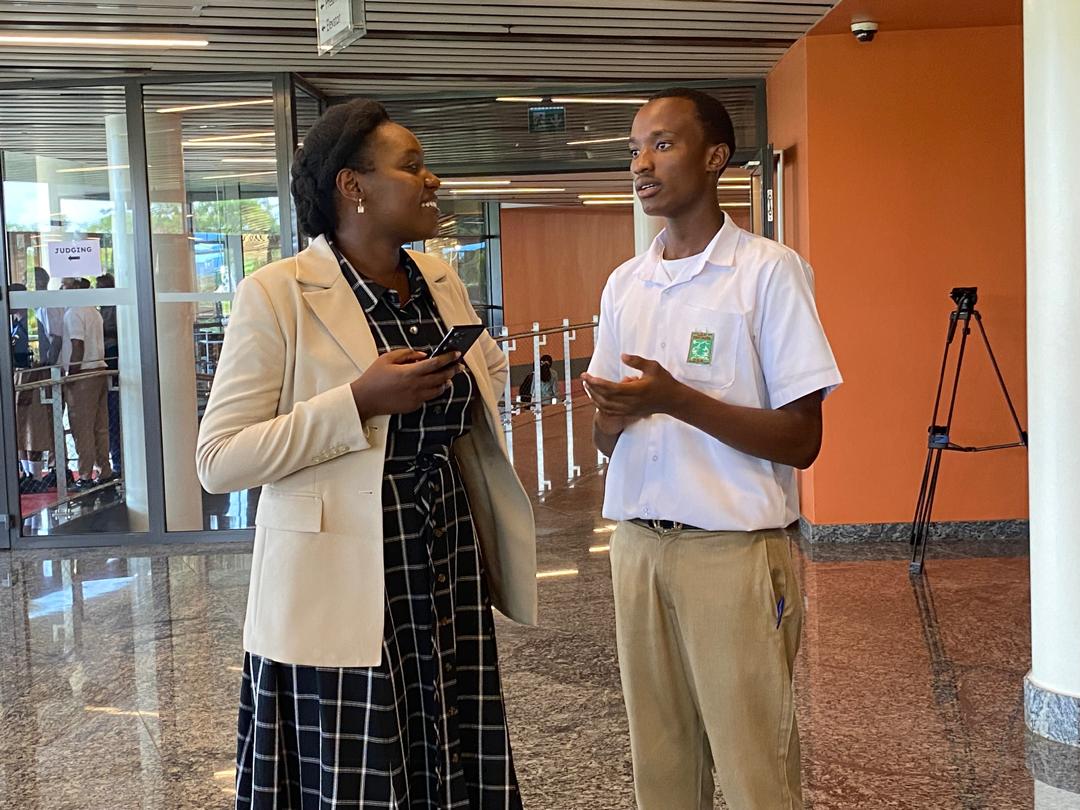
State Minister of Education Claudette Irere engages with a young robotics student at the First Lego League and AI Ideathon held at Kigali Convention Centre.
Inevitably, some teams will go home disappointed. But the words “losing team” feel misplaced, because it is difficult to see any of the participants as anything other than winners. It is that time of year once again — the First Lego League (FLL) and the AI Ideathon.
The Kigali Convention Centre has rarely felt more alive, crackling with excitement as more than 300 school pupils gathered to support their teams in what could best be described as organised chaos.
In the main auditorium — where global leaders, heads of state, industry captains and experts usually meet to deliberate on issues shaping the world — excited teenagers now cheered loudly as robots navigated set obstacles on specially designed tables.
The teams themselves seemed almost oblivious to the deafening applause, focusing instead on guiding their individual robots.
Beyond the robots: AI solving real-world problems
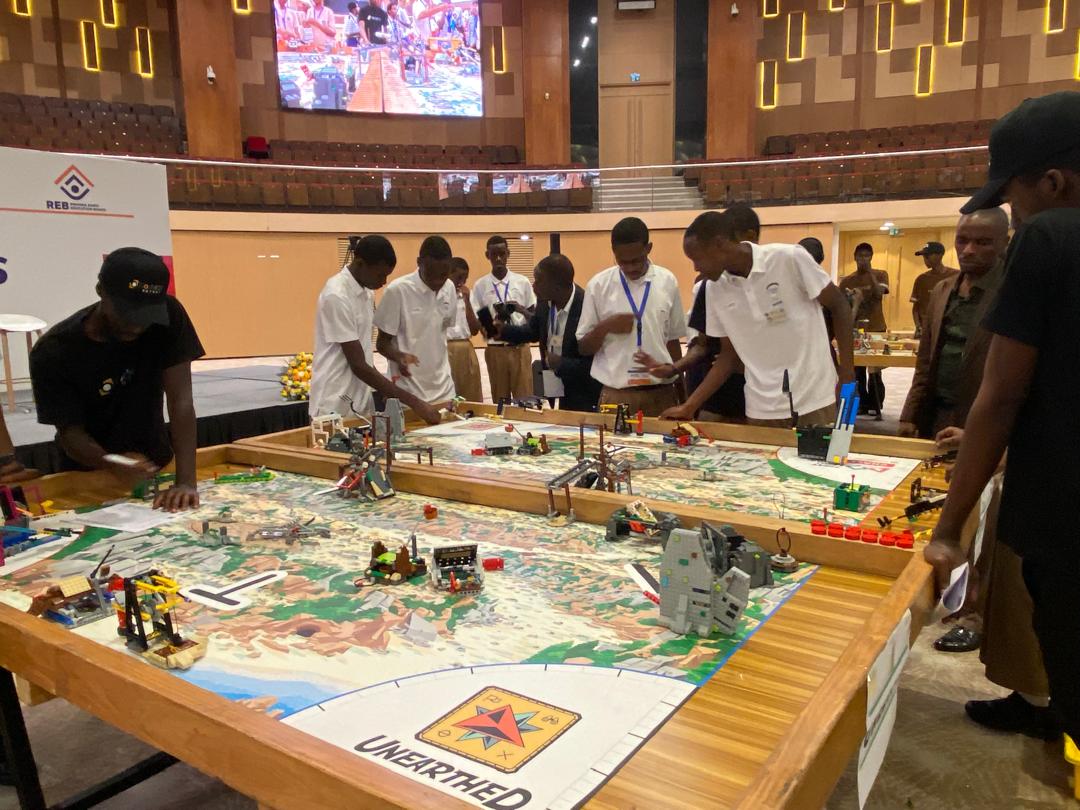
Robots navigate specially designed obstacles during the First Lego League competition at Kigali Convention Centre.
In other rooms, young innovators demonstrated practical ways artificial intelligence can be applied to address challenges facing the world today and in the future.
Competition to reach the national stage at the Convention Centre is intense, requiring months of preparation, coordination and support for the pupils ahead of their big moment. This year, 383 projects were submitted and evaluated, with only the most successful teams advancing to the next stage.
Among the projects showcased at KCC was a robot with what appeared to be X-ray vision, designed to locate archaeological artefacts beneath the ground.
Eighteen-year-old Noella Chance Isingizwe from Hope Haven Christian School in Gasoji explained that the project combines a robot, a drone and a website to help identify sites of archaeological interest without digging or damaging existing infrastructure.
“Our system is a drone, a robot and a website to receive the collected data. We are able to determine whether there is something underground worth exploring, while avoiding unnecessary destruction of built infrastructure caused by false indications of archaeological artefacts,” she said.
Education leaders back Rwanda’s next generation of innovators
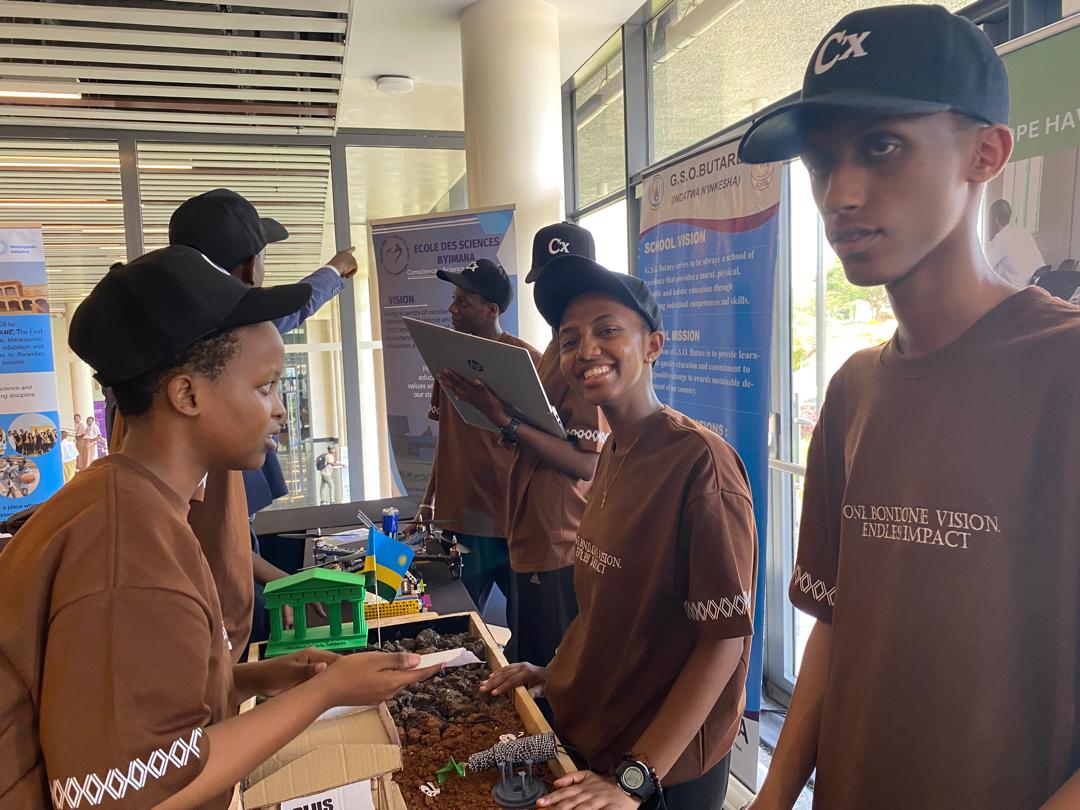
Student Noella Chance Isingizwe with her teammates showcasing their innovative robotics project at the First Lego League and AI Ideathon.
Offering encouragement and support was much of the country’s education leadership, including the Minister of Education, Joseph Nsengimana, State Minister Claudette Irere, and the Director-General of the Rwanda Education Board (REB), Dr Nelson Mbarushimana.
For State Minister Irere, the time and effort invested in the competition are more than worthwhile because of what it gives students. The programme, she said, is now firmly embedded in the school calendar.
“As you can see, it teaches them to work together in teams, and they meet their peers from different schools. The winning projects go on to compete at more demanding levels, nationally and globally,” she said.
She added that she had previously accompanied pupils to a global AI competition in Switzerland, where they competed with peers from around the world, including teams from China and India — countries known for their strong performance in information and communications technology.
She said she was impressed by how Rwandan pupils acquitted themselves.
The competition, she added, is one that opens young minds — “exactly what we aim for in education.”
Now in its fourth year, the initiative is already shaping future ambitions. Some pupils, including Isingizwe, say they hope to pursue further studies in robotics and artificial intelligence.
