




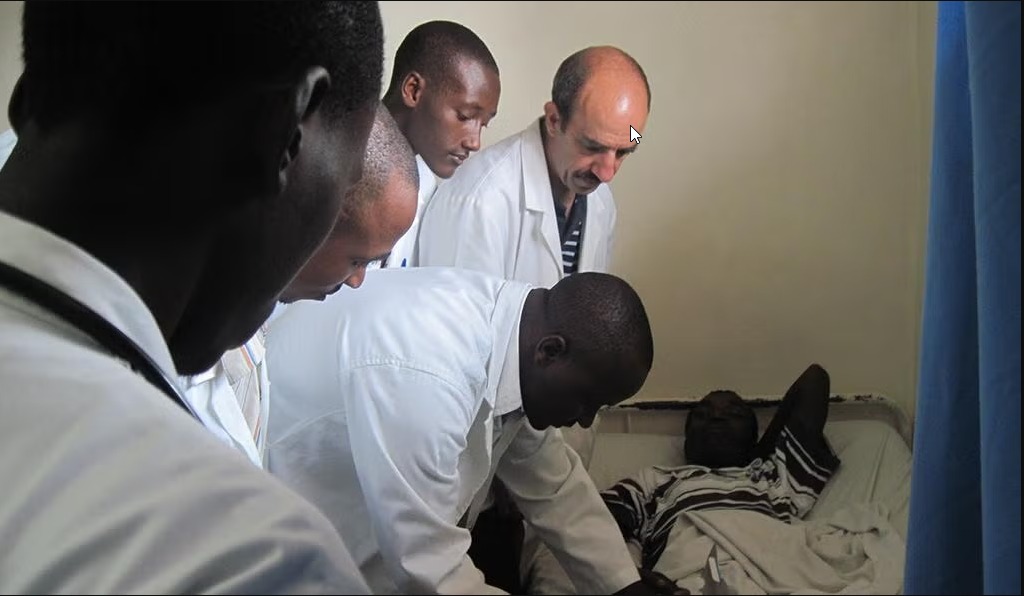
A patient receives care at a Kigali health center under Mutuelle de Santé, as recent reforms expand funding and strengthen protections for vulnerable households.
Rwanda’s community-based health insurance program, widely known as Mutuelle de Santé, is entering a new era. With major reforms published in the National Gazette, the government aims to make the system more equitable, financially sustainable, and accountable, ensuring the most vulnerable remain protected while those with greater means contribute their fair share.
Under the revised structure, households in the lowest income bracket pay nothing, fully covered by the government. Contributions then rise progressively for higher-income households — from RWF 3,000 for the next tier to RWF 7,000, RWF 10,000, and up to RWF 15,000 per person per year for the wealthiest.
Officials stress that the new system reflects citizens’ ability to pay, reduces pressure on public finances, and strengthens Mutuelle de Santé, which now covers over 90 percent of the population.
Equity and sustainability are at the heart of this reform, a government spokesperson said. Those with greater means contribute more, while the most vulnerable are fully protected.
Broader funding and diversified contributions
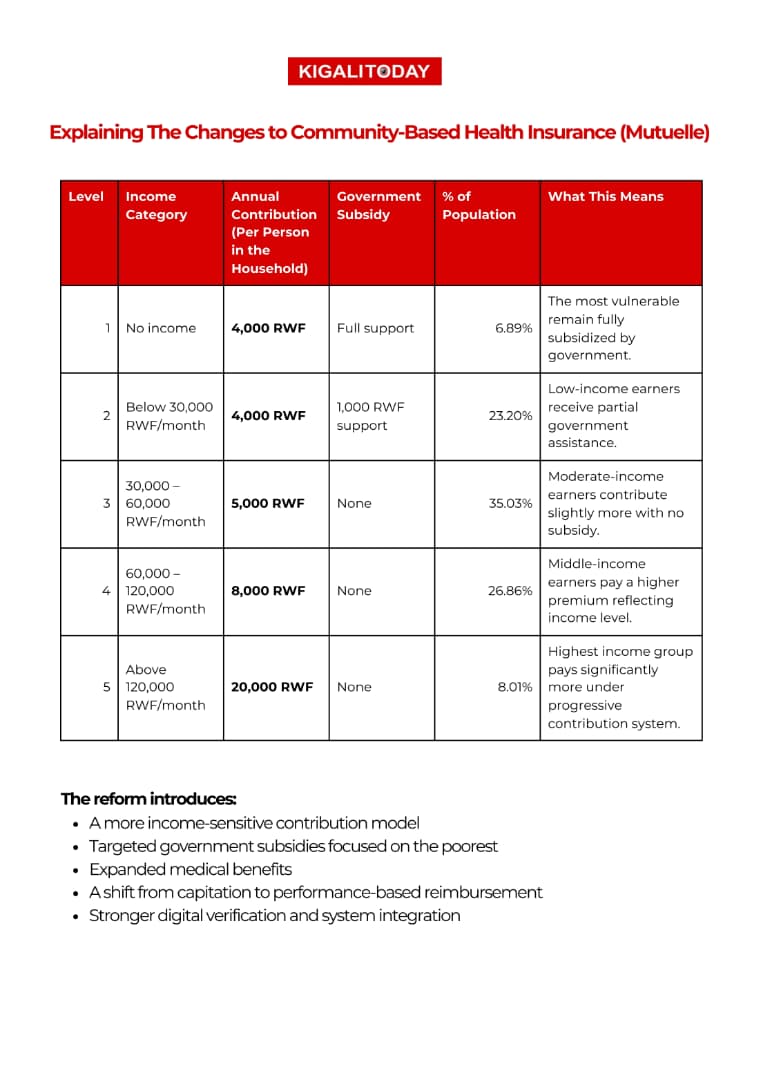
The reforms also expand who funds Mutuelle de Santé. In addition to households, contributors now include the government, public and private sector employees, health insurers, telecommunication companies, fuel distributors, banks, and other private sector actors.
The government remains the largest contributor, committing RWF 6 billion annually and continuing subsidies for the lowest-income households. Dedicated revenue streams have also been introduced, drawn from medical product registration fees, vehicle inspection fees, traffic fines, penalties for substandard goods, parking fees in Kigali, and a share of tourism revenues.
Tighter rules for defaulters
To ensure compliance, the Prime Minister’s Order introduces stricter penalties. Entities that delay payments incur 2 percent monthly interest, while audits revealing underpayment trigger administrative fines of up to 200 percent of the unpaid contribution. All fines are deposited into the Mutuelle fund to strengthen the scheme’s finances.
25 years of Mutuelle de Santé
The announcement coincides with the 25th anniversary of Rwanda’s CBHI scheme, a policy widely credited with dramatically expanding access to health care since the early 2000s.
Public events in Kayonza and Kigali today will highlight the reforms and new services. Authorities will also introduce a capitation payment model, under which health facilities are pre-funded based on patient numbers rather than reimbursed per service — a pilot already underway in parts of eastern Rwanda.
Strengthening Rwanda’s health system
Rwanda’s health system is often cited as a global model for expanding coverage in low-income countries. Rising demand for care, expanded benefit packages, and demographic changes have increased financial pressure.
While some middle-income households will see higher contributions, the system ensures fairness and protection for the most vulnerable, embedding financial discipline and broader economic participation.
With these reforms, Rwanda positions Mutuelle de Santé as a resilient, equitable, and sustainable model for universal health coverage in the coming decades.
