



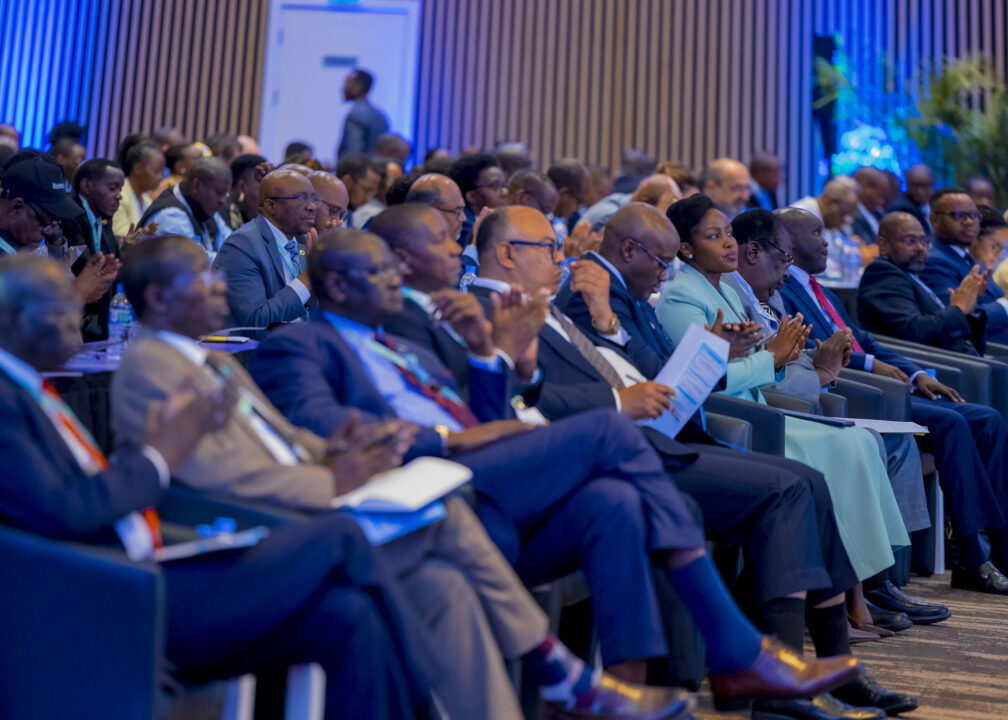
Delegates listen to proceedings at the 4th East African Community (EAC) Science, Technology and Innovation Conference.
KIGALI – Rwanda’s ICT Minister, Paula Ingabire, warns that Africa risks embedding inequality into its future if it continues relying on AI systems developed abroad.
Speaking at the 4th East African Community (EAC) Science, Technology and Innovation Conference, Ingabire cautioned that the continent is not yet in control of the technologies shaping its economies, health systems, and governance.
“The greatest risk is remaining consumers of AI systems built elsewhere. Systems trained on foreign data may misdiagnose patients, misread markets, and misclassify crops,” she said.
Experts note that while East Africa’s digital progress is undeniable—with mobile network coverage above 90 percent and rising internet usage—AI must be approached not just as an innovation opportunity, but as a question of sovereignty. The technology is already being applied in climate advisory tools and expanding access to credit.
AI Sovereignty Takes Center Stage
For example, Ingabire notes that Rwanda is already using AI in healthcare logistics and disease surveillance, but she stresses that infrastructure alone is not enough.
Without control over data and systems, African countries risk embedding foreign assumptions into critical sectors, often with costly consequences.
The concept of “AI sovereignty” has emerged as a defining theme—an urgent call for East Africa to design, build, and govern its own intelligent systems. Sovereignty means ensuring African data is stored, processed, and used to benefit Africans, aligning AI with local realities, languages, and needs.
“Partnership must be built on equity, not dependency,” she said, signaling a shift from aid-driven tech adoption toward co-creation and ownership.
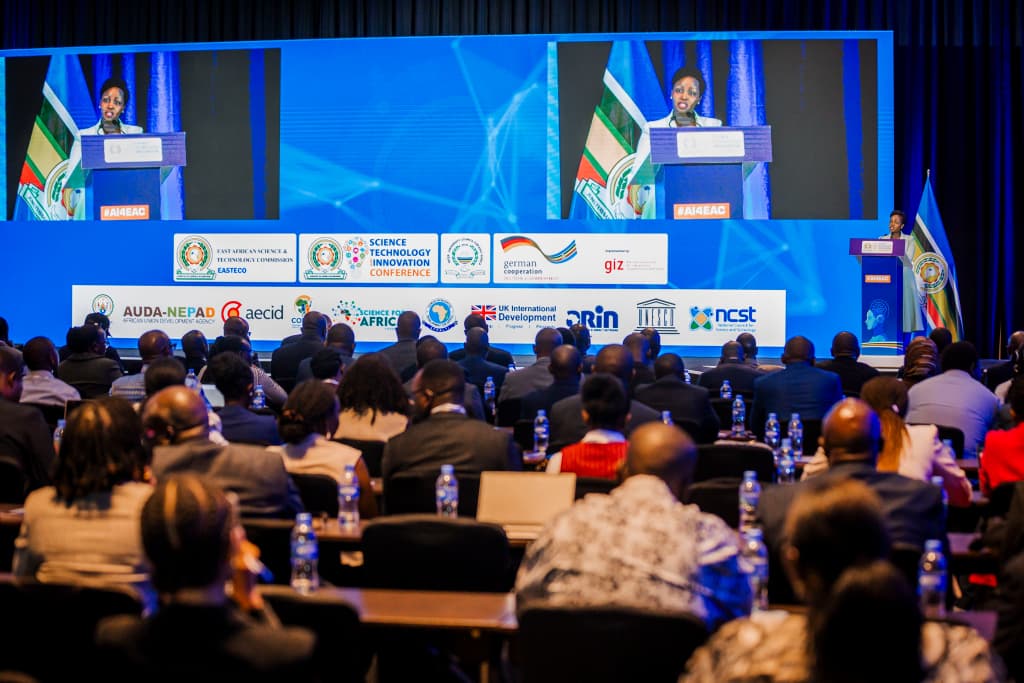
The concept of “AI sovereignty” has emerged as a defining theme at the 4th East African Community (EAC) Science, Technology and Innovation Conference.
A Region Playing Catch-Up
Prof. Idris Rai of the Inter-University Council for East Africa acknowledged that universities across the region are still unprepared for the AI era, citing outdated curricula, limited research capacity, and a shortage of skilled talent.
At the policy level, underinvestment remains a major constraint. Most African countries have yet to meet the African Union’s target of allocating one percent of GDP to research and development.
Dr. Sylvance Okoth of EASTECO warned that fragmented national efforts could further slow progress, calling instead for coordinated regional action. The urgency is not just technological, it is economic and strategic.
Globally, AI is projected to contribute over $15 trillion to the economy by 2030. For East Africa, estimates suggest potential gains of up to $200 billion within a decade. But leaders have cautioned that value without control could deepen dependency rather than reduce it.
“Unless we fund our own agenda, we will always remain consumers,” a representative of the EAC Council of Ministers noted, likening AI to electricity, a foundational force that will define competitiveness across all sectors.
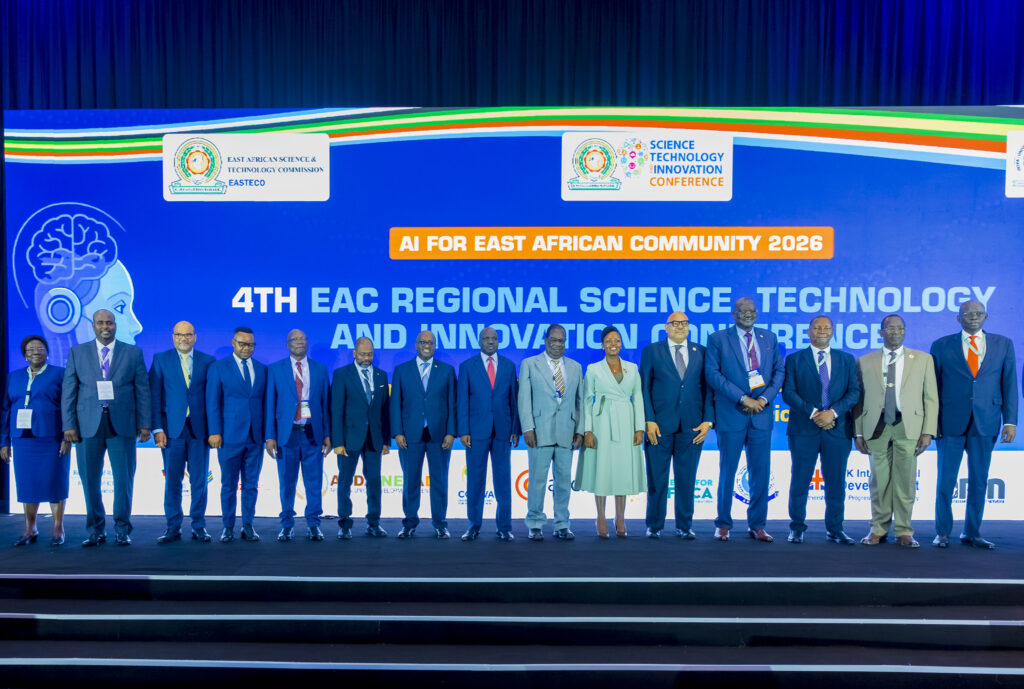
Delegates representing different countries pose for a group photo.
From Warning to Action
The conference is now moving from caution to concrete steps, including the creation of a regional AI research fund, harmonized regulations, shared digital infrastructure, and expanded investment in skills development.
There is also growing momentum for a formal EAC AI sovereignty framework, which could position the region as a unified player in global technology negotiations—ensuring East Africa shapes its own AI future rather than remaining a passive consumer of systems developed elsewhere.
As the world races to adopt and regulate AI, the region’s efforts reflect a broader global trend: countries that control their data and AI infrastructure are better positioned to leverage technology for economic growth, governance, and societal benefit. East Africa’s move toward AI sovereignty signals both ambition and a strategic response to the inequalities that unchecked AI adoption can create.
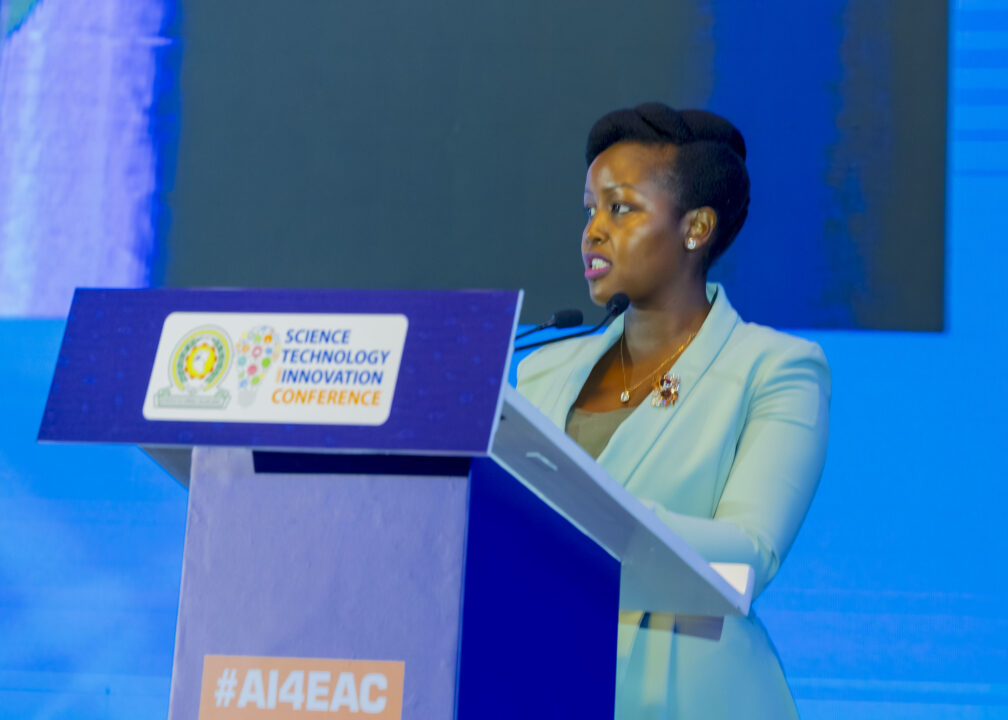
Rwanda’s ICT Minister, Paula Ingabire, speaking at the 4th East African Community Science, Technology and Innovation Conference.