



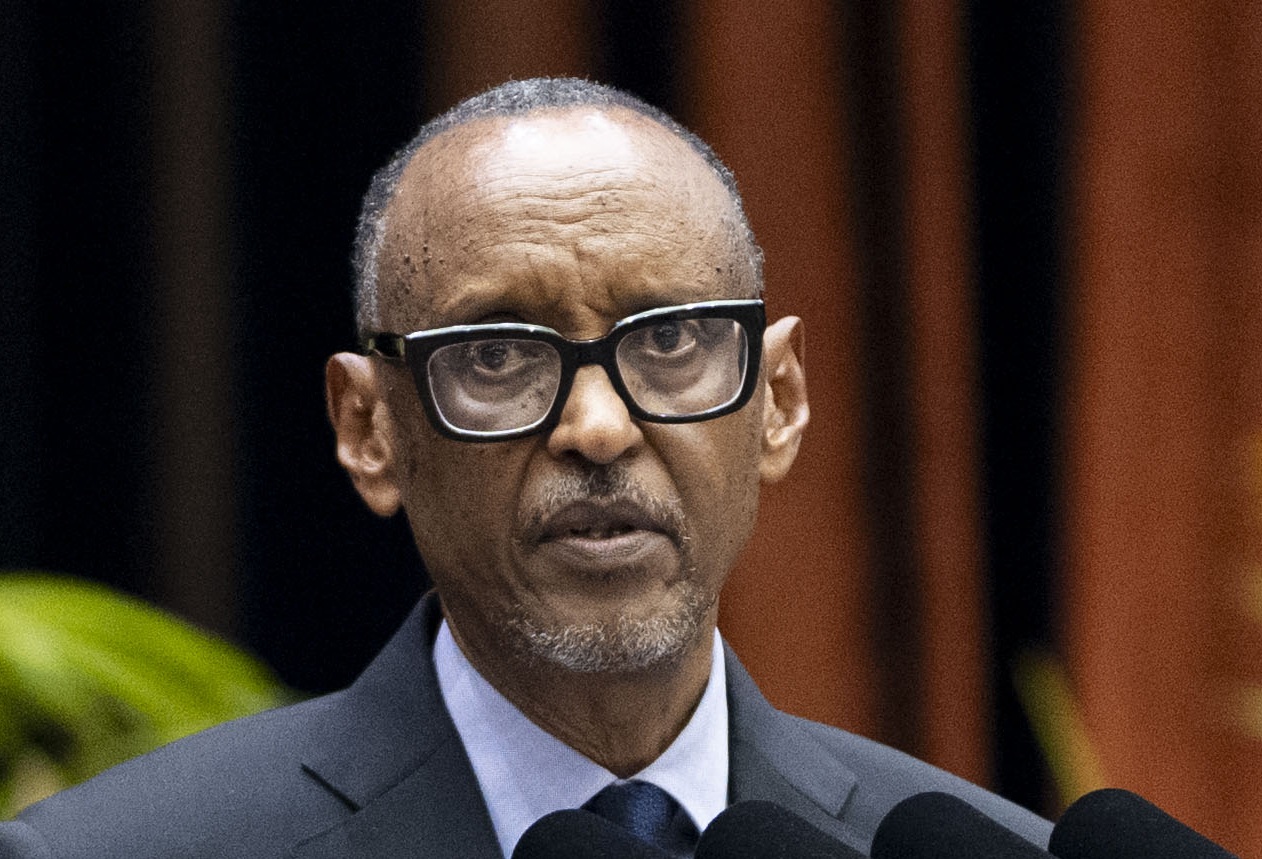
President Paul Kagame Speaking on Friday night
President Paul Kagame said Friday that Rwanda will continue to defend its borders and citizens against security threats from eastern Democratic Republic of the Congo, citing the continued presence of armed groups linked to the perpetrators of the 1994 Genocide against the Tutsi.
Speaking before diplomats and representatives of international organizations in Kigali, Kagame, who was accompanied by First Lady Mrs Jeannette Kagame, said the conflict in eastern Congo has persisted for decades largely because its root causes have been ignored.
“The conflict in eastern DRC is not new,” Kagame said. “It has been prolonged for decades due to neglect and complacency, notably by those with the power to make the biggest difference in resolving it.”
Kagame said Rwanda’s security concerns are driven primarily by the continued presence of the militia Democratic Forces for the Liberation of Rwanda (FDLR), an armed group formed by elements associated with the perpetrators of the genocide.
According to Kagame, the group continues to promote extremist ideology and operate from eastern Congo.
“In the late 1990s, cross-border attacks by this militia from the territory of DRC claimed thousands of lives inside Rwanda,” he said.
MORE PHOTOS FROM THE DIPLOMATIC DINNER
Kagame accused the Congolese government of providing political cover and financial support to the militia and integrating it into state military structures.
“The Congolese government has provided political cover and financial support to FDLR and integrated this group into its military structures, from where it now operates with total impunity,” he said.
He also pointed to recent political developments he said were troubling for Rwanda’s security.
Kagame said the son of the former Rwandan leader who presided over the country during the genocide, along with close associates, had recently visited Kinshasa and strengthened ties with actors involved in the conflict. Kagame was referring to Jean Luc Habyarimana, who was in Kinshasa recently, and video was released with high security manned by Congolese government forces, and he was visiting a museum for a former DRC leader Mubutu.
“The son of the former leader of Rwanda who led this country into genocide and other close collaborators have been visiting Kinshasa in order to deepen the alliance,” Kagame said, adding that they had been openly welcomed there.
Kagame said such developments reinforce Rwanda’s concerns about the persistence of genocide ideology in the region and the alliances forming around it.
He said the ideology associated with the FDLR has spread to other armed groups operating in eastern Congo, some of which target Congolese Tutsi communities and other civilians.
Rwanda, he said, has repeatedly raised these concerns in regional and international forums, but the issues are often overlooked.
“We have consistently raised these issues in any relevant forum and directly to many of you here,” Kagame said.
The president emphasized that Rwanda’s approach to the conflict is guided by the responsibility of any nation to protect its citizens.
“One thing that has not changed is the right and duty of every nation to ensure the safety of its borders and people,” he said. “Rwanda is no exception.”
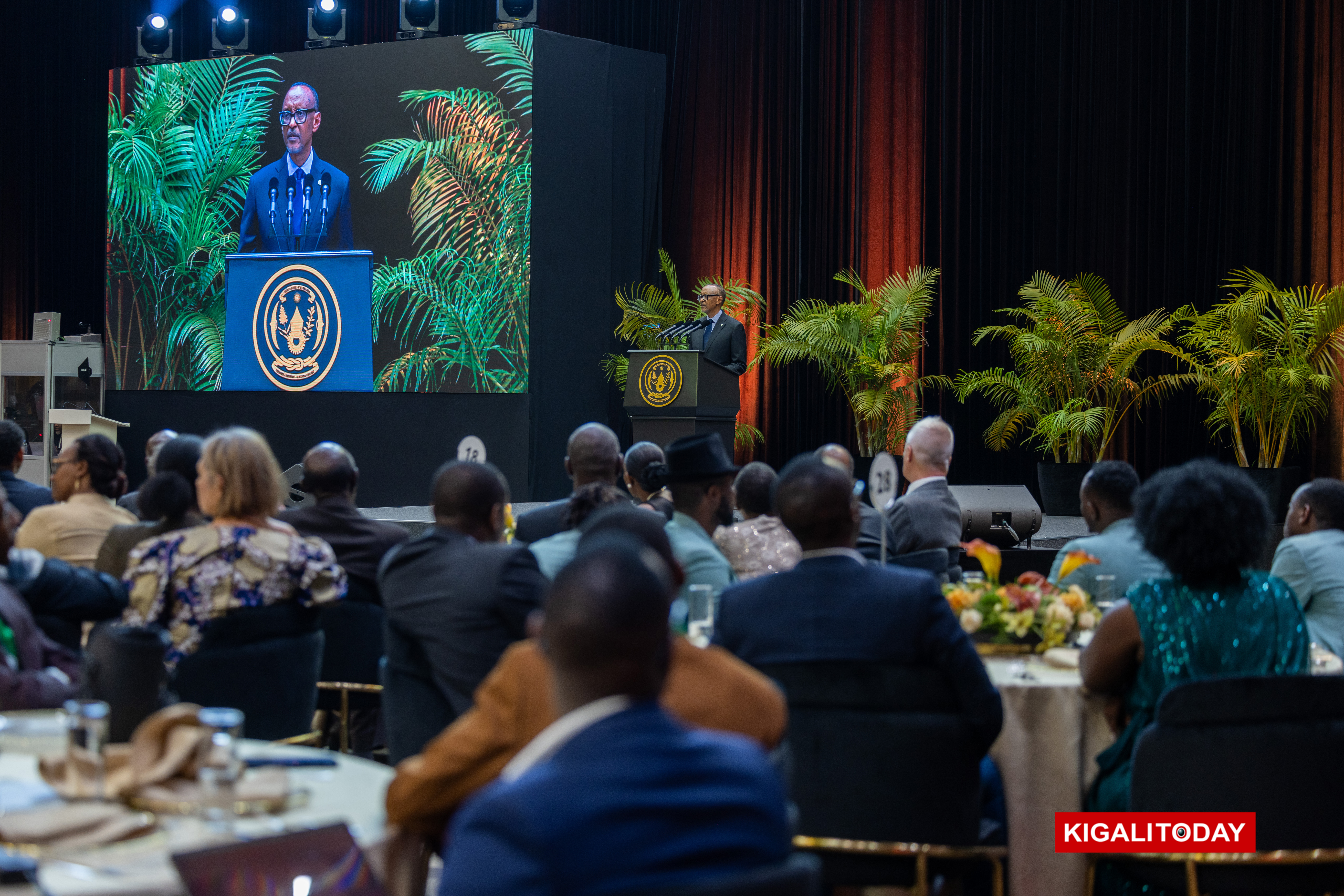
Kagame said Rwanda’s geography and history require the country to maintain what he described as “defensive borders,” adding that the country’s military measures are intended solely to safeguard national security.
“Our defensive measures are aimed at this objective, for nothing else,” he said.
At the same time, Kagame said Rwanda faces what he described as a difficult choice: either tolerate hostile armed groups operating close to its borders or take defensive action and face criticism from abroad.
“As things stand, Rwanda faces an impossible choice — to tolerate the continued presence of the FDLR and its growing network of militias or to defend ourselves and be condemned for it,” he said.
Despite the tensions, Kagame said Rwanda’s ultimate goal remains peace and stability in the region.
“Make no mistake, Rwanda wants peace,” he said. “But we want a genuine and lasting peace on which we can build our future prosperity.”
He added that Rwanda’s policies are shaped by the lessons of its history and its determination never to allow the forces behind the genocide to threaten the country again.
