



PSF officials hand over the financial support in a dummy cheque
Rwanda Private Sector Federation (PSF) has donated Rwf5 million to boost resilience efforts of members of the Abayubaka Gakoni Association of genocide widows in Nyabugogo Cell, Kigali Sector, Nyarugenge District.
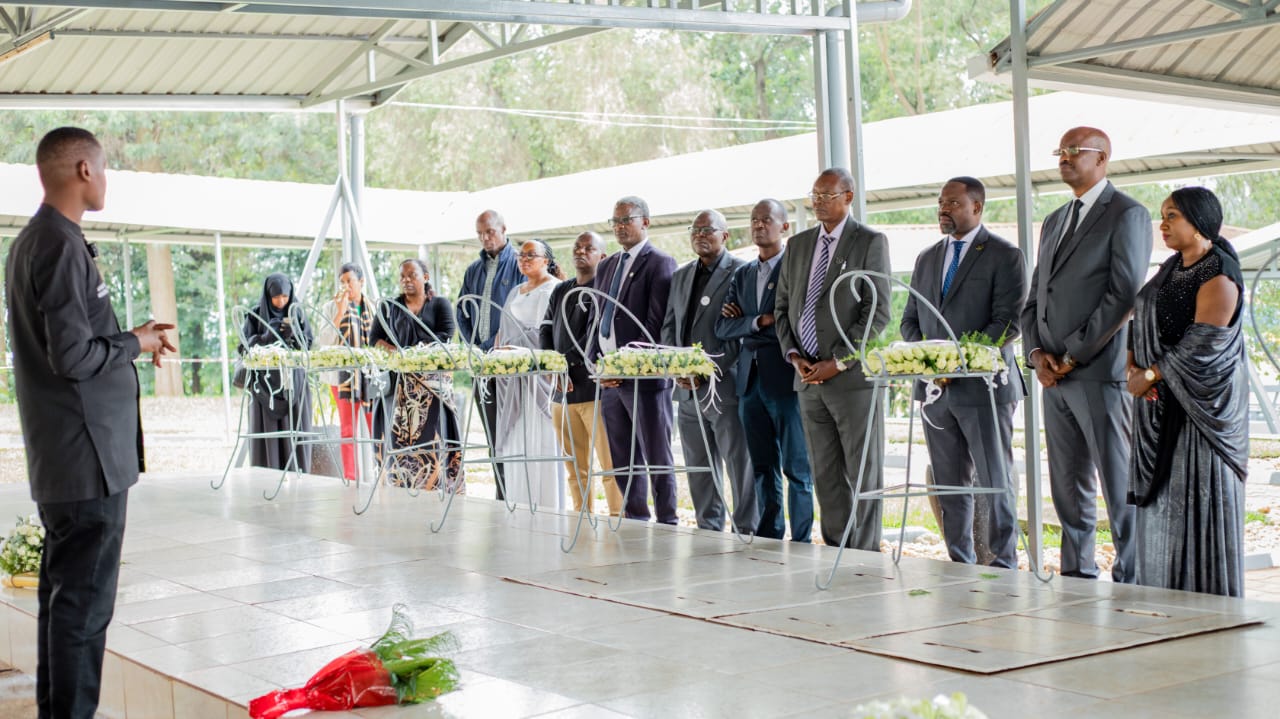
The support, handed over this Friday, April 17, is part of the ongoing 32nd Genocide Commemoration activities conducted annually by the business community, which included paying tribute to over 105,000 genocide victims laid at Nyanza Genocide Memorial Site in Kicukiro District.
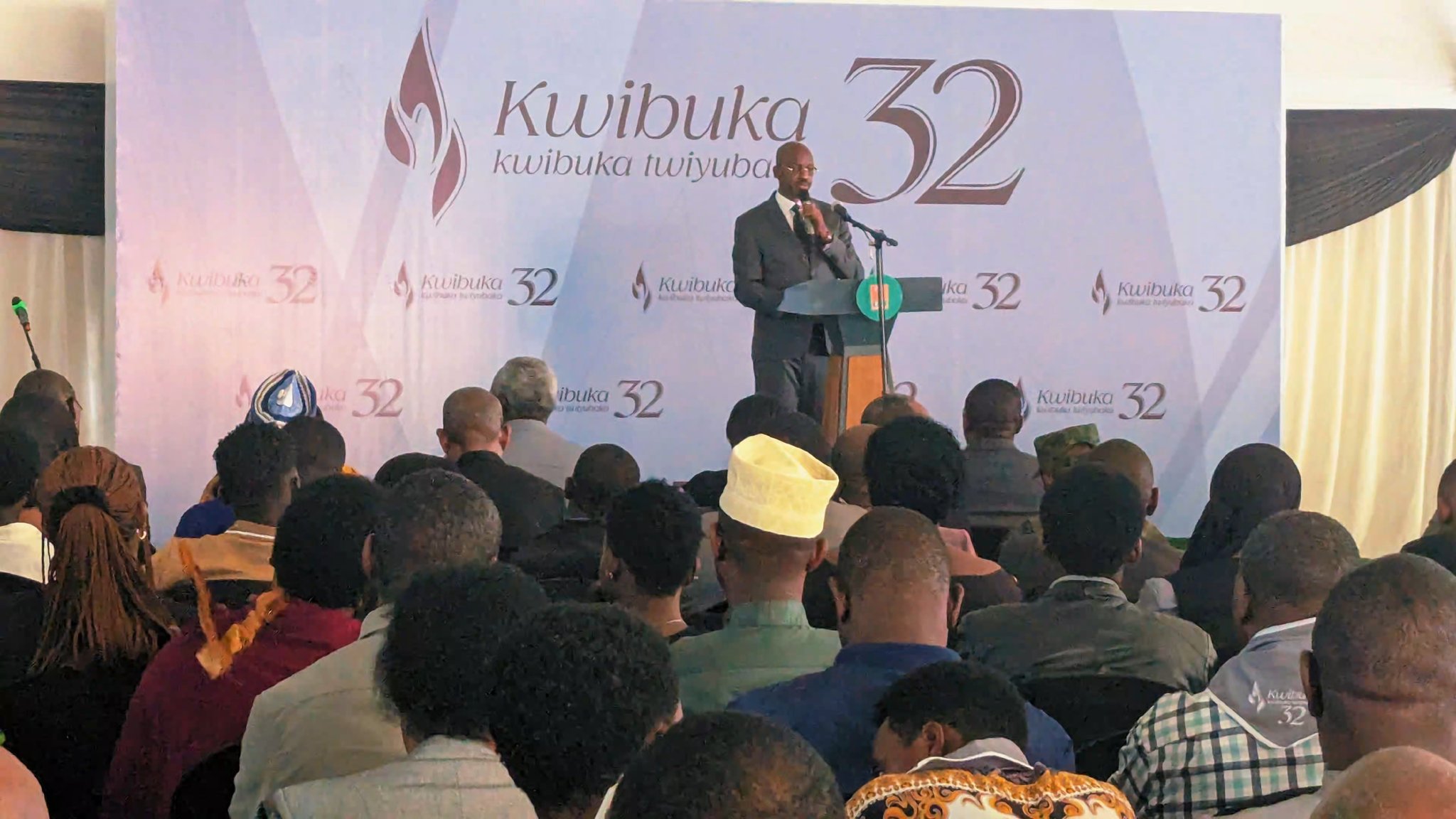
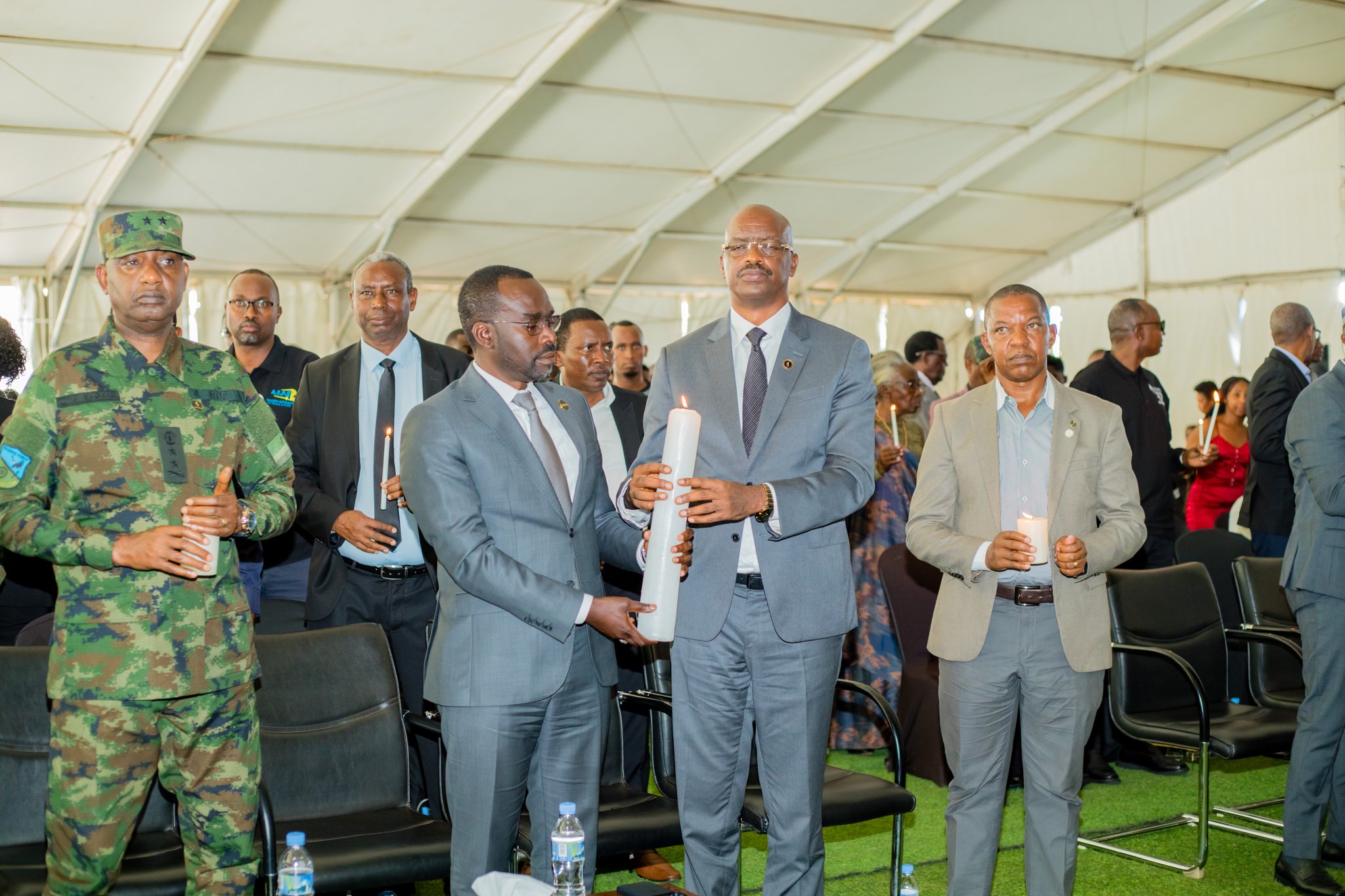
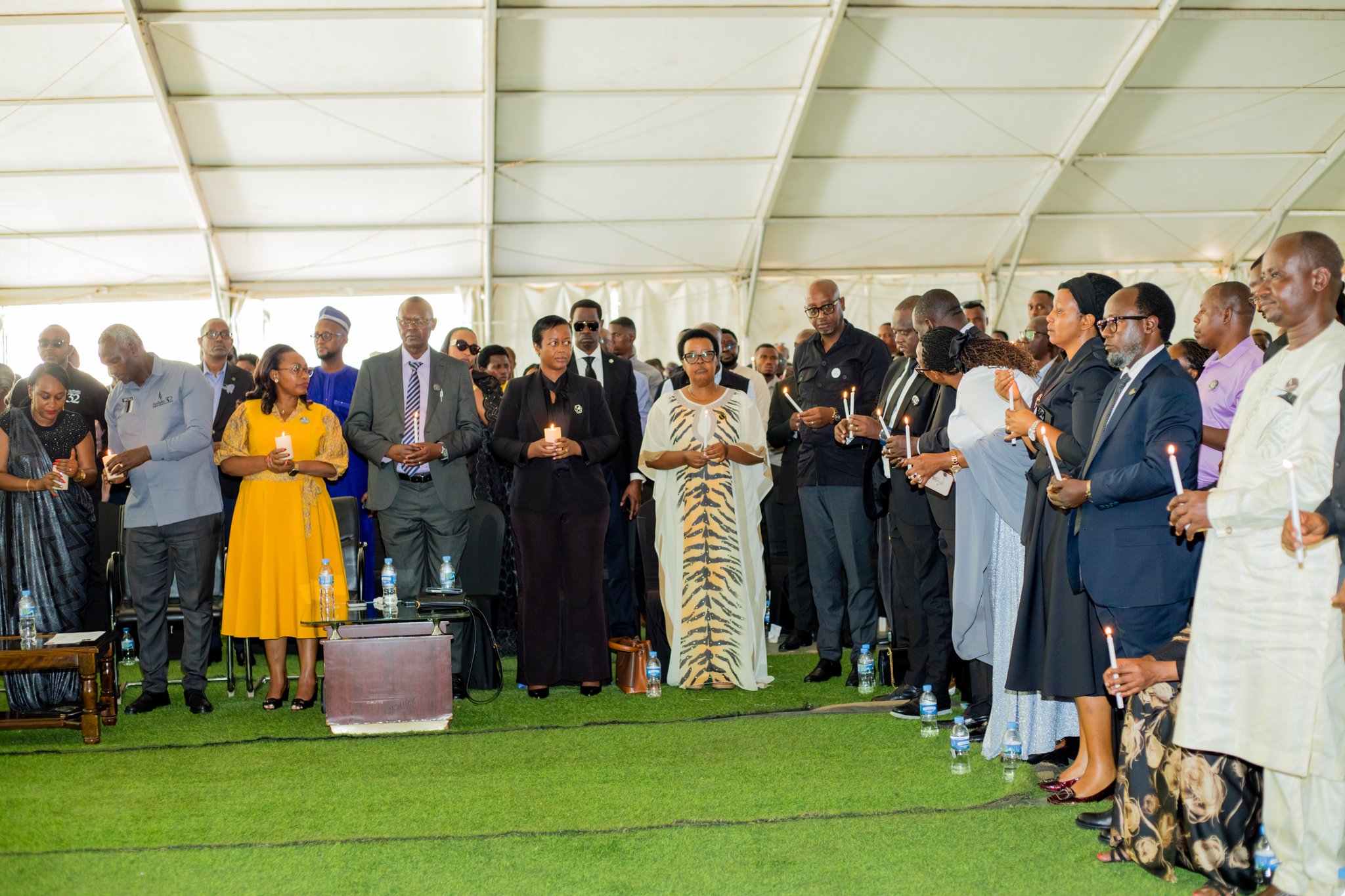
The group also held a commemoration vigil later in the evening, gathering at PSF Expo Grounds in Gikondo, bringing together various business leaders from across the country.
In attendance was Rwanda’s Minister of Trade and Industry, Prudence Sebahizi, General Alex Kagame, Rwanda Reserve Force Chief of Staff (RFCOS), Ibuka and Avega officials, as well as church leaders.
PSF Rwanda Chairman, François Twagirumukiza, said that although it is evident the genocide was planned, it is also very sad to note the role of the business community in the genocide, hence the need to fight genocide and its ideology.
“It is our role to fight the genocide and its ideology, but also contribute to the country’s development and rebuilding the Rwandan society,” Twagirumukiza said.
With current developments in the business world, and the use of the internet and technology, he stressed the need to fight genocide ideology while upholding unity among Rwandans.
Twagirumukiza thanked the Rwanda Patriotic Front for stopping the genocide, and President Kagame’s leadership and government for restoring unity and rebuilding the nation.
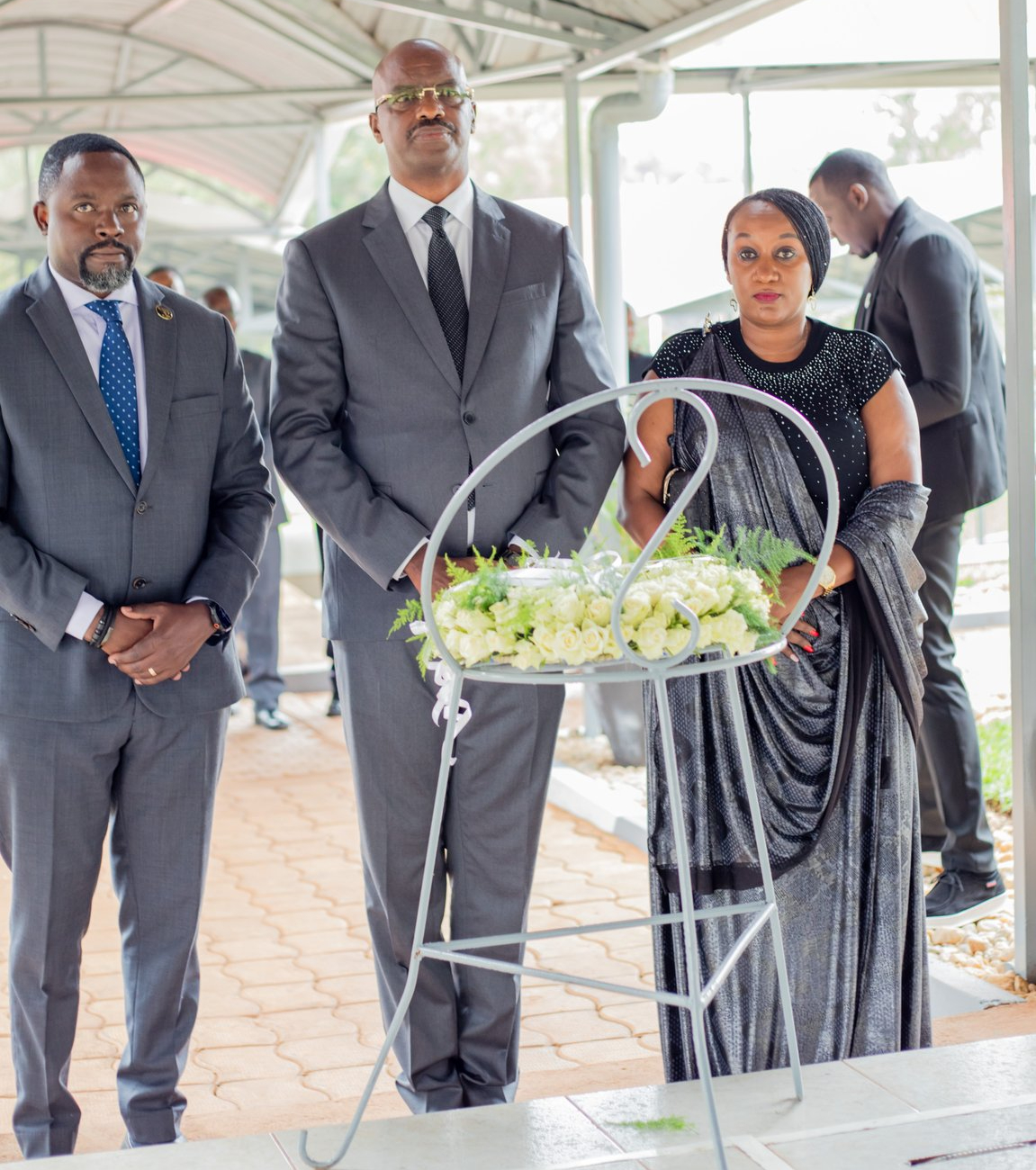
François Twagirumukiza (middle) and executive team at Nyanza genocide memorial site
Janvier Bayingana, an Ibuka representative, said the role of youth in fighting genocide and its ideology is crucial and has been significant over the past years.
“This is a legacy that we as youth and the business community need to pursue,” he said.
He added that genocide commemoration has become a culture that must be reinforced further.
He urged that, beyond doing business, the private sector should take on greater responsibility in fighting genocide ideology, instead of leaving it to survivors, government, and legal institutions alone.
Olivier Mugabonake, a genocide survivor, gave a testimony in which he recounted how he survived the genocide, unlike many of his family members, including his cousin Thierry, who was in Gisenyi Town, Rugerero Zone during that year’s Easter season.
He described how one neighbour hid them but later alerted Interahamwe militia, who found them at their hiding place, where some were killed along with religious priests.
“The good thing is that this suspect was convicted of genocide, but what he did made me question how people can be killed in a religious place. We never met since then and heard that he was killed,” he said.
At Shange Church, where they had sought refuge, they found that many religious people had been killed, prompting them to flee to an elderly woman’s home, who also warned them to leave before they were discovered.
One of the religious leaders later informed them that their family had been killed. A bishop blessed them together with other priests before urging them to escape. This was on April 14, and they remained in hiding until April 29.
He also recounted how a militia member, Yussuf, a businessman involved in the rice trade, used his resources to finance between 200 and 300 militia members who operated across the region.
They took groups of victims to Nyarushishi to be killed. Mugabonake said he survived by hiding in an empty water tank, where a woman who later became known as a Murinz i w’Igihango helped conceal them.
He later travelled towards the shores of Lake Kivu on April 25 with a relative, where they were hidden in a boat, only to later learn that many of his family members had been killed.
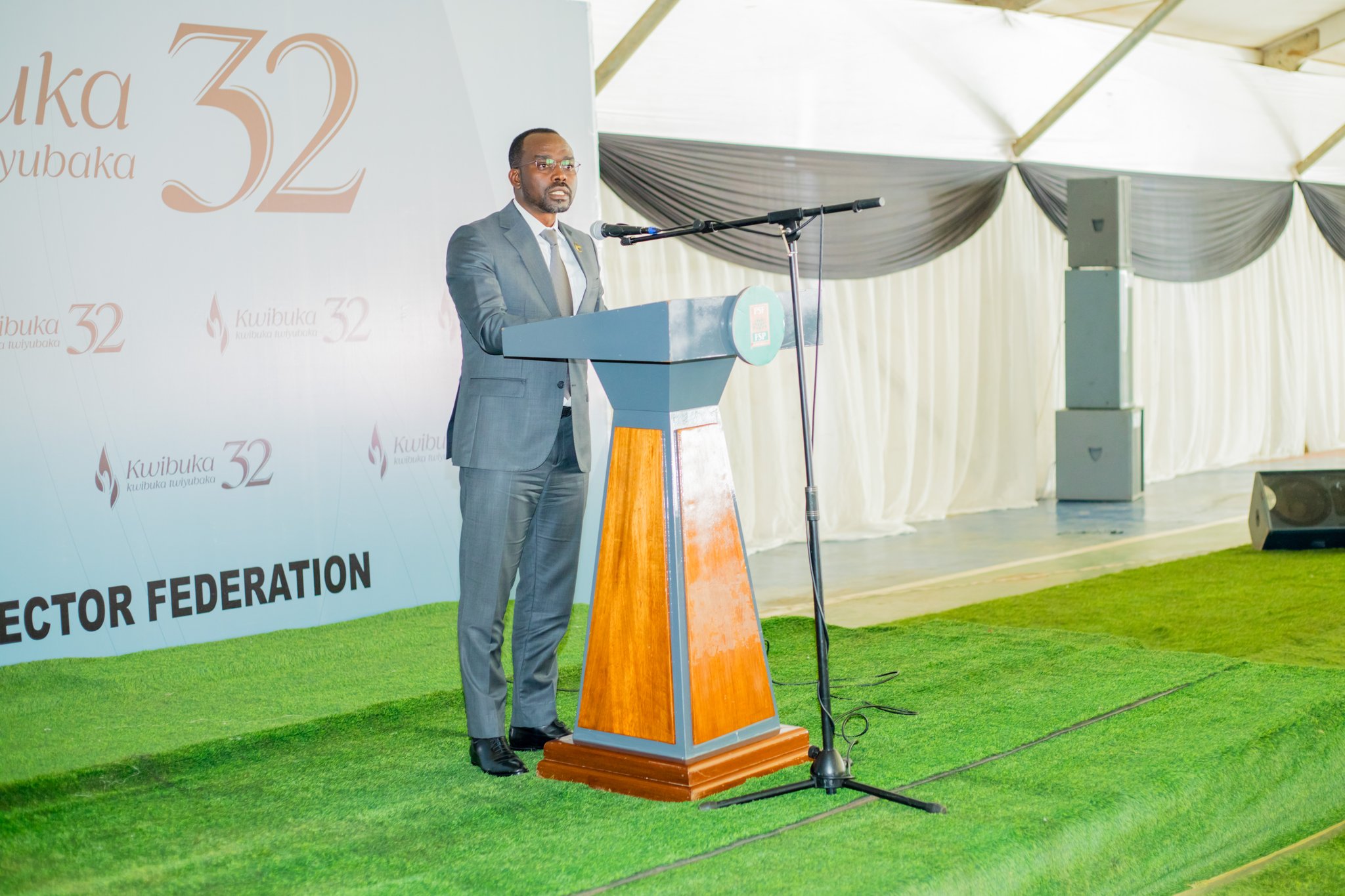
In his remarks, Trade Minister Sebahizi reminded the Rwandan business community of the need to fight genocide and its ideology, which he said remains evident in families, across the region, and among convicted individuals both inside and outside the country.
“This is another war we all must fight as Rwandans and understand all the paths used to disseminate genocide ideology, especially through technology,” he said.
The minister emphasized the importance of the business community committing to fight this ideology in all forms, whether online or through verbal statements, to promote unity and lasting peace.
“As a private sector, you have a big role in building a peaceful, united, and developed nation, while ensuring that past mistakes are not repeated,” Sebahizi stated.