



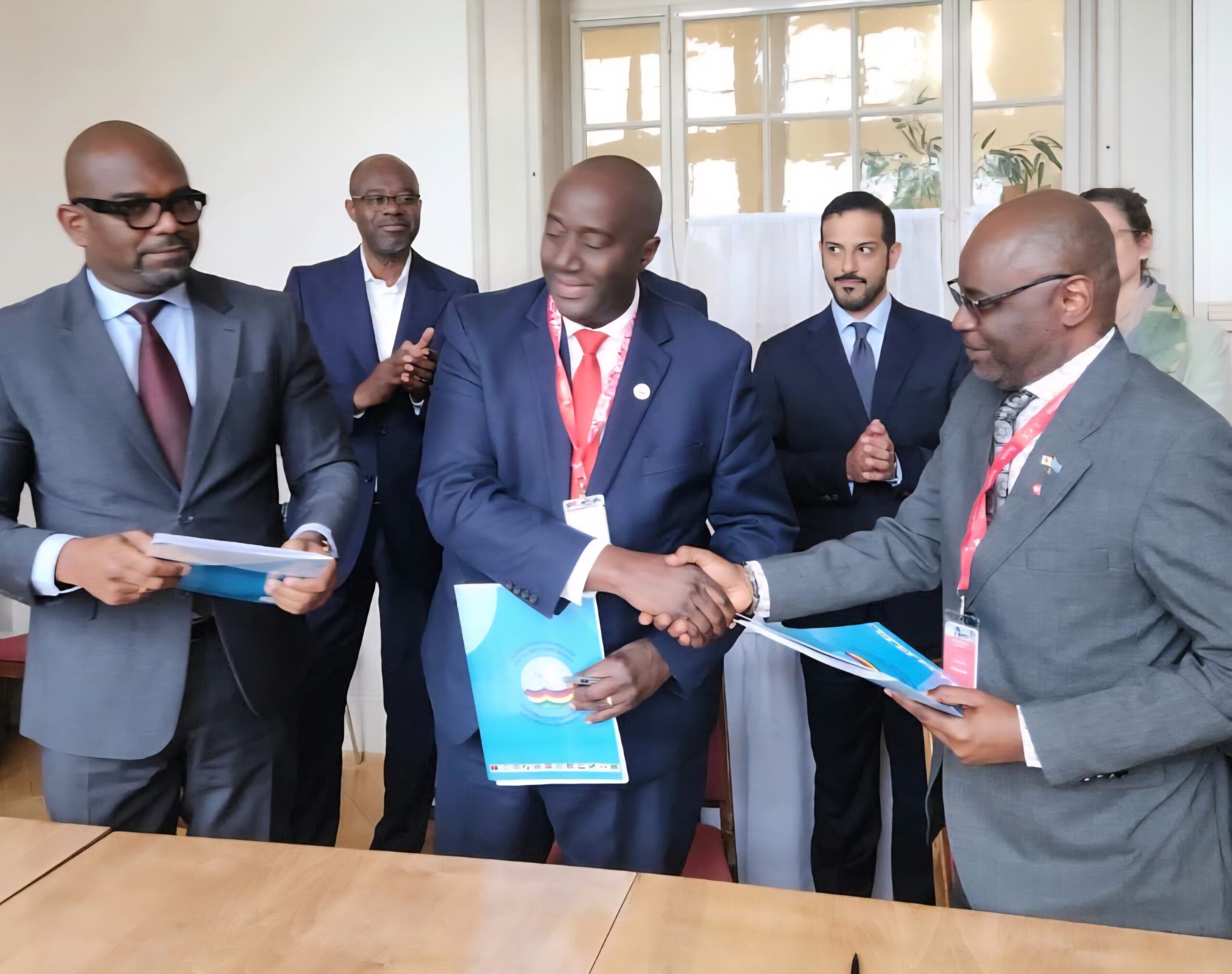
The rebels and government exchange the documents after signing part of the agreement on Wednesday
Goma — The government of the Democratic Republic of the Congo and the AFC/M23 rebel alliance have agreed to begin releasing prisoners within ten days, in what negotiators describe as a key step toward stabilizing eastern Congo after months of conflict.
The commitment was announced Friday in a joint communiqué issued after five days of talks in Montreux, Switzerland, held under the framework of a broader peace process backed by Qatar, the United States, Switzerland, Togo, the African Union and the United Nations.
Under the agreement, both sides will proceed with prisoner releases in line with a mechanism signed in September 2025, with the International Committee of the Red Cross expected to facilitate the process by providing verified lists.
The issue of detainees, however, remains one of the most politically sensitive aspects of the negotiations.
The AFC/M23 has demanded the release of around 700 individuals it describes as political prisoners — a group that includes senior political figures as well as civilians allegedly detained for links to the rebellion.
Kinshasa has not publicly accepted the scope of that demand, leaving uncertainty over how broadly the exchange will be implemented.
The prisoner question has also been complicated by an earlier move by the rebels. Last month, AFC/M23 said it had handed over more than 5,000 captured Congolese soldiers to the Red Cross, describing it as a goodwill gesture aimed at building confidence.
But weeks later, their fate remains unclear. The Congolese government has not allowed their return, and officials have not provided a detailed explanation, raising concerns among mediators about a growing trust deficit between the two sides.
Beyond the prisoner exchange, the Montreux talks produced a wide-ranging set of commitments aimed at easing humanitarian conditions and reinforcing a fragile ceasefire.
Both parties agreed to allow rapid, safe, and unimpeded delivery of humanitarian assistance across conflict-affected areas in eastern Congo.
Aid is to be distributed strictly on the basis of need, without discrimination, and humanitarian organizations are to be granted full freedom of movement.
The parties also pledged to protect aid workers, prevent the diversion or looting of assistance, and avoid interfering in how beneficiaries are selected.
The agreement places strong emphasis on the protection of civilians. Both sides committed to refraining from attacks on infrastructure essential to survival, including food production systems, water supply networks, hospitals, schools, and energy and telecommunications facilities.
They also agreed to ensure the continued provision of basic services such as healthcare, education, and access to clean water, even in areas affected by fighting.
In parallel, the two sides reaffirmed their obligation to comply with international humanitarian law, human rights law, and refugee law, while also referencing the constitutional framework of the Congolese state.
A central pillar of the agreement is the operationalization of a ceasefire monitoring system. The parties endorsed the launch of a verification mechanism, supported by the International Conference on the Great Lakes Region and backed logistically by the United Nations peacekeeping mission, MONUSCO.
The mechanism is expected to begin its first verification missions within a week, marking the first attempt to systematically track compliance with the ceasefire on the ground.
Medical access and the treatment of the wounded also feature prominently in the commitments. Both sides agreed to facilitate the evacuation and care of injured fighters and civilians, ensure the transport of medical supplies, and take all feasible measures to locate and assist the wounded without delay.
The communiqué reflects a broader effort to rebuild confidence between the parties after months of fighting that displaced hundreds of thousands and disrupted large parts of eastern Congo’s economy.
Negotiators said the latest agreements would serve as a foundation for further talks, including the completion of additional protocols under the wider peace framework.
Still, the durability of the process may depend on how quickly and credibly the prisoner exchange unfolds. Previous efforts to build trust have faltered over implementation gaps, and the unresolved status of the 5,000 soldiers handed over by the rebels underscores the fragility of the current moment.
For now, both sides have pledged to maintain momentum, submit concrete proposals for the next phase of negotiations, and continue working with international mediators to move toward a comprehensive settlement.
Whether those commitments translate into lasting stability will depend less on what has been signed than on what happens in the days ahead — starting with the promised exchange of prisoners.
