



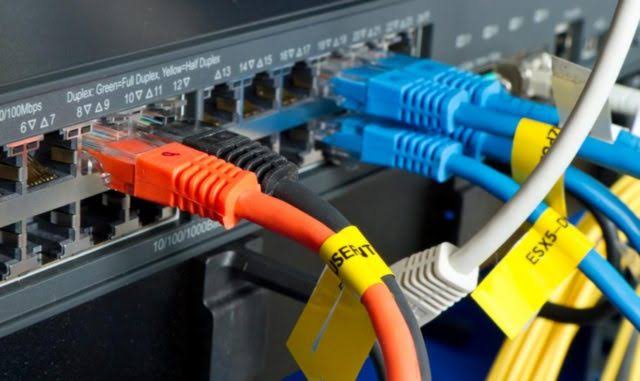
The system will make Uganda come into the group of nations who internet data doesn’t have to travel distances to reach users
KIGALI — Uganda has launched a new internet system known as an IP Peering Exchange, aimed at improving speed, reducing costs, and keeping more data traffic within the country — a move that brings it closer to infrastructure Rwanda has operated for more than two decades.
In Rwanda, the same system is known as the Rwanda Internet Exchange Point (RINEX), established in 2004, making it one of the earliest such platforms in the region.
At its core, the system is simple. It acts as a local meeting point for internet traffic, allowing service providers to exchange data within the country instead of routing it through international networks.
Without such a system, even a message sent between two users in the same country might travel abroad—passing through distant servers in Europe or elsewhere—before returning.
With a peering exchange in place, that same data moves directly within national networks, cutting distance, time, and cost.
WITHOUT PEERING (before)
User A (Uganda)
     ↓
Internet Provider
     ↓
International Route (Europe/other country)
     ↓
Back to Uganda
     ↓
User B

WITH PEERING (after)
User A
     ↓
Local Internet Exchange (Uganda)
     ↓
User B
The implications are practical but significant. Shorter data routes translate into faster browsing speeds and more stable connections, while reduced reliance on international bandwidth lowers operational costs for providers.
Over time, this also supports the growth of local digital services, as platforms perform better when hosted closer to users.
Rwanda’s longer experience with RIEP means that a substantial share of its internet traffic is already handled locally, with commonly used services increasingly delivered from within the country.
Uganda’s launch signals a similar ambition, though the benefits will depend on how widely telecom operators connect to the exchange and whether major global platforms begin storing content locally.
The development is part of a broader regional shift. Countries such as Kenya and Tanzania have also invested in internet exchange infrastructure, while South Africa hosts some of the continent’s most advanced and heavily used systems.
Across Africa, the direction is increasingly toward keeping data closer to home, improving performance while reducing dependence on overseas routes.
For users, the immediate impact may be subtle. But over time, such systems shape how fast, reliable, and affordable the internet becomes. Uganda has now built the foundation.
Rwanda has had it for 22 years. What comes next will depend less on the presence of the infrastructure than on how effectively it is used.

10 comments
this article is very misleading.
UIXP was established in 2001
It was initiated under the Uganda Internet Service Providers Association (UISPA) The purpose was to keep local internet traffic within Uganda
At the time, this was a pioneering move in East Africa—not many countries had IXPs yet.
UIXP evolved beyond just ISP interconnection: To Hosting content caches (Google, Meta, etc.) Supporting Content Delivery Networks (CDNs)
Handling large-scale local traffic exchange
Great. They’re coming close to The Great Rwanda
The article is informative, but there seems to be a factual gap that may mislead readers.
Uganda is not new to internet exchange infrastructure. The country has had the Uganda Internet Exchange Point (UIXP) since 2001, which actually predates Rwanda’s RINEX (established around 2009).
What Uganda has recently launched is a more centralized and government-backed National IP Peering Exchange (NIPX), which is an upgrade and expansion—not a first-time introduction.
For accuracy and fairness, it would be helpful to clarify this distinction so readers understand that this is a modernization step rather than Uganda “catching up” after decades.
Thank you.
Thank you for clarifying 🙏
Why are u miss leading. The UIXP has been around since 2001
Lies. I implemented trafdic monitoring for Ugandas ixp 16 years ago, and by then it had been in existence for some time.
This is a very good launch that will make internect a very effective tool in development of our country.
Coagulation Uganda ITC 🇺🇬
I would like to ask a question however?
What will be the participation of citizens in this new launch?
These days citizens have been participating in the data and wifi industry to serve the neighbours with Internet what will be the fate with a new launch? How does the system work I heard that Internet in Rwanda is free? Shall we have a free connection here as well?
How soon will will the Internet exchange system be effective.
What a shoddy article written only to throw shade at a country which is building its infrastructure. No wonder you cannot dare publish the author’s name. Shame!
You do not rise by bringing others down.
hahahahahaaa
lol. true
Comments are closed.