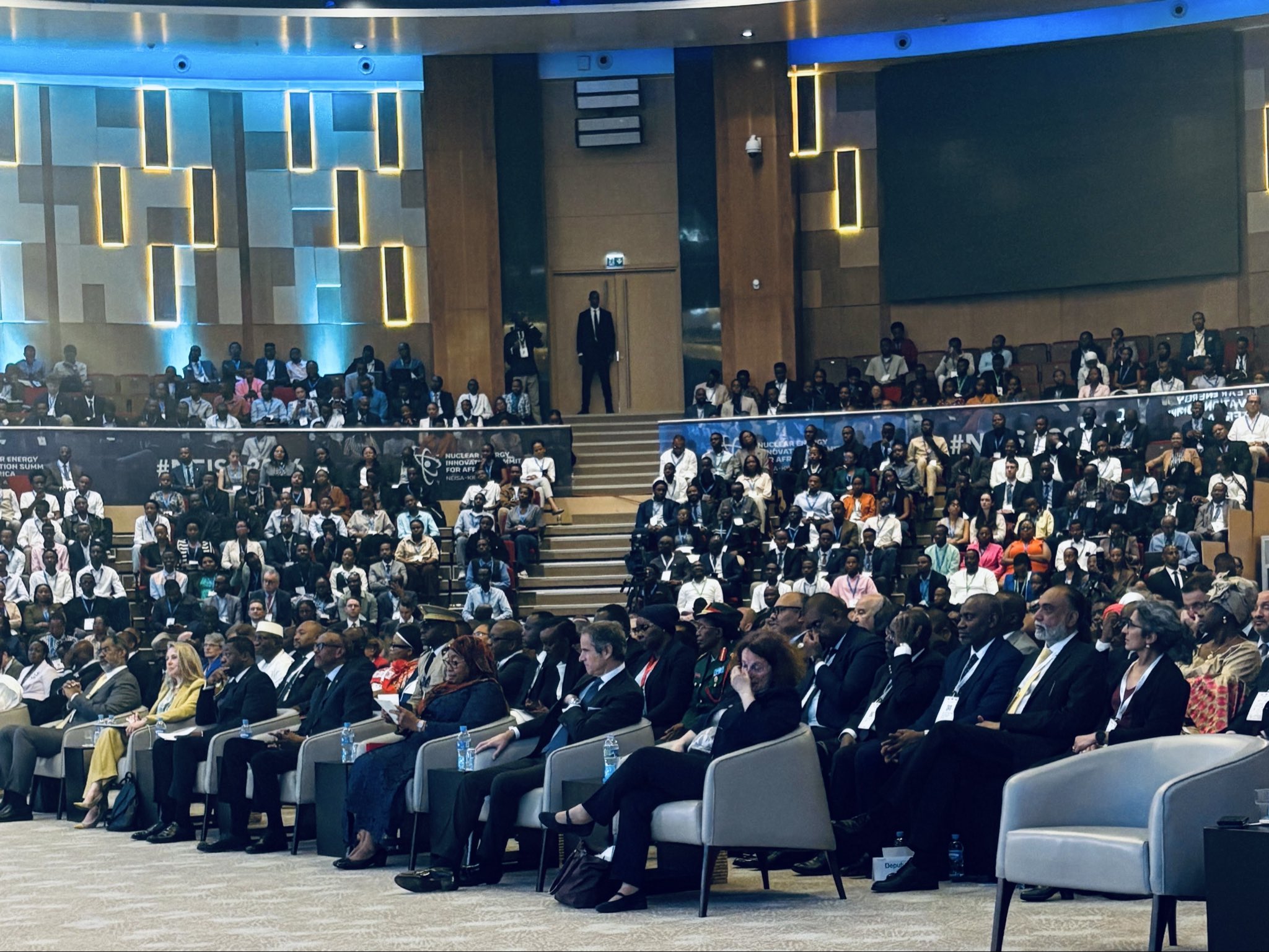
The Nuclear Energy Innovation Summit for Africa (NEISA) 2026 is underway in Kigali.
KIGALI – The Director General of the International Atomic Energy Agency (IAEA), Rafael Mariano Grossi, has said that Africa’s nuclear energy future has entered a practical phase shaped by financing shifts, institutional readiness, and accelerating global energy demand.
Addressing delegates at the Nuclear Energy Innovation Summit for Africa (NEISA) 2026 in Kigali, Grossi said the continent is approaching what he called “a decisive transition point” where nuclear energy is shifting from long-term ambition to structured implementation.
He linked this urgency to Africa’s rapidly rising electricity demand—with nearly half a billion people still lacking access to electricity—alongside increasing pressure from industrialization and digital transformation.
“The elements are finally aligned for us to move. Global conditions for nuclear expansion are now more favorable than at any previous stage for developing countries,” said Grossi.
Financing Barriers Are Easing
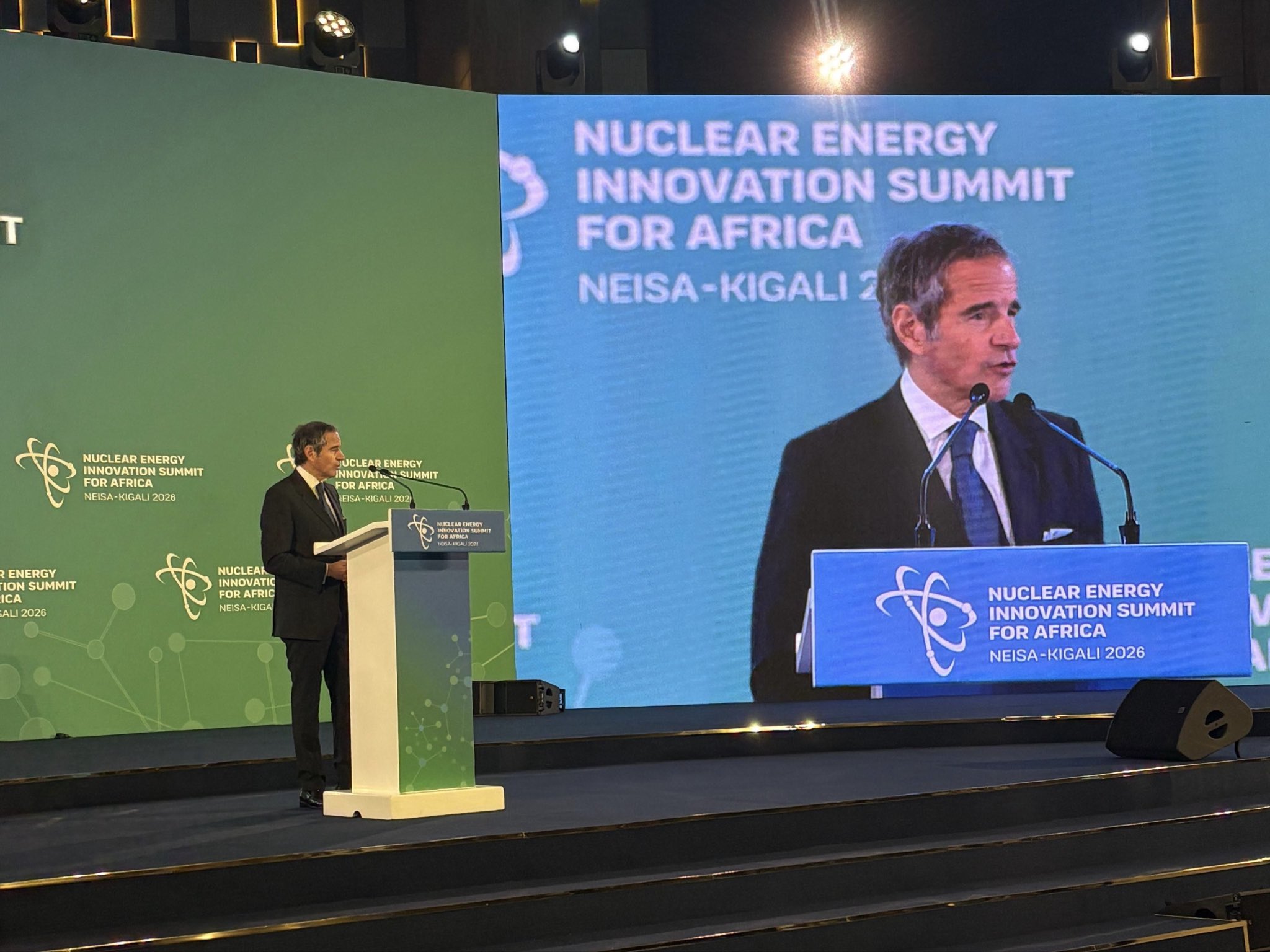
The Director General of the International Atomic Energy Agency (IAEA), Rafael Mariano Grossi says that Africa’s nuclear ambition is no longer out of reach.
For decades, nuclear energy has remained out of reach for most African states due to high capital requirements, long development timelines, and perceived financial risk. These constraints created a structural barrier that kept nuclear power largely confined to advanced economies.
Grossi described this as a long-standing “red line” in global nuclear financing, which limited access for developing countries regardless of their energy needs.
However, he pointed to a major shift following renewed engagement by the World Bank on nuclear energy and strengthened cooperation with the IAEA. This development, he said, has begun to reopen financing discussions that were previously closed to many emerging economies.
This change is particularly significant for Small Modular Reactors (SMRs), which are increasingly viewed as more flexible and scalable alternatives to traditional large nuclear plants, potentially making nuclear deployment more realistic for countries with smaller grids and growing demand.
Africa’s Challenge Is Strategic, Not Resource-Based
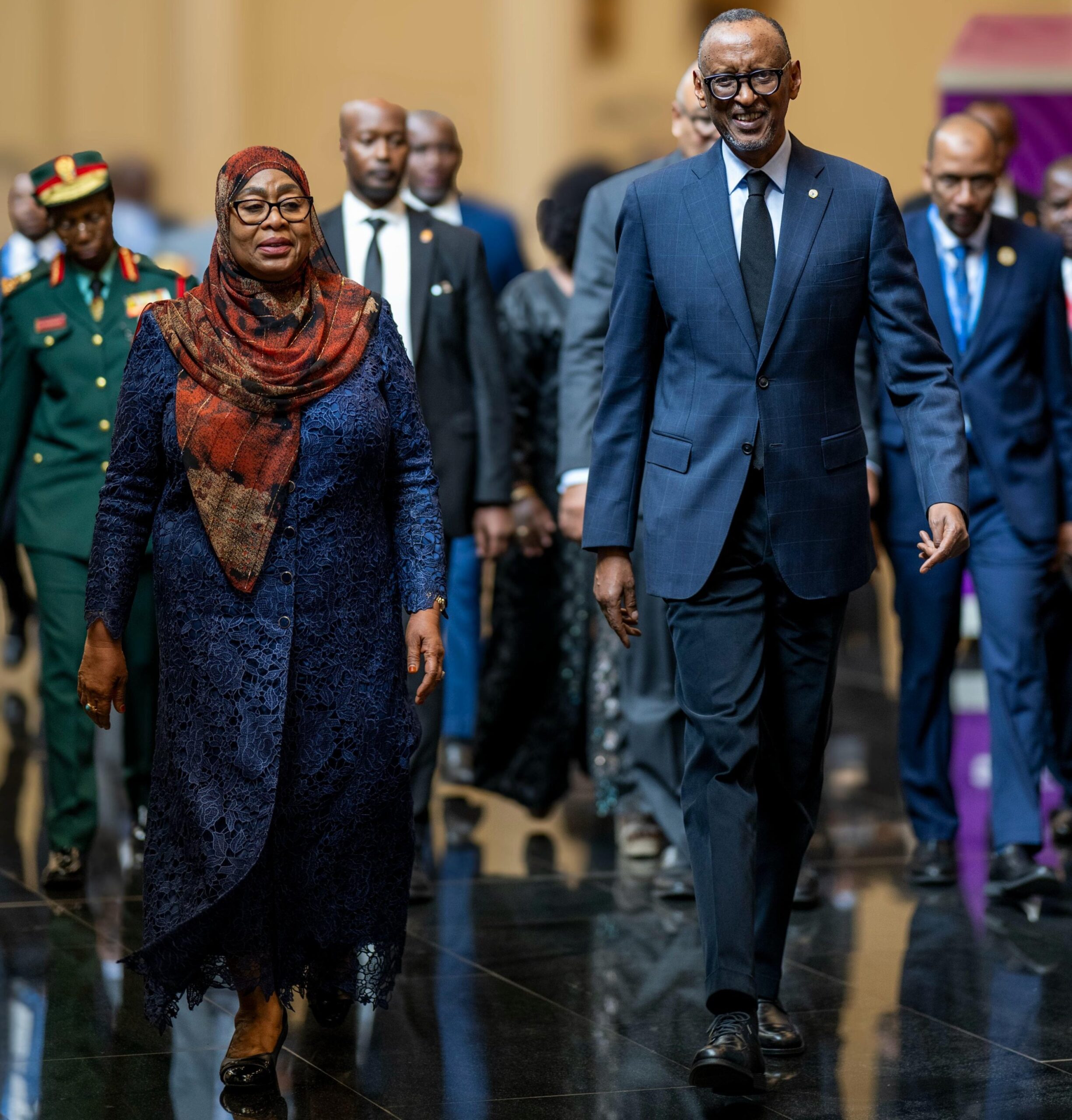
President Kagame arrives at the Kigali Convention Centre for the NEISA 2026 Summit alongside Tanzania’s Samia Suluhu Hassan.
The Chairman of the Rwanda Atomic Energy Board, Lassina Zerbo, said Africa’s challenge is not a lack of resources but how effectively it transforms them into industrial and technological sovereignty.
He pointed to Africa’s vast reserves of uranium, cobalt, lithium, and graphite, noting that these materials place the continent at the center of global energy and technological transitions.
“Africa’s challenge is therefore not one of resources, but how do we empower Africa’s industrialization, digital sovereignty and long-term growth in a sustainable way,” said Zerbo.
He warned that Africa risks exclusion if it does not actively participate in shaping global energy systems.
“Africa should not sit at the table itself,” he said, emphasizing the importance of engagement in decision-making structures.
Nuclear as a Global Partnership Model
The Acting Principal Deputy Assistant Secretary for the Bureau of Arms Control and Nonproliferation at the U.S. Department of State, Renee Sonderman, said nuclear energy is becoming a central pillar of global energy security as countries face rising demand driven by artificial intelligence, industrial expansion, and population growth.
She said no country can build a nuclear program alone, stressing that success depends on partnerships between governments, financial institutions, private investors, and international organizations.
“No country builds a nuclear program alone. There is need for blended financing and coordinated global cooperation,” she said.
Sonderman also highlighted U.S. initiatives supporting Small Modular Reactors, including financing tools, technical assistance, regulatory support, and workforce development programs aimed at reducing risk and accelerating deployment.
Rwanda’s Phase 1 Nuclear Readiness Milestone
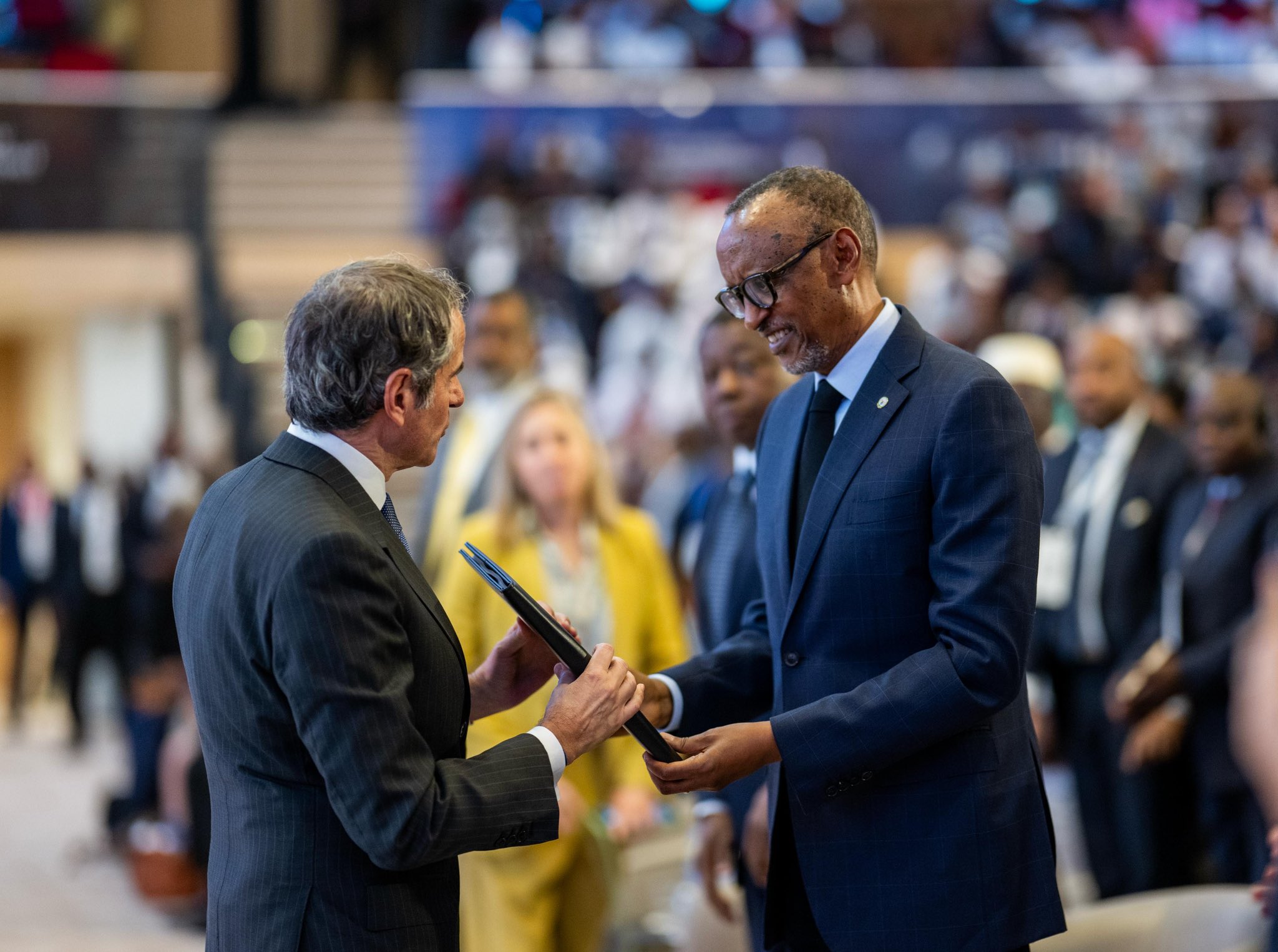
IAEA Director General formally handed over the Phase 1 Integrated Nuclear Infrastructure Review evaluation report to President Paul Kagame.
A key moment at NEISA 2026 came when the IAEA Director General formally handed over the Phase 1 Integrated Nuclear Infrastructure Review evaluation report to President Paul Kagame.
The report confirmed Rwanda’s successful completion of the first phase of its nuclear infrastructure readiness assessment, marking a foundational step in its long-term energy strategy.
The milestone places Rwanda among a small but growing group of African countries progressing through structured international nuclear development frameworks.
Grossi described the achievement as evidence of institutional seriousness and long-term planning, reinforcing Rwanda’s position as an emerging hub for innovation and advanced infrastructure.
The summit reflects a transition in Africa’s nuclear discourse. The debate is no longer centered on feasibility, but on implementation capacity, institutional readiness, and financing architecture. Thus, Africa’s nuclear moment is no longer a theory; it is a structured transition already underway.