


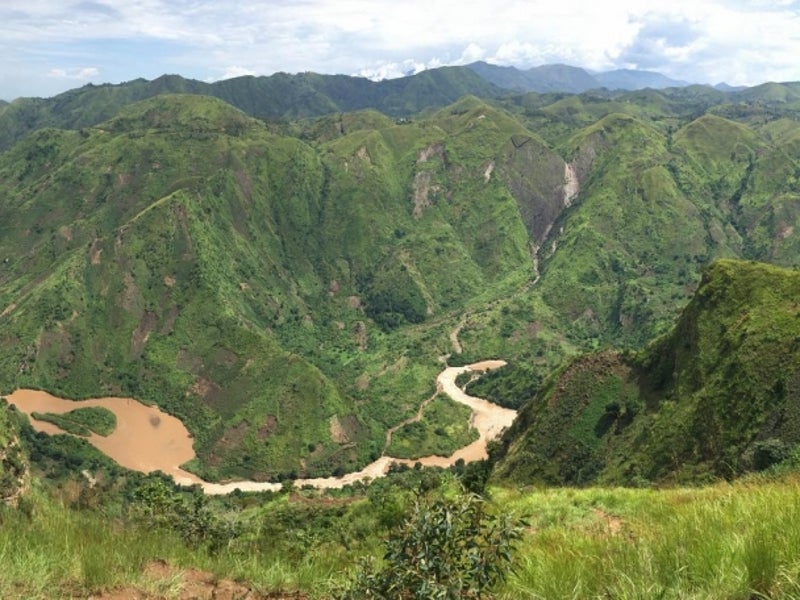
Ruzizi III, the latest hydropower dam on River Rusizi, is moving slowly despite all that is necessary being available
The long-delayed Ruzizi III hydropower project, a flagship regional energy initiative shared by Rwanda, the Democratic Republic of Congo (DRC), and Burundi, is facing renewed uncertainty as political disagreements between Kinshasa and its regional partners stall progress on key implementation decisions.
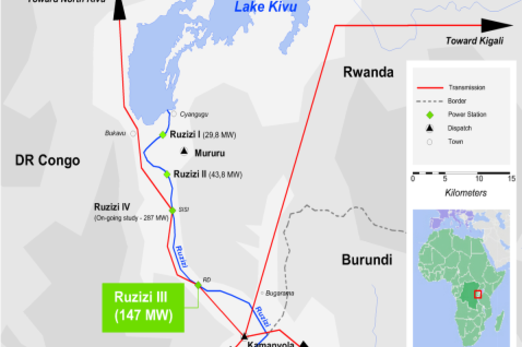
The 206-megawatt project, planned on the Ruzizi River along the border between eastern DRC, Rwanda and Burundi, is designed to significantly boost electricity supply in the Great Lakes region. It is expected to nearly double Burundi’s generation capacity, raise Rwanda’s electricity supply by roughly a quarter, and provide critical baseload power to eastern DRC, where access to the national grid remains limited.
Despite its technical and financial readiness, the project has repeatedly been delayed for more than a decade, with officials and diplomatic sources pointing to political disagreements, security concerns in eastern Congo, and sovereignty sensitivities as key obstacles.
At the center of the latest impasse is Kinshasa’s resistance to certain security and governance arrangements tied to the project’s implementation, including proposals for enhanced security coordination around the construction zone in South Kivu.
One of the most sensitive proposals involves the creation of a Demilitarised Zone (DMZ) around the project site. This would be a specially designated buffer area where armed forces and armed groups are restricted or excluded entirely, with only approved security personnel allowed limited access to protect infrastructure, workers, and equipment.
Supporters say it is essential to guarantee investor confidence in a conflict-prone border region, while critics in Kinshasa view it as a potential limitation on national sovereignty.
While donors and private investors see such measures as necessary safeguards in a volatile region affected by armed group activity, Congolese authorities have raised concerns over sovereignty and external influence.
The project is structured as a public-private partnership under Ruzizi III Energy Limited, a special purpose vehicle led by Industrial Promotion Services (IPS), linked to the Aga Khan Fund for Economic Development, and Norway-linked energy investor SN Power, now associated with Scatec and TotalEnergies interests. Governments of the three participating countries hold minority stakes.
Financing for the estimated $650–800 million project is backed by major multilateral institutions, including the African Development Bank, World Bank, European Investment Bank, KfW, and Agence Française de Développement, reflecting its positioning as both an infrastructure and regional integration project.
However, despite this strong financial backing, key milestones have repeatedly slipped. Procurement processes have been postponed multiple times, while construction timelines—originally expected to begin several years ago—have now shifted toward the end of the decade, with commissioning increasingly projected around 2030.
Diplomatic engagement has intensified in recent months, with external partners, including U.S.-backed regional peace initiatives, encouraging renewed coordination between the three countries. Private stakeholders have also stepped up consultations in Kinshasa in an effort to unblock outstanding political and security concerns.
The Ruzizi III project is widely viewed as a cornerstone of regional energy integration in the Great Lakes, forming part of a cascade system following the existing Ruzizi I and II dams. Once completed, it is expected to generate more than 1,150 GWh annually, reducing reliance on expensive thermal generation and improving electricity access for millions of people.
Yet its progress remains closely tied to the fragile political and security dynamics of eastern Congo. For investors and development partners, the project illustrates both the promise and the difficulty of cross-border infrastructure in conflict-affected regions, where technical feasibility often collides with questions of trust, sovereignty, and security control.
As discussions continue, the future of Ruzizi III is increasingly seen not only as an energy project, but as a test case for whether the Great Lakes region can translate political agreements into shared economic infrastructure—or whether long-standing tensions will continue to delay one of Africa’s most strategically significant hydropower schemes.
