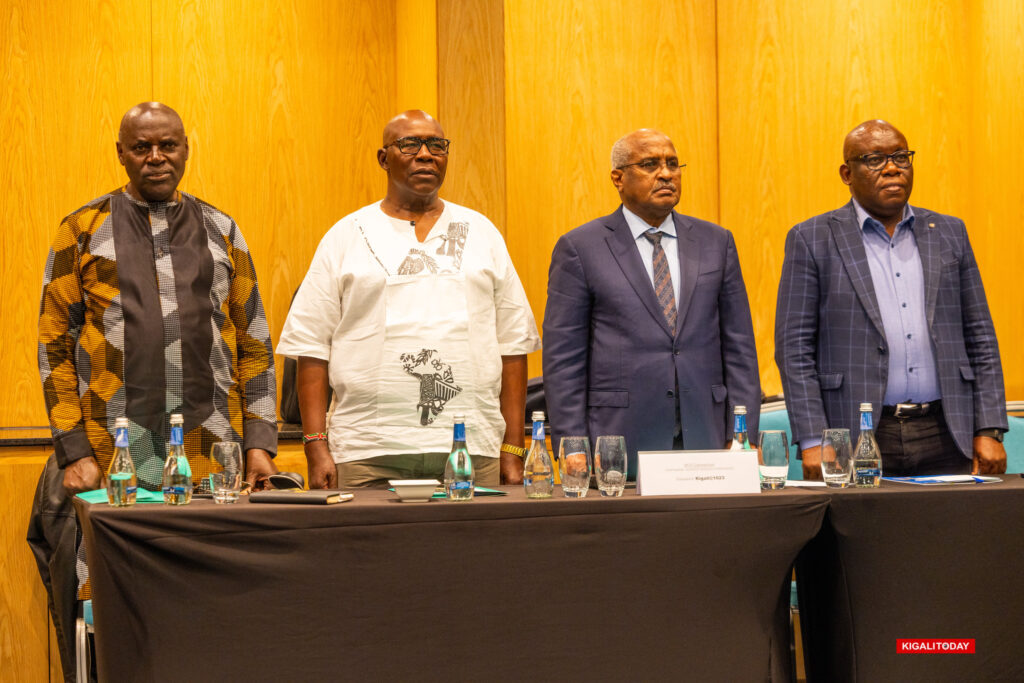
Officials at the launch of national consultations in Rwanda on the drafting of a constitution for the proposed East African political confederation.
KIGALI – If you travel from Rwanda to Tanzania today, you will need to exchange your money from francs to Tanzanian shillings.
Travel onward to Kenya, Uganda, Burundi or South Sudan and you will likely do it again.
More than two decades after East African countries revived regional integration, some of the bloc’s key ambitions such as the monetary union and a single currency remain elusive. Efforts continue to remove barriers that limit the full benefits of a common market.
Yet this week in Kigali, East African leaders and constitutional experts began discussing how the region could eventually be governed under a political confederation despite the unfinished integration goals.
The EAC has launched national consultations in Rwanda on the drafting of a constitution for the proposed East African political confederation, a transitional stage toward deeper political integration in the region.
The consultations, which will be held in Kigali, Rubavu, Huye and Nyagatare districts are designed to gather citizens’ views before constitutional experts begin drafting the document.
Why Talk Politics Now
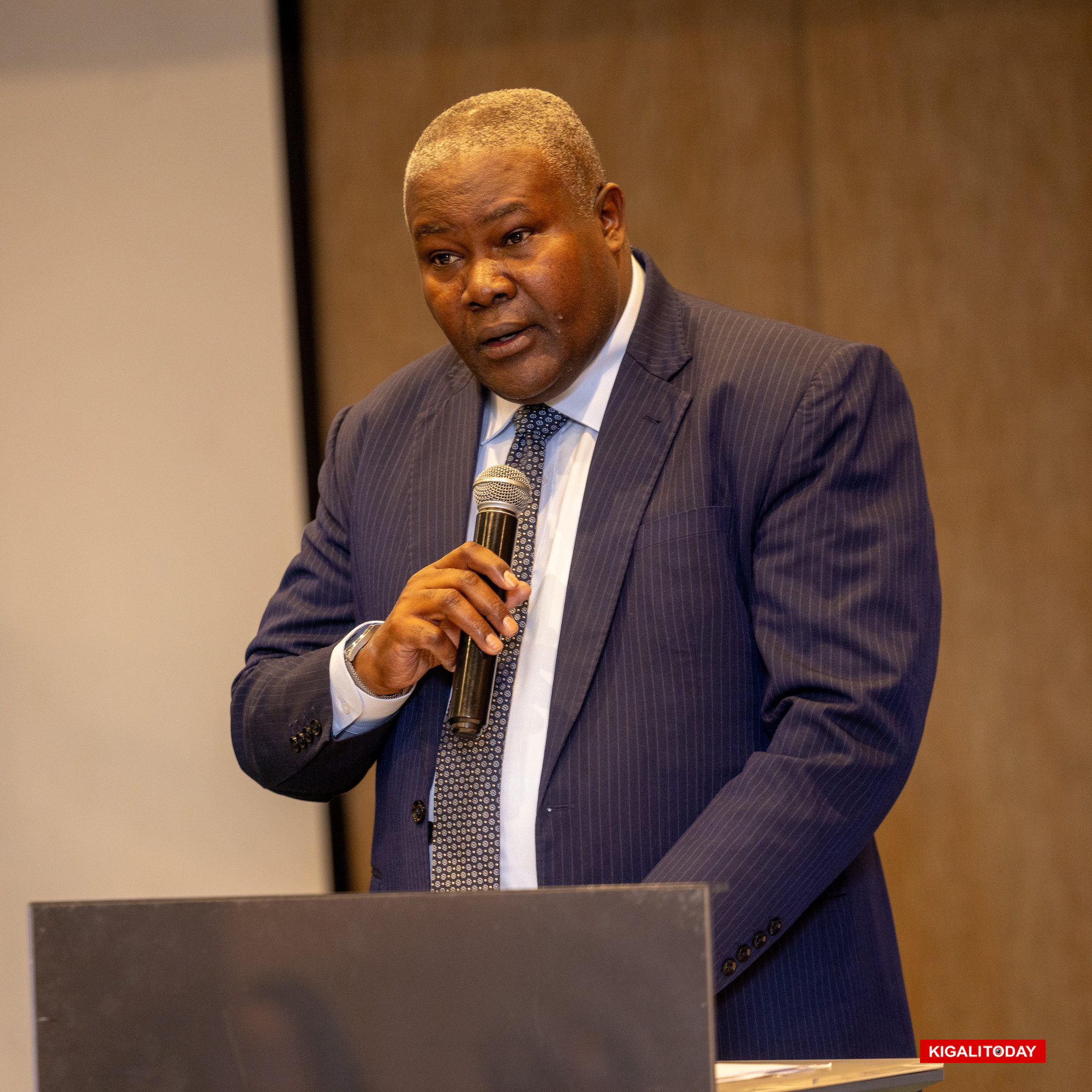
EAC Secretary General Ambassador Stephen Mbundi speaking at the launch.
At first glance, the move may seem unusual.
The EAC’s integration roadmap envisioned four stages including the customs union, the common market, the monetary union and ultimately political federation.
While the first two have made significant progress, the monetary union remains under implementation, with the bloc targeting 2031 for its achievement.
But EAC leaders argue that political integration cannot wait until every economic target has been completed.
“The process we are undertaking now is aimed at realizing the fourth pillar, that is political integration, and seeks to provide a clear framework for the governance and the operation under the Political Confederation,” EAC Secretary General Ambassador Stephen Mbundi said.
In reality, the political conversation has been years in the making.
Previous consultations across East Africa found that many citizens and stakeholders were not ready for an immediate political federation.
Those concerns led EAC Heads of State in 2017 to adopt a political confederation as a transitional model instead of moving directly toward a federation.
The current consultations are therefore part of a longer effort to build consensus before any major political changes are considered.
Not One Country
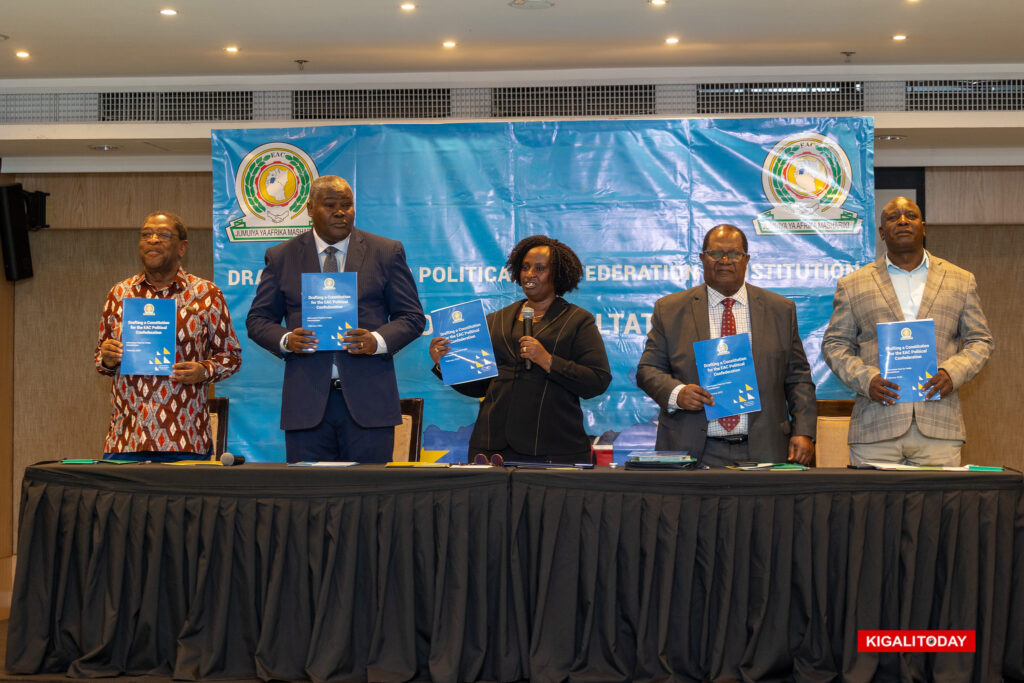
Minister of State for Foreign Affairs and regional cooperation, Dr. Usta Kayitesi (C) launched the consultations on Monday in Kigali.
One of the biggest misconceptions surrounding the process is that it seeks to create a single East African state.
The proposed confederation would not replace existing countries. Partner states would retain their sovereignty and remain independent nations while cooperating more closely in agreed areas such as governance, peace and security, and foreign policy.
For supporters of the process, the goal is to gradually strengthen cooperation while allowing citizens to determine how far integration should go.
“This is not just a mere exercise; it is a requirement by the Treaty. The treaty is very clear that the community is people-centered and therefore all citizens must be consulted when we are about to make a very major decision on our integration,” Mbundi said. ”
More Than an Economic Project
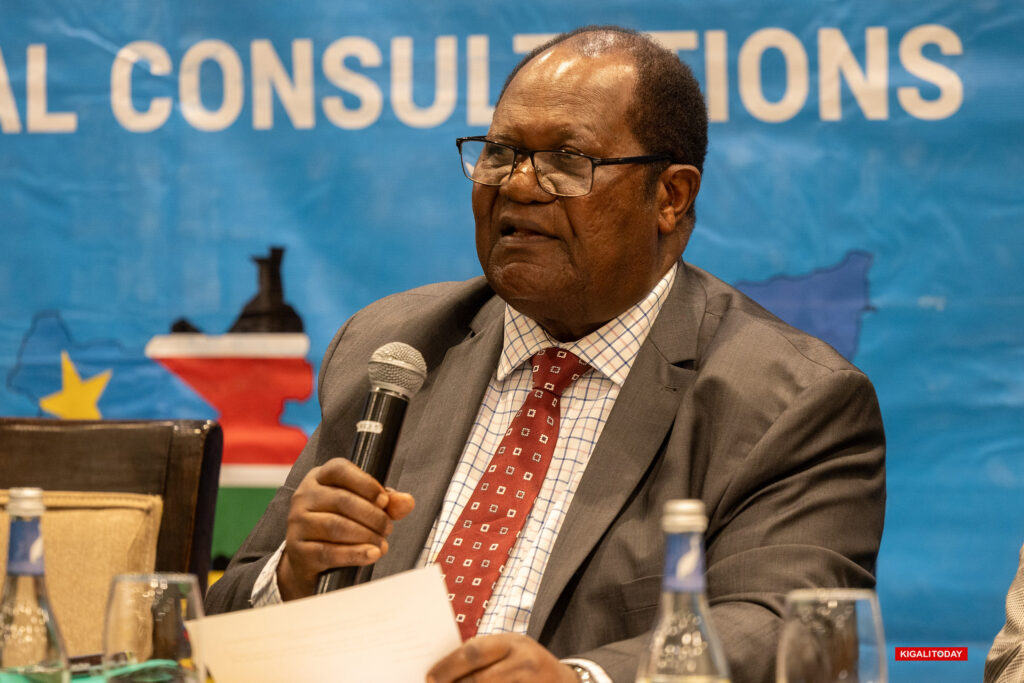
Former Ugandan Chief Justice Benjamin Odoki is the chairperson of the constitutional experts’ team drafting the proposed constitution.
Former Ugandan Chief Justice Benjamin Odoki, the chairperson of the constitutional experts’ team drafting the proposed constitution says the push for a political confederation is about more than completing the next stage of integration.
He described the confederation as a transitional step toward the long-term vision of a political federation, arguing that East Africa must prepare gradually for deeper cooperation.
“The Constitution for the political confederation is supposed to be a transition to the ultimate goal of establishing a free and independent political federation of East Africa,” he said.
Odoki also linked political integration to growing security concerns across the region, arguing that stronger regional institutions could help East African countries respond more effectively to common threats.
His remarks offer a glimpse into why EAC leaders are continuing discussions on political integration as an attempt to begin building the political and security foundations of a more united region.
Building the Next Chapter
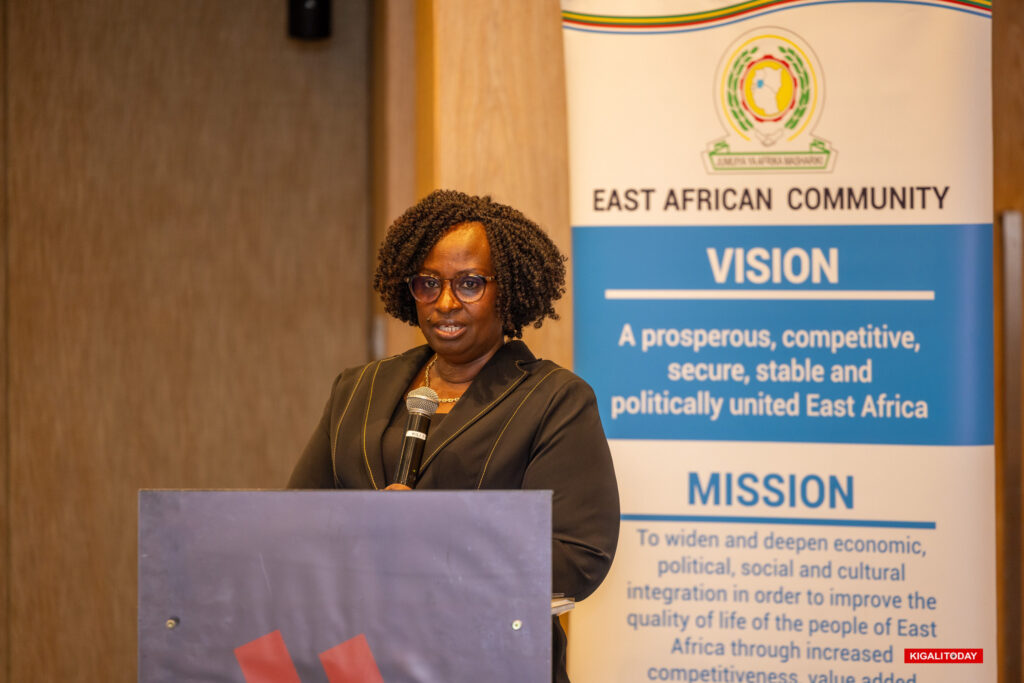
Minister of State for Foreign Affairs and regional cooperation, Dr. Usta Kayitesi.
Launching the consultations, Minister of State for Foreign Affairs Dr. Usta Kayitesi said regional integration had already expanded opportunities for trade, investment and movement across borders.
“A more integrated East Africa can create larger markets for businesses, more opportunities for our youth, stronger institutions for our citizens, and a greater voice for our region on continental and global issues,” she said.
She stressed that citizens must remain at the centre of the process.
“The future of our region cannot be shaped by governments alone. It must be informed by the views, aspirations, and expectations of the citizens whose lives will be shaped by the decisions we make.”
East Africa’s leaders no longer see integration as a process in which one stage must be completely finished before discussions on the next can begin.
So far, discussions on how the region could eventually be governed under a political confederation have already been conducted in Burundi, Uganda and Kenya.
Establishing a common currency may take years. Designing shared political institutions could take even longer. For the EAC, that is precisely why the conversation about a political confederation is underway now.