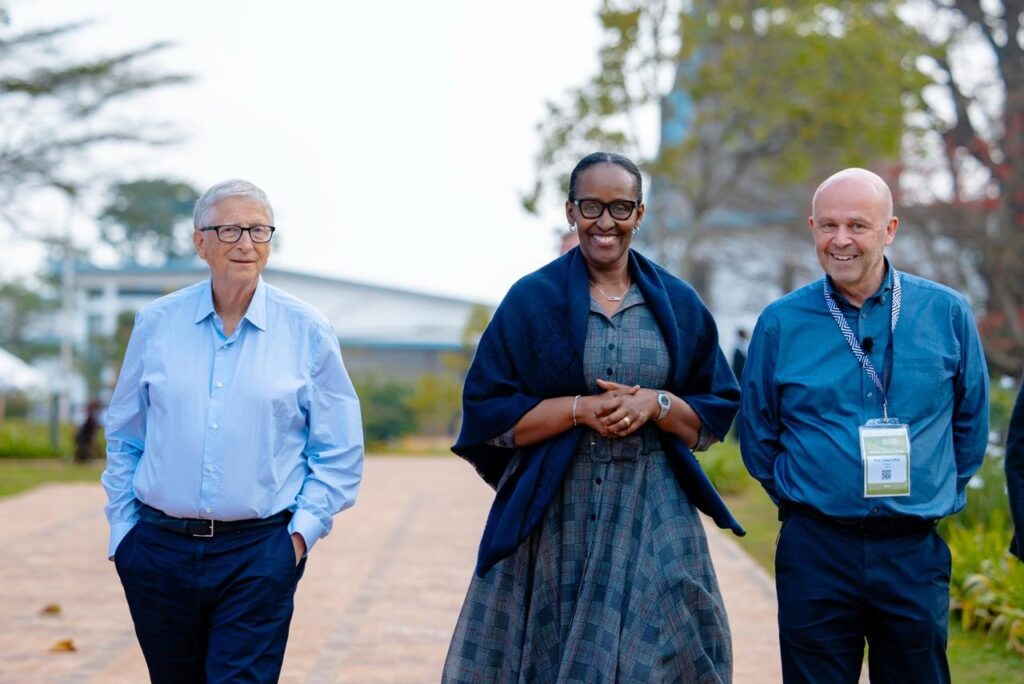
First Lady Jeannette Kagame arrives for the inaugural Paul Farmer Butaro Dialogues in the company of American philanthropist Bill Gates and Prof. Phil Cotton, the VC of UGHE.
BUTARO, Rwanda – Despite decades of medical breakthroughs, women continue to die from complications that doctors already know how to prevent, First Lady Jeannette Kagame said on Friday, arguing that the world’s biggest obstacle is no longer scientific discovery but making proven healthcare available to every mother.
Opening the inaugural Paul Farmer Butaro Dialogues on Health Equity and Innovation, Mrs. Kagame said reducing maternal and newborn deaths now depends less on finding new treatments than on ensuring existing solutions reach every community, regardless of geography or income.
“Our greatest challenge is no longer discovering solutions. The solutions already exist. Our challenge today is operational. It is translating proven interventions into universal delivery,” she said.
Her message shifted the discussion from medical innovation to implementation, urging policymakers, researchers and development partners to focus on closing the gap between evidence and everyday healthcare.
She cited interventions whose effectiveness has long been established, including rapid treatment for postpartum haemorrhage, magnesium sulphate for eclampsia, kangaroo mother care for premature babies and improved maternal nutrition.
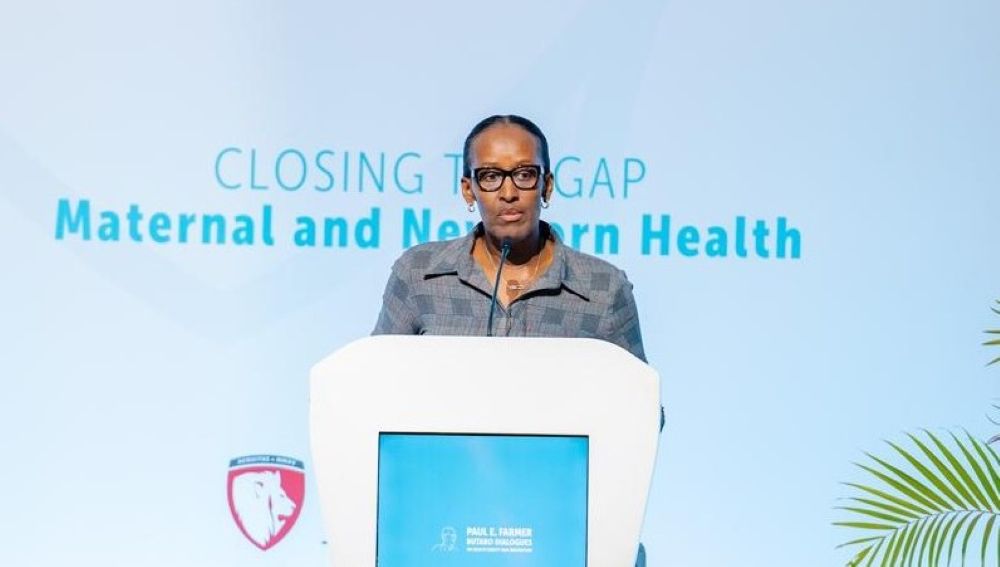
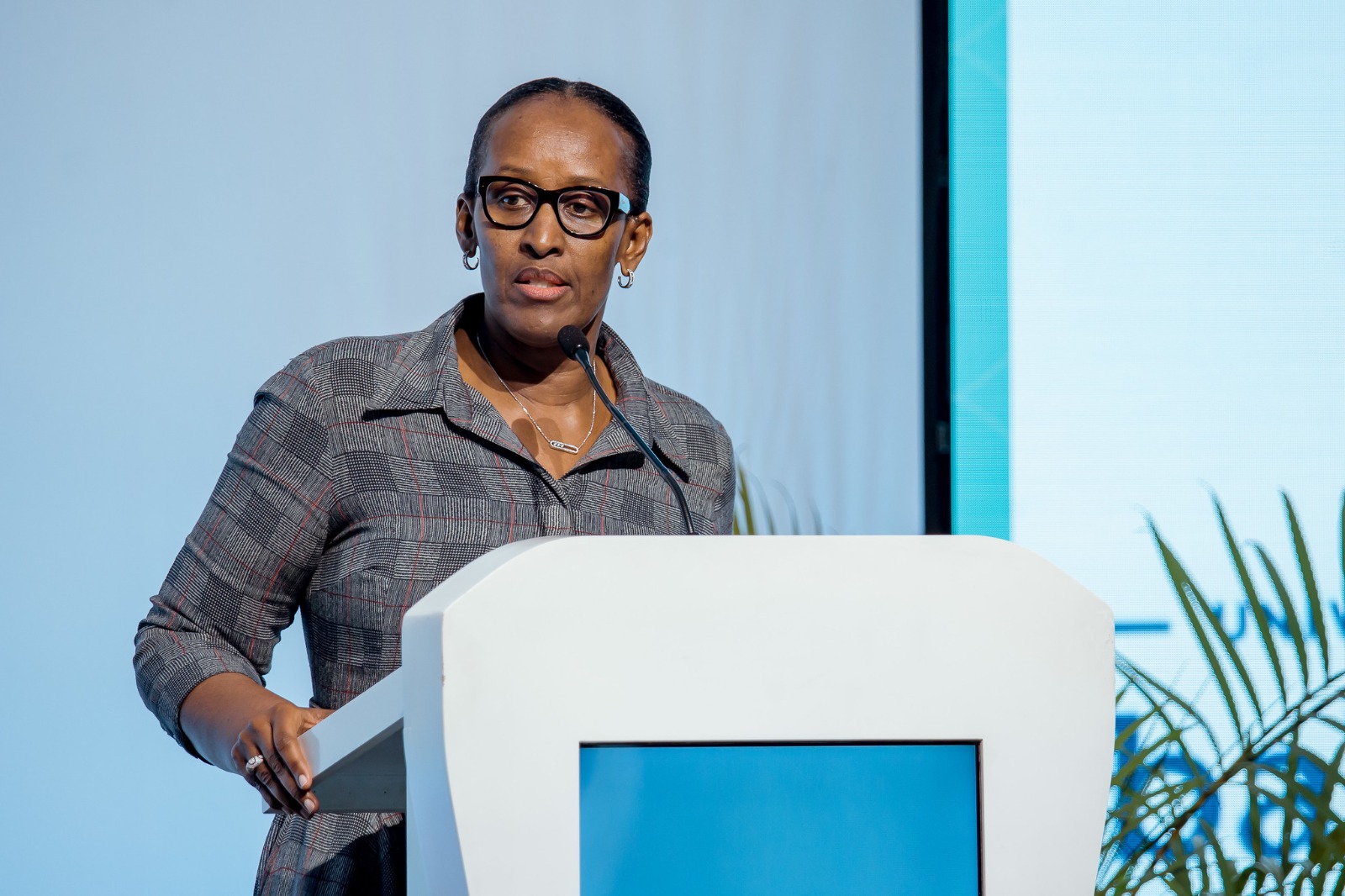
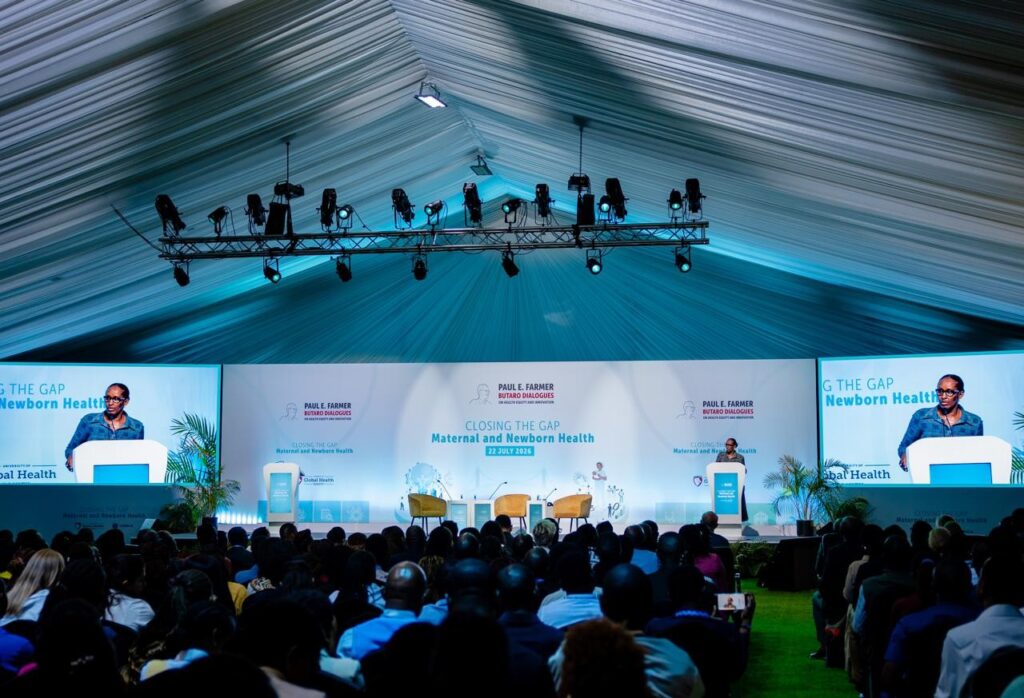
The First Lady speaking at the inaugural Paul Farmer Butaro Dialogues on Health Equity and Innovation.
The problem, she said, is that too many of these life-saving measures remain confined to pilot programmes or isolated success stories instead of becoming standard practice across health systems.
“We know the challenges. We know sustainable financing remains insufficient. We know research too often remains confined to journals… We know that innovation takes years to become routine practice, yet we can choose to scale what works without delay.”
Mrs. Kagame said the conversation should no longer centre on discovering the next breakthrough, but on turning scientific evidence into national policy, transforming policy into routine clinical practice, and ensuring quality healthcare reaches women far from major hospitals.
She pointed to Rwanda’s own experience as evidence that sustained political commitment and effective implementation can dramatically improve health outcomes, even in resource-constrained settings.
Over the past three decades, Rwanda has reduced maternal mortality from 1,071 deaths to 149 deaths per 100,000 live births, while deaths among children under five have fallen from 196 to 36 per 1,000 live births
“These achievements were not from abundant resources. They happened because evidence became policy, political will met implementation, primary healthcare was strengthened, and community health workers became trusted partners in care,” she said.
Mrs. Kagame credited Rwanda’s network of community health workers with helping bridge the gap between medical innovation and the families those innovations are designed to serve.
Addressing the health workers directly, she said they deserved to play a greater role in shaping health policy.
“You cannot be mere recipients of conclusions reached in rooms like this. You deserve a seat at the table. You have earned it through years of study and service.”
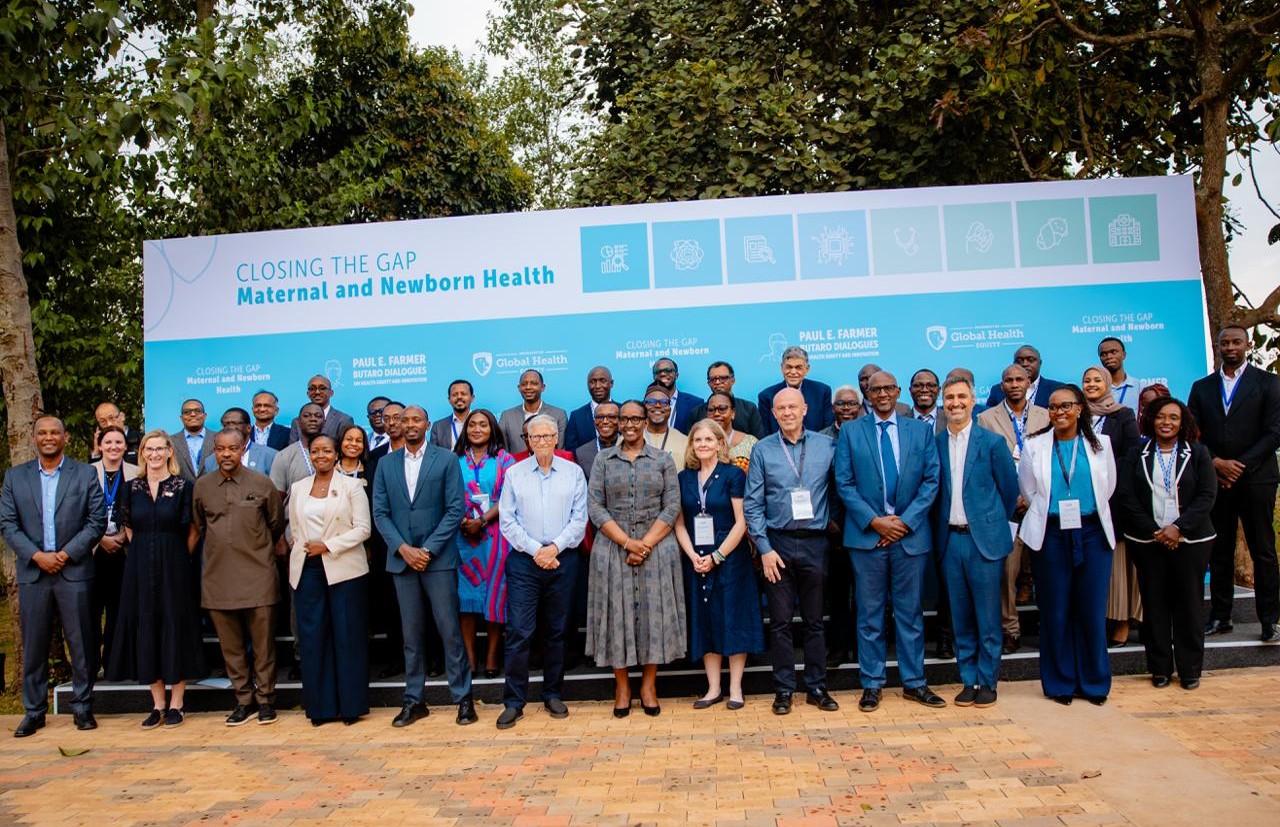
The Paul Farmer Butaro Dialogues, named after the late American physician and global health pioneer, bring together researchers, policymakers, clinicians and development partners to strengthen collaboration on maternal and child health.
Mrs. Kagame said the forum’s success would ultimately be judged not by the quality of its discussions but by measurable improvements in people’s lives.
She closed with a reminder that preventable maternal deaths are no longer primarily a medical problem, but a failure to apply knowledge the world already possesses.
“When a woman dies while giving life, it’s a dark reminder that somewhere, a health system failed to deliver what is already possible. This is a moral failure. But it’s a moral failure we can correct,” she said.
Her message was clear: the next revolution in maternal healthcare will not come from discovering new medicines or technologies, but from ensuring the life-saving solutions already available reach every woman who needs them.