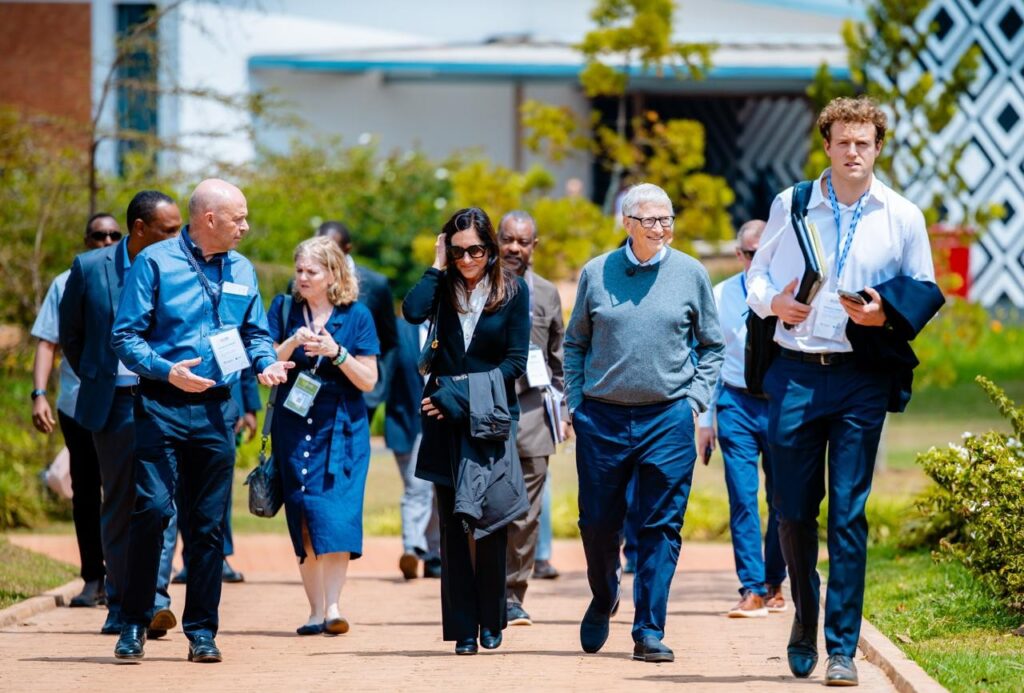
Bill Gates and his delegation arrive at the University of Global Health Equity (UGHE) on Wednesday.
BUTARO – For decades, the world’s biggest medical breakthroughs have largely been developed in wealthy countries before gradually reaching poorer nations. However, Bill Gates believes the rise of artificial intelligence presents Africa with a rare opportunity to change that pattern.
Speaking at the inaugural Paul E. Farmer Butaro Dialogues on Health Equity and Innovation at the University of Global Health Equity (UGHE) on Wednesday, Gates argued that Africa should become one of the first places where AI is used to solve healthcare challenges.
The American philanthropist and Microsoft co-founder expressed conviction that instead once again waiting for innovations created elsewhere, the continent has the potential to change the way global health works.
“If we let things take their normal course, AI, like all advanced tools, will be in the rich countries… But that would be a great injustice,” he said, adding that the world’s most overstretched healthcare workforce is in Africa where technology could save countless lives.
For years, Africa has carried some of the world’s heaviest disease burdens while facing persistent shortages of healthcare workers and limited financial resources.
Gates said these realities make the continent one of the places where artificial intelligence could have the greatest impact, particularly by supporting doctors, nurses and community health workers who are often overwhelmed by demand.
Rather than viewing Rwanda as an exception, Gates presented it as an example of what is possible.
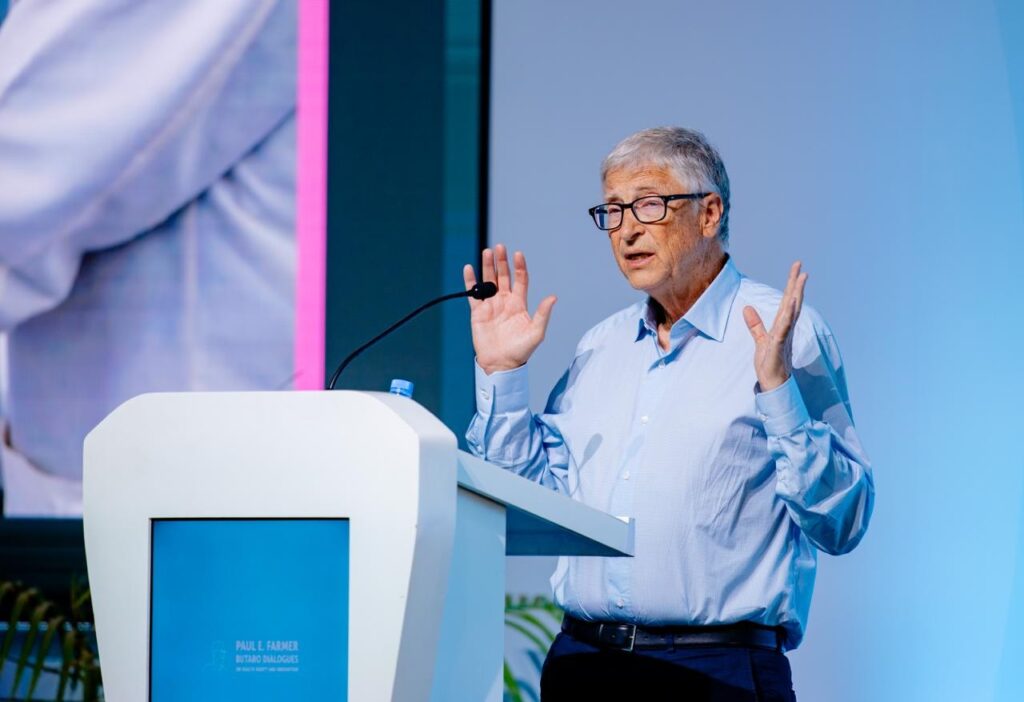
Bill Gates addressing guests at the University of Global Health Equity (UGHE).
During his visit, he toured the National Health Intelligence Centre, where digital platforms are already helping authorities monitor health services and make better use of data.
He said those systems provide the foundation for integrating artificial intelligence into healthcare and revealed that Rwanda is already working with the Gates Foundation and technology partners to explore practical AI applications in the health sector.
His optimism comes at a difficult moment for global health. Many donor countries are scaling back aid budgets, forcing governments across Africa to stretch already limited resources.
Gates warned that these funding cuts threaten to reverse years of progress, noting that the world recently recorded its first increase in childhood deaths since the beginning of this century, with many of those additional deaths occurring in Africa.
Against that backdrop, he said the challenge facing global health is no longer simply discovering new medicines or developing new technologies. The greater test is making sure proven innovations reach the people who need them most.
That message echoed the thinking behind the newly launched Paul E. Farmer Butaro Dialogues.
UGHE Deputy Vice Chancellor Prof. Abebe Bekele said the forum was created on the belief that conversations about the future of global health should happen closer to the communities where health inequities are most visible.
He noted that the world already possesses remarkable scientific knowledge and continues to produce breakthroughs in artificial intelligence, digital health and medical research.
The bigger challenge, he said, is translating those discoveries into national policies, medical education and routine healthcare so they improve the lives of ordinary people.
The dialogue is named after the late physician and global health pioneer Paul Farmer, whose work in Rwanda and other low-income countries focused on expanding access to quality healthcare for communities often left behind.
Gates, a longtime friend of Farmer, said one lesson from their years of working together continues to shape his own approach to global health.
“He always believed that where you live should never determine if you live,” Gates recalled.
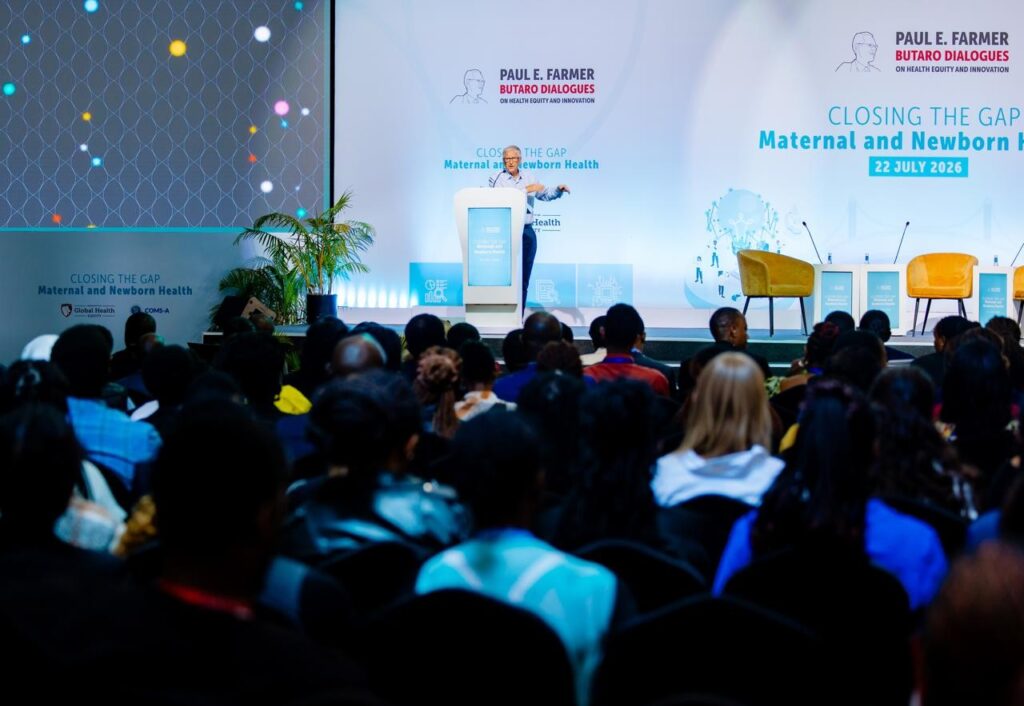
That philosophy, he suggested, should guide the deployment of artificial intelligence as much as it guided previous advances in vaccines, diagnostics and medicines.
In his view, Rwanda demonstrates what is possible when governments invest consistently in primary healthcare.
Child mortality and maternal deaths have each fallen by more than 80 percent since the early 2000s, achievements Gates described as evidence that strong health systems can deliver extraordinary results even with limited resources.
The emergence of artificial intelligence presents a new test for the global health community. It can either reinforce the inequalities that have long defined access to medical innovation, or help narrow them by reaching the communities that have traditionally been last in line.
Africa should not spend another generation waiting for the future of healthcare to arrive. If the technology is capable of saving lives anywhere, Gates said, it should be deployed first where the need is greatest.