



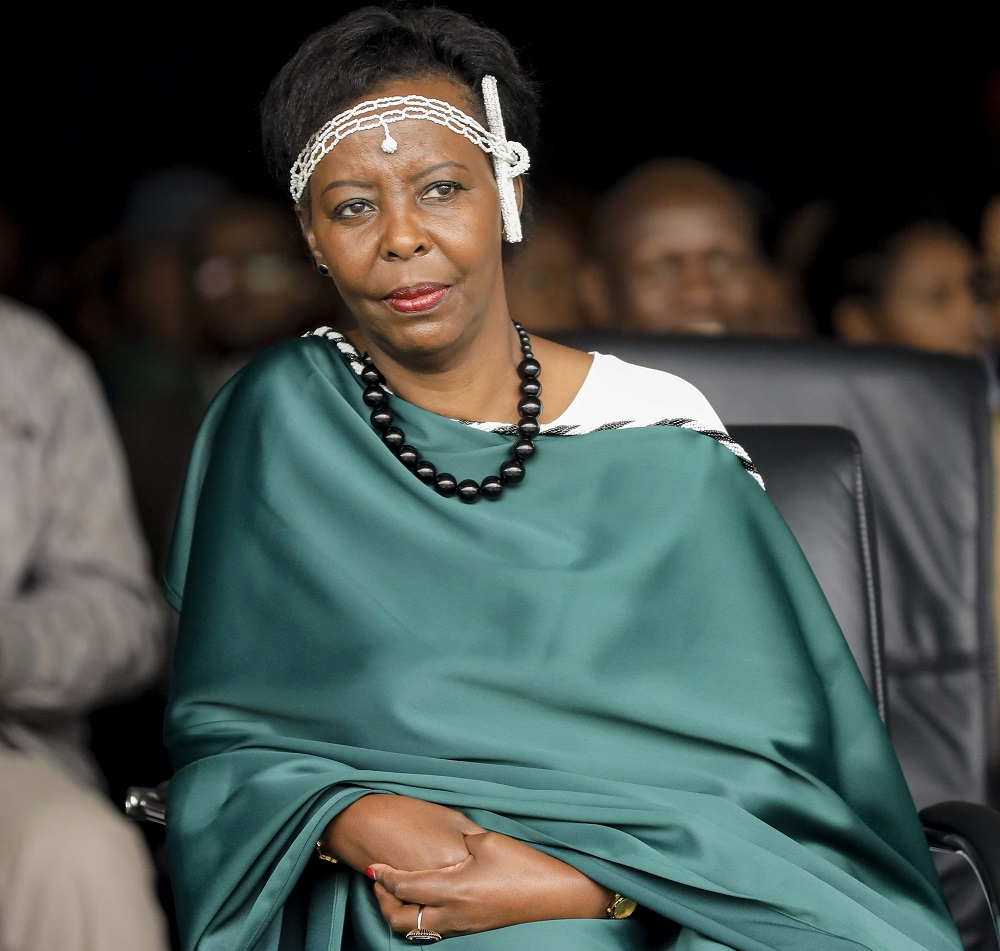
Here, in 2024. Louise Mushikiwabo attends the Kwita Izina gorilla naming durinh which she also named a baby gorilla
PARIS — Louise Mushikiwabo, the Rwandan diplomat seeking an unprecedented third term as Secretary General of the Organisation internationale de la Francophonie (OIF), presented herself on Tuesday as the leader best positioned to steer the 93-member French-speaking organization through an era of geopolitical turbulence, arguing that continuity—not disruption—is what the institution needs.
Addressing foreign ministers gathered for an extraordinary ministerial conference ahead of elections later this year, Mushikiwabo offered an expansive defense of her seven-year record while laying out an ambitious vision for the next four years.
“I want to continue serving you,” she said. “I love what I do, and this is a good moment for our organization.”
Unlike many re-election campaigns, Mushikiwabo made no reference to any competing candidates. Instead, she repeatedly stressed that the priorities she outlined would remain essential “regardless of who leads the organization,” presenting herself less as a politician seeking office than as the custodian of reforms already underway.
At the heart of her message was a pledge to transform La Francophonie into “a more influential, more united and better governed” institution capable of responding to global instability while remaining relevant to ordinary citizens.
Since taking office in 2019, Mushikiwabo said, the organization has undergone significant restructuring. She highlighted annual external certification of the OIF’s accounts since 2019, a reduction of cooperation programmes from 49 to 20 to improve effectiveness, and a decentralization strategy that shifted roughly half of those projects closer to member states through regional offices.
She also noted that the OIF expanded its diplomatic presence by opening new regional representations in Quebec, Beirut and Tunis, arguing that the reforms have modernized the institution as it entered its second half-century.
A Changing World
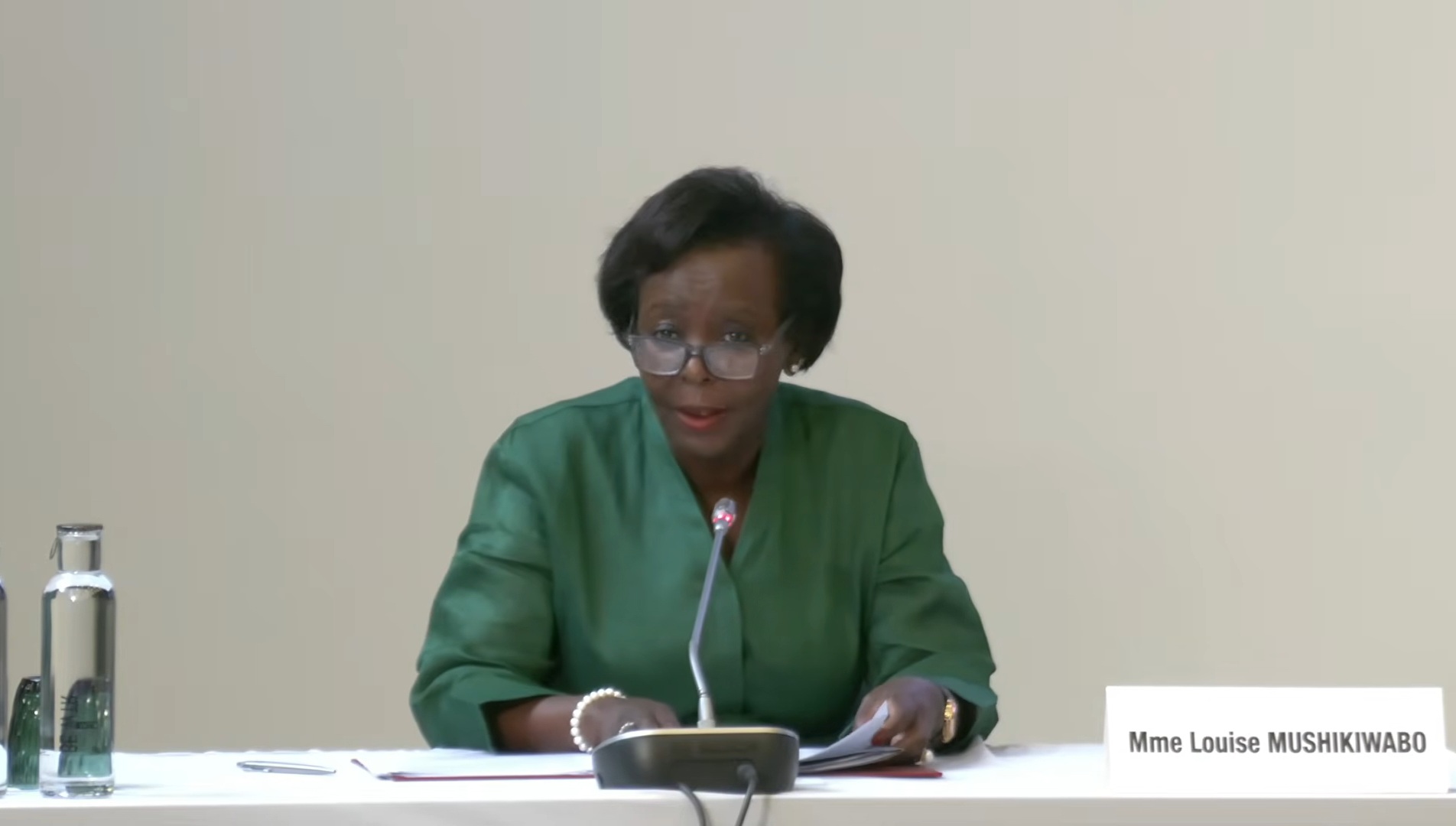
Here speaking on Tuesday to La Francophonie Foreign Ministers
Mushikiwabo framed her candidacy against what she described as an international system under unprecedented strain.
She cited overlapping crises—from armed conflicts and climate change to democratic erosion, disinformation and shrinking financial resources for multilateral organizations—as evidence that traditional international institutions must adapt quickly.
Rather than convening foreign ministers only once a year, she proposed more frequent consultations to allow the OIF to respond rapidly to changing political realities and remain closely aligned with the priorities of member states.
One notable element of her vision was a shift in how La Francophonie handles countries experiencing unconstitutional changes of government.
Instead of relying primarily on suspensions and sanctions, she defended an approach based on continued dialogue, regular monitoring and engagement with transitional authorities while remaining faithful to the organization’s democratic principles established under the Bamako Declaration.
The goal, she argued, is to preserve influence rather than isolate governments undergoing political crises.
No Mention of Rwanda-DRC Tensions
Despite being Rwanda’s former foreign minister and speaking at a time of heightened regional tensions in eastern Democratic Republic of Congo, Mushikiwabo made no reference to the conflict between Rwanda and the DRC.
She likewise avoided commenting on France, despite the country’s central historical role within La Francophonie.
Instead, she emphasized the organization’s role as a bridge between regions, cultures and political systems, arguing that the OIF’s strength lies in bringing together countries with divergent interests around common values.
“I have sought to reduce the North-South divide that too often creates sterile tensions in multilateral diplomacy,” she said, describing the organization’s diversity as its defining characteristic.
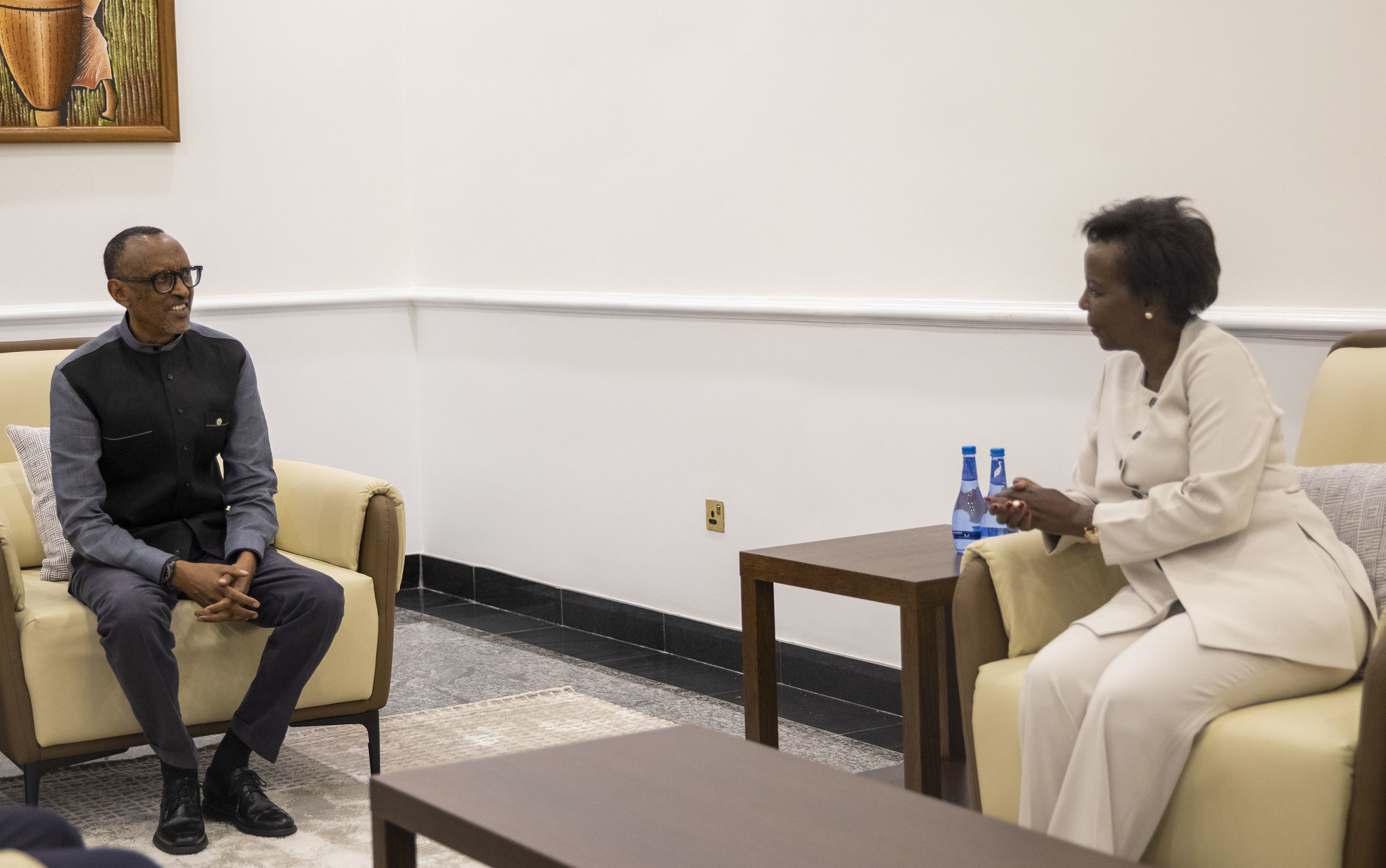
Here, on a 2022 visit to Rwanda during which she met President Paul Kagame. Despite her global schedule, she is however a regular visitor back home
Louise Mushikiwabo, Rwanda’s former foreign minister and the incumbent Secretary General of the Organisation internationale de la Francophonie (OIF), is seeking a third four-year term during the Francophonie Summit in Phnom Penh, Cambodia, on November 15–16, 2026.
She made her case during a historic candidates’ hearing before OIF foreign ministers in Paris on June 30, the first such public audition in the organization’s history.
Mushikiwabo faces three challengers: Juliana Lumumba, widely known because of being dsughter of DR Congo independence leader Patrice Lumumba, Coumba Bâ of Mauritania and former Romanian Prime Minister Dacian Cioloș.
In her address, Mushikiwabo avoided mentioning her rivals, the Rwanda-DRC conflict or France, instead presenting herself as an experienced reformer focused on strengthening the OIF through artificial intelligence, youth employment, economic cooperation, democratic dialogue and the promotion of the French language.
Artificial Intelligence Takes Center Stage
Perhaps the clearest policy priority of Mushikiwabo’s proposed third mandate is artificial intelligence.
She argued that AI has become both an economic necessity and an issue of national sovereignty, requiring coordinated international action.
During her first mandate, she said, the OIF modernized its digital strategy and launched training programmes for young people in digital professions.
Her second term focused on digital governance and artificial intelligence, including establishing governance initiatives through the organization’s Geneva office.
If re-elected, she pledged to prepare Francophone societies for what she described as the unavoidable AI era, placing particular emphasis on increasing opportunities for girls in artificial intelligence following the Kigali Declaration adopted at the organization’s last ministerial meeting.
She also warned that artificial intelligence is accelerating the spread of disinformation, describing false information as one of the greatest threats facing member states and calling for significantly expanded fact-checking and media literacy programmes.
Defending the French Language
Although the organization increasingly embraces multilingual societies, Mushikiwabo insisted that French itself must remain central to its mission.
She argued that teaching French must become a strategic priority if the language is to avoid losing ground internationally, noting growing demand for French-language education across all five continents.
Responding later to a question from Rwanda’s Foreign Minister OlivierNduhungirehe, she reflected on Rwanda’s own linguistic transformation from a predominantly French-speaking country to one that now officially operates in Kinyarwanda, English, French and Kiswahili.
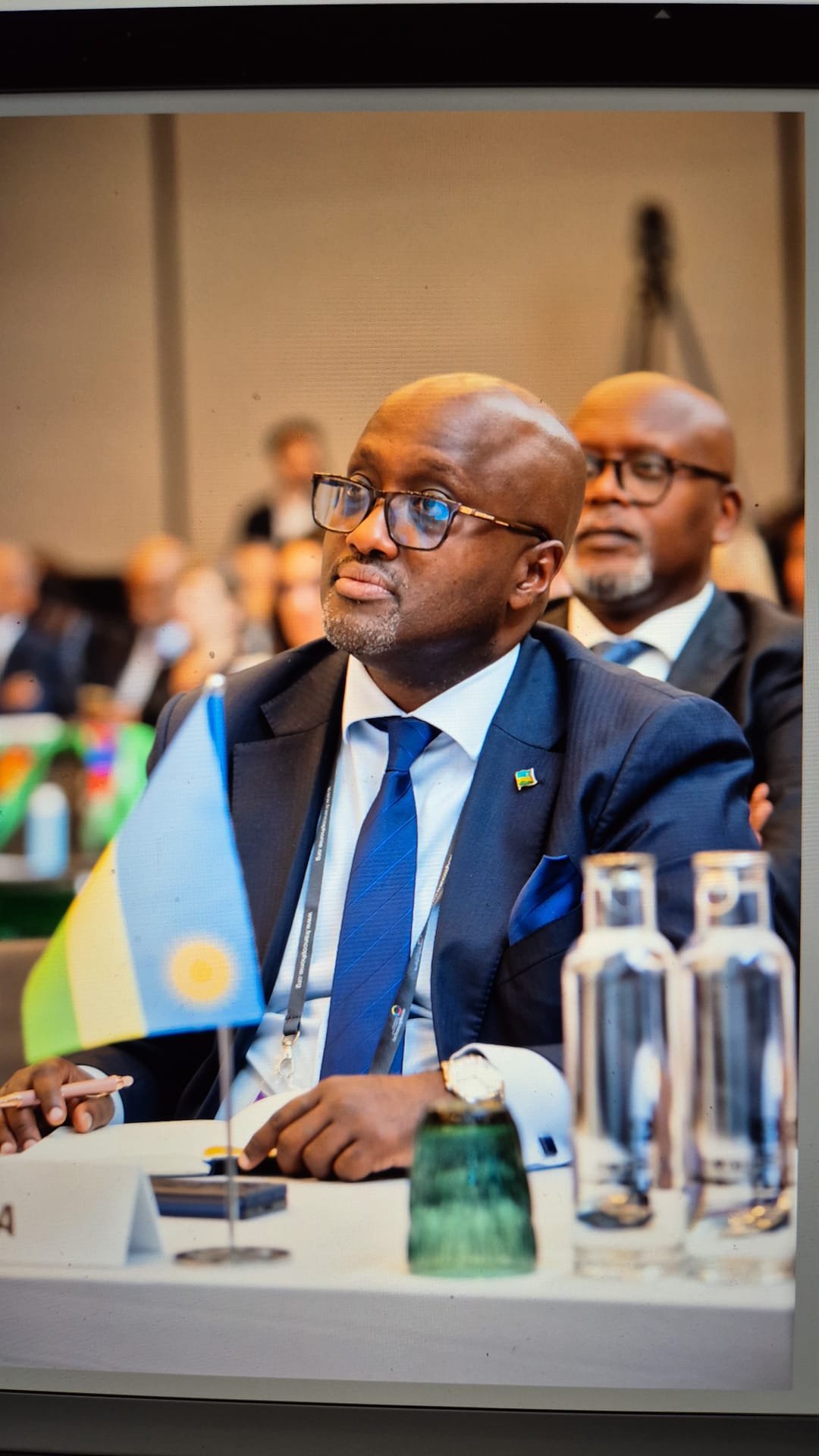
Olivier Nduhungirehe, the Foreign Affairs Minister of Rwanda, attending the session on Tuesday
She praised Rwanda’s adoption of the OIF’s teacher mobility programme, describing it as a model that has since expanded to countries including Ghana, Seychelles and Cambodia.
She also drew comparisons with the Commonwealth, arguing that Francophone countries should invest far more heavily in teacher training and digital learning if French is to remain competitive globally.
Economic Francophonie
Mushikiwabo devoted considerable attention to what she called “economic Francophonie”—the idea that a shared language should create tangible commercial opportunities.
She said economic missions launched in 2022 have already brought together nearly 2,000 companies from 30 member countries, resulting in more than 100 commercial agreements.
Rather than creating new bureaucratic institutions, she argued in response to questions from Vietnam that the OIF should strengthen existing networks connecting businesses, investors, entrepreneurs and regional governments.
Special emphasis, she said, should be placed on helping small and medium-sized enterprises, youth entrepreneurship and investment across the Francophone world.
Youth Employment and Private Financing
Youth employment featured prominently throughout her presentation.
Mushikiwabo said more than 26,000 young people benefited from OIF programmes between 2024 and 2026, with certification rates exceeding 75 percent and more than 40 percent reporting that they had secured employment afterward.
She argued that the challenge now is to dramatically expand those programmes.
She cited a newly signed agreement with the African Development Bank aimed at eventually increasing digital skills training from roughly 20,000 young people to 100,000, beginning in five countries.
To finance that expansion, she said the organization must increasingly attract private-sector funding alongside traditional member-state contributions, pointing to partnerships already established with companies such as TotalEnergies and development finance institutions.
Sahel Departures Regretted
One of the few sensitive political issues Mushikiwabo addressed directly was the departure of Burkina Faso, Mali and Niger from La Francophonie earlier this year.
She described their withdrawal as deeply regrettable but argued that it reflected broader geopolitical dynamics beyond the organization’s control.
The OIF’s doors, she said, remain open should the three founding members decide to return in the future.
A Rwandan Leading a Global Institution
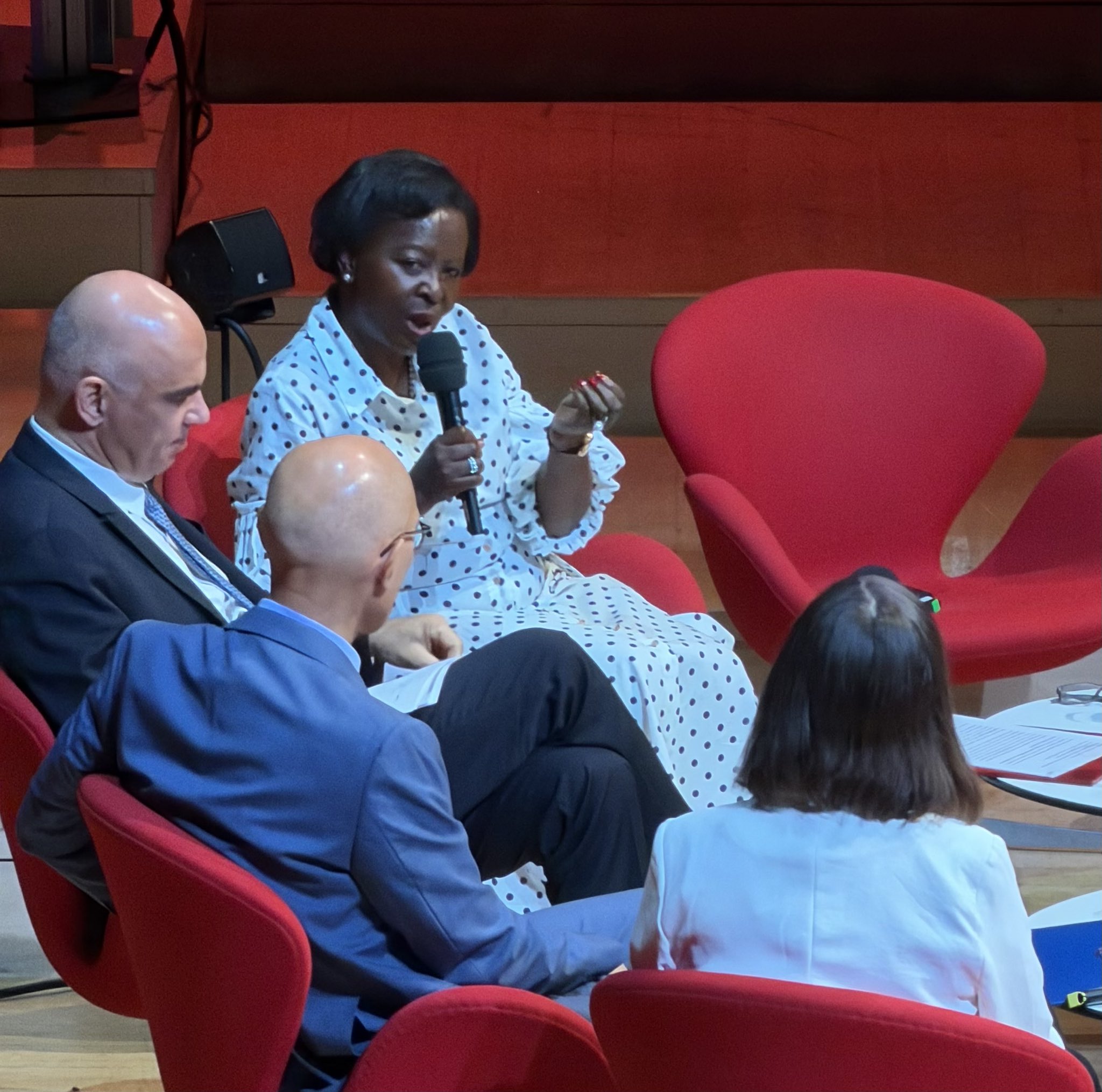
To continue leading La Francophonie, Louise Mushikiwabo has been on charm offensive across the bloc.
Toward the end of her remarks, Mushikiwabo offered a personal reflection on identity.
“I am profoundly African, obviously Rwandan—I haven’t changed,” she said.
She described herself as a “confident Francophone” with multiple identities, arguing that the diversity embodied by both her own background and the organization’s international staff represents La Francophonie’s greatest strength.
If ministers choose to renew her mandate, Mushikiwabo argued, the next four years should be less about reinventing the organization than scaling up reforms already underway—from artificial intelligence and digital governance to economic cooperation, mediation, education and the global promotion of the French language.
Her appeal ultimately rested on a simple argument: that in a period of accelerating global uncertainty, experience has become the organization’s most valuable asset.
