



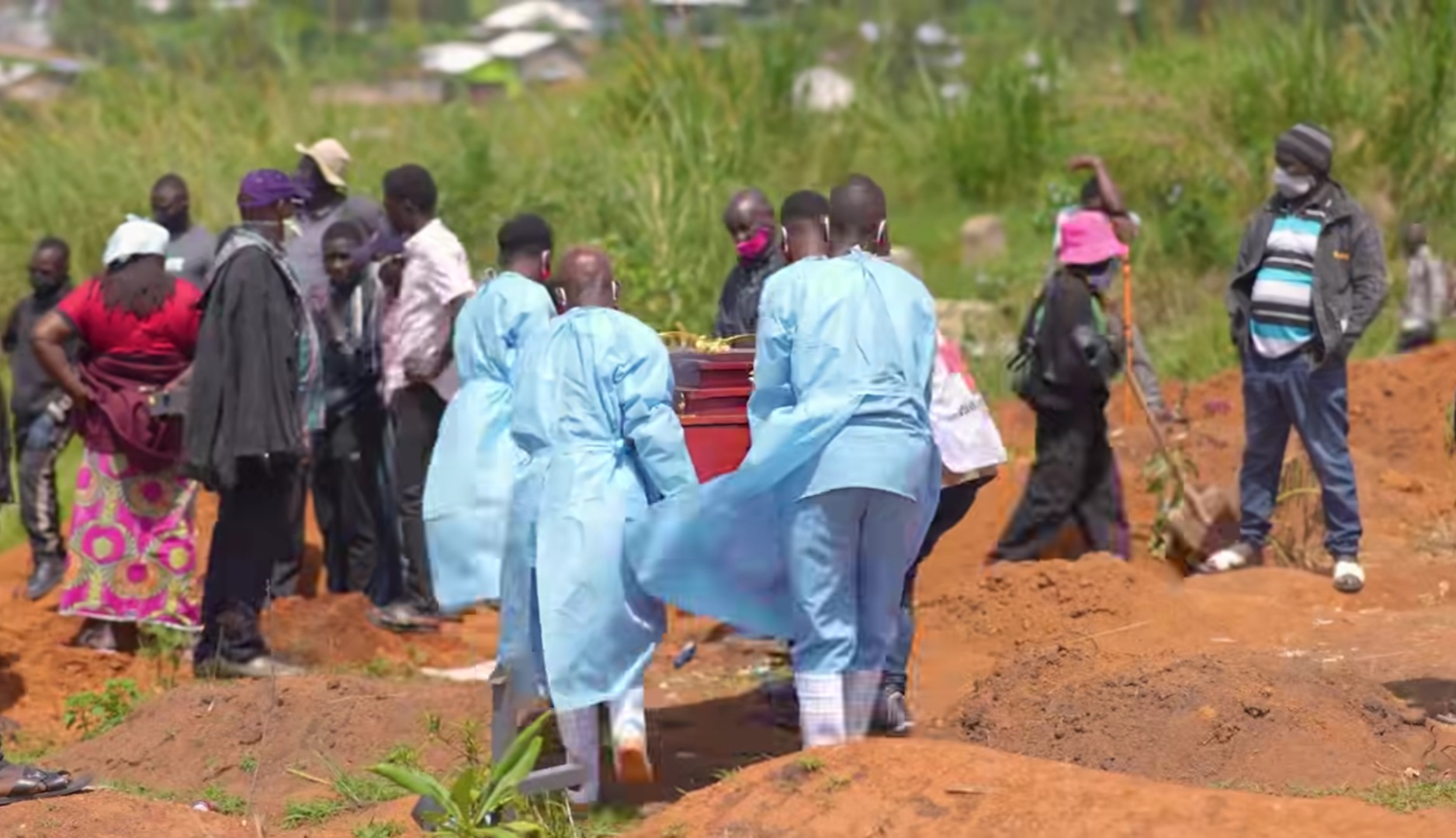
The deadly virus has left communities ravaged, in addition to years of conflict and displacement
Kinshasa – to $700 million has been mobilized for the Democratic Republic of Congo’s worsening Ebola outbreak, but growing concerns over corruption and the management of public funds are raising questions about whether the money will reach the communities and health workers for whom it was raised.
Jean Kaseya, Director-General of the Africa Centres for Disease Control and Prevention (Africa CDC), said $452 million had already been disbursed by donors and made available to implementing partners on the ground.
An additional $242 million announced by the United States on August 5 brought the total mobilized to nearly $700 million, Kaseya said. The United States has described the latest funding as additional support for the Ebola response, preparedness and related humanitarian assistance.
Kaseya disclosed the figures during a live Space discussion on August 19 hosted by Congolese journalist Stanis Bujakera Tshiamala. He said he had personally communicated the $452 million figure to President Félix Tshisekedi during a meeting on August 5.
But the announcement comes against a backdrop of deep public skepticism in Congo over the management of large sums of money.
The country has been hit by a series of high-profile corruption controversies involving public funds and money intended for vulnerable populations. One of the most recent involves the Fund for Reparation and Compensation for Victims of the Illicit Activities of Uganda in the Democratic Republic of Congo, known as FRIVAO.
The International Court of Justice ordered Uganda to pay Congo $325 million in reparations for damage caused during its military intervention in the country. The award included $225 million for damage to people, $40 million for property and $60 million for environmental damage and the loss of natural resources.
Victims who were supposed to benefit from the reparations have, however, complained about the management of the funds. Recent reporting has raised allegations of mismanagement and embezzlement, adding to concerns about whether money intended for victims is reaching them.
That history has inevitably colored the reception of the latest Ebola funding.
There is no evidence that the $452 million already disbursed for the Ebola response has been stolen. The concern is instead about whether the funds will be properly tracked, whether they will reach implementing partners and frontline operations on time, and whether Congolese authorities can demonstrate how the money is being used.
Those questions are particularly pressing because health workers involved in the response have already complained about delayed payments.
Ebola response workers have protested over unpaid compensation for services provided since the beginning of the outbreak, while strikes and operational disruptions have complicated efforts to contain the virus.
Kaseya himself appeared to acknowledge the need for clearer accountability by drawing a firm distinction between Africa CDC’s international role and the Congolese government’s responsibility for what happens inside the country.
“National coordination is the government’s job. And I will not do the government’s job,” Kaseya said.
He explained that Africa CDC had taken responsibility for the high-level international mobilization of resources, including engagement with governments in the United States, Europe and Asia and appeals by the African Union Commission to governments around the world.
But the coordination of those resources inside Congo, he said, belongs to the Congolese government.
Kaseya said Congolese authorities must bring together the implementing partners and ensure that the money is properly deployed on the ground.
The comments come as the Ebola outbreak itself continues to deteriorate.
As of August 18, Congo had recorded 5,208 confirmed Ebola cases and 2,476 deaths, according to figures cited by the U.S. Centers for Disease Control and Prevention. The outbreak has spread across six provinces and 56 health zones.
The outbreak, caused by the Bundibugyo strain, was declared on May 15 and has now become the deadliest Ebola outbreak in Congo’s history. The number of confirmed cases has surpassed the previous national record, while the speed of transmission has raised fears that the epidemic could become one of the largest Ebola outbreaks ever recorded.
The response has been further complicated by armed conflict, displacement, poor infrastructure, mistrust of health authorities and difficulties reaching communities.
The WHO and Africa CDC have warned that response operations are not keeping pace with transmission. Earlier in August, the two organizations called for a stronger community-led response, noting that contact follow-up remained below the level needed to rapidly identify transmission chains.
Funding has also been a moving target.
Africa CDC initially estimated that hundreds of millions of dollars would be required. By late June, Kaseya said the requirement had risen to $1.4 billion, including humanitarian needs, as the outbreak expanded into conflict-affected and displacement areas. At that point, about $910 million had reportedly been pledged, but only 13% had been released. (CIDRAP)
The latest figures suggest that the financial response has since accelerated significantly.
But the central question is increasingly becoming not simply how much money has been pledged, but how much is actually reaching the field and producing results.
That question carries particular weight in Congo, where the public has repeatedly watched large sums associated with war reparations, public programmes and emergency responses become the subject of allegations of mismanagement and corruption.
For the Ebola response, the stakes are unusually high.
Thousands of people are already dead. Health workers are demanding timely payment. Communities in conflict-affected areas remain difficult to reach. And the virus is spreading faster than authorities have been able to contain it.
With $452 million already reportedly disbursed and nearly $700 million mobilized, scrutiny of how the money is managed is therefore likely to intensify.
The credibility of the response will ultimately depend not only on the amount raised internationally, but on whether Congolese authorities can show that the money reaches treatment centres, health workers and affected communities—and that it is spent for the purpose for which donors provided it.
