

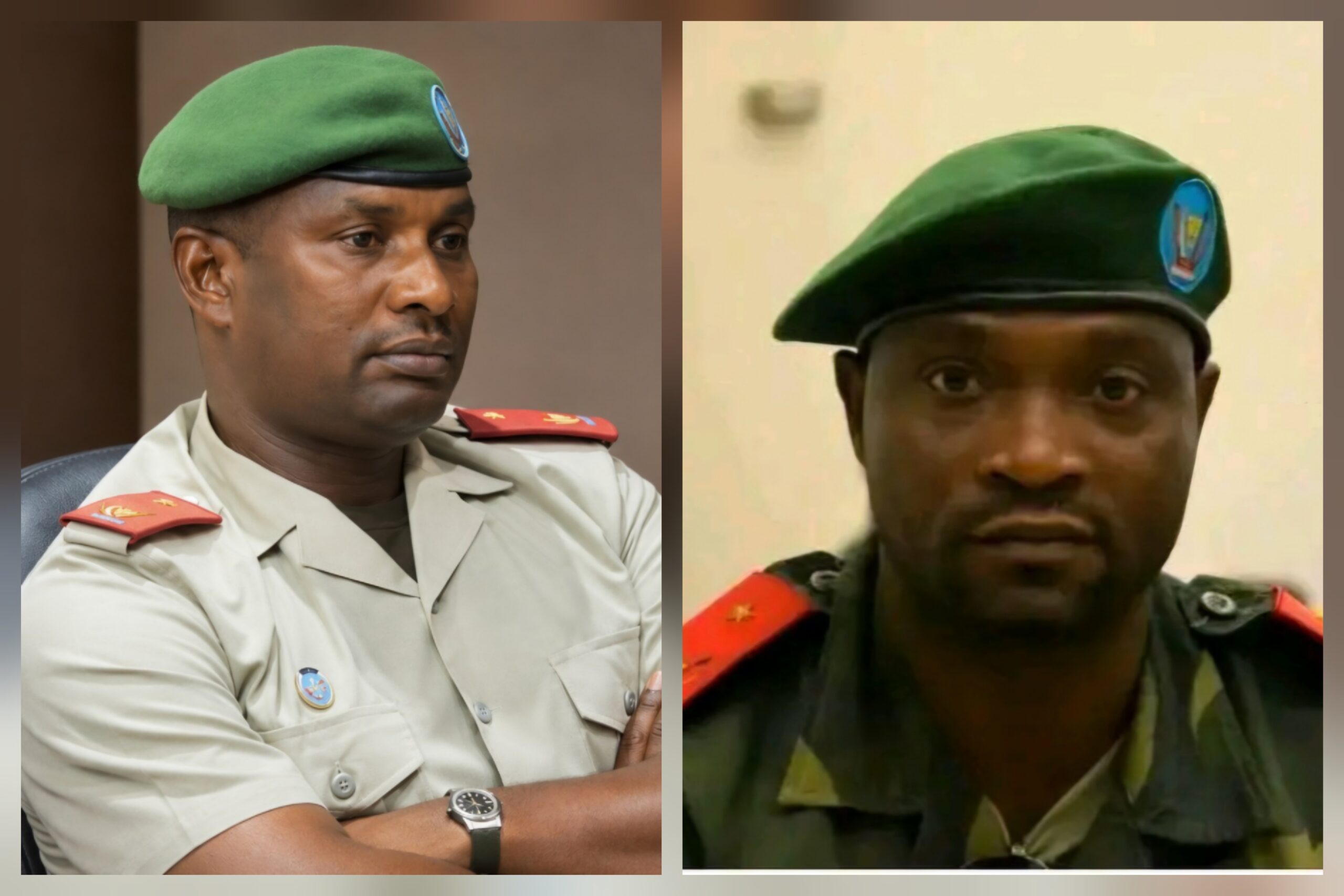
Brigadier Generals François Kamanzi and Germain Katanga
GOMA/KINSHASA – Two brigadier generals and more than 600 soldiers from the Democratic Republic of Congo’s armed forces (FARDC) have reportedly joined the Front for the Refoundation of the Nation (FRN), the rebel coalition led by former president Joseph Kabila.
The reported defections involve senior officers, junior commanders and hundreds of ordinary soldiers. They come less than three weeks after Kabila launched the FRN in Goma as a new political and military movement opposing President Félix Tshisekedi’s government.
The first high-ranking officer publicly identified was Brigadier General François Kamanzi.
On October 27, FRN spokesperson Lawrence Kanyuka announced that Kamanzi had joined the movement’s military wing, known as the Congolese Revolutionary Army (ARC), or the Lions of Sarambwe.
Kamanzi previously served as operations commander of the FARDC’s 12th Military Region in Kongo-Central Province.
Photographs circulated by the rebels showed him in North Kivu alongside Willy Manzi Ngarambe, the FRN-appointed deputy governor of the province.
A second brigadier general, Germain Katanga, was reported to have joined the movement on October 29–30. Regional media reports said he had arrived in Goma.
Other officers named in the reported defections include Colonel Dem Umba Ndolo Ghislain, who served as deputy commander for operations and intelligence of the 61st Infantry Brigade based in Nyunzu, Tanganyika Province.
Lieutenant Lemba Lula Arnold, an officer of the Republican Guard, was also named.
The reported movement of ordinary soldiers is even larger.
According to accounts published by regional media, 635 FARDC soldiers crossed into FRN-controlled territory through Nzibira in South Kivu on October 28.
They were reportedly accompanied by seven officers. The group included four colonels, two lieutenant colonels and one captain. Seven lieutenants were also said to have joined.
The figures have not been independently verified. The circumstances surrounding the alleged mass defection also remain unclear.
Kabila’s new military coalition
The FRN was launched in Goma on October 12, with Kabila named as its president.
It brings together leading figures from the former Alliance Fleuve Congo (AFC) and M23 movement.
Corneille Nangaa and Bertrand Bisimwa were named vice-presidents, while Major General Sultani Makenga was appointed chief of staff of the movement’s military wing.
The formation of the FRN marked a major change in Kabila’s role in the conflict. The former president had previously been accused by Kinshasa of supporting the rebellion but had stopped short of openly taking its leadership.
The new movement announced the end of the AFC structure and said it would take over its political and military commitments.
It presents itself as a national movement seeking to challenge the government in Kinshasa. It also says it intends to unite different forces opposing Tshisekedi’s administration.
Kinshasa appeals to soldiers
The reported defections have come as the Congolese army faces renewed fighting in parts of South Kivu, particularly around Uvira and Fizi.
The FARDC high command has responded with an appeal to soldiers and young people it says were forcibly recruited by the rebels.
Through army spokesperson Major General Sylvain Ekenge Bomusa Efomi, the military urged those who had joined the FRN to abandon the movement and return with their weapons.
The army promised to receive them and urged them to turn their weapons against what it described as the aggressor.
Kinshasa has not publicly confirmed the reported defections of Kamanzi, Katanga or the hundreds of soldiers.
The developments come amid continuing diplomatic efforts to end the conflict, including African Union-facilitated talks in Goma.
However, the reported arrival of senior FARDC officers in the FRN ranks, if confirmed, would add another dimension to the conflict.
It would also raise questions about military loyalty and the ability of the Congolese army to retain personnel as fighting continues in the country’s east.
