



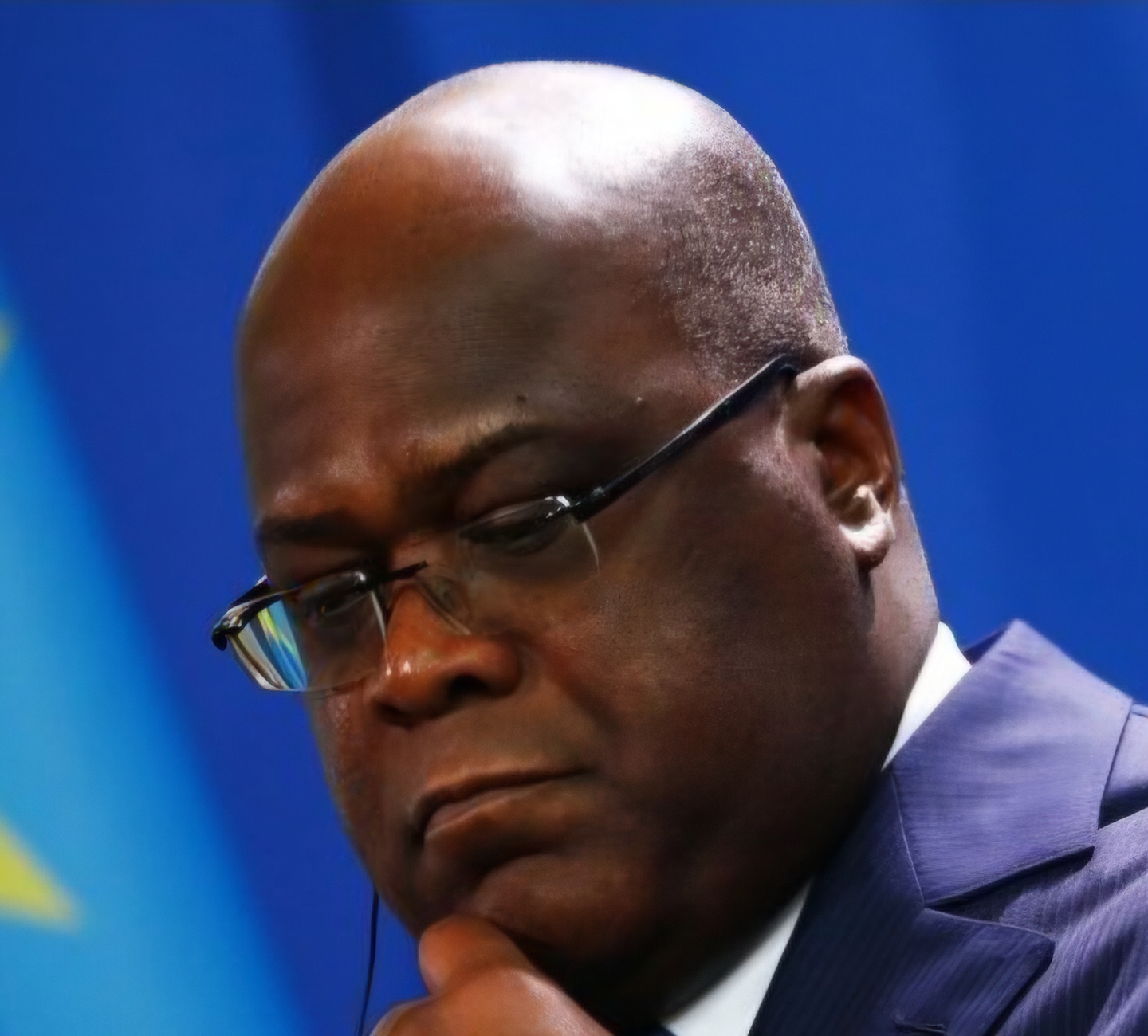
LUANDA – Democratic Republic of Congo President Félix Tshisekedi has left open the possibility of transferring water from the Congo River basin to other parts of Africa, but adds a caveat – any such move would require a national referendum and scientific guarantees protecting his country’s interests.
His remarks mark a conditional position on proposals to divert water towards the Lake Chad region, where countries have explored ways to replenish the lake and support agriculture, fishing and livestock production.
“Regarding possible transfers of water from the Congo River to other basins, I wish to reaffirm our country’s position. No commitment can be considered without respect for our Constitution and laws,” Tshisekedi said on Thursday at the fourth Luanda Biennale in Angola.
“We maintain as a condition the consultation of the Congolese people through a referendum and rigorous scientific guarantees regarding the protection of our country’s interests,” he added.
Although Tshisekedi did not endorse a specific project, his wording leaves a route open for considering a transfer if the stated conditions are met. It stops short of an outright rejection and places the decision on a process that would include a national vote.
Whether this amounts to a change in policy remains unclear. Tshisekedi did not announce a new agreement or say that his government was preparing to approve either of the proposals.
A long-running debate
The idea of transferring water from the Congo basin to the Lake Chad region has been discussed for decades. One of the best-known proposals, Transaqua, was developed in the 1980s. It envisages a canal of about 2,400 kilometres linking the Congo basin to the Chari River system, which feeds Lake Chad.
A separate proposal would divert water from the Ubangi River, a major tributary of the Congo, towards Lake Chad. The plans have attracted interest from countries in the wider Sahel, where changes in water availability have put pressure on farming, fishing and livestock production.
The DRC’s position has evolved over time. The Transaqua concept received attention during the Mobutu Sese Seko era, while later Congolese authorities raised objections to the proposed transfers. In April 2018, then Environment Minister Amy Ambatobe told the National Assembly that the country would not transfer Ubangi River water to Lake Chad.
Tshisekedi himself expressed concern about Transaqua in 2018 and called for alternative solutions in 2019. His latest remarks place renewed emphasis on a referendum and scientific guarantees rather than announcing an unconditional rejection.
A referendum as a condition
The referendum requirement predates Tshisekedi’s latest statement. Article 53 of the DRC’s 2015 Water Law provides for consultation of the Congolese people through a referendum before freshwater is transferred to another country.
A referendum would put the question to voters, while the scientific guarantees demanded by Tshisekedi would require evidence that a transfer would protect the DRC’s interests. His statement did not specify how such guarantees would be assessed or what scientific findings would be sufficient.
The conditions leave unresolved whether a transfer could ever secure approval. The river basin’s environmental importance, the costs of the proposed infrastructure and the possible effects on water flows would all be central to any assessment.
Supporters argue that a transfer could help replenish Lake Chad and strengthen livelihoods across the region. Critics warn that large-scale diversion could damage ecosystems and affect communities dependent on the Congo basin.
Water governance in Africa
Tshisekedi spoke at the fourth Luanda Biennale, held on October 22 and 23 under the theme “Strengthening Water Governance in Africa as a Tool for Conflict Prevention, Mediation and Resolution.”
The forum is organised by the African Union and the Angolan government in partnership with the United Nations Educational, Scientific and Cultural Organization (UNESCO). It brings together African leaders and other participants to discuss shared water resources, water scarcity and cooperation as tools for preventing conflict.
