


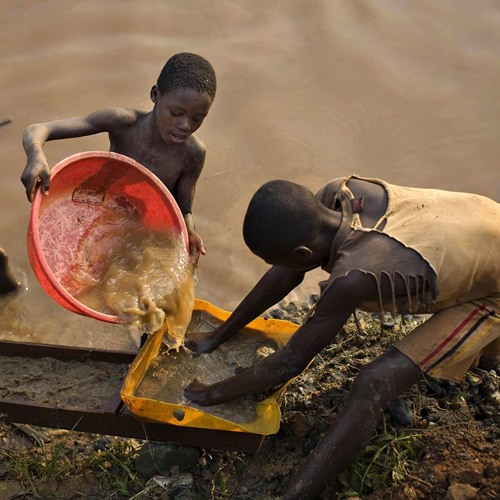
If there’s one country that exemplifies the difficulty in transforming mineral wealth into inclusive growth- it’s the Democratic Republic of Congo. The IMF’s annual economic assessments indicates poverty rates in the DRC are still among the highest in the world.
When 28 million people are facing hunger in the DRC, you would expect the Tshisekedi regime to focus on solutions, mobilize resources, and tackle the structural causes of food insecurity. Instead, Rwanda remains the convenient scapegoat for Congolese officials.
Eve Bazaiba, Tshisekedi’s Minister of State for Social Affairs and Humanitarian Action, has managed something quite remarkable: implicating Rwanda in the country’s food crisis. She blames the war in the east for hunger spreading across every province of a country larger than France, Germany, the UK, Spain and Italy combined.
Think about it! The allegation raises an obvious question: did South and North Kivu, two war-affected provinces in the east, previously supply all 24 provinces with food? Or is it that the longstanding structural problems that have undermined the country’s agricultural potential for decades cannot be explained away except by the incompetence rearing its head across every sector during this administration.
After her declaration, even some of her supporters are growing tired of this rhetoric. Congolese are demanding answers, food, and leadership capable of addressing their daily struggles. At some point, the regime must stop passing the buck to Rwanda and take responsibility.
The DRC has vast arable land, enormous water resources, favourable climatic conditions, and a population capable of sustaining a productive agricultural economy. That huge country could feed the entire continent if it had capable leaders. Yet millions remain vulnerable to hunger, while the country continues to depend heavily on food imports and struggles to establish reliable domestic supply chains.
How can a country with such enormous agricultural potential repeatedly find itself in this situation? What about agricultural policy, unused fertile land, limited investment in farmers, poor rural roads, inadequate storage facilities, and the lack of reliable access to markets? These are longstanding governance failures that cannot simply be explained away by blaming Rwanda.
The contradictions become even more glaring when you consider public spending priorities. Reports of questionable financial arrangements and hundreds of millions of dollars in payments involving companies active in the security and defence sectors, including entities linked to recruitment for South American mercenaries, are not only evidence of the failure to reform and improve the security sector.
These are all evidence of misplaced priorities and massive corruption when measured against policy outcomes, no security, and entire sectors, including health and agriculture, are collapsing.
Truth be told, the government owes its population serious explanations. If barges supplying Kinshasa and other provinces with food and essential commodities are blocked or disrupted, what alternative arrangements has the government put in place? Where is the emergency logistics plan? What measures are being taken to stabilize supply chains and prevent shortages?
But no real answers are provided. Instead, there is an increasingly troubling pattern whereby Congolese ministers invoke Rwanda whenever confronted with criticism or difficult questions. Remarkably, blaming Rwanda has become a political reflex, sometimes serving as a demonstration of loyalty rather than an explanation of government failure.
But most Congolese are realizing that Rwanda cannot be the universal scapegoat for corruption, poor infrastructure, weak institutions, agricultural mismanagement, and, more broadly, the structural failures of the Congolese state.
Most urgently, hunger cannot be defeated with scapegoats. It takes leadership, accountability, and action. If Kinshasa is serious about tackling this life-and-death matter, it should stop putting Rwanda on the menu, and start putting food on the Congolese people’s tables.
