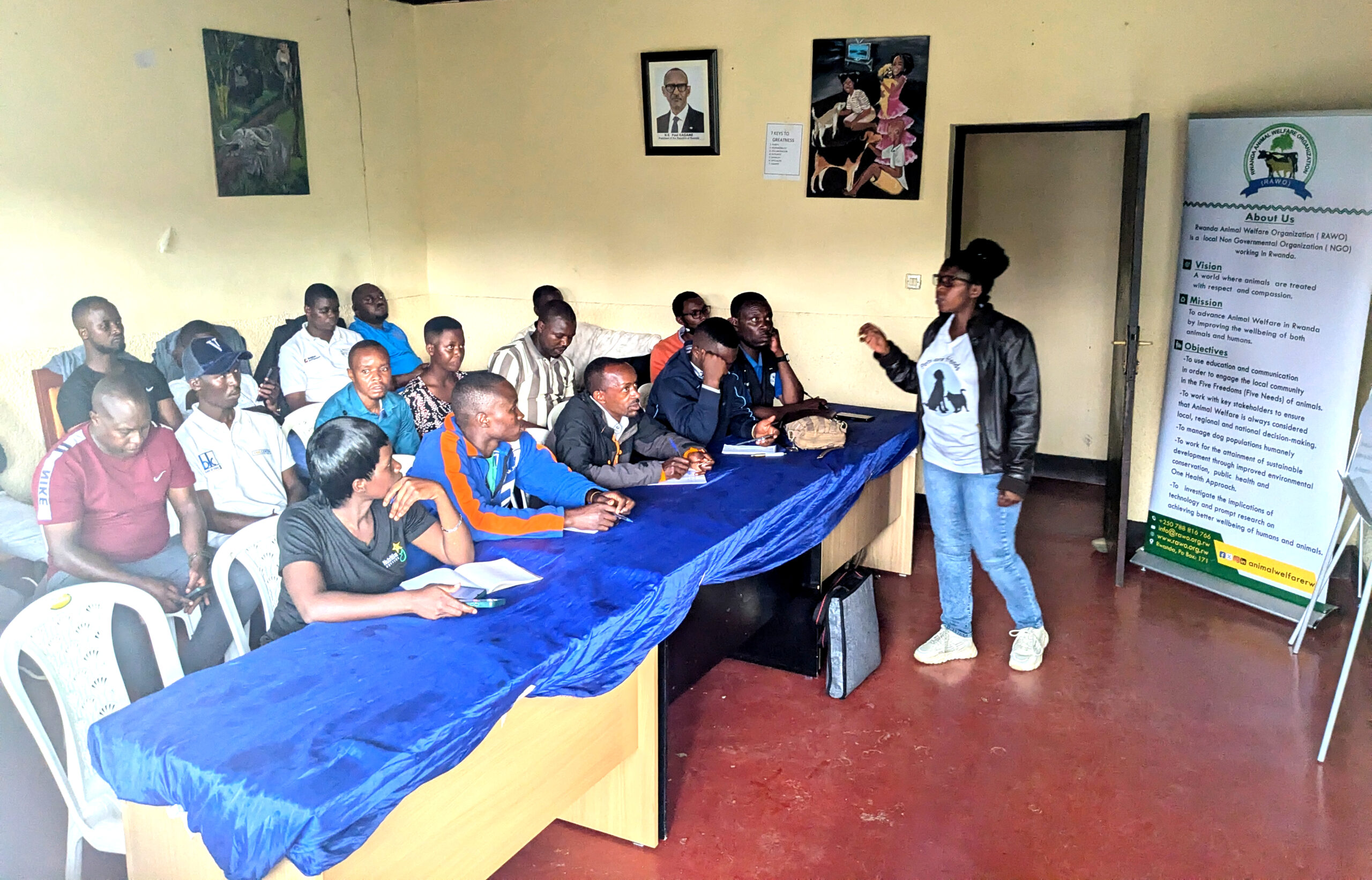
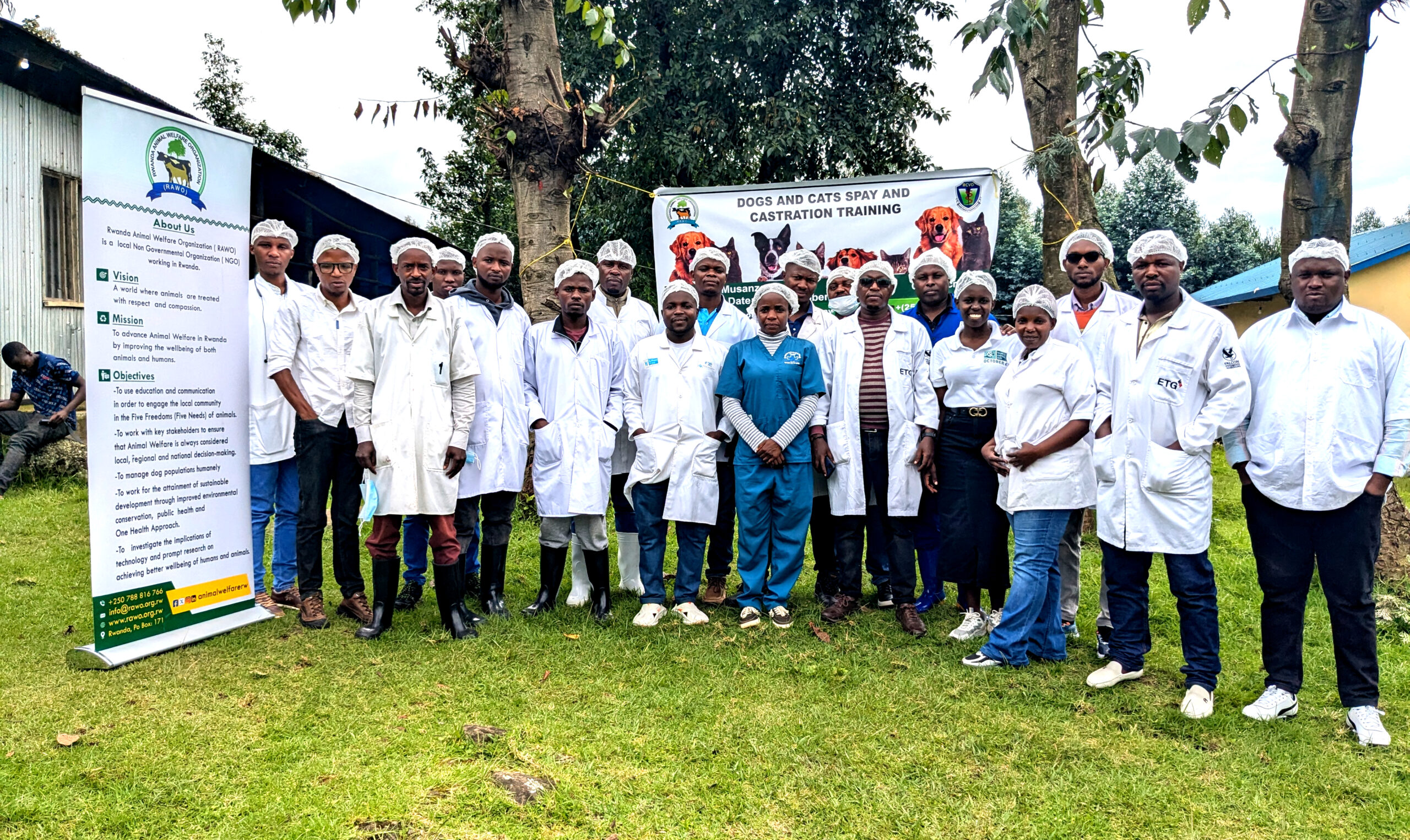
 Rwandan veterinarians have gained new practical skills in spaying, castration, and animal welfare management to help control the growing populations of dogs and cats across the country.
The three-day practical training, organized by the **Rwanda Animal Welfare Organization (RAWO), was conducted as part of its role as a Continuing Professional Development (CPD) provider accredited by the Rwanda Council of Veterinary Doctors (RCVD).
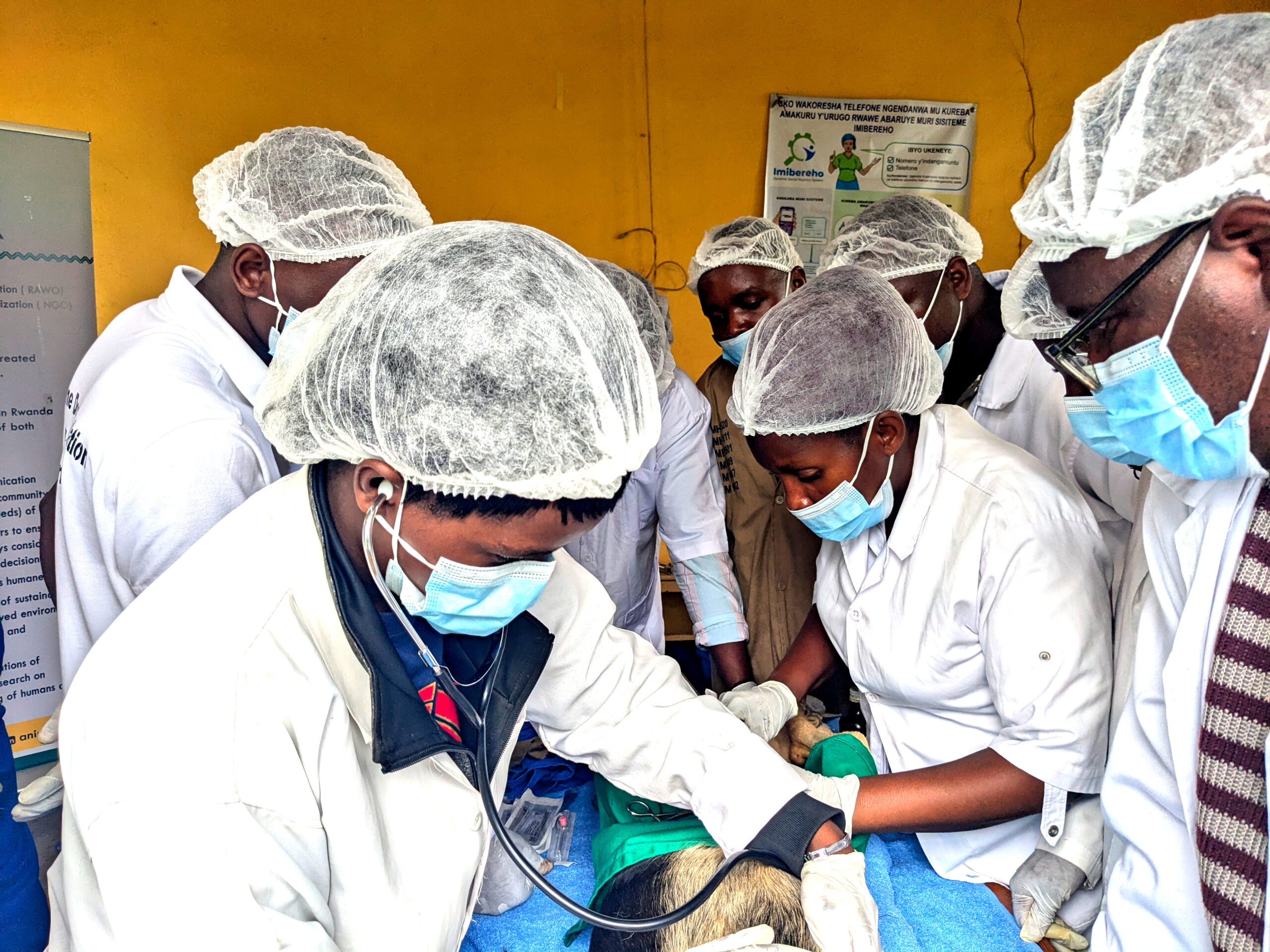
Participants received hands-on training in small and large animal medicine, including clinical examination, disease diagnosis, wound and fracture management, caesarean section procedures, and animal behavior handling techniques.
The training also focused on humane dog population control and welfare-centered interventions.
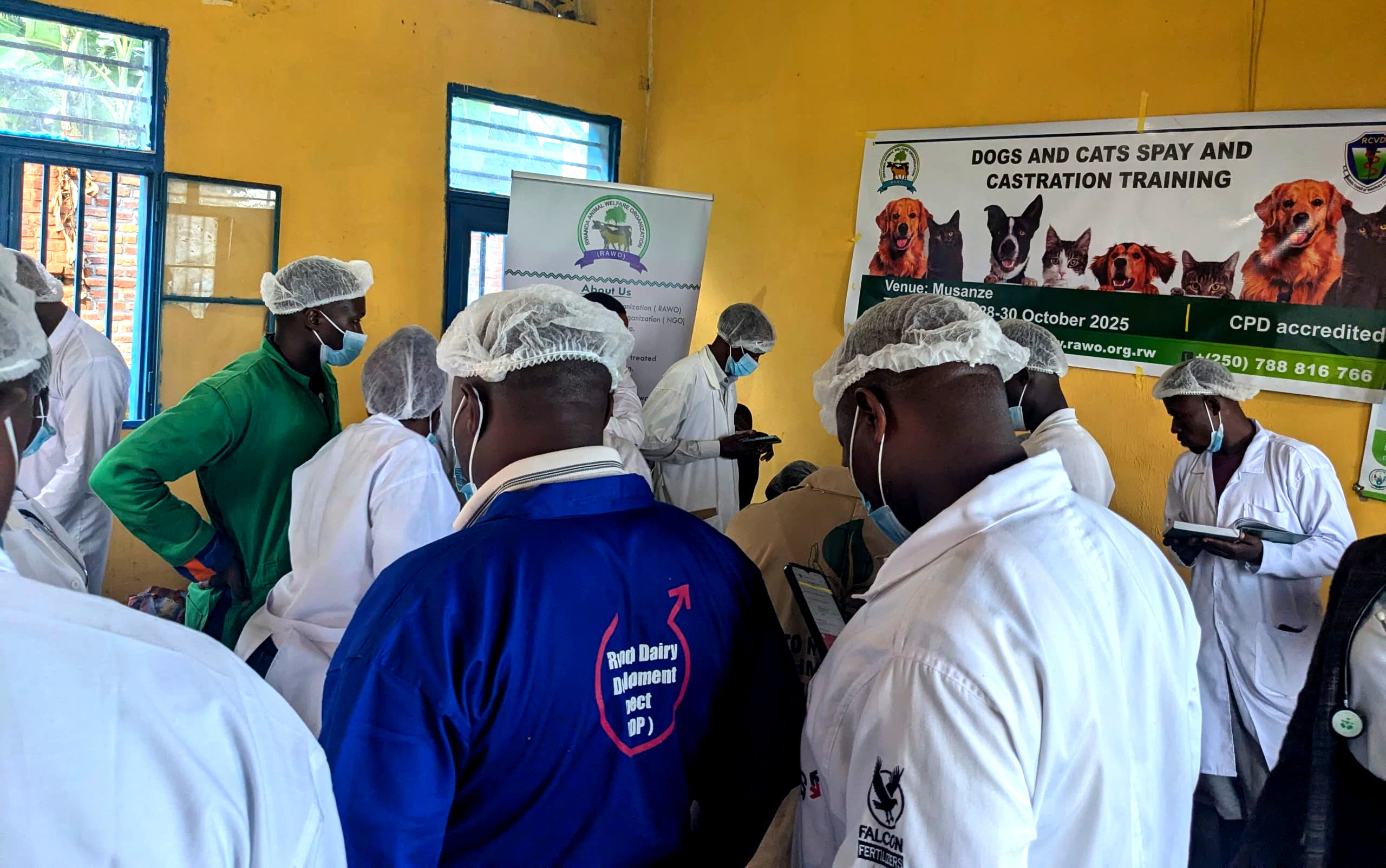
According to Claude Masengesho, RAWO’s Executive Director, the initiative aimed to enhance the competencies of Rwandan veterinary professionals, promote humane dog population management, and strengthen animal welfare practices nationwide.
“Through expert-led practical sessions, participants gained advanced knowledge in small animal surgery and anesthesia, clinical interventions, and welfare management,” said Masengesho.
He added that the CPD program is being implemented under a Memorandum of Understanding (MoU) between RAWO and RCVD to build the capacity of private veterinarians in small and large animal medicine, contributing to the **Veterinary Sanitary Mandate (VSM) and overall animal health improvement in Rwanda.
The training responds to increasing challenges linked to the growing number of stray dogs, particularly in urban areas, which have been associated with biting incidents and potential disease transmission.
Though there is no specific data on dog and cat populations in Rwanda, at least 8,809 dogs and cats vaccinated in 2018 and plans to conduct more vaccinations remain in the pipeline with 200 dogs vaccinated against rabbies during the World Animal Day 2025 held in Musanze district.
In a move to enhance public health and safety, the Rwanda Agriculture and Animal Resources Development Board (RAB), in August) issued a strict set of regulations for all dog owners across the country.
The new rules require that: All dogs must be registered with local authorities at the village (Umudugudu) level, every dog must be vaccinated against rabies annually, a critical step in preventing the transmission of the virus to humans and other animals.
Dogs in public must be on a leash and under the control of a responsible adult at all times, and must be muzzled while in public spaces to prevent biting incidents.
The Government of Rwanda continues to strengthen the veterinary sector by investing in veterinary diagnostic laboratories, practical training programs, and access to essential tools and equipment.
However, service delivery in some districts remains limited due to skill gaps, especially among newly graduated veterinarians who often lack sufficient hands-on experience.
Some of the trainees said the course offered an invaluable opportunity to bridge the gap between theoretical knowledge and real-world veterinary practice, enhancing their ability to deliver quality animal care.

Dr Fabrice Ndayisenga, Head of Department Animal Resources Research, RAB has previously said that continous vets training is highly need to improve animal welfare, and increase professionalism in a career which has had a tinted image due to lack of seriousness in delivering services to the general population.
Meanwhile, the Ministry of Agriculture, RAWO, and the Animal Welfare in Development Cooperation Programme (WTS) are exploring the implementation of international animal welfare guidelines centered on the Five Freedoms of Animals:
Freedom from hunger and thirst; Freedom from discomfort; Freedom from pain, injury, or disease; Freedom to express normal behavior; and Freedom from fear and distress.
These guidelines are informed by research conducted by WTS, which highlighted gaps in animal welfare awareness and practices within development cooperation projects involving animals.
The findings showed that poor handling and treatment of livestock often undermine the sustainability and impact of such projects, underscoring the need to integrate animal welfare standards in all programs involving animals.