



Corneille Nangaa Yubeluo, head of the Congo River Alliance (AFC-M23), and the group’s military commander, Major Sultani Makenga, during a recent commissioning of new forces
The latest statement by the AFC-M23 regarding its conditional withdrawal from Uvira is notable not because of who issued it, but because of how it frames the path toward de-escalation.
Its emphasis on demilitarisation, civilian protection, and neutral monitoring reflects principles that have underpinned major conflict-resolution efforts elsewhere, including the Washington Accords and the Doha deal between the rebels and the Kinshasa government.
For eastern Democratic Republic of Congo, a region long trapped in cycles of militarised competition, this framing deserves analytical attention rather than reflexive dismissal.
Demilitarisation as a Necessary Reset
A defining feature of protracted conflicts is the accumulation of armed actors in the same operational space.
Eastern Congo exemplifies this pattern, with national forces, community militias, foreign armed groups, and regional interests overlapping in ways that blur lines of responsibility and accountability.
The AFC-M23’s call for complete demilitarisation of Uvira echoes a core insight found in both Washington and Doha: security deteriorates when too many armed actors pursue incompatible objectives in the same territory.
In these frameworks, de-escalation began not with political settlements, but with reducing the density of weapons and forces on the ground.
Demilitarisation, in this sense, is not an end in itself, but a reset—one that creates space for civilian governance and political engagement.
Civilian Protection as the Measure of Legitimacy
Another striking aspect of the statement is its insistence on credible mechanisms for civilian protection. This reflects a broader shift in peace-process thinking: legitimacy is no longer derived from battlefield control, but from the ability to protect populations.
The Washington Accords and the Doha deal both placed civilian safety at the centre of their logic, recognizing that agreements collapse when communities remain exposed to violence, displacement, or reprisals.
By foregrounding civilian protection, the AFC-M23 statement situates itself—at least rhetorically—within this civilian-centred security paradigm.
For eastern Congo, where public trust in armed actors and institutions alike has been deeply eroded, this emphasis is not incidental. It speaks to a widely shared demand among civilians: security that is visible, verifiable, and impartial.
Neutral Monitoring and the Problem of Trust
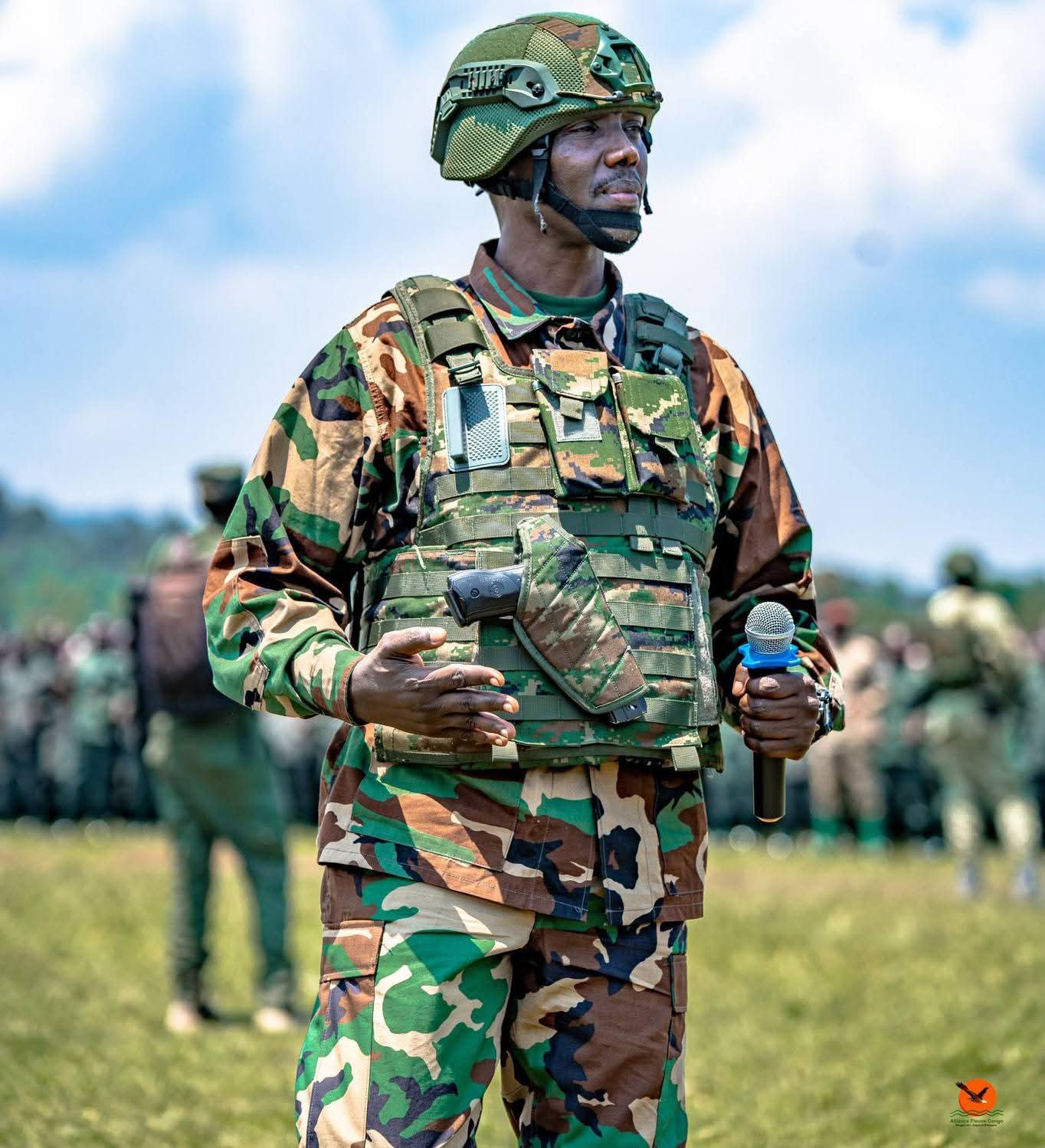
AFC-M23 military commander, Major Sultani Makenga, during a recent commissioning of new forces
Ceasefires fail most often not because they are signed in bad faith, but because they lack credible enforcement and verification.
This lesson runs through the histories of Washington, Doha, and numerous African peace initiatives.
The demand for a neutral force to oversee the ceasefire reflects an understanding of this trust deficit. Neutral monitoring serves three functions: it deters violations, reduces misinformation, and anchors diplomacy in facts rather than accusations.
In deeply polarised conflicts, such mechanisms are often the difference between temporary pauses and sustained de-escalation.
Ownership and Resistance to External Manipulation
The rejection of political manipulation and external pressure in the statement mirrors a recurring critique of international conflict management: that externally imposed solutions often lack durability because they fail to align with local security realities.
Both Washington and Doha attempted—imperfectly—to balance external facilitation with local ownership.
The AFC-M23 framing taps into this same discourse, reflecting a regional sentiment that peace cannot be subcontracted indefinitely to distant capitals or competing geopolitical agendas.
For neighbouring states and regional organisations, the logic articulated in the statement aligns with broader stability objectives: fewer armed confrontations, reduced refugee flows, and diminished risks of cross-border escalation.
Whether one agrees with the actor or not, the framework mirrors de-escalation principles long advocated by regional and international mediators.
A Test of Credibility, Not Rhetoric
History cautions against confusing language with outcomes. Washington and Doha both demonstrated that agreements grounded in sound principles can still falter without credible implementation, enforcement, and accountability.
The same applies here. The value of the AFC-M23 position, analytically, lies not in its declaration but in whether such principles—demilitarisation, civilian protection, neutral oversight—can be operationalised in a transparent and verifiable manner.
Eastern Congo’s tragedy has never been a lack of military solutions, but an excess of them. The AFC-M23 statement, viewed through a peace-process lens, reflects a growing recognition that stability requires structured disengagement rather than perpetual confrontation.
If the region is to move forward, it will be by applying lessons already learned elsewhere: reduce weapons before politics, protect civilians before territory, and verify commitments before trust. Whether these principles can translate into reality remains the decisive question.
