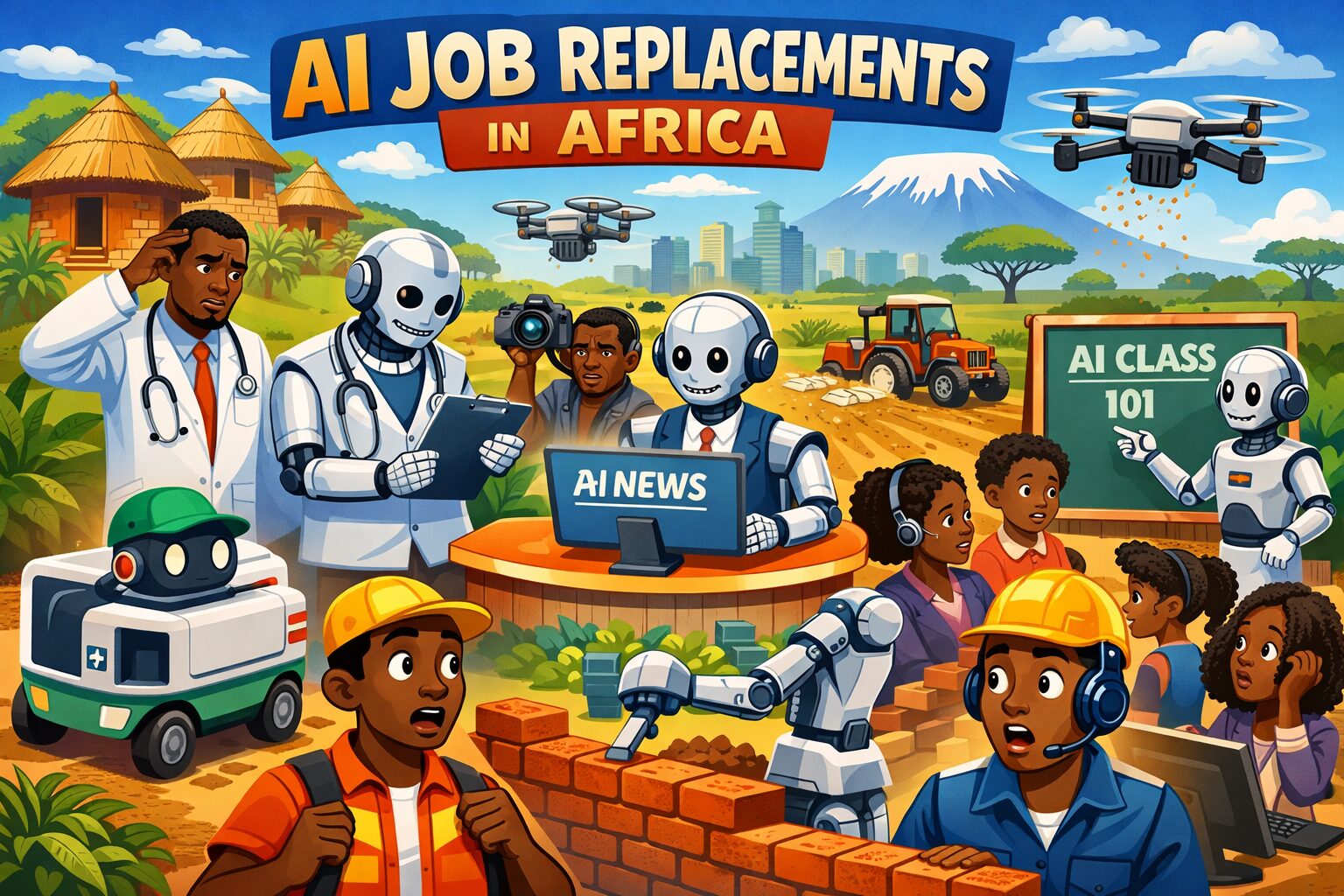
Routine roles in areas such as outsourcing, data handling and call-centre services face the highest risk of automation across Africa, Rwanda included.
AI is reshaping work across the continent, particularly in sectors with repetitive tasks that are easier to automate. A study released by Mastercard Foundation in April 2025, indicates that in Africa’s outsourcing and business services sector, up to 40 % of tasks could be automated by 2030 due to AI and automation technologies.
However, this doesn’t mean that entire jobs will disappear, but many routine parts of jobs are at risk, especially at entry levels. Only 10 % of tasks in that sector are fully resistant to automation — highlighting how deeply technology might alter the nature of work by replacing repetitive elements with AI systems.
Women in particular face higher vulnerability to automation in Africa, because many are employed in lower-paying, routine roles that are more easily automated by AI tools — on average 10 % more vulnerable than men’s tasks.
Meanwhile most African business leaders don’t expect massive layoffs. A 2025 survey of African executives (AI Radar report, titled: ‘From Potential to Profit: Closing the AI Impact Gap) shows that only around 6 % predicted AI would cut overall workforce size, with most prioritizing productivity and up skilling instead of reducing headcount.
A PricewaterhouseCoopers survey found that 64 % of African workers reported using AI in their jobs in the past year, exceeding the global average although regular deep-usage remains lower.
Workers who use AI often see it as a productivity booster rather than a threat, and many expect it to improve work quality and outcomes in the years ahead.
Focus on Rwanda: Early Adoption, Slow Disruption, Strong Strategy
Experts note that AI is already beginning to replace some routine tasks in Rwanda; for example, AI-enabled road speed cameras reducing the need for some manual monitoring.
Overall, the pace of job displacement from AI in Rwanda is slower than in advanced economies due to less advanced digital infrastructure and differing labour market structures. According to the IMF, emerging and low-income economies (like Rwanda) have lower exposure to AI disruption than advanced ones.
Rwanda is actively positioning itself to benefit from AI rather than just endure its disruptive effects. The country ranks among the leaders in AI readiness in East Africa thanks to investments in digital infrastructure, STEM education, and policies supporting tech adoption.
National studies project that even a modest AI user could contribute up to about 6 % of Rwanda’s GDP over time by improving agricultural yields, service delivery, and productivity in key economic areas.
The Rwandan government is actively training its workforce to adapt to AI, and AI training is becoming mandatory for civil servants in various sectors to improve productivity and ensure workers aren’t left behind as roles evolve.
Partnerships with tech training organisations aim to build AI literacy for thousands of teachers and workers, preparing them to use AI tools rather than be replaced by them.
The informal economy and agriculture (still major employers in Rwanda) could see pressures as technology increases productivity and changes the structure of rural work, potentially reducing manual labour demand unless new opportunities are created.
Thought leaders in Rwanda argue that routine, repetitive tasks are the ones most at risk, but that AI also drives demand for new skill sets like data management, digital services, and creative applications which can create new jobs if education and training keep pace.
Low-skill, repetitive jobs especially in outsourcing, data tasks, and customer service are most vulnerable to automation in Africa, including Rwanda. Women and young workers in routine roles may face greater disruption unless targeted up skilling is provided.
AI adoption in Rwanda and Africa is accelerating rapidly and could boost productivity, create new job categories, and raise incomes if workers are equipped with digital literacy and adaptable skills.
Strategic national policies and training programs like those in Rwanda are crucial to helping workers transition into higher-value jobs in tech, data, and AI implementation roles.
AI in Africa is likely to lead to shifted jobs, not just lost jobs but also with automation reducing certain tasks while creating new roles and demand for digital skills.