



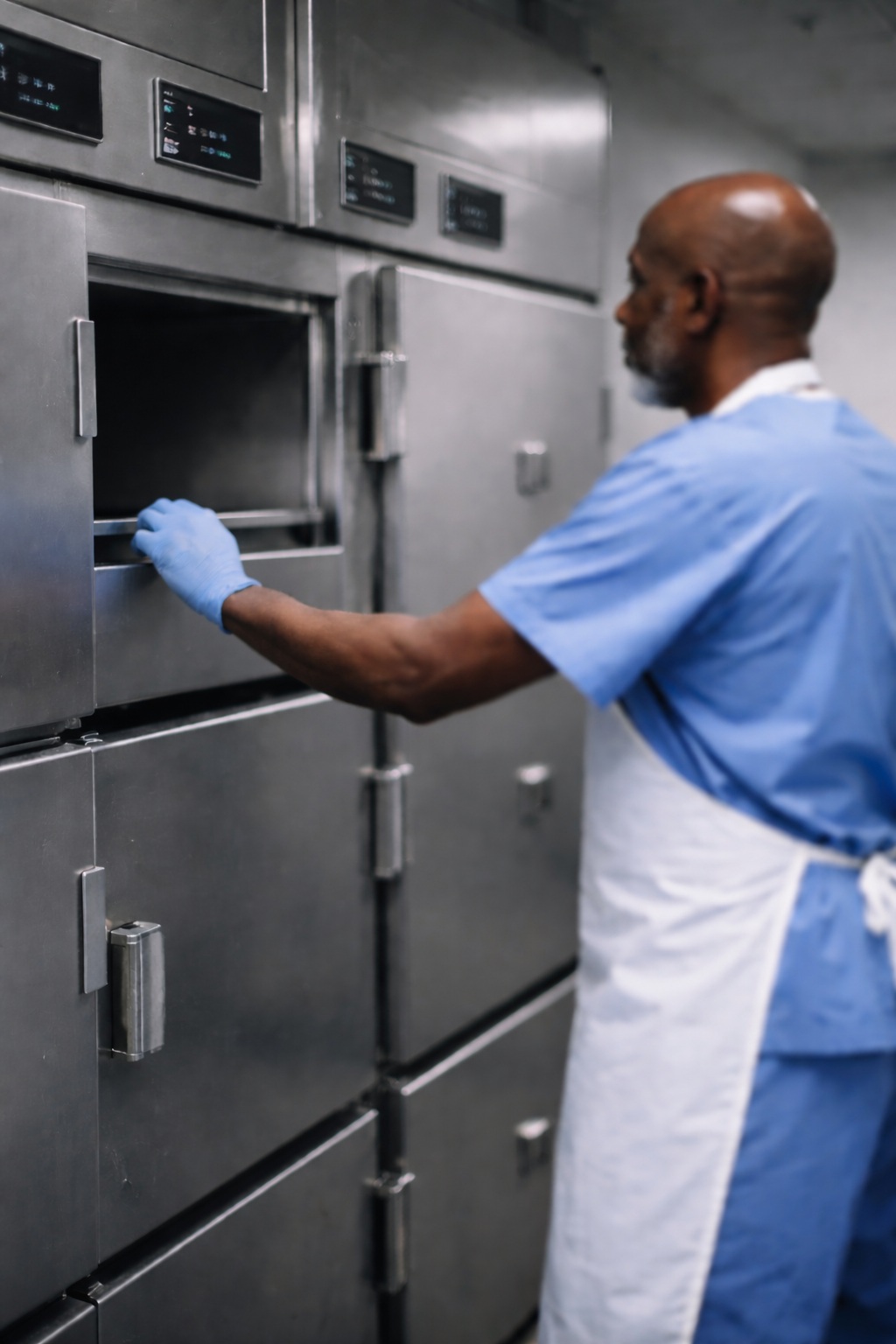
In the quiet environment of Nyamata Hospital, behind doors most people would rather never open, Jean Marie Vianney Gasana begins another day’s work. The room is spotless. Large stainless-steel refrigeration units line the walls. There are no whispers, no shadows—only silence and procedure.
For Gasana, 63, the morgue is not a place of fear. It is a place of responsibility. Originally from Rulindo District, Gasana’s life has been shaped by Rwanda’s most turbulent chapters. In 1993, his family relocated to Bugesera.
That same year, he joined the liberation struggle. When he returned after the 1994 Genocide against the Tutsi, nearly all his relatives had been killed. He later served in the army in the early years before leaving military service in 1999 to rebuild his life.
By 2000, he was working on the construction of Nyamata Hospital. When the facility opened two years later, he was hired as a sanitation staff member. In 2023, hospital management entrusted him with a new assignment: managing the morgue.
“I accepted because work is work. What matters is doing it with discipline and respect,” Gasana says calmly.
A Strict Process
In the course of his work, everyone who arrives at the morgue must follow a strict process. Gasana verifies the medical certificate of death before receiving any body. Without proper documentation, he cannot proceed.
“I cannot accept a body unless a doctor has certified the death. Even burial cannot commence without that document,” he explains.
Some bodies arrive from hospital wards, while others come from accident scenes across Bugesera District. Once medical staff prepare the body, Gasana carefully labels and stores it in refrigerated chambers to prevent decomposition and avoid any mix-ups.
Accuracy is critical, and grieving families depend on it. Relatives are allowed to identify their loved ones before burial. In those moments, Gasana often becomes a quiet witness to grief—sometimes even a source of reassurance.
“There are families who struggle to believe what has happened. They ask questions again and again. You have to be patient,” he says.
The Weight of Certain Cases
Over the years, Gasana has handled countless bodies. Most pass through his care with solemn routine. But some remain etched in his memory.
He recalls three young men who died in separate tragic accidents—one in a road incident involving a truck, another in a mining pit collapse, and a third in an accident involving heavy machinery. Their injuries were severe.
“It is painful, especially when the body is badly damaged and the family cannot even say goodbye the way they wish,” he says softly. Despite such scenes, Gasana does not carry fear home with him.
“I have never heard voices. I have never dreamed of the people I receive here. When I leave this place, I close the door and continue my life. I eat, I pray, and I sleep normally,” he says.
He says he believes resilience depends on mindset and faith. Some people say they could never step into a morgue. For him, it is simply another room in the hospital—one that requires cleanliness, order, and humanity.
Discipline from Another Life
Gasana attributes much of his emotional strength to his military background. Years of service taught him discipline and composure under pressure.
He has also undergone professional training at referral hospitals, including Kanombe, the University Teaching Hospital of Kigali (CHUK), and the University Teaching Hospital of Butare (CHUB), sharpening his technical skills in handling the deceased.
Contrary to common myths, he says hospital morgues are not frightening spaces. They are hygienic, regulated environments designed to preserve dignity.
“There is no strange smell, no mystery. Only responsibility,” he says.
Serving the Living by Honouring the Dead
In Rwanda, where history has made conversations about death unavoidable, the work of morgue attendants rarely receives attention. Yet their role is vital. They ensure that even in the final stage of life, there is order and respect.
Gasana does not seek recognition. He sees his job as service—both to the departed and to the families left behind.
“Death is part of life. What we can control is how we treat people—with dignity, even at the end,” he says.
Behind the quiet doors of Nyamata Hospital’s morgue, that dignity is guarded every day by steady hands and a composed heart.
