



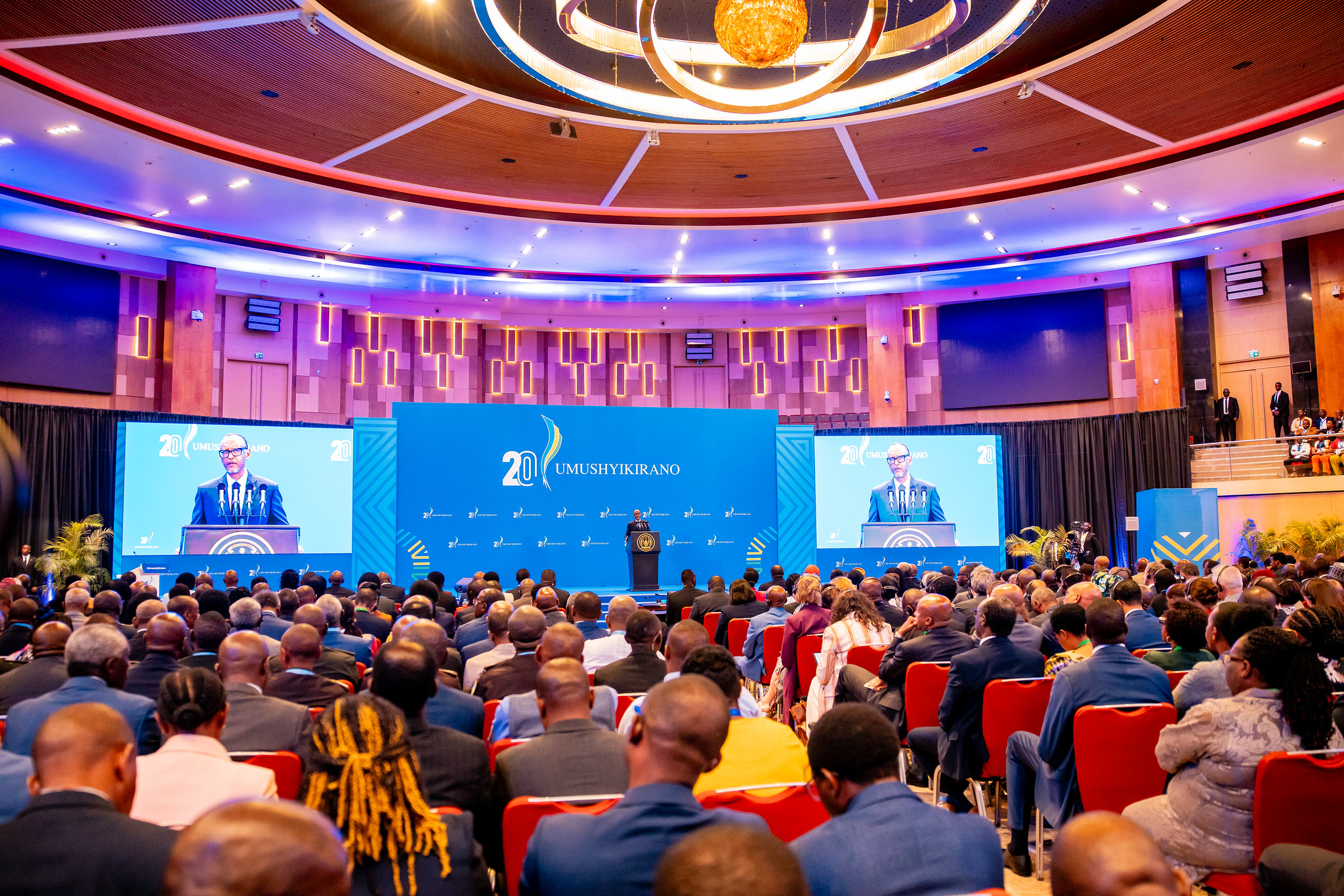
President Paul Kagame addresses the 2026 National Dialogue Council Umushyikirano held February 5-6, 2026, at Kigali International Convention
Kigali — Government has been formally directed to strengthen nationwide use of English after participants at this year’s 20th National Dialogue Council, Umushyikirano, warned that weak language proficiency is undermining education outcomes and slowing the country’s transition toward a knowledge-based economy.
The resolutions, adopted in Kigali and presided over by President Paul Kagame, carry particular authority. Umushyikirano brings together a broad cross-section of Rwandan society — cabinet ministers, local leaders, civil servants, youth representatives, business owners and ordinary citizens — and its conclusions function as binding directives to government.
By law, the Prime Minister is required to present a detailed implementation report at the next dialogue, a mechanism that has turned the annual forum into a powerful accountability tool over the years.
This time, English language proficiency emerged as one of the most urgent concerns.
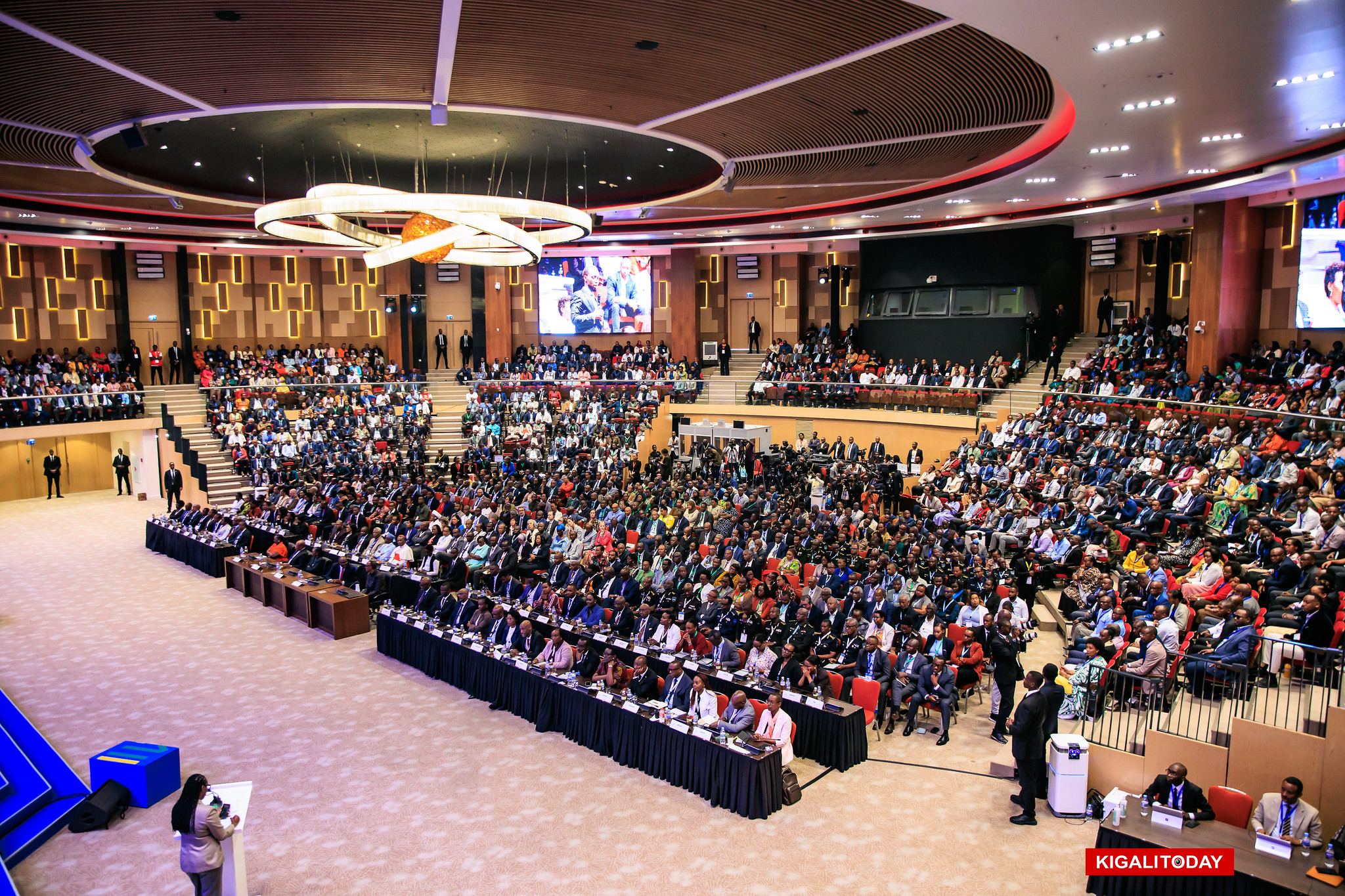
A cross section of delegates at the 2026 Umushyikirano
Nearly 17 years after Rwanda adopted English as the main language of instruction, progress remains uneven.
As a national policy, there are four national languages in Rwanda: Kinyarwanda, English, French, most recently Swahili – adopted because of Rwanda’s membership in the East African Community (EAC).
However, while English remains the main dominant language of instruction at school, Kinyarwanda is the language everyone uses.
But studies have painted low outcomes in English, yet the country is positioning itself as a regional and international hub.
Only about 7 percent of Rwandans are literate in English, while fewer than 15 percent of people aged 15 and above say they can use the language at all. Among students, just over half can read English at expected levels.
Teacher preparedness remains a major bottleneck. Recent education assessments show that only 4 percent of teachers have adequate English proficiency.
Earlier surveys found that two-thirds of secondary school teachers lack sufficient English skills, and in rural areas up to 85 percent of primary teachers fall within beginner or elementary levels.
In some districts, more than 80 percent of teachers continue to rely mainly on Kinyarwanda in classrooms despite the official policy.
The academic consequences are stark. Studies reviewed during Umushyikirano revealed a strong positive correlation between English proficiency and overall student performance, with weaker language skills translating directly into lower achievement in science and other core subjects.
Umushyikirano Delegates also cited high repetition rates in early grades, limited exposure to English outside school, and widespread code-switching as signs of a system still struggling to adapt.
Participants therefore instructed government to intensify teacher training, strengthen early-grade literacy, expand communicative teaching methods, and provide targeted support to rural schools.
The aim, officials said, is not simply linguistic fluency, but improved learning outcomes and better alignment between education and labor market needs.
Language reform, however, was only one part of a wider set of directives.
Umushyikirano 2026 also called on government to accelerate youth employment through skills development and entrepreneurship programs, expand access to affordable credit for small and medium enterprises, strengthen technical and vocational education, improve service delivery in health facilities, and fast-track irrigation and storage infrastructure to boost agricultural productivity.
Delegates urged faster digitalization of public services, tighter monitoring of government projects to curb delays and cost overruns, expanded affordable housing initiatives, and stronger social protection for vulnerable households.
During the panel discussions of Umushyikirano, officials acknowledged that many of these challenges are interconnected.
Without stronger English skills, Rwanda’s ambitions to attract investment, grow its creative and digital industries, and integrate more deeply into regional markets could stall.
Without jobs and financing, youth frustration could rise. And without stricter oversight, public spending risks losing impact.
Now the focus shifts from dialogue to delivery.
Each ministry has been assigned responsibilities under the resolutions, with progress to be tracked throughout the year.
The Prime Minister will return to the next Umushyikirano with a formal implementation report — a defining feature of Rwanda’s governance model, where citizen dialogue is paired with measurable follow-through.
As one senior official noted on the sidelines of the forum, Umushyikirano is not a ceremonial gathering. It is where citizens set priorities — and where government is expected to act.
