


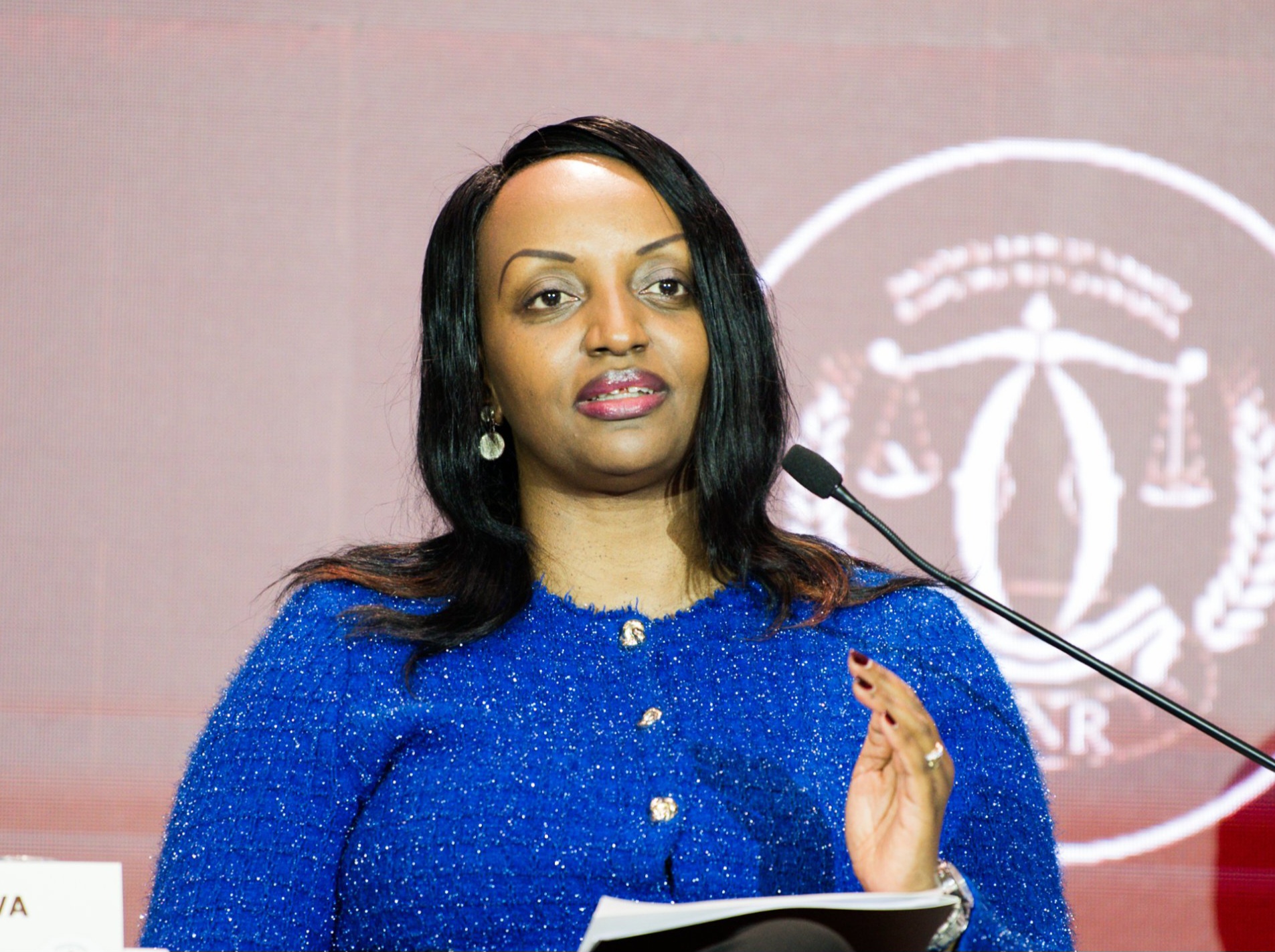
Governor of the National Bank of Rwanda (BNR) Soraya M. Hakuziyaremye speaking today
KIGALI — Mobile money is booming in Rwanda. In fact, it is growing so fast that it now moves more money than the entire economy produces in a year.
According to the latest Monetary Policy and Financial Stability Statement released today by BNR Governor Soraya M. Hakuziyaremye , mobile payments processed transactions worth more than 161% of Rwanda’s GDP, making them the single largest channel in the country’s financial system.
In the Central Bank’s terminology, “mobile payments” refers specifically to mobile money services run by telecom companies such as MTN Rwanda and Airtel Rwanda.
These include sending money, paying bills, or buying goods using mobile wallets, which people access through short codes (USSD) or smartphone apps. It does not include payments made through bank apps or internet banking.
On the surface, having booming mobile payments is a success story.
The number of transactions surged by 44% to about 1.2 billion, while the total value jumped 58% to over Rwf 31 trillion.
More people are using mobile money, and they are using it more frequently — not just to send money, but to pay for goods and services every day.
But behind this growth, the Central Bank is becoming more cautious.
The concern is simple: when one system becomes this big, any problem within it can affect the entire economy.
If mobile payment platforms were to face a major outage, cyberattack, or operational failure, millions of transactions could be disrupted instantly.
Businesses would struggle to receive payments, households could lose access to funds, and economic activity could slow down.
That is why the report places strong emphasis on system resilience, cybersecurity, and continuous monitoring, even though no major incidents have been reported.
There is also another concern — over-dependence.
While other channels like ATM cards and internet banking are growing, they still lag far behind mobile money. This creates a system where most transactions rely on a single dominant channel.
In response, the Central Bank is pushing for a “more diversified and resilient payment ecosystem”, where risks are spread and alternatives exist if one channel fails.
In simple terms, mobile money’s success has created a new reality:
It is no longer just a convenient payment tool —
it is now too important to fail.
Regionally, Rwanda’s mobile payments ecosystem ranks among the most advanced in the East African Community, alongside leaders like Kenya, Tanzania, and Uganda.
About 77 % of adults use mobile wallets, with over 7 million active mobile payment subscribers, reflecting high financial inclusion.
While Rwanda’s absolute subscriber numbers are smaller than Kenya’s or Tanzania’s, the value and frequency of transactions are impressive, with mobile payments accounting for more than 60 % of all payment transactions in the country.
Compared to neighbors like Burundi and Ethiopia, where mobile money adoption is still emerging or lower, Rwanda has established a robust, reliable digital payment system, making it a regional model for fintech growth and cashless transaction adoption.
