
Many small and medium enterprises are not short of ambition. What they often lack are the systems that turn ambition into credible, investable businesses.
The Shift from Access to Readiness
For years, the central challenge for Rwandan entrepreneurs has been the “capital gap.” While a compelling vision can initiate a venture, sustainable scaling requires more than just ingenuity—it requires institutional liquidity. Traditionally, commercial banks have served as the primary conduit for growth. However, the rigid collateral requirements and high cost of debt often create a risk profile that stifles rather than stimulates SME expansion.
A fundamental paradigm shift is now taking shape across the domestic business landscape. The discourse is moving beyond mere access to capital and toward investment readiness. In the current market, capital is no longer strictly scarce; rather, it is selective. Institutional investors are increasingly prioritizing corporate governance, financial discipline, and transparency over raw potential. Ultimately, investment does not merely chase ideas—it follows rigorous preparation.
Bridging The Gap Between Ideas and Investment
While Rwanda’s Small and Medium Enterprises (SMEs) possess significant ambition, they frequently lack the operational architecture required to convert that ambition into an investable asset. Critical deficiencies in financial reporting, informal organizational structures, and nascent corporate governance frameworks remain pervasive. These institutional gaps often preclude investor commitment, irrespective of a venture’s underlying market potential.
However, these barriers are increasingly being repositioned as developmental milestones rather than insurmountable hurdles. “Accessing capital markets is not merely a transaction; it is a long-term strategic alignment that connects businesses to sustainable funding sources,” notes Hesse Ivy, a capital markets consultant.
This cultural shift is gaining traction among the entrepreneurial class, with many now recognizing the intrinsic value of institutionalization. The process does more than unlock funding—it instills the fiscal discipline necessary for prudent capital allocation.
“Capital is not a reward for passion; it is a response to reliability,” says tech entrepreneur Carl Mabuka. “There is an essential checklist of compliance and transparency that acts as the baseline for trust.”
From a regulatory standpoint, these structural voids are a primary focus of reform. “A significant portion of our SMEs must transition away from informality as they scale,” explains Antoine Marie Kajangwe, Permanent Secretary at the Ministry of Trade and Industry. “Adhering to rigorous governance standards is the next logical step in their growth trajectory.”

Antoine Marie Kajangwe, Permanent Secretary at the Ministry of Trade and Industry says that from a policy perspective, these gaps are well understood.
A Shift Toward Long-Term Growth
Unlike traditional debt financing, capital markets facilitate a fundamental shift in the relationship between an enterprise and its funding. Investors in this space are not merely lenders focused on immediate interest payments; they are strategic partners seeking long-term value creation.
“Capital markets represent more than a financial alternative; they are a transformative tool for empowering businesses and driving broader economic structural change,” states Pierre-Célestin Rwabukumba, CEO of the Rwanda Stock Exchange (RSE).
This paradigm shift requires entrepreneurs to look beyond immediate liquidity needs and prioritize long-term sustainability. In this new environment, transparency, accountability, and strategic clarity are no longer optional—they are foundational.
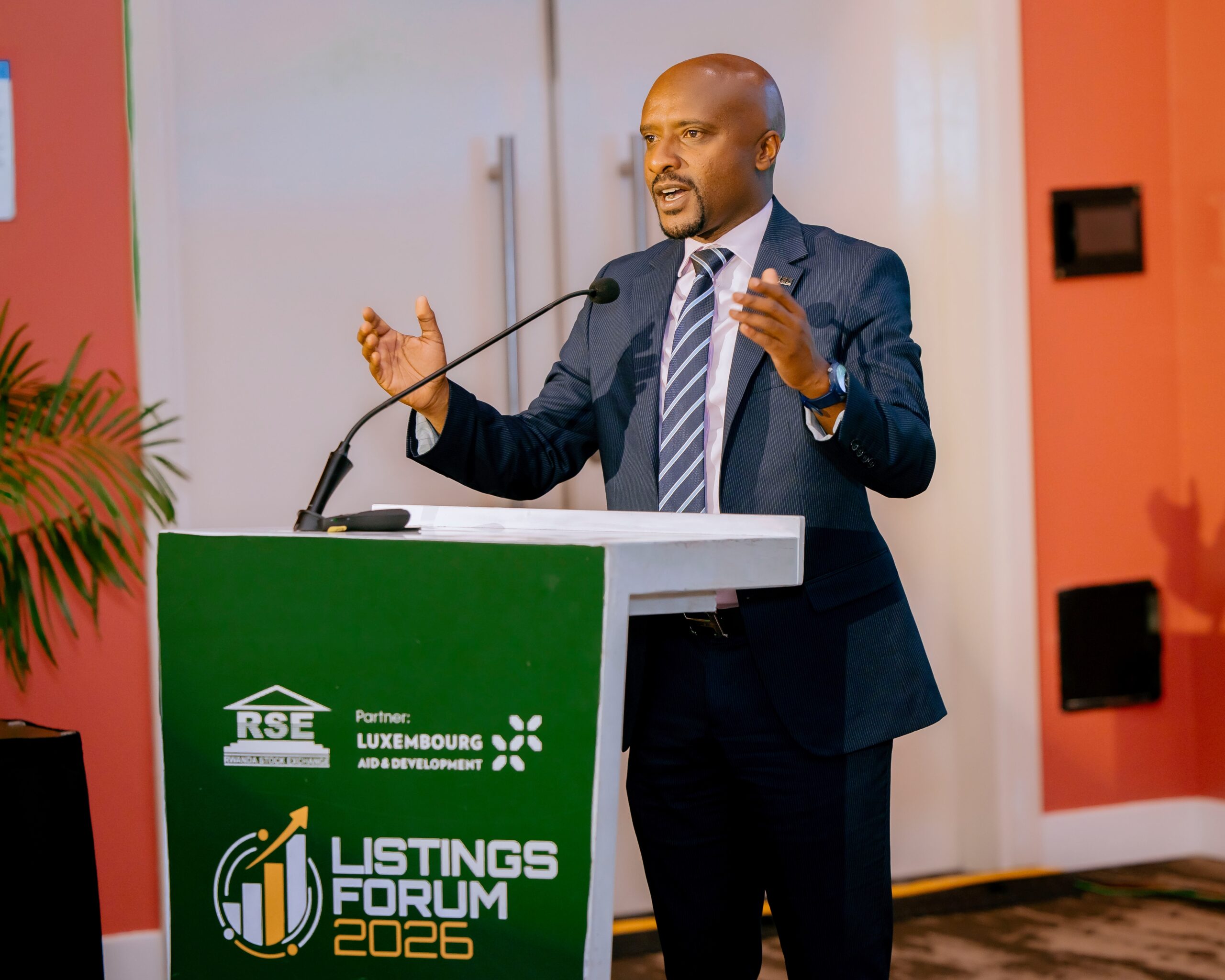
Rwanda Stock Exchange CEO Pierre Celestin Rwabukumba says that Capital markets are a powerful tool for empowering businesses and driving economic transformation.
To facilitate this transition, structured institutional support is becoming increasingly available. “Our periodic investment clinics offer targeted advisory and capacity-building services, ranging from corporate governance to financial reporting,” Rwabukumba adds. “By elevating these internal standards, we ensure our businesses are not only investment-ready but also globally competitive.”
The result is a gradual but profound transformation of the private sector. Rwandan businesses that once operated within informal frameworks are increasingly formalizing their operations and adopting rigorous, long-term strategies. Ultimately, the focus of the Rwandan entrepreneur is shifting—from a mindset of day-to-day survival to one of sustainable, institutional growth.