


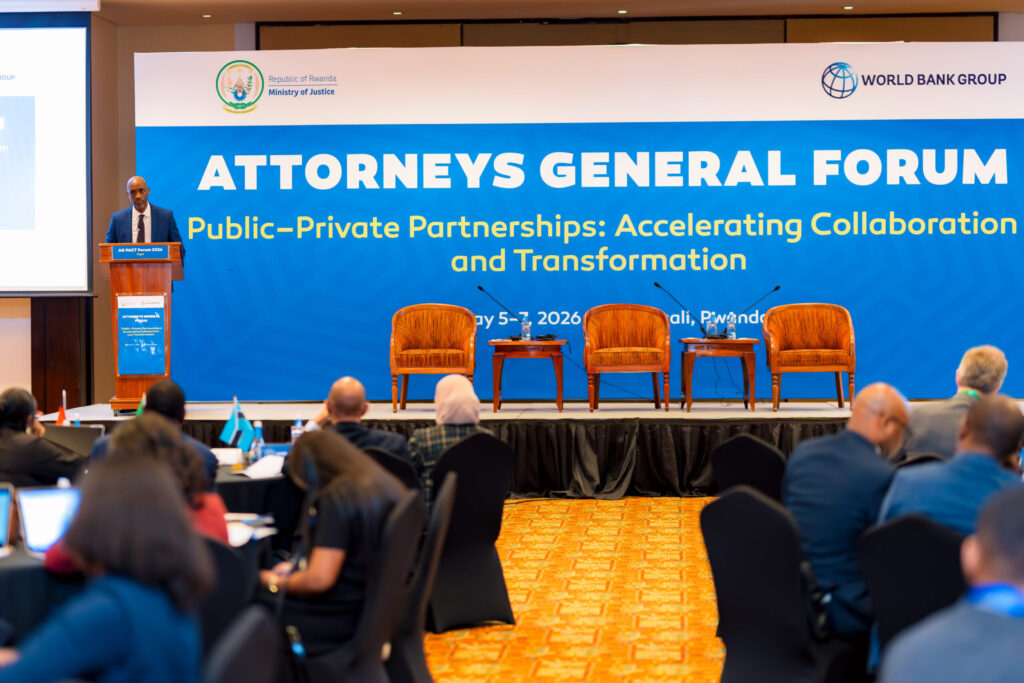
The Attorney General’s Public–Private Accelerating Collaboration and Transformation (AG PACT) Forum is underway in Kigali.
KIGALI, Rwanda— In the high-stakes push to bridge Africa’s infrastructure and energy gaps, a new consensus is emerging: the most critical tool for development isn’t found in a toolbox or a bank vault, but in the law books.
At the ongoing Attorney General’s Public–Private Accelerating Collaboration and Transformation (AG PACT) Forum in Kigali, top government lawyers and global development partners are reframing legal reform as the primary engine for the continent’s growth. The shift marks a move away from seeing law as a bureaucratic hurdle and toward viewing it as essential capital—an engine that underpins investment, stability and long-term development.
The Contractual Backbone of Progress
The forum, convened with support from the World Bank Group (WBG), comes at a pivotal moment. As African nations seek to attract massive private investment for energy and transport, the “regulatory risk” associated with weak legal systems has become a primary deterrent.
“Public–private partnerships are not shortcuts, but structured tools that require discipline, clear laws, and institutions that can manage them over time,” said Dr. Emmanuel Ugirashebuja, Rwanda’s Minister of Justice and Attorney General. “Attorneys General sit at the point where public ambition becomes legal commitment, and that is what determines whether projects are sustainable.”
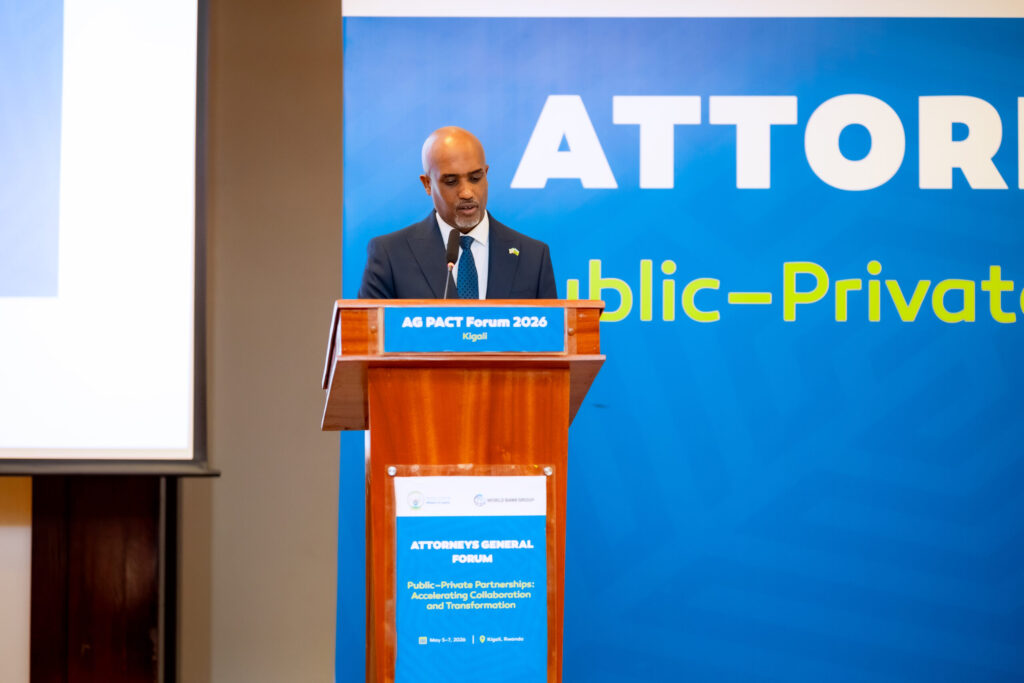
Minister of Justice, Dr. Emmanuel Ugirashebuja, emphasized that PPPs depend on clear legal frameworks.
Powering ‘Mission 300’
A central focus of the dialogue is Mission 300, an ambitious initiative implemented alongside the African Development Bank to connect 300 million Africans to electricity by 2030. While the physical infrastructure—power lines and substations—is the visible goal, the enabling force is a predictable and credible legal framework.
Christopher Stephens, Senior Vice President and General Counsel at the World Bank Group, emphasized that energy access must be tied directly to a broader jobs agenda. By creating stable laws for power providers, governments can unlock economic activity across sectors including agriculture, healthcare and transport.
“We brought this agenda to Rwanda because it has a strong and evolving economic program,” Stephens said. “Only the private sector can bring the scale of capital, know-how, and technology needed, but that depends on legal systems that are predictable.”
De-Risking the Future
A major theme of the Kigali forum is the role of dispute resolution in sustaining investor confidence. The International Centre for Settlement of Investment Disputes (ICSID) urged that mechanisms such as arbitration and mediation be embedded into project design from the outset.
“Disputes are part of any major infrastructure project, but what matters is having systems in place to resolve them efficiently,” said ICSID Secretary-General Martina Polasek. By anticipating risks within the legal framework, she noted, governments can ensure that when challenges arise, projects—and the financing behind them—do not stall.
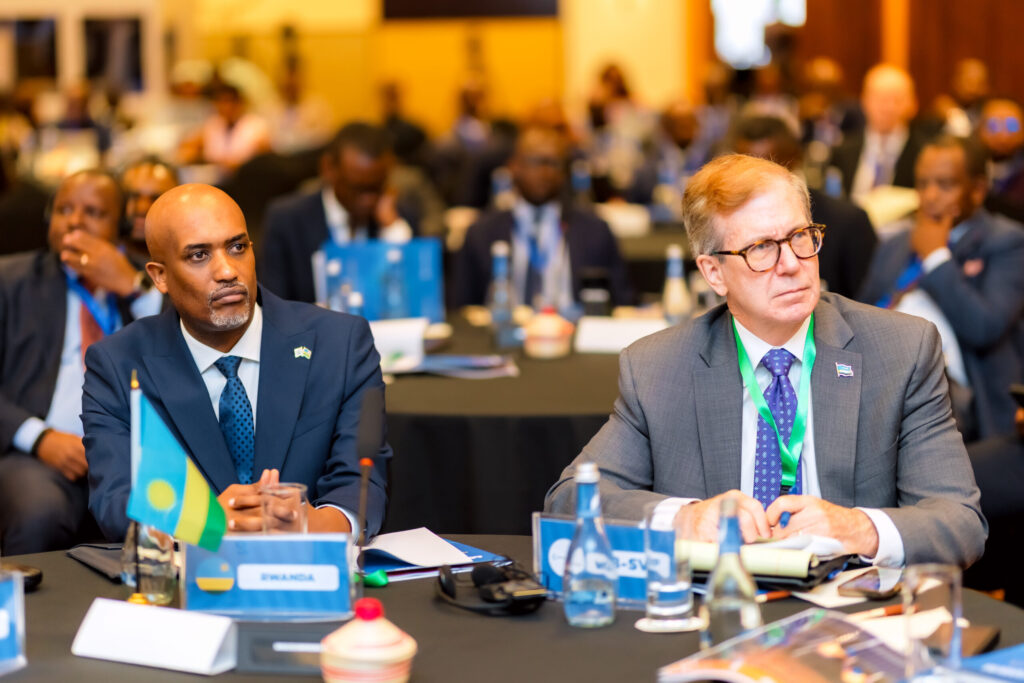
Minister of Justice, Dr. Emmanuel Ugirashebuja (L) and Christopher Stephens, Senior Vice President and General Counsel at the WBG during the forum.
A New Mandate for Attorneys General
Across Sub-Saharan Africa, weak regulatory systems have often acted as a silent tax on development. The AG PACT Forum aims to bridge this gap, repositioning Attorneys General from the state’s chief litigators into architects of investment-friendly environments.
The message from Kigali is clear: billions of dollars in global capital are ready to flow into Africa’s infrastructure, but that capital is seeking the certainty of strong legal systems. By aligning legal frameworks with economic priorities, African countries are demonstrating that law is not just a governance tool—it is capital in its own right, and a cornerstone for powering the continent’s future.