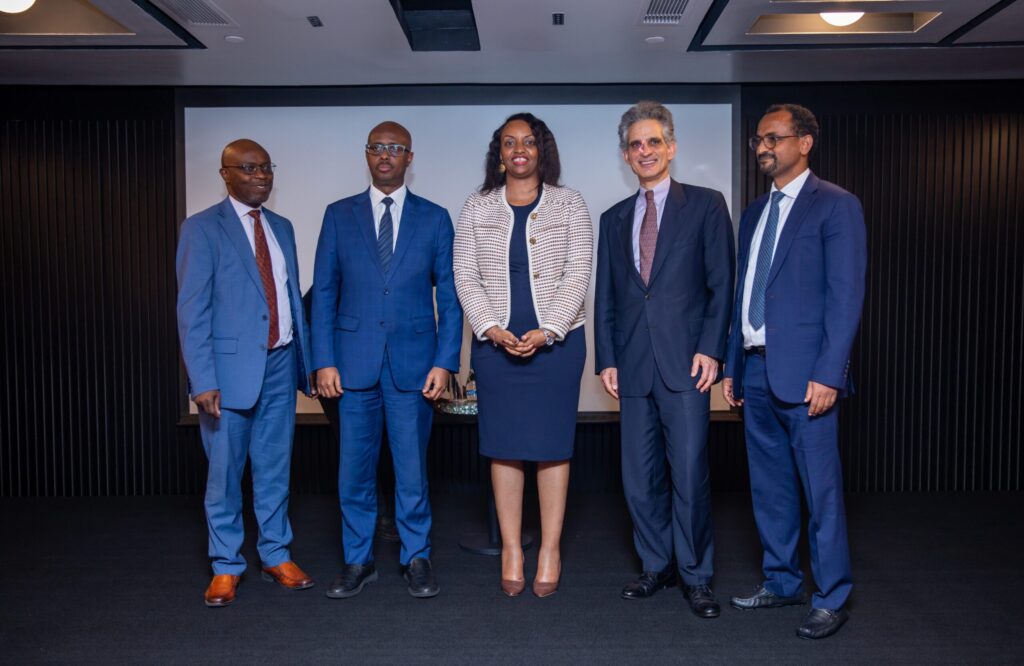


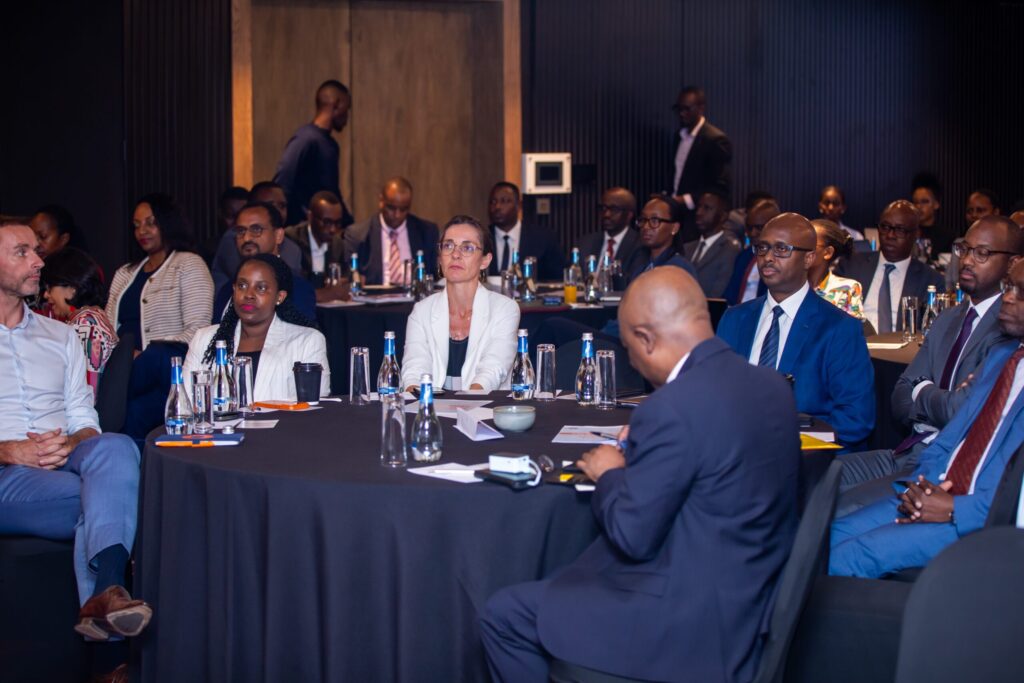
Officials during the launch of the latest IMF’s Regional Economic Outlook for Sub-Saharan Africa in Kigali.
KIGALI – As Sub-Saharan Africa faces a new wave of global shocks, Rwanda is keen to stand out as a case study in resilience, discipline, and forward-looking reform.
According to the latest IMF’s Regional Economic Outlook for Sub-Saharan Africa, Kigali remains at the center of a critical policy conversation on how to sustain growth in an increasingly volatile world.
The report, titled “Hard-Won Gains Under Pressure,” highlights a region that entered 2026 with strong momentum, posting 4.5% growth in 2025, while Rwanda outperformed with an impressive 9.4% expansion.
Yet beneath this progress lies a fragile reality. Growth is expected to ease slightly to 4.3%, with risks tilted to the downside, particularly for import-dependent economies. For Rwanda, strong fundamentals must now be matched with deeper structural reform.
Growth Must Deliver Jobs and Transformation
Rwanda’s Minister of Finance and Economic Planning, Yusuf Murangwa, described the current moment as decisive for the region’s future. “Progress has been real, but it remains fragile,” he said, noting that growth alone is not enough to transform livelihoods.
At the current pace, Africa could take nearly 50 years to double per capita income, compared to just 15 years in East Asia. Murangwa emphasized that the structure of growth must shift toward the private sector. “We cannot rely on public spending, commodity windfalls, or external aid. We need strong private sector–led growth,” he said.
With more than 620 million young Africans expected to enter the labor force by 2050, he warned that policy choices made now will determine whether this becomes an opportunity or a crisis. He pointed to IMF analysis showing that improving governance, business regulation, and trade openness could boost output by up to 20% over the next decade.
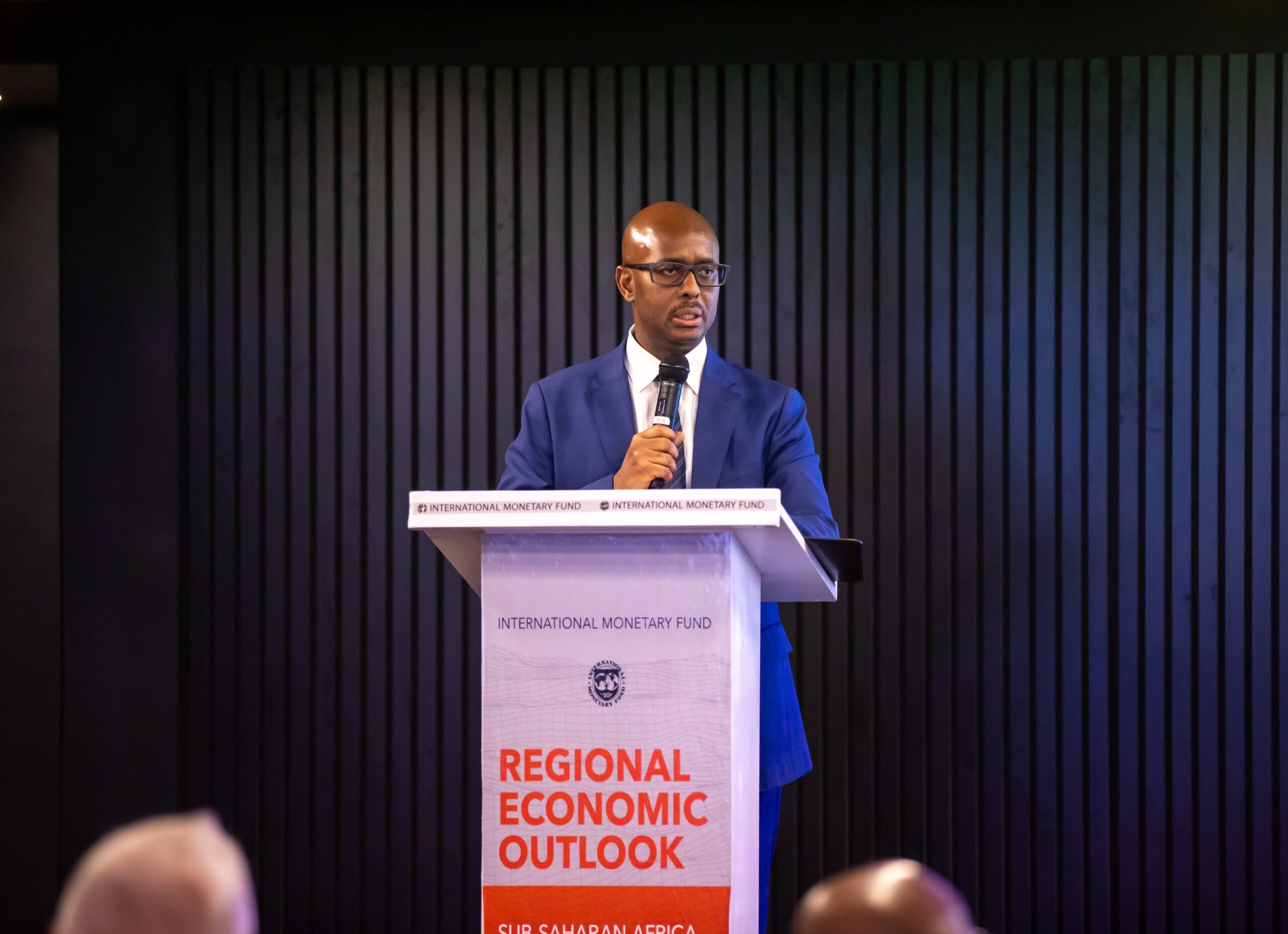
Rwanda’s Minister of Finance and Economic Planning, Yusuf Murangwa, sees the current moment as decisive for the region’s future.
Mlachila: Resilience Will Depend on Strong Fundamentals
From the IMF’s perspective, Montfort Mlachila, the Deputy Director, IMF African Department, cautioned that the region’s growth story is uneven and increasingly fragile. “The 4.5% growth figure masks major disparities. Many countries, especially oil importers, could see growth fall by as much as 1.5 to 2 percentage points,” he said.
About one-third of African economies are highly vulnerable, with limited fiscal buffers and weaker reserves. Countries with strong macroeconomic fundamentals such as low inflation, manageable deficits, and credible policies, are more likely to withstand shocks.
On policy priorities, Mlachila emphasized targeted interventions. “You must avoid broad-based subsidies and instead focus on targeted, time-bound support. We also need stronger domestic revenue mobilization through improved tax systems and digitalization” he said.
He also highlighted a major structural shift of declining external aid. With official development assistance falling by 16% to 20% on average, countries must increasingly rely on domestic resources and capital markets to finance development.
Stability, Reform, and Trust Are Critical
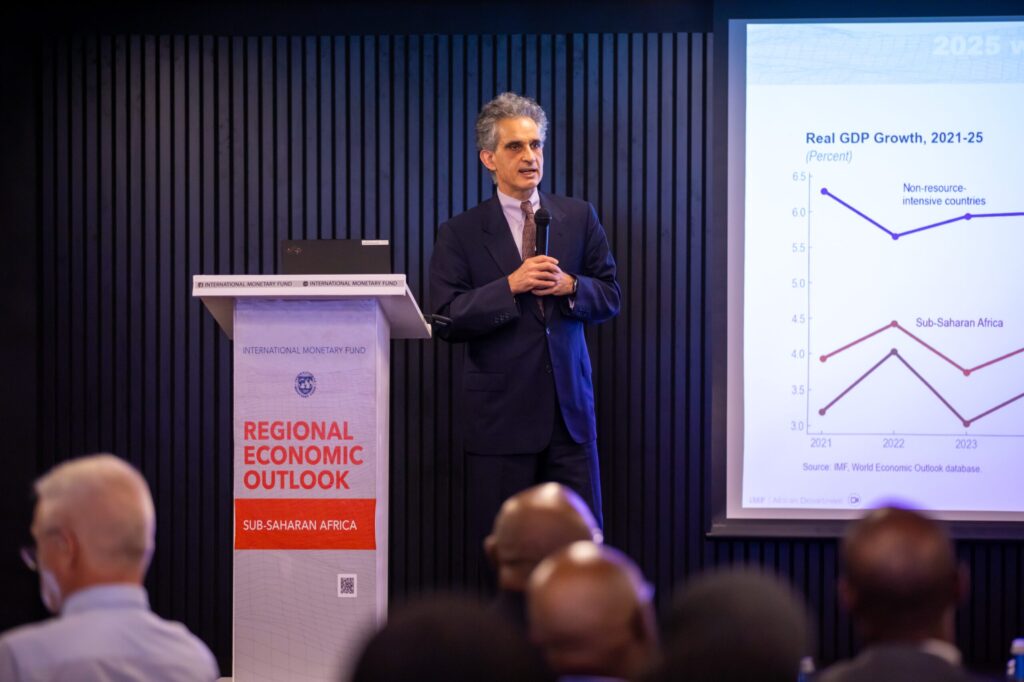
Dr. Nikola Spatafora, Senior Economist in the IMF’s African Department, speaks at the launch of the latest IMF Regional Economic Outlook for Sub-Saharan Africa.
According the Governor of the National Bank of Rwanda, Dr. Soraya Hakuziyaremye, the rising inflation is a key immediate concern.
“Last year’s inflation stood at 7%, but in the first quarter of 2026, it rose to 9.2%. We expect inflationary pressures to persist due to global energy shocks and supply disruptions,” she said.
She emphasized that maintaining stability requires protecting vulnerable households through targeted and time-bound measures, while safeguarding fiscal discipline.
Beyond short-term pressures, Hakuziyaremye highlighted the need for sustained reforms to unlock growth. Improving governance, regulatory efficiency, and the ease of doing business will be essential to attract investment and boost productivity.
“Building internal resilience has become even more urgent. There is need to strengthen domestic revenue, improve public spending efficiency, and enhance institutional capacity. Reforms must be anchored in trust, transparency, and accountability to succeed,” she said.
A Forward-Looking Growth Strategy
Rwanda’s long-term strategy is increasingly focused on positioning the economy for future growth drivers. Investments in digital infrastructure, artificial intelligence, and skills development are being prioritized to raise productivity across key sectors.
“We only have 24 years to achieve Vision 2050. The clock is ticking,” Hakuziyaremye cautioned.
With coordinated fiscal and monetary policies under the IMF-supported program, Rwanda is working to strengthen resilience while advancing reforms that support private sector-led growth. It requires disciplined policy, credible reforms, and a decisive shift toward a more productive, private sector-driven economy.