Rwanda has temporarily closed the Rusizi I and Rusizi II border posts with the Democratic Republic of Congo (DRC) as part of heightened efforts to prevent the spread of Ebola following a new outbreak reported in eastern Congo.
The closure, announced on Monday, comes a day after authorities suspended operations at border crossings in Rubavu District, in response to concerns that the outbreak may have reached Goma, the North Kivu provincial capital located just across Rwanda’s western border.
However, authorities said essential cross-border movement will continue. Students, humanitarian workers, food transporters and returning residents will still be allowed to cross under strict health screening procedures.
No Ebola Cases Reported in Rwanda
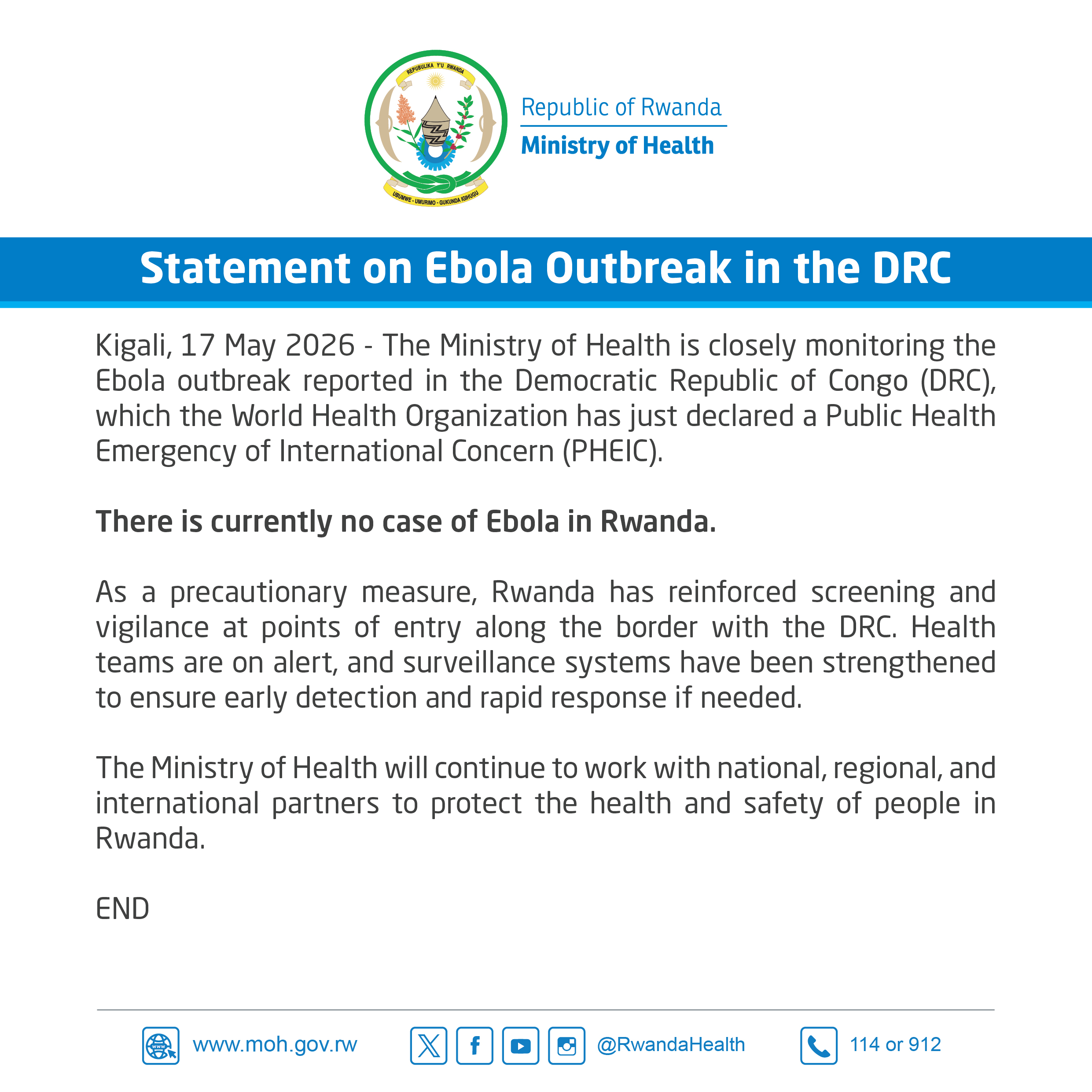
The Ministry of Health has reassured the public that, despite intensified surveillance and preventive measures, no Ebola case has been detected in Rwanda as of May 18, 2026.
Rwanda has activated stringent monitoring and screening at all border entry points with the DRC, particularly in high-risk areas along the Western Province.
Health officials have also placed rapid response teams on standby, while specialised treatment centres and isolation units have been prepared to manage any suspected cases if needed.
The public is being urged to continue observing preventive measures, including regular handwashing with clean water and soap, and avoiding handshakes or unnecessary physical contact.
Officials also advise limiting non-essential travel to affected areas, seeking immediate medical attention if symptoms appear, and reporting suspected cases through the Ministry of Health toll-free number 114.
Symptoms of Ebola include sudden fever, severe fatigue, headaches, muscle pain, vomiting, diarrhoea and, in severe cases, unexplained bleeding.
Regional and Continental Response Intensifies
The latest outbreak in the DRC has heightened concern across the region due to the affected area’s high population mobility, insecurity and extensive cross-border movement with neighbouring countries, including Rwanda and Uganda.
Africa Centres for Disease Control and Prevention (Africa CDC) said the situation underscores the urgent need for coordinated continental action to prevent further spread and protect regional health security.
The continental health body has recommended the immediate activation of its Incident Management Support Team (IMST), which will coordinate support across surveillance, laboratory systems, case management, infection prevention and control, logistics, risk communication and cross-border collaboration.
Africa CDC officials are expected to visit affected countries in the coming days to support national authorities and strengthen preparedness efforts.
“Africa CDC will continue to work closely with all partners to ensure that timely and appropriate support is provided to all affected and at-risk countries,” the agency said in a statement.
Outbreak Reaches Goma
According to Congolese health authorities, the latest Ebola outbreak has reached Goma, a city of more than one million people bordering Rwanda.
Jean-Jacques Muyembe, Director of the DRC’s National Institute for Biomedical Research, confirmed that laboratory tests detected a positive case in the city.
Media reports said the confirmed patient is the wife of a man who died of Ebola in Bunia, the capital of Ituri Province and the epicentre of the current outbreak. She reportedly travelled to Goma while already infected.
The development has raised concern because of the close economic and social ties between Goma and neighbouring cities in Rwanda, particularly Rubavu and Rusizi.
Rwanda’s Proven Track Record in Epidemic Response
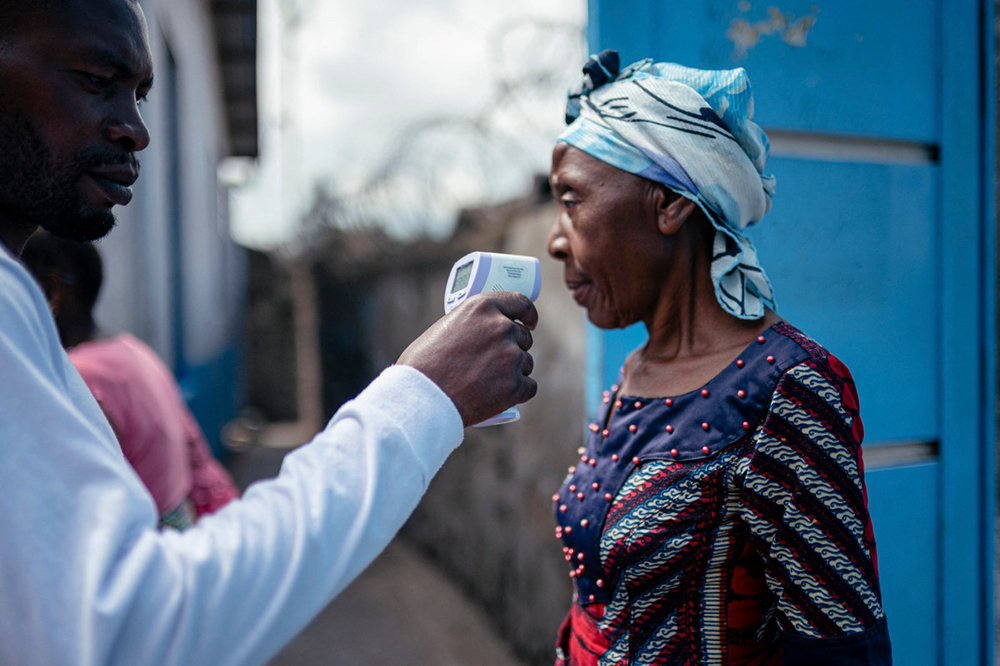
Rwanda has built a strong reputation for managing public health emergencies swiftly and effectively.
The country successfully contained previous threats, including Ebola and Marburg virus disease, through early detection, aggressive contact tracing and coordinated public communication.
Rwanda also earned international recognition for its prompt and well-organised response to the COVID-19 pandemic, which combined strict preventive measures, testing, vaccination and community mobilisation.
Health authorities say these past experiences have strengthened Rwanda’s preparedness systems and its ability to respond rapidly to emerging outbreaks.
Understanding Ebola
Ebola Virus Disease (EVD) is a severe and often fatal illness, with an average case fatality rate of around 50%.
Symptoms typically appear between two and 21 days after exposure and initially resemble flu-like illness before progressing to more severe complications.
Scientists believe the virus is animal-borne, with fruit bats considered the most likely natural reservoir.
The disease can be caused by several virus species, including Ebola virus, Sudan virus, Tai Forest virus and Bundibugyo virus.
Prevention relies on strict hygiene and minimizing exposure to the virus. Key measures include washing hands frequently with soap and clean water, using alcohol-based sanitizers, and avoiding direct contact with the blood or bodily fluids of infected individuals.
Public health guidelines also emphasize avoiding contact with wild animals, particularly fruit bats, monkeys, and apes, as well as refraining from consuming raw or undercooked bushmeat.
Safe burial practices that avoid direct contact with the deceased are critical in halting community transmission. Additionally, approved Ebola vaccines are utilized to protect high-risk individuals, including frontline health workers and contacts of confirmed cases.
Authorities say Rwanda remains vigilant and prepared, while urging the public to stay calm, rely on official information and continue adhering to preventive measures.