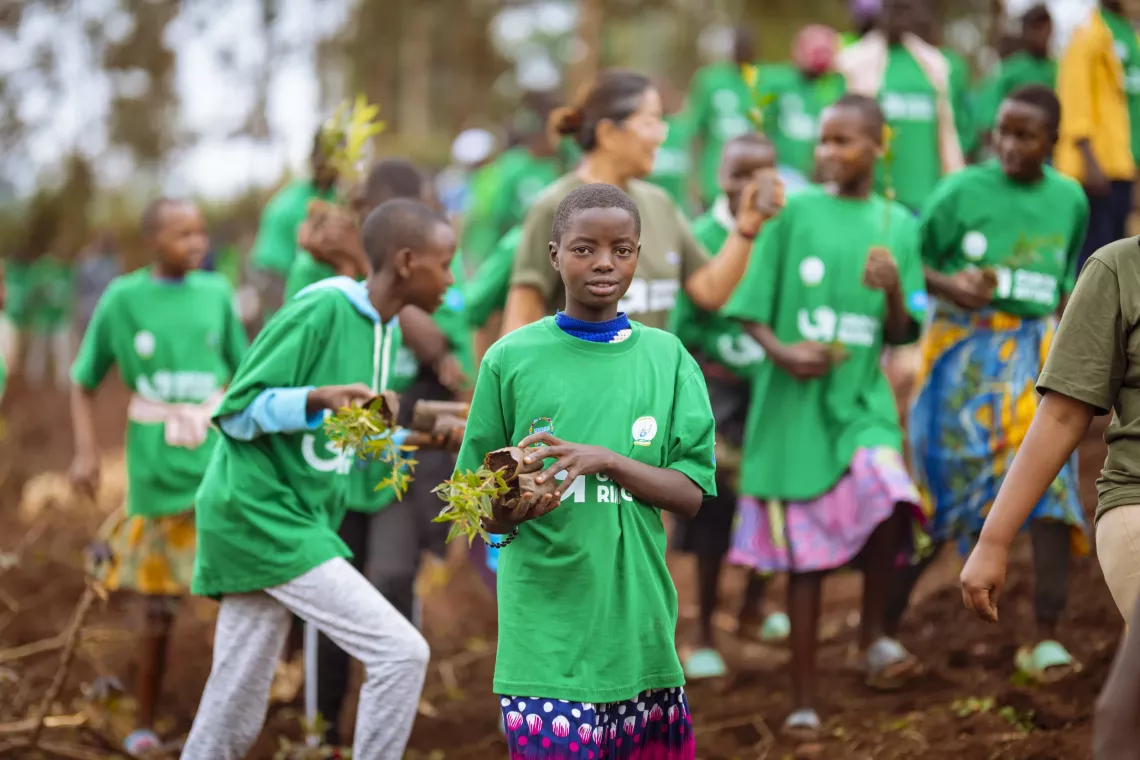
 Every Wednesday morning at Groupe Scolaire Matyazo in Rwanda’s Eastern Province, the normal classroom routine gives way to a different kind of lesson.
Instead of carrying only notebooks and pens, students arrive in sports attire armed with hoes, watering cans, and seedlings.
Together, they spend part of the day planting trees, watering young saplings, and maintaining school gardens—activities central to their understanding of climate change and environmental protection.
Among the enthusiastic students leading the effort is Shalom Tuyishime. Like many children in rural Rwanda, Shalom has already witnessed the destructive effects of climate change.
“Our village has suffered from landslides and floods,” she says, gesturing animatedly.
“But now, through the Greening Schools Programme, we are planting trees around our school and community. It feels good to know that we are making a difference,” she added.
For Shalom, the benefits of these trees are both environmental and practical.
“Shaded areas provide cooler spaces for outdoor activities and reduce dust, making it easier for us to focus on our studies,” she adds.
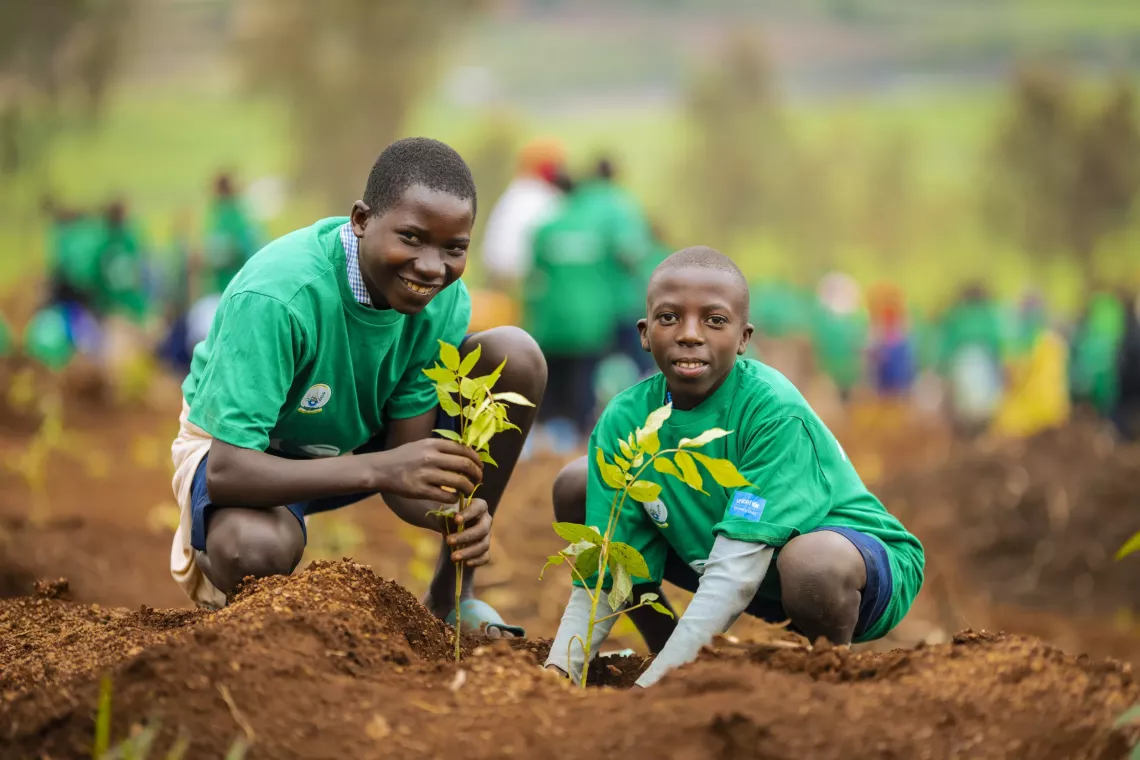
Gisagara district students participate in a special community tree planting drive. Photo: Serge/ UNICEF- Rwanda
So far, students and teachers at GS Matyazo have planted 1,040 trees within their school compound and distributed 2,925 nursery-raised seedlings to nearby communities.
Across Rwanda, this school greening initiative has already resulted in 42,852 planted trees—11,661 within ten participating schools and 31,191 in surrounding areas.
The effort is part of the ambitious Green Rising Project, a global initiative spearheaded by Generation Unlimited and UNICEF to nurture 10 million young climate advocates.
Locally, the initiative targets more than 150,000 young Rwandans within a single year.
Turning Schools into Green Spaces
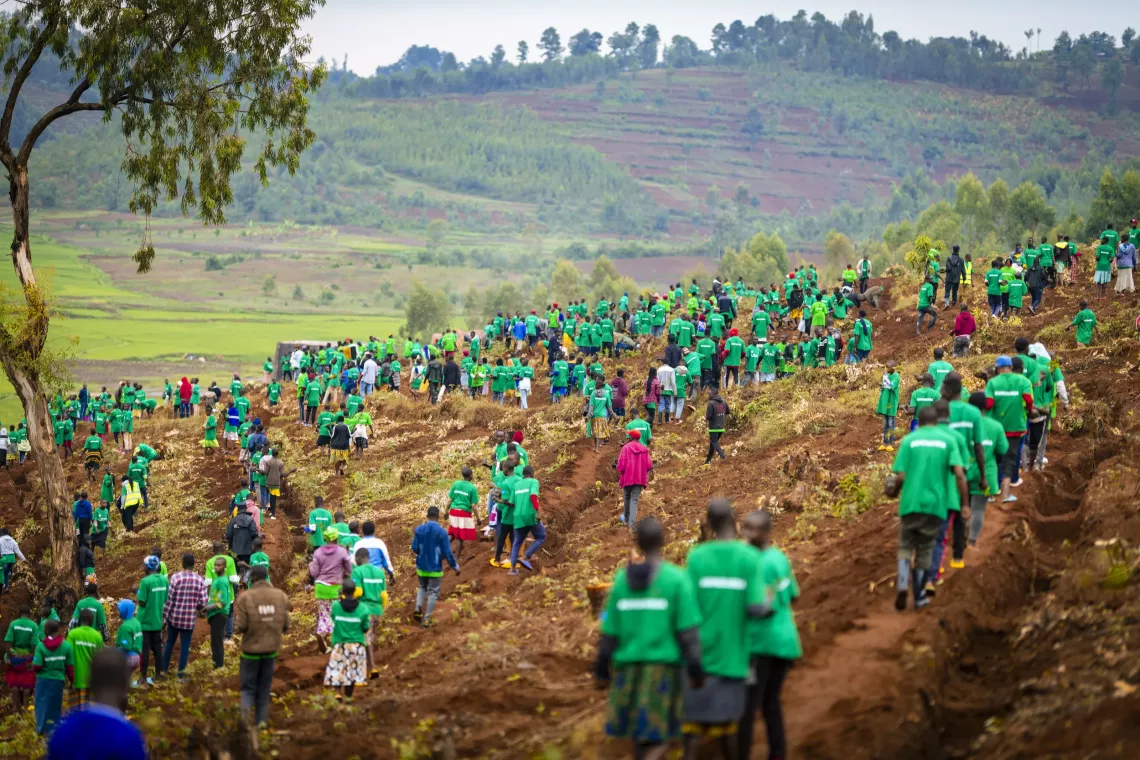
Young Rwandans among participants in a tree planting Umuganda exercise on the hill of Kibirizi Sector in Gisagara District. Photo: Serge/ UNICEF- Rwanda
While UNICEF has engaged many young Rwandans through monthly community tree-planting exercises, the organization believes schools offer a unique opportunity to reach nearly every child in the country.
Speaking at the launch of a nationwide fruit tree initiative, Lieke van de Wiel highlighted Rwanda’s high primary school enrollment as an exceptional platform for climate education.
She noted that the high enrollment rate naturally inspired the Ministry of Environment, the Ministry of Education, and UNICEF to collaborate on a movement to plant trees in every single primary school nationwide.
Van de Wiel believes the memories created through this initiative will stay with children for a lifetime.
“Ten years from now, they will look back and proudly say, ‘I planted that tree,'” she said.
From Climate Action to School Nutrition
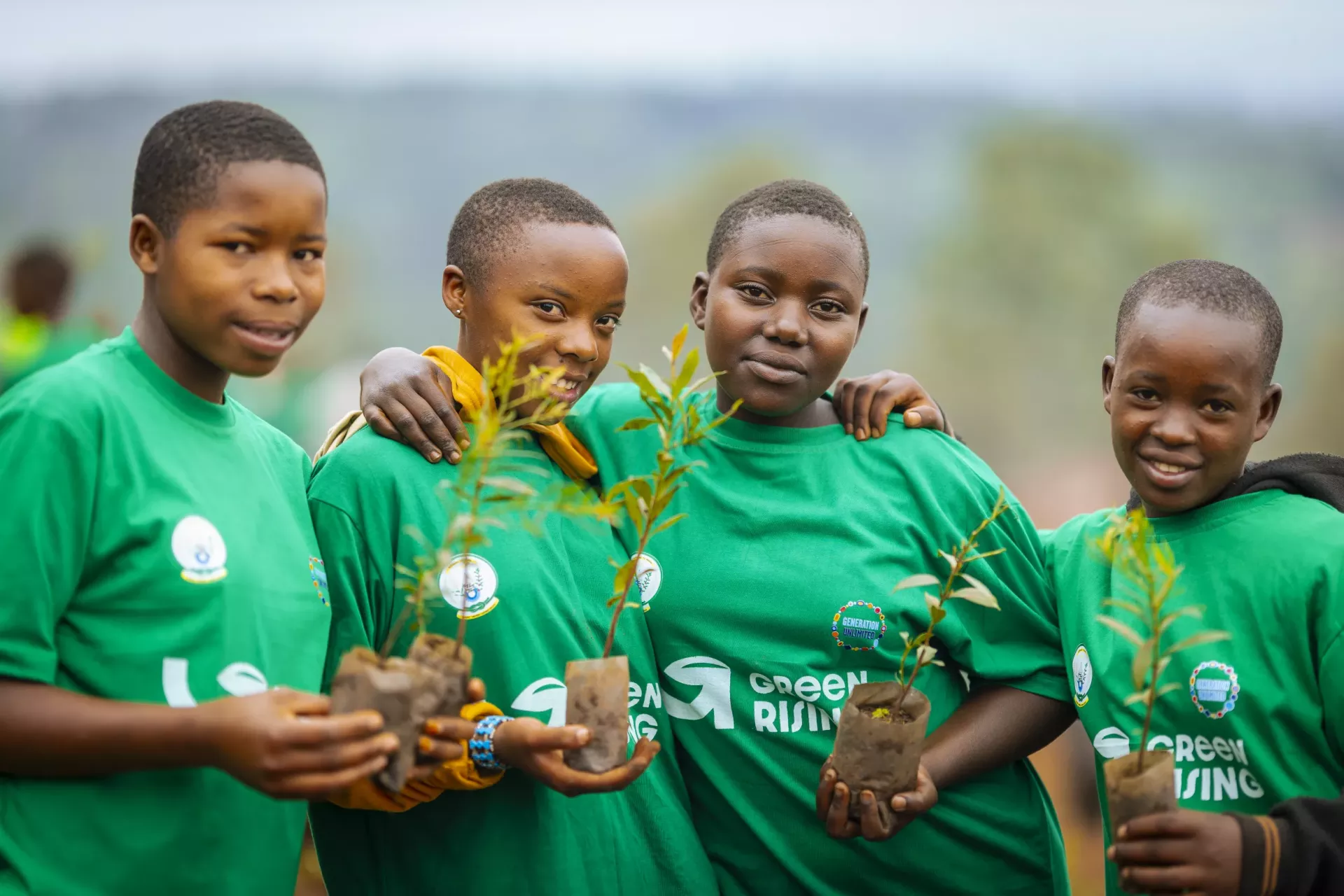
The Green Rising project made concerted efforts to ensure girls take part in green actions. Photo: Serge/ UNICEF- Rwanda
To turn that vision into reality, UNICEF and its partners launched a new national initiative, “Our Trees, Our Future” (“Ibiti byacu – Ejo heza hacu”).
The program, targeting more than 4,000 schools, will be implemented by the Government of Rwanda in partnership with UNICEF and One Acre Fund Rwanda.
Under the initiative, each beneficiary school will plant at least 40 fruit trees—including avocado, mango, orange, and lemon—beginning in the late 2026 planting season.
While grafted citrus and mango trees typically take four to six years to bear fruit, and avocado trees take five to seven, future generations of learners will inherit the fruits, shade, and healthier environments created today.
With 4,986 registered schools and over 300 Early Childhood Development (ECD) centers across the country, the initiative represents a major national effort to promote nutrition, environmental sustainability, and climate resilience.
Fighting Hunger and Climate Change Together, Investing in the Future
The fruit tree agenda is part of a broader national strategy to simultaneously tackle malnutrition, climate change, land degradation, and household poverty.
Rwanda has successfully reduced childhood stunting to 27 percent and aims to lower it to 15 percent by 2029.
Fruit trees are a sustainable solution, providing essential vitamins while stabilizing the country’s hilly, erosion-prone terrain.
The initiative also supports Rwanda’s “Five Fruit Trees per Household” policy and complements a five-year plan to plant more than 6.4 million fruit-bearing trees nationwide.
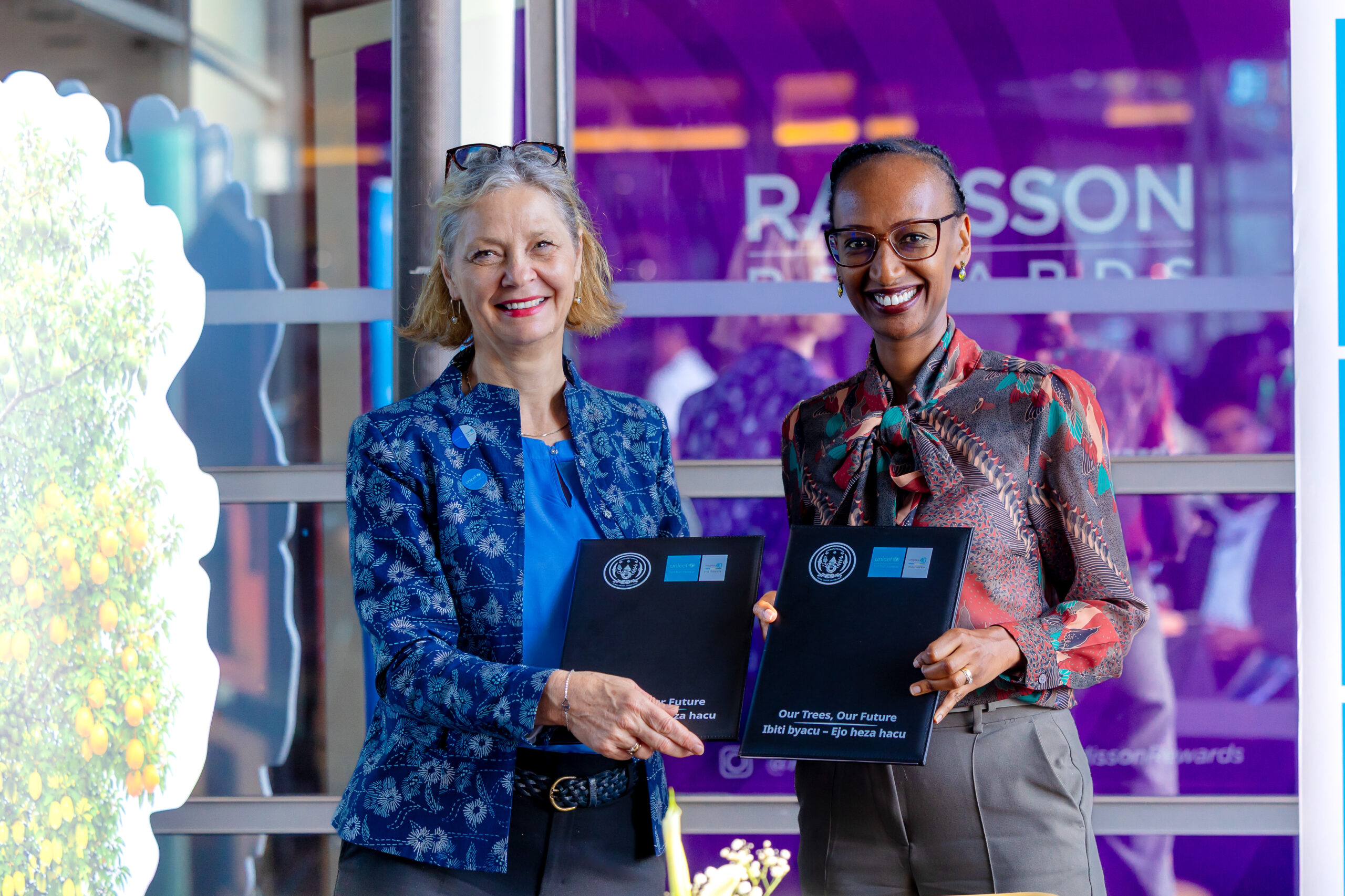
UNICEF Rwanda Country Representative, Lieke van de Wiel (left) and One Acre Fund Rwanda CEO, Belinda Bwiza after signing a statement of intent.
Van de Wiel described the initiative as a milestone celebrating UNICEF Rwanda’s 40 years of partnership in the country.
“This is one step further in our commitment to children,” she said. “These trees will grow with them and become a part of their future.”
Belinda Bwiza, CEO of One Acre Fund Rwanda, prioritized the project’s economic impact.
“We serve over one million farmers, and resilience is at the center of our work,” she said.
The project is also expected to support livelihoods by creating opportunities for more than 2,000 tree nursery micro-entrepreneurs.
Rwanda’s Minister of Environment, Bernadette Arakwiye, framed the initiative as both an environmental and nutritional investment:
“A tree planted today is a meal for a child tomorrow and a breath of fresh air.”
Having already exceeded its national forest cover target of 30 percent to reach 30.4 percent, Rwanda now aims to grow 300 million seedlings by 2030 under the National Strategy for Transformation (NST2).
For students like Shalom, the impact is already felt every Wednesday beneath the shade of newly planted trees, where children are proving that even small hands can build a greener, healthier future.
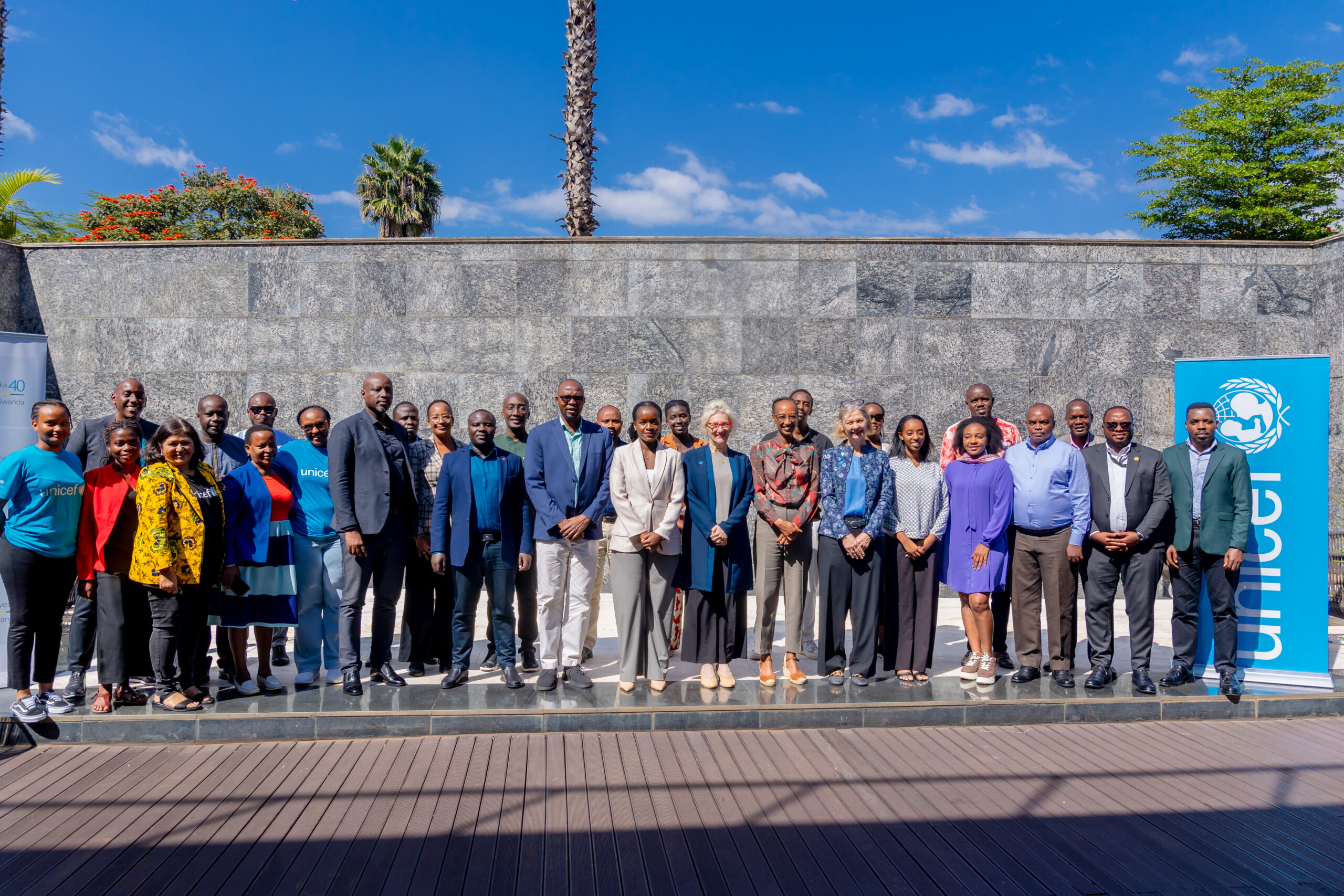
Official at the Soft launch of the joint fruit tree planting initiative co- led by UNICEF, the Ministry of Environment and Education, Rwanda Forestry Authority (RFA), policy level and other partners at technical level such as the Ministry of Gender and Family Promotion, Local Government, Agriculture, Rwanda Agriculture Board, Rwanda Environment Authority and the implementing partner, One Acre Fund.
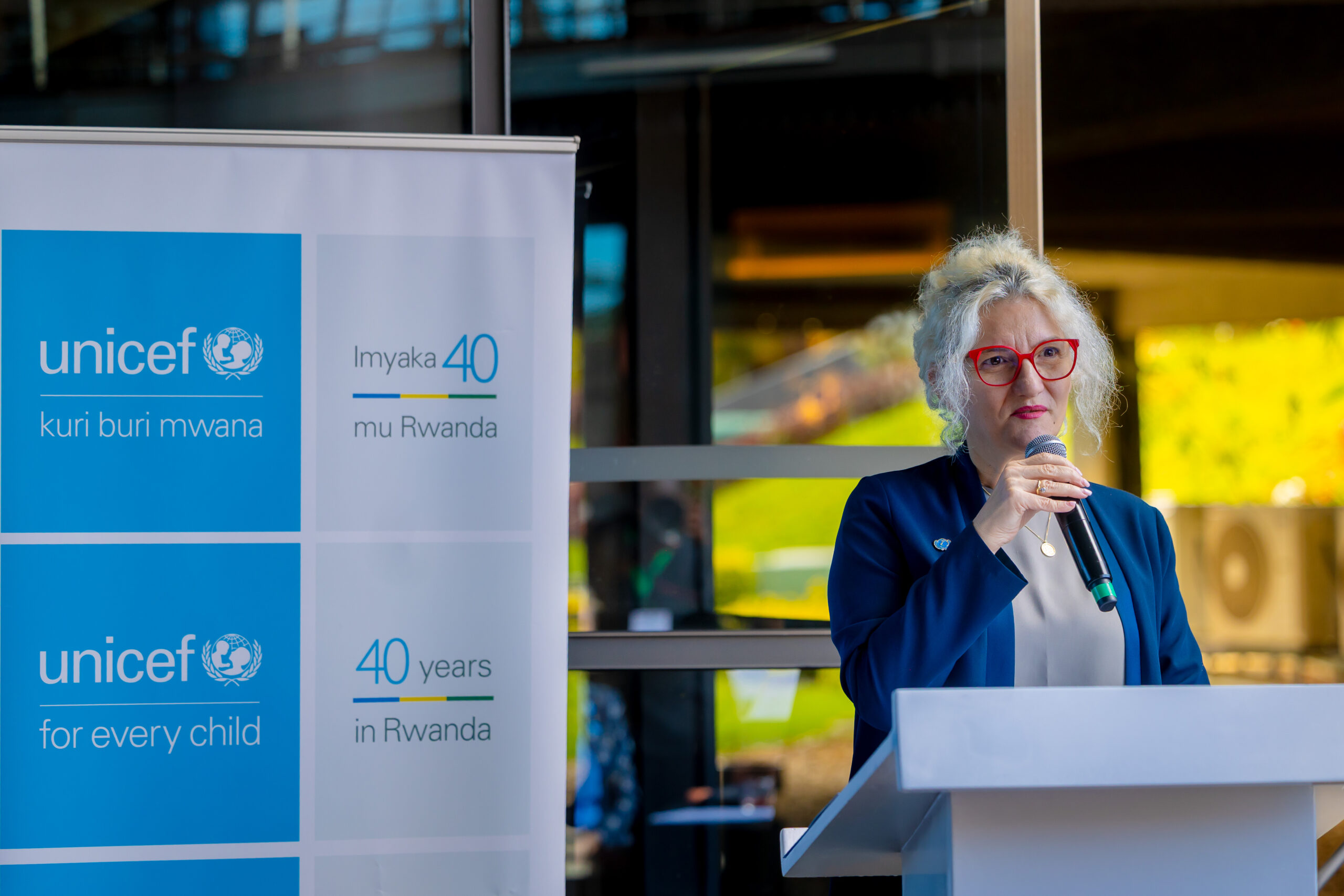
Etleva (Eva) Kadilli, the UNICEF Regional Director for Eastern and Southern Africa
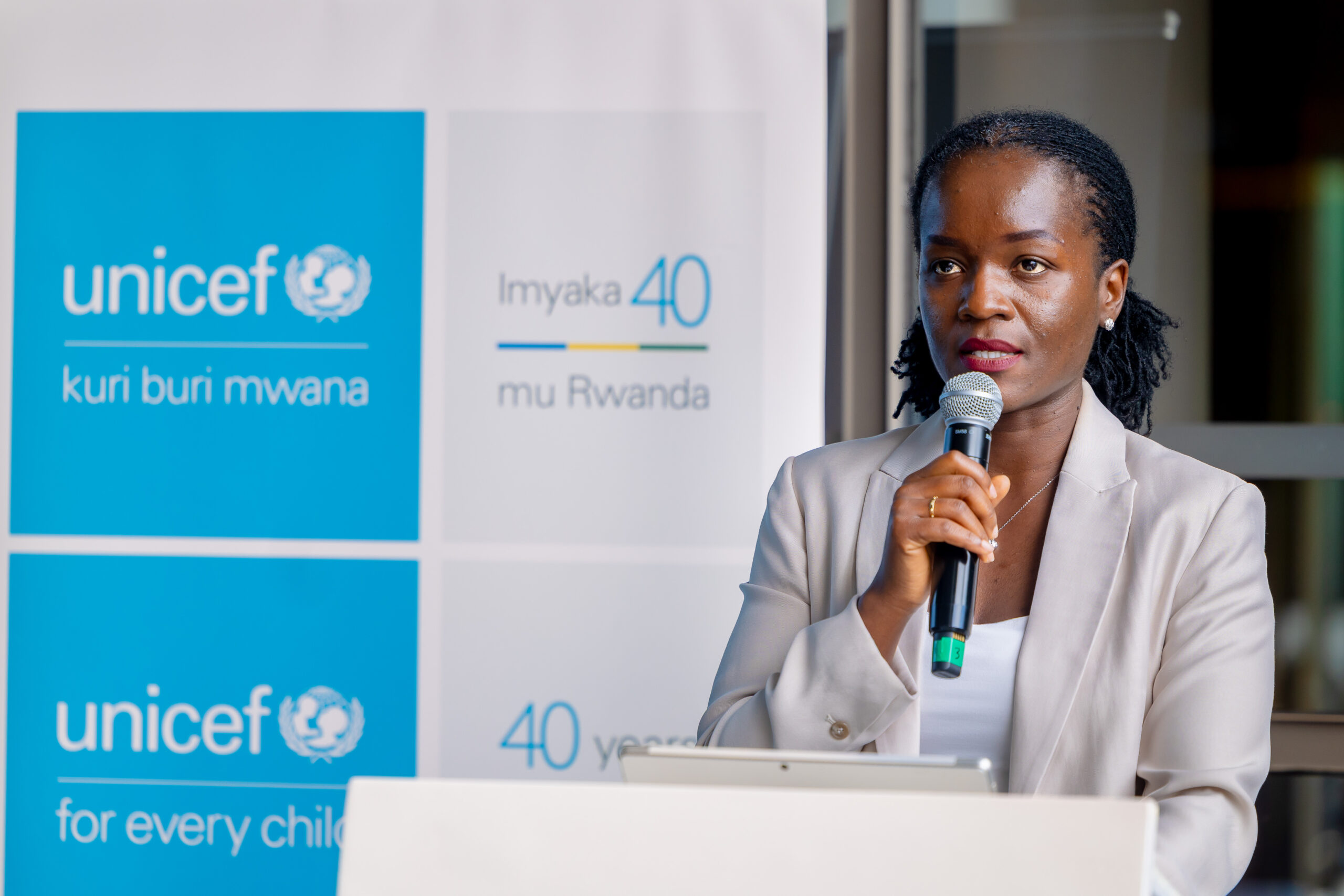
Rwanda’s Minister of Environment, Dr. Bernadette Arakwiye sees a bright future where Rwandan children can grow proud of their contribution to a climate resilient Rwanda by 2030

Officials at the Soft launch breakfast at Radisson Blu Hotel in Kigali