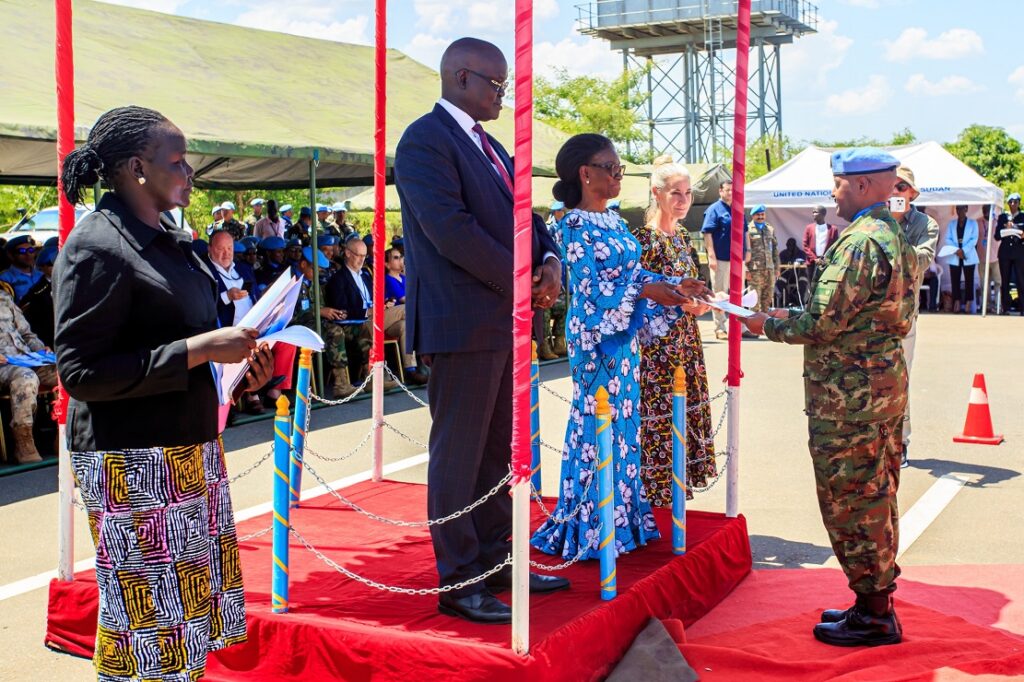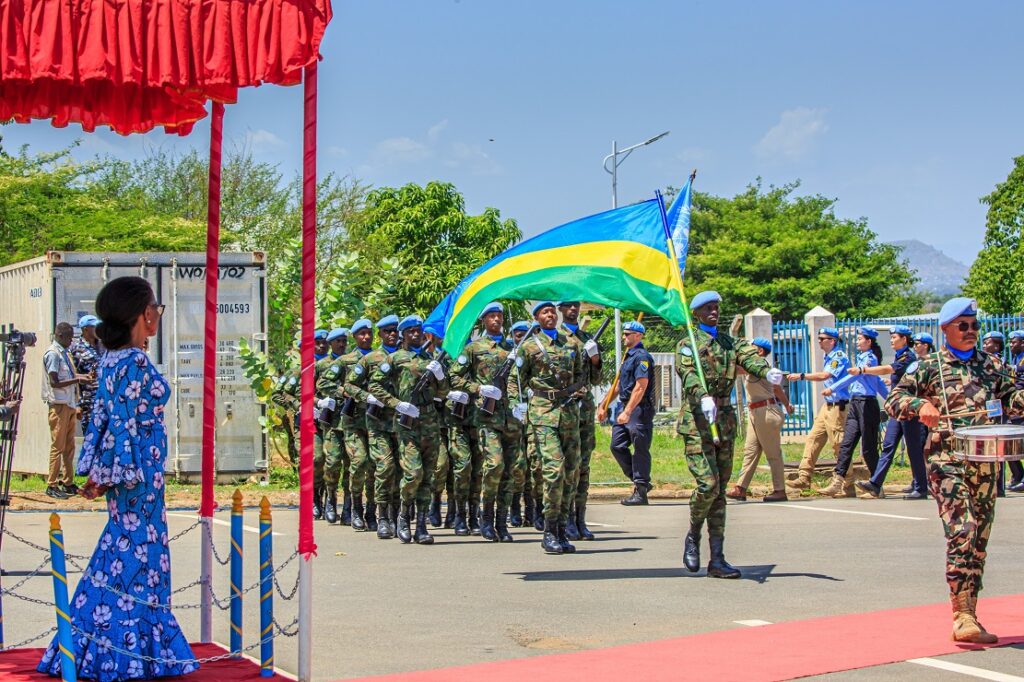



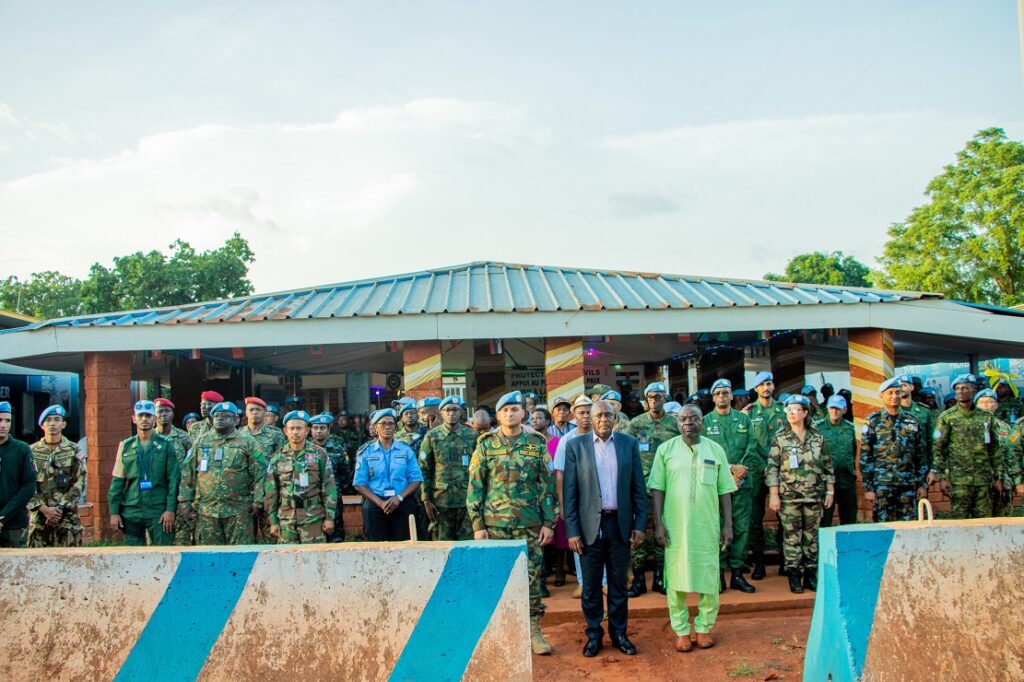
Rwandan troops and UN officials serving in South Sudan.
As the United Nations marked the International Day of Peacekeepers on May 29, Rwandan troops serving in the Central African Republic and South Sudan joined colleagues from around the world in honour of those involved in protecting civilians in some of the world’s most fragile regions.
Three decades after emerging from one of the darkest chapters in modern history, Rwanda has become one of the world’s leading contributors to United Nations peacekeeping operations, deploying soldiers, police officers and medical personnel to some of Africa’s most volatile regions.
The ceremonies in Bria and Juba were reminders of Rwanda’s growing role in international efforts to prevent the kinds of human suffering that continue to threaten vulnerable communities across the continent.
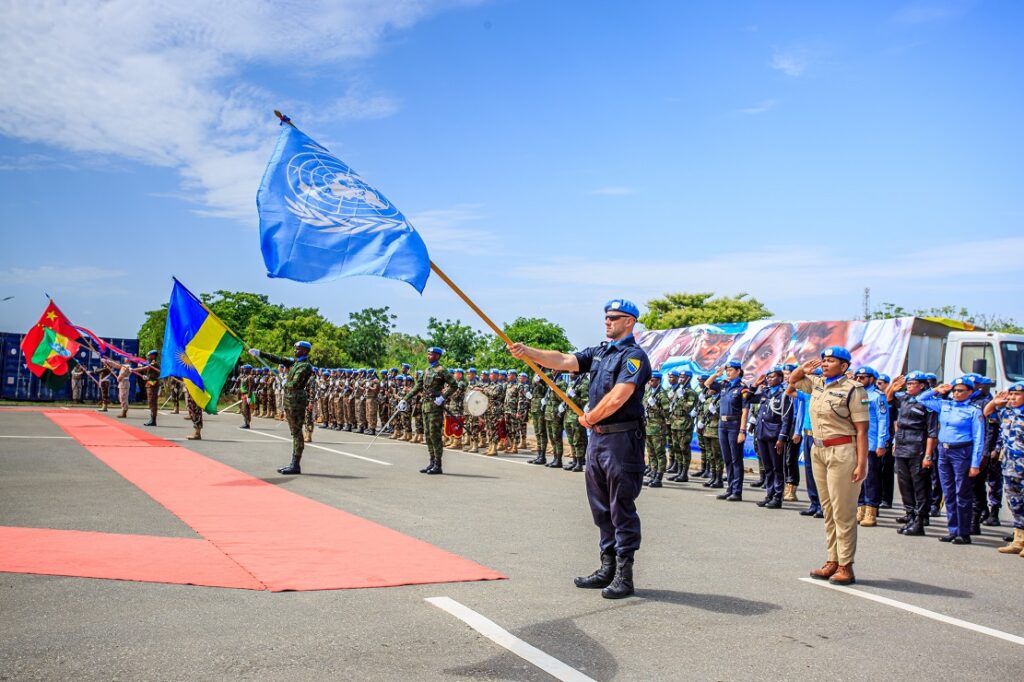
Military parades, cultural performances and sporting events formed part of the commemorations, bringing together peacekeepers from numerous countries serving under UN mandates.
Behind the displays of unity, however, lay a deeper recognition of the risks carried by those who patrol conflict-affected communities each day.
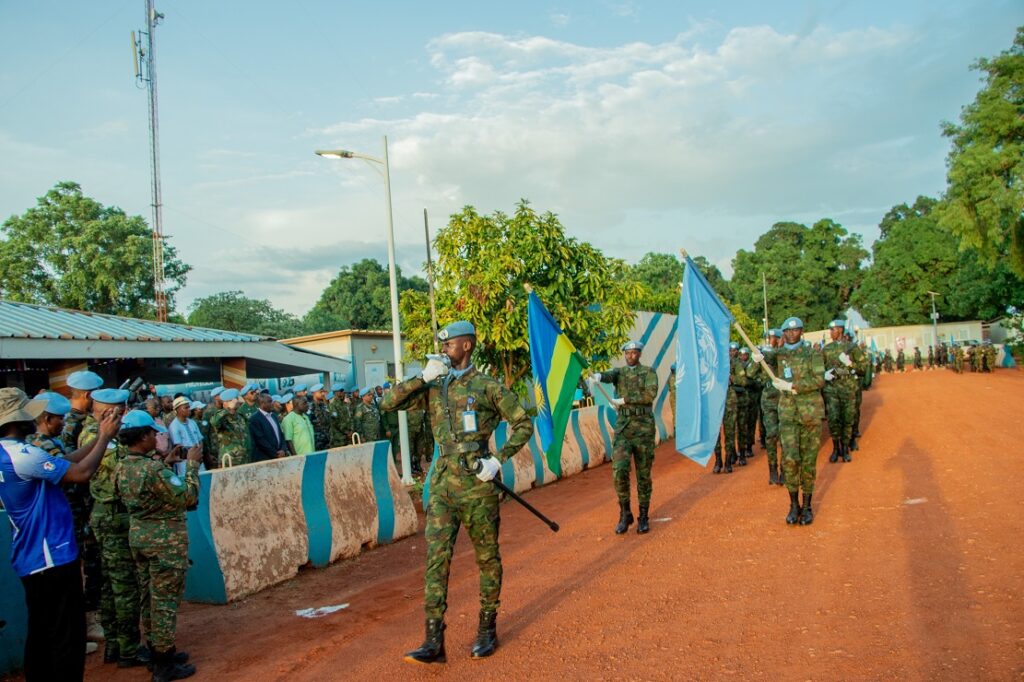
Rwandan troops serving in South Sudan during commemorations to celebrate the International Day of Peacekeepers.
This year’s theme, “Investing in Peace,” highlighted a reality often overshadowed by global crises: peacekeeping remains one of the international community’s most visible tools for protecting civilians caught between armed groups, political instability and humanitarian emergencies.
For the Rwandan contingent in Bria, including members of RWABG VIII and the Rwanda Level 2+ Hospital, the day provided an opportunity to reflect on a mission that continues long after ceremonies end.
Their work ranges from securing vulnerable populations to providing medical support in areas where access to healthcare is often limited.
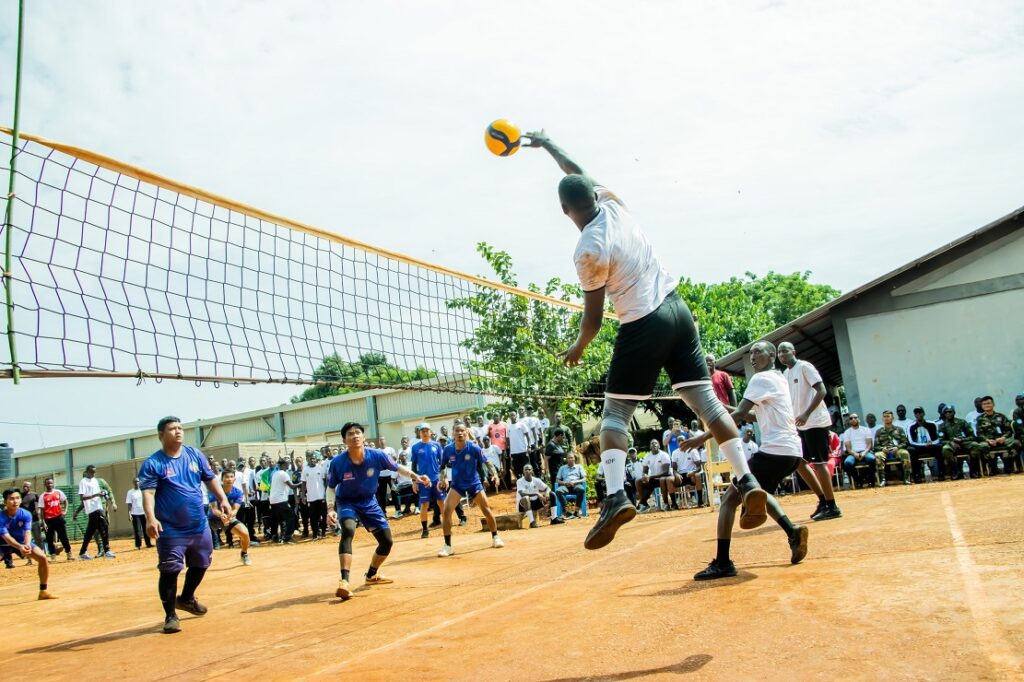
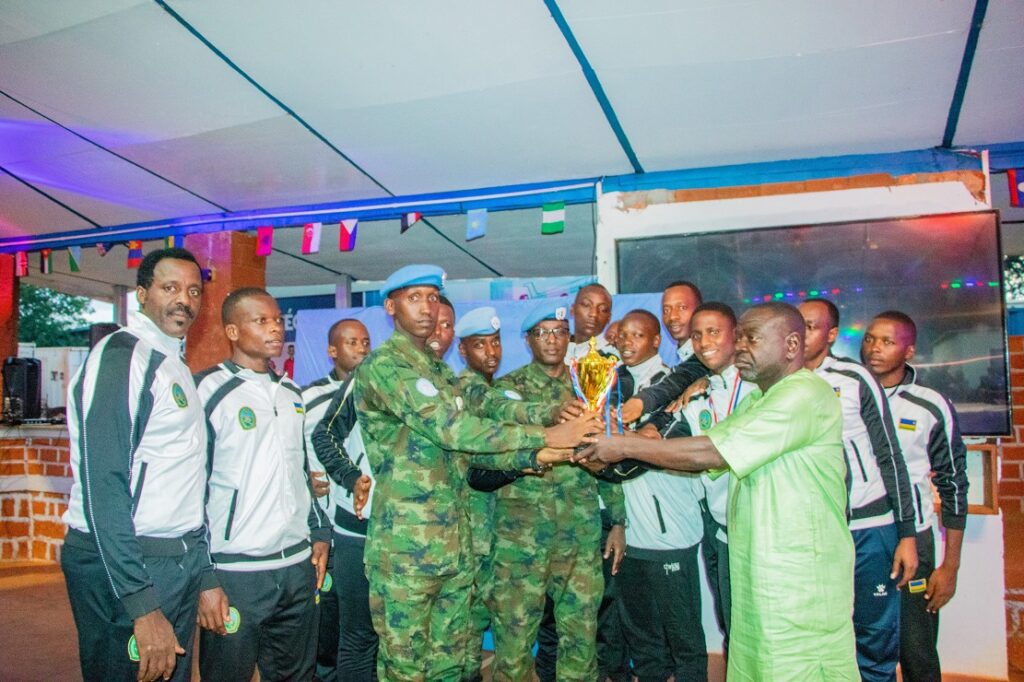
The celebrations also offered moments of camaraderie. Rwanda’s Battle Group volleyball team claimed the tournament title after defeating Cambodia Engineering in straight sets, while peacekeepers from different nations gathered in a display of cooperation that mirrors the multinational nature of UN operations themselves.
In South Sudan, similar commemorations unfolded in Juba, where peacekeepers paid tribute to fallen colleagues and renewed calls for lasting peace in a country still navigating a fragile security environment.
Across both missions, Rwandan troops showcased traditional cultural performances, underscoring how peacekeeping missions bring together not only military capabilities but also the identities and traditions of nations working toward a common objective.
The annual observance traces its origins to 2002, when the United Nations established a day dedicated to honoring peacekeepers worldwide. Every year, commemorations begin with a wreath-laying ceremony at UN Headquarters in New York City, remembering those who never returned home from their missions.
Since the first UN peacekeeping operation was launched in 1948, more than two million personnel from 120 countries have served under the UN flag. More than 4,500 have lost their lives in the process.
For many nations, May 29 is a day of remembrance. For Rwanda, it is also a reflection of a remarkable transformation from a country once associated with the failure of international protection to one whose peacekeepers now stand on the front lines of protecting civilians in some of the world’s most fragile societies.