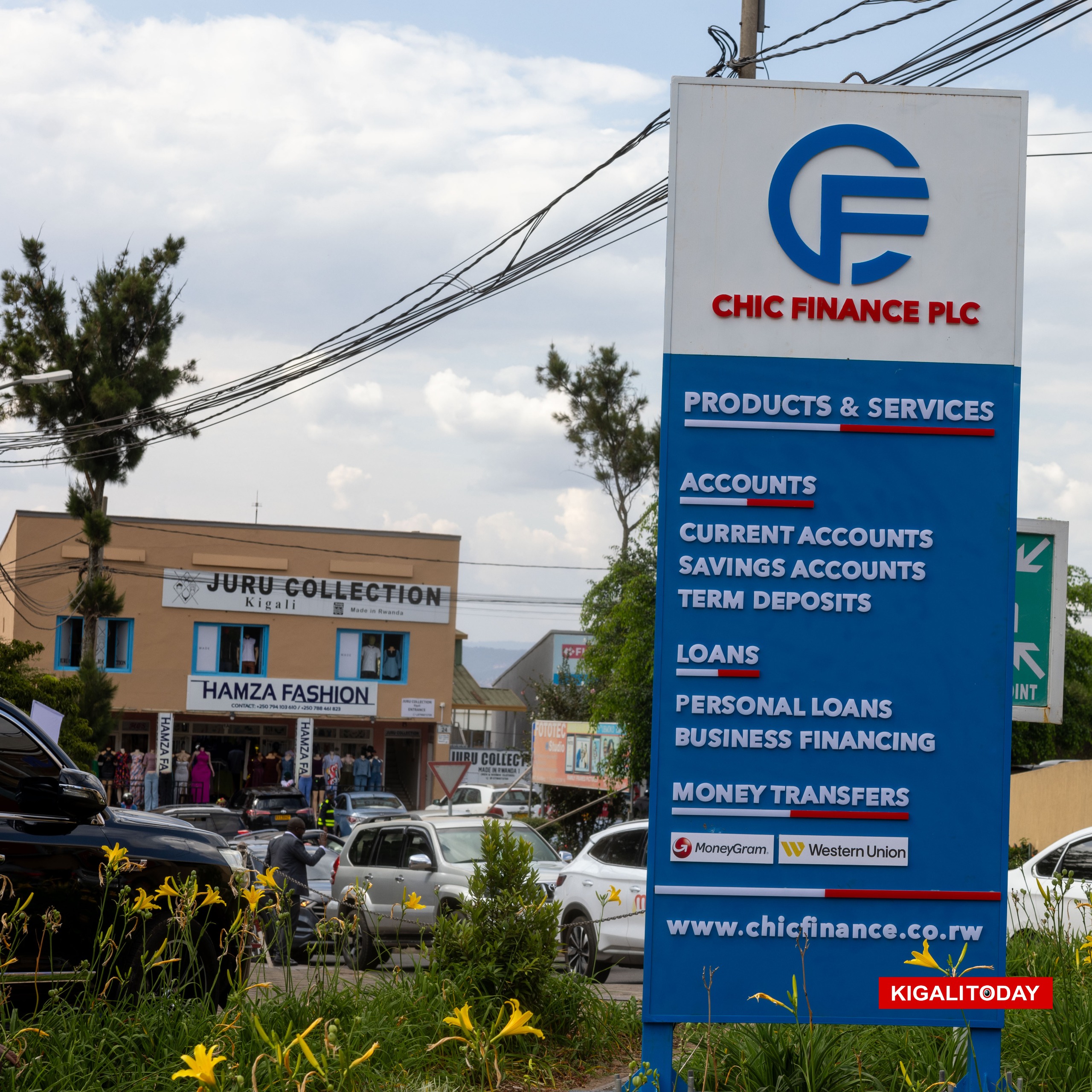
Champions, Investment Cooperation (CHIC) Ltd. has established CHIC Finance Plc.
KIGALI – On December 13, 2007, a group of about 80 traders gathered for a shareholders’ meeting under the banner of Champions, Investment Cooperation (CHIC) Ltd. Like many entrepreneurs in Kigali at the time, they were facing a common challenge of finding modern and reliable commercial premises from which to run their businesses.
What began as a problem-solving meeting would eventually evolve into one of Rwanda’s most unusual private-sector success stories of transforming traders into property investors, and now into shareholders of a financial institution capitalized at Rwf11 billion.
Nearly 19 years later, the same group has launched CHIC Finance Plc, a savings and credit institution built on the same collective investment philosophy that first brought them together.
From Traders to Developers of a Landmark
The original CHIC Ltd shareholders pooled resources to construct the CHIC commercial complex in Kigali’s central business district. The project cost approximately Rwf18 billion and has since grown in value to an estimated Rwf52 billion.
Over time, the group reduced from 80 to 41 shareholders as some exited, but the structure remained intact. What is most significant is not just the asset they built, but the investment culture they created, one based on pooling capital for long-term returns.
That same culture has now expanded into financial services. CHIC Ltd and its shareholders have established CHIC Finance Plc, a microfinance institution with a total capital base of Rwf11 billion.
Of this, Rwf6 billion has already been invested, while Rwf5 billion will be injected gradually over five years, at a rate of Rwf1 billion annually.
The ownership structure is split equally: CHIC Ltd holds 50 percent, while individual shareholders own the remaining 50 percent.

Officials cut the ribbon at the launch of the CHIC Finance Plc.
Lending Before Full Takeoff
Even before fully scaling operations, CHIC Finance has already entered the market. Board Chairman Jean Pierre Iyamuremye confirmed early lending activity.
“We have already distributed loans worth Rwf1 billion in the last three months, and our target is Rwf8 billion by the end of the year. We aim to ensure efficiency and fast service delivery, especially for traders operating around us,” he said.
The institution is positioning itself around speed and accessibility. Loan processing for clients within the CHIC building takes up to 12 hours, while other clients are served within 24 hours.
The institution also operates a modern core banking system linked to the National Bank of Rwanda, allowing daily reporting and close regulatory supervision.
In addition, CHIC Finance is developing a credit card product in partnership with Bank of Kigali, targeting clients engaged in international trade.
A Capital Structure Built on Patience and Expansion

A booth where new clients were facilitated to open accounts in at the launch of the CHIC Finance Plc.
The Rwf11 billion capital base reflects both immediate commitment and staged investment. Rwf6 billion was injected at launch, while the remaining Rwf5 billion will be contributed progressively over five years.
This structure reflects a cautious expansion model rooted in long-term shareholder trust rather than rapid scaling.
For the shareholders, this is a continuation of a journey that began nearly two decades ago with collective capital pooling and has now evolved into regulated financial intermediation.
Confidence from Regulators and the Market
The launch has been welcomed as a sign of growing investor confidence in Rwanda’s financial sector.
Clarisse Mushimirwa, who oversees microfinance institutions at the National Bank of Rwanda, described the development as positive for economic growth. She noted that establishing a financial institution is only the first step; its true value lies in impact.
“It’s not enough just to establish the company. It must also create impact among clients and contribute to economic development,” she said.
She further emphasized that financial institutions must operate on trust, transparency, and professionalism, given their reliance on public confidence.
Mushimirwa also encouraged innovation, noting that clients have diverse financial needs requiring adaptable solutions.

A view of CHIC building owned by shareholders of CHIC Ltd.
From Collective Investment to Banking Ambitions
For Private Sector Federation chairman François Twagirumukiza, who is also a shareholder, CHIC Finance represents the evolution of a long-standing investment model.
“As shareholders of CHIC Ltd, we are proud to have responded to the government’s call of working together as Rwandans to improve the economic status of our people,” he said.
Beyond the launch, he pointed to broader ambitions. “With the trust and capacity we have, we can even quickly turn this into a bank,” he said, hinting at future expansion beyond microfinance into full banking and potentially insurance services.
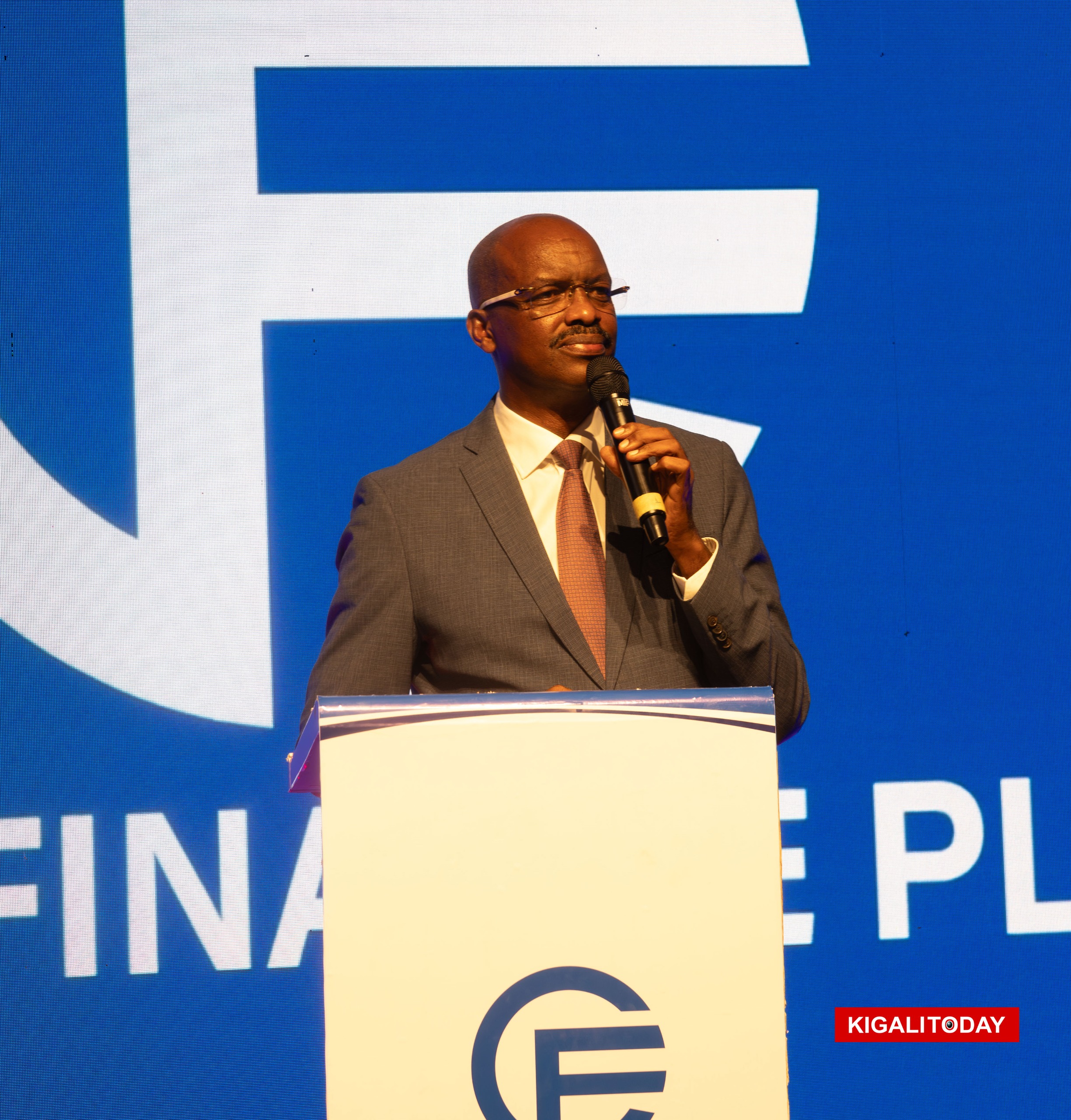
François Twagirumukiza, who is also a shareholder at CHIC Finance Plc. says the initiative represents the evolution of a long-standing investment model.
A Journey Defined by Collective Growth
From a 2007 shareholders’ meeting of 80 traders to a Rwf52 billion commercial complex and now an Rwf11 billion financial institution, the CHIC story reflects a rare continuity of collective ambition.
What began as a search for business premises has evolved into a structured investment ecosystem that now finances businesses, mobilizes savings, and increasingly positions itself within Rwanda’s financial services sector.
Nearly two decades later, the CHIC shareholders are no longer simply traders solving a space problem. They are investors shaping infrastructure, financiers enabling growth, and potentially future bankers redefining the scale of collective private enterprise in Kigali.
The journey is still unfolding but its direction is already defined as a journey of expansion through unity, and transformation through shared capital.