



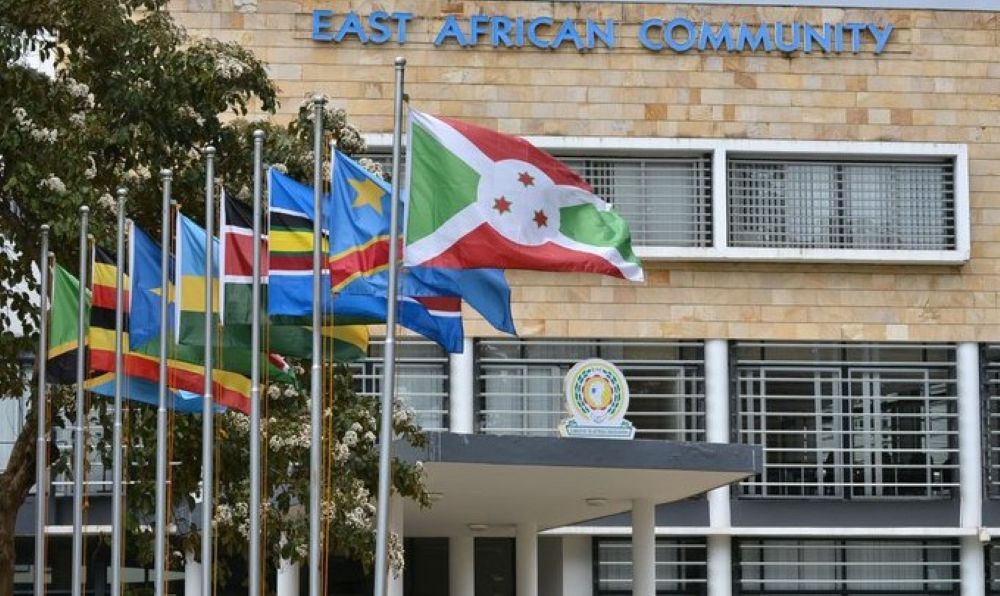
EAC Budget Policy Statement for the 2026/27 financial year highlighted a 28 percent increase in intra-EAC trade, reaching US$19.3 billion in 2025.
ARUSHA– Burundi and the Democratic Republic of Congo (DRC) have emerged as the largest contributors to a growing financial burden facing the East African Community (EAC), with the two countries accounting for more than half of nearly US$90 million in unpaid member state contributions.
According to the latest figures, outstanding member state contributions had reached US$89.4 million by the end of January 2026.
The DRC leads the list with arrears of US$27.7 million, followed by Burundi at US$22.7 million. South Sudan owes US$21.8 million, while Somalia, the bloc’s newest member, has accumulated US$10 million in unpaid contributions.
In contrast, Rwanda, Kenya, Uganda and Tanzania are reported to have met their obligations in full.
The arrears have become a major concern for the regional bloc at a time when it is seeking to deepen economic integration, strengthen regional security and expand development programs across East Africa.
EAC officials say persistent non-payment by some member states is beginning to strain the institution’s operations, forcing reforms aimed at making the Community financially sustainable.
Successes Overshadowed by Funding Challenges
The funding difficulties come despite what the EAC describes as a year of significant achievements for regional integration.
Presenting the EAC Budget Policy Statement for the 2026/27 financial year, Secretary General Stephen Patrick Mbundi highlighted a 28 percent increase in intra-EAC trade, reaching US$19.3 billion in 2025.
This was driven by the removal of non-tariff barriers and the introduction of new digital trade facilitation measures.
The Community also advanced regional health preparedness through mobile laboratories and specialized treatment centres while supporting youth-led innovation across member states.
Yet those gains have exposed a growing concern as the EAC’s responsibilities continue to expand despite a scarcity of resources available to execute them.
“Despite the progress made, delayed and non-disbursement of statutory contributions by some Partner States, static budget ceiling unfilled positions continues to place undue pressure on existing personnel and affect implementation of community programs,” Mbundi said.
The challenge has become particularly acute as the community embarks on its new development strategy covering trade, industrialization, infrastructure, monetary integration and governance reforms across the region.

DRC President Félix Antoine Tshisekedi and Burundi’s Évariste Ndayishimiye. Their countries have emerged as the largest debtors on EAC contributions.
New Formula, New Pressure
Faced with mounting arrears, EAC leaders have approved a major overhaul of how member states finance the organization.
Beginning July 2026, countries will no longer contribute equal amounts as was previously the case. Instead, half of the contribution will remain equal among all partner states while the remaining 50 percent will be calculated according to the size of each country’s economy.
Officials believe the new arrangement will make the system fairer and reduce resistance from countries with smaller economies.
At the same time, the bloc is increasing pressure on chronic defaulters. The EAC Council of Ministers has been directed to develop sanctions for countries that fail to honour their financial commitments, signaling a tougher approach than in previous years.
The reforms are expected to play a critical role in financing the proposed US$110.9 million budget for 2026/27, of which member states are expected to provide 58 percent while development partners contribute the remainder.
Vacancies Reveal Cost of Non-Payment
The consequences of the funding shortfall are already visible within EAC institutions.
The Community currently has 163 unfilled positions out of an approved establishment of 469, leaving many departments overstretched and slowing the implementation of regional programs.
EAC officials say a phased recruitment exercise is planned, but its success will depend heavily on improved financial contributions from member states. Mbundi warned lawmakers that decisions taken now will determine the future effectiveness of the regional bloc.
“The decisions we make in this budget cycle will shape the trajectory of our Community for years to come. Together, our collective efforts are building a more prosperous, competitive, secure and united region for the people of East Africa,” he said.
EAC as a regional organization, serves more than 300 million people with more than half of the resources needed to deliver on integration goals mobilized through its member states.
How indebted member states respond to the new incentives and pressure measures could determine how quickly that vision becomes reality.