



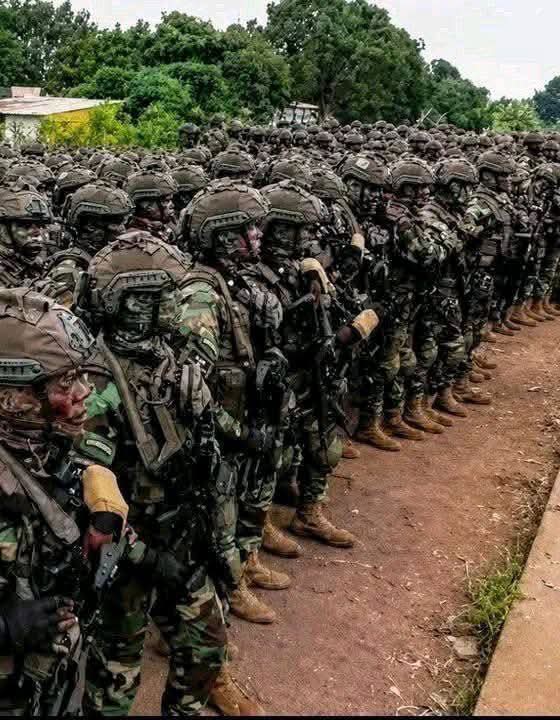
Congolese social media has been proudly sharing the massive movement of troops from Kinshasa and other regions, heading to eastern Congo.
KIGALI — Thousands of Democratic Republic of Congo (DRC) coalition troops have reportedly been deployed along Rwanda’s border in South Kivu in what security sources describe as one of the largest military buildups in the area since the launch of the ongoing peace process.
Multiple security sources and local witnesses told this publication that significant reinforcements have arrived in recent days in areas overlooking Rwanda’s Bugarama sector, raising concerns about a potential escalation despite ongoing diplomatic efforts led by the United States and Qatar.
According to the sources, more than 4,000 members of various coalition forces are now concentrated in strategic locations along the Ruzizi Plain, including Kamanyola, Katogota, Luvungi, Sange and surrounding areas.
The forces reportedly include elements of the Congolese army (FARDC), the elite Hiboux special forces unit, Burundian troops, Wazalendo militia fighters, Rwandan FDLR militia and foreign military contractors.
The deployments come only weeks after AFC/M23 forces withdrew from parts of the Ruzizi Plain and repositioned around Katogota, a strategic locality situated only a few kilometers from the Rwanda border.
Security sources said that during the past week, at least 12 trucks carrying troops crossed from Burundi into eastern Congo through the Kavimvira border post in Uvira Territory.
Of these, seven trucks reportedly proceeded toward Kamanyola and the Katogota front line near Rwanda’s border.
Witnesses reported seeing troops deploying around Lubarika while other units moved toward Lemera and the Minembwe axis.
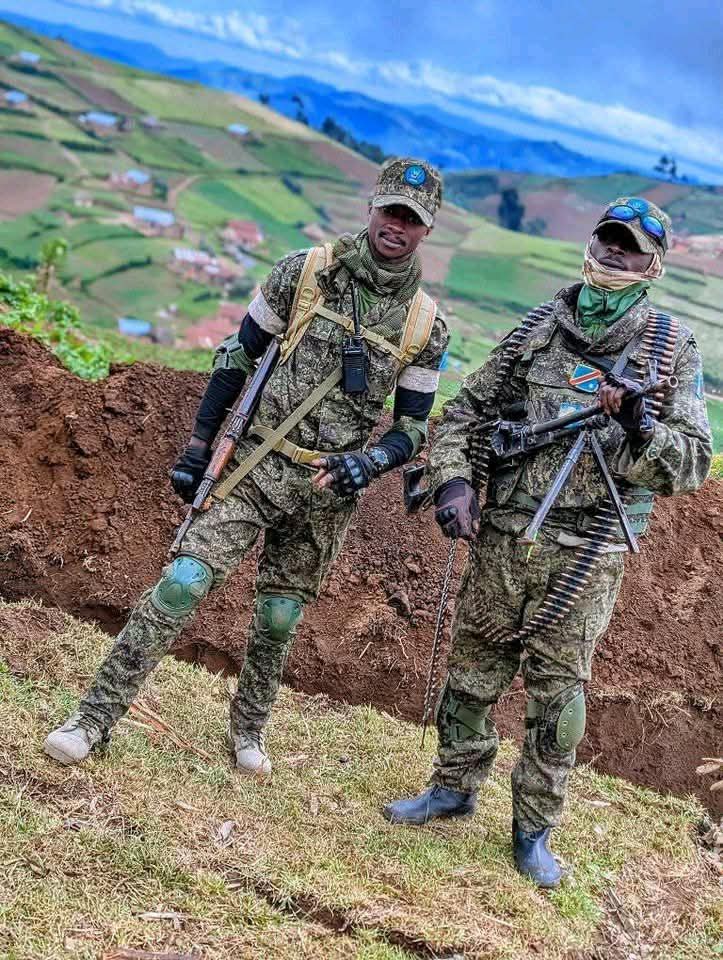
The deployed Congolese troops are happily sending their photos to family members, and they end up on social media
The level of movement is unlike anything seen in recent months. There appears to be a deliberate effort to reinforce multiple fronts simultaneously.
Local residents reported that traffic along the RN5 highway near Kamanyola was temporarily restricted as military movements intensified, leaving some civilians stranded and disrupting transport along one of the region’s key routes.
The remaining five trucks reportedly headed south toward Baraka through territory controlled by Mai-Mai Yakutumba fighters, another armed group allied with Kinshasa against AFC/M23.
Additional troop movements were reported near Luvungi, where witnesses said soldiers crossed the Rusizi River on foot from Burundi before joining forces already deployed along the border zone.
The latest developments come at a particularly sensitive moment for regional diplomacy.
In recent months, Washington has intensified efforts to secure implementation of agreements aimed at reducing tensions between Rwanda and the DRC.
The peace process includes commitments related to ceasefire arrangements, neutralization of FDLR militia and restoration of state authority in contested areas.
The reported troop concentrations have nevertheless generated concerns among observers who fear that military calculations may be overtaking diplomatic commitments.
Rwanda has consistently argued that the continued presence of the FDLR—an armed group linked to perpetrators of the 1994 Genocide against the Tutsi—poses a direct threat to its national security and justifies defensive measures along the border.
Justifying the amassing of troops and weaponry, Kinshasa, meanwhile, maintains that it has the sovereign right to deploy forces anywhere within its territory and accuses Rwanda of supporting AFC/M23, allegations Kigali has repeatedly denied.
Security analysts note that the concentration of FARDC, Burundian forces, Wazalendo fighters and other allied groups in close proximity to both AFC/M23 positions and the Rwanda border significantly increases the risk of accidental or deliberate confrontation.
The danger is not simply the presence of troops. It is the fact that heavily armed forces with competing objectives are now operating within a very compressed geographical space during an already fragile peace process.
With diplomatic negotiations continuing and military movements accelerating on the ground, attention is increasingly turning to South Kivu, where the next phase of the conflict—or the peace process—may soon be determined.
