


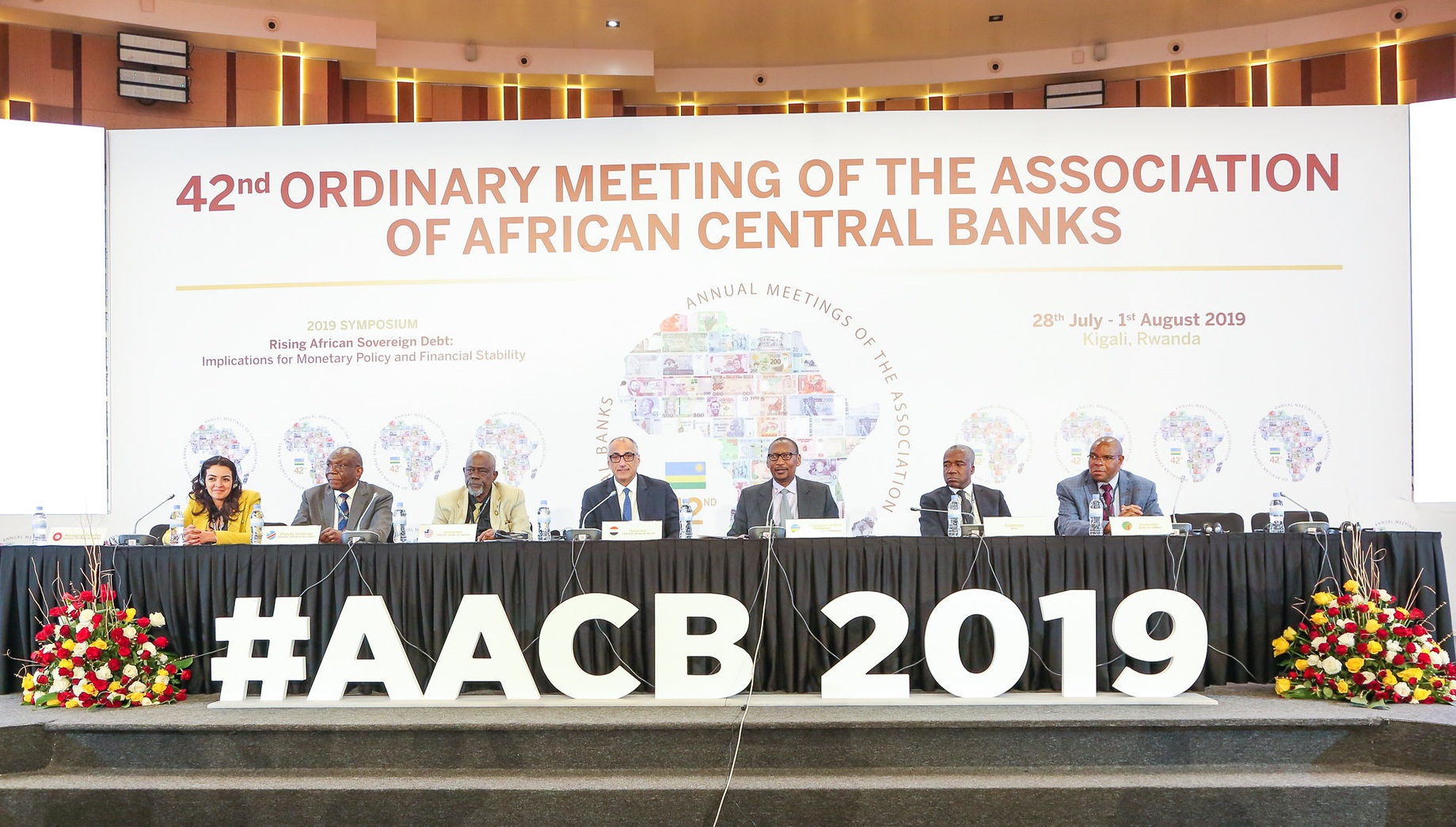
This was the 42nd ordinary meeting of the Association of African Central Banks (AACB) bureau meeting, held in Kigali, 2019. The public has placed its faith in these institutions to manage the sector on their behalf
Recently, while scrolling through LinkedIn, my attention was drawn to an article by Neil Ford for African Business, shared by Jay Connolly. The article ranked East Africa’s largest listed companies and highlighted an impressive story of regional corporate growth.
The comments section was filled with celebration. Understandably so. Rising market capitalisations, billion-dollar companies, expanding banks, and a dominant Safaricom seem to signal economic progress. We were all invited to applaud. And perhaps we should.
But before we do, it is worth asking a more uncomfortable question.
If 11 of East Africa’s 20 most valuable listed companies are banks, what exactly are we celebrating?
Banks play an indispensable role in any economy. They mobilise savings, allocate capital, facilitate trade, and finance investment.
However, banks are not the final destination of economic growth; they are meant to be its enablers. They finance factories, farms, technology companies, logistics networks, manufacturers, and exporters,the businesses that create products, jobs, innovation, and industrial capacity.
When financial institutions dominate the region’s corporate rankings, it raises an important question about the underlying structure of that growth.
Are our economies producing enough large-scale enterprises outside finance, or are we increasingly rewarding the institutions that control capital more than those that transform it into productive output?
The rise of Tanzania’s CRDB and NMB Banks is remarkable. Their growth reflects improving financial inclusion, stronger banking profitability, and growing investor confidence. The broader performance of East African banks also demonstrates that financial systems across the region are maturing. These are positive developments.
Yet finance should ideally be a reflection of productive growth, not its substitute.
Historically, the world’s most transformative economic success stories were built on manufacturing, industrialisation, technology, energy, and large-scale production. Their financial sectors grew because the productive economy expanded. In East Africa, however, one could reasonably ask whether the sequence is becoming reversed.
If banks continue to grow faster than the sectors they finance, it may indicate that access to capital remains expensive, productive enterprises remain relatively small, or that entrepreneurs struggle to scale into regional champions. It may also suggest that too much value is being captured within the financial system and not enough in the industries that generate broad-based economic transformation.
Perhaps the most difficult question is one we cannot easily measure. How many promising businesses never reached maturity? How many manufacturers remained small? How many innovators abandoned ambitious projects because financing was unavailable, unaffordable, or excessively cautious?
These businesses do not appear in market capitalisation rankings. Their absence is invisible. Yet their absence may tell us as much about our economies as the presence of successful banks.
The fact that Safaricom remains East Africa’s most valuable company is instructive. Its success stems not from controlling capital, but from creating platforms, expanding connectivity, developing financial technology, and entering new markets. It is a reminder that lasting economic value is often created through innovation and productivity rather than intermediation alone.
East Africa should absolutely celebrate the growth of its banks. Strong banks are essential for development. But a future in which banks dominate corporate rankings year after year should also provoke reflection.
The ultimate measure of economic progress is not how wealthy the institutions financing growth become. It is whether the businesses being financed become even larger, more productive, and more globally competitive.
That is the list East Africa should aspire to lead.
James Kaliisa is a lawyer-turned-tech entrepreneur, software developer, and Co-Founder & CEO of Nexus Inc., a Rwandan deep-tech company building AI-powered infrastructure solutions for industries across multiple sectors.
