
A plan by the Rwanda Revenue Authority to improve compliance and close loopholes that allow revenue to escape is currently underway.
KIGALI – As Rwanda sets out to finance an increasingly growing national budget, this financial year, domestic revenue is expected to cover 61.6 percent of the country’s Frw7,796.3 billion national budget.
In order to support government’s long-term strategy of reducing reliance on external financing, the Rwanda Revenue Authority (RRA) has launched its 2026/2027 compliance improvement plan.
The strategy seeks to increase revenue not by introducing new taxes, but by helping more people and businesses meet their tax obligations voluntarily, thereby shifting to a resource that lies within its own borders.
This plan to improve compliance and close loopholes that allow revenue to escape follows one of the institutions strongest performances to date.
During the 2025/2026 financial year, the authority collected Frw3,956.4 billion for the central government, achieving 104.2 percent of its target and recording a 27.7 percent increase over the previous financial year.
Revenue collected on behalf of local governments also surpassed expectations, reaching Frw137.9 billion, equivalent to 102.3 percent of the target before reconciliation.
Building on a Record Year
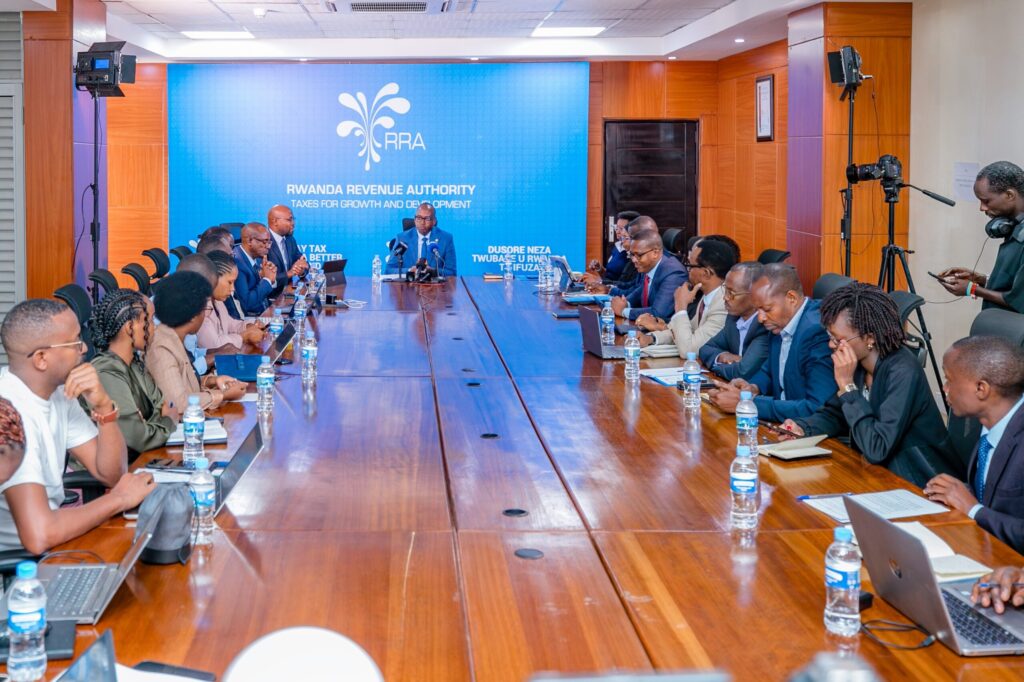
Ronald Niwenshuti, the Commissioner General of RRA, speaking to the press at the launch of the new compliance plan.
Launching the new compliance plan, Ronald Niwenshuti, the Commissioner General of RRA, said the strong performance was driven by a combination of favorable economic conditions and sustained improvements in tax administration.
Among the key contributors were Rwanda’s robust economic growth, improved VAT performance, stronger corporate profitability, increased employment income and better customs performance.
On the administration side, wider use of Electronic Billing Machines (EBMs), stronger recovery of tax arrears, risk-based audits and taxpayer engagement all played a significant role.
“While significant progress has been made, much remains to be done to achieve even higher levels of compliance and domestic revenue mobilization,” Niwenshuti said.
He expressed confidence that, through continued collaboration, mutual trust, and the shared commitment of taxpayers, stakeholders and RRA staff, the revenue and compliance objectives for this financial year will be successfully achieved
During the year, RRA registered 126,282 new taxpayers, who contributed Frw15.4 billion in tax revenue.
The authority also recovered Frw277.1 billion in domestic tax arrears, while 43,243 additional taxpayers adopted EBMs thereby improving VAT compliance and transaction traceability across the economy.
Technology Tightens the Net
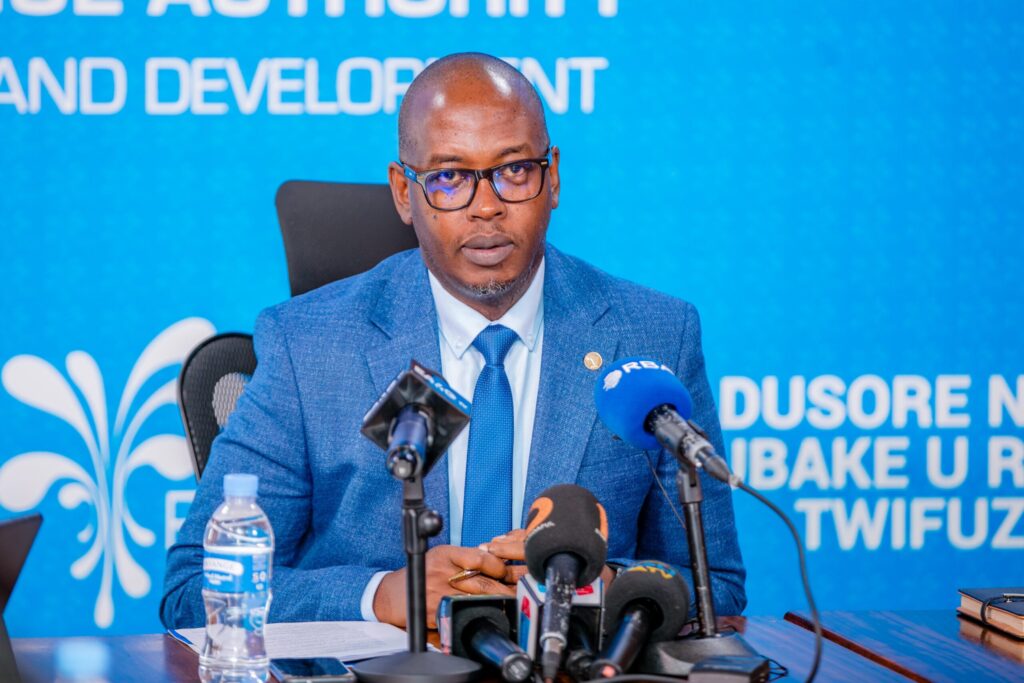
Ronald Niwenshuti, the Commissioner General of the Rwanda Revenue Authority (RRA).
As tax systems become increasingly digital, RRA is relying more on technology and intelligence to detect fraud and reduce revenue losses.
Francis Musirikare, the Assistant Commissioner in charge of Strategic Intelligence and Investigation Division says that intensified tax investigations, anti-smuggling operations and data-driven enforcement to identify high-risk taxpayers have been intensified.
“The authority has strengthened the use of data analytics to identify fictitious invoices that were being used to claim fraudulent VAT refunds and get them blacklisted before payments were made,” he said.
He noted that such disrupt tax evasion schemes before significant revenue is lost paid off with about Frw28 billion in VAT prevented from being fraudulently claimed last year.
During the last financial year, RRA completed 163 investigation cases, resulting in tax assessments amounting to Frw21.4 billion, while 1,542 anti-smuggling operations generated assessments totaling Frw29 billion.
In addition, 1,883 tax audits generated Frw9.3 billion in additional tax assessments and payments, reinforcing the authority’s shift towards intelligence-led compliance and risk-based enforcement.
Making Voluntary Compliance Easier
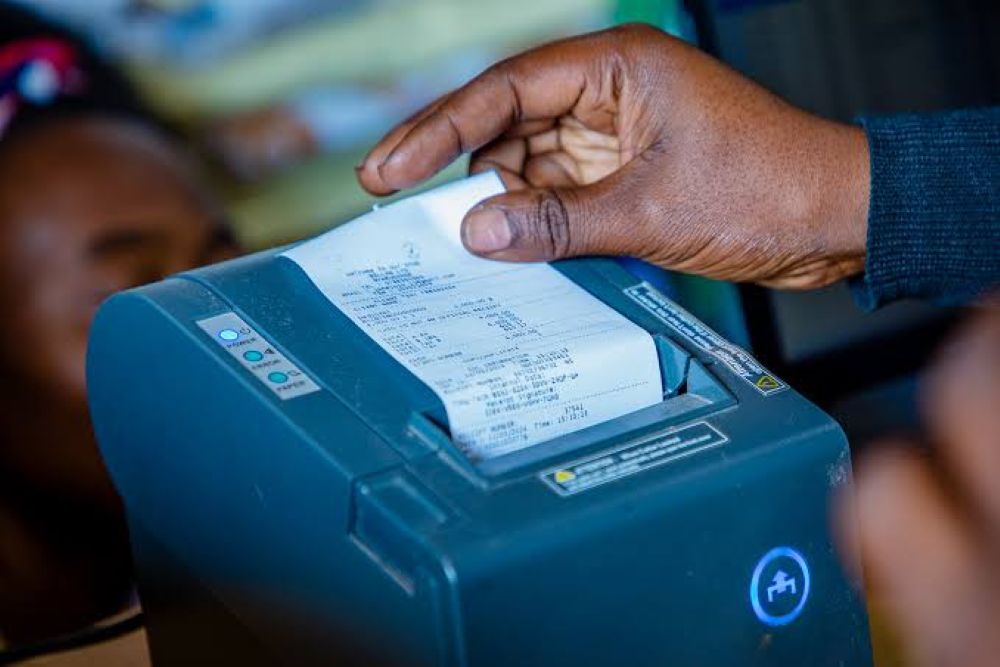
VAT reward scheme encourages consumers to request EBM receipts whenever they make purchases.
Alongside enforcement, RRA says lasting success depends on making it easier for taxpayers to comply willingly.
One of its biggest success stories has been the expansion of the Tengamara na TVA and Tenga Promo VAT reward scheme, which encourages consumers to request EBM receipts whenever they make purchases.
Participation in the program grew dramatically from 74,964 registered users in June 2025 to 1,096,931 by the end of June 2026.
Invoices requested through the scheme reflected VAT output worth Frw105.8 billion, while Frw4.2 billion in rewards was paid to consumers during the financial year.
Joint compliance campaigns conducted with the Rwanda National Police also expanded EBM adoption in Kigali and five districts outside the capital, bringing more than 12,000 taxpayers into the EBM system while recovering about Frw3 billion in penalties.
According to Emmy Mbera Rukamirwa, the Assistant Commissioner in charge of Tax Control and Operational Support Division, these initiatives are designed to strengthen voluntary compliance by combining taxpayer education, digital services and practical incentives.
These, he said encourage businesses and consumers to declare transactions correctly and pay taxes on time.
The Next Target

Tengamara na TVA and Tenga Promo VAT reward scheme is also underway.
For the 2026/2027 financial year, RRA has been assigned a target of collecting Frw4,640.4 billion for the central government and Frw165.9 billion for local governments.
To achieve it, the new compliance improvement plan will focus on the four core taxpayer obligations including registration, timely filing of tax declarations, timely payment of taxes and accurate tax reporting.
The authority will pay particular attention to manufacturing, transport and storage, information and communication, professional services, education, real estate, construction and hospitality.
On the customs side, interventions will target importers dealing in high-risk commodities, traders sourcing goods from high-risk countries, customs brokers and other areas identified through risk management systems.