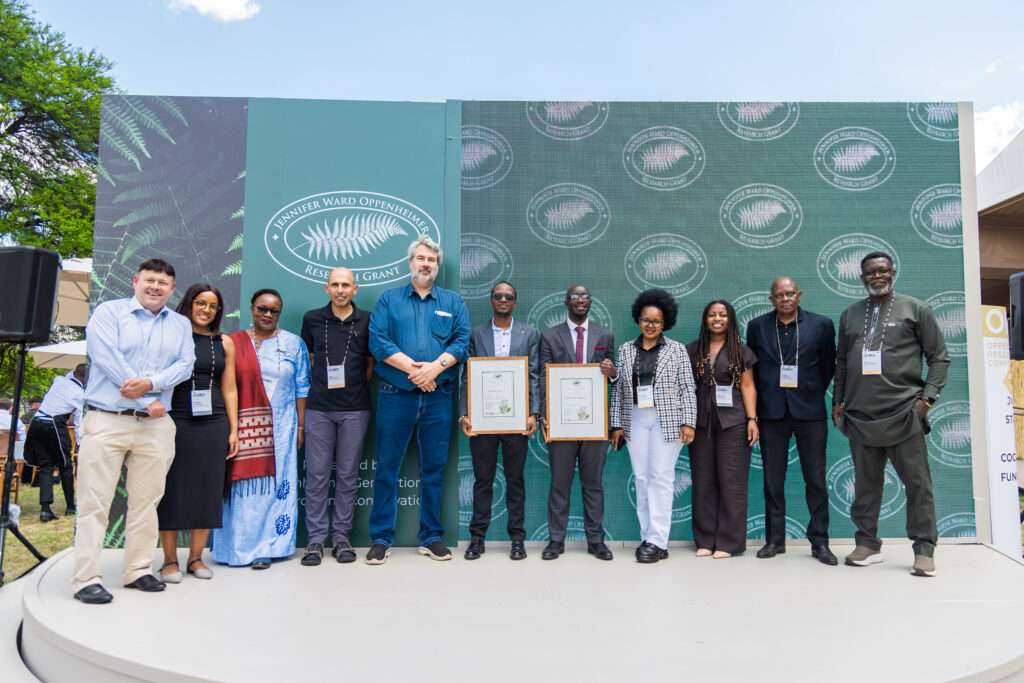



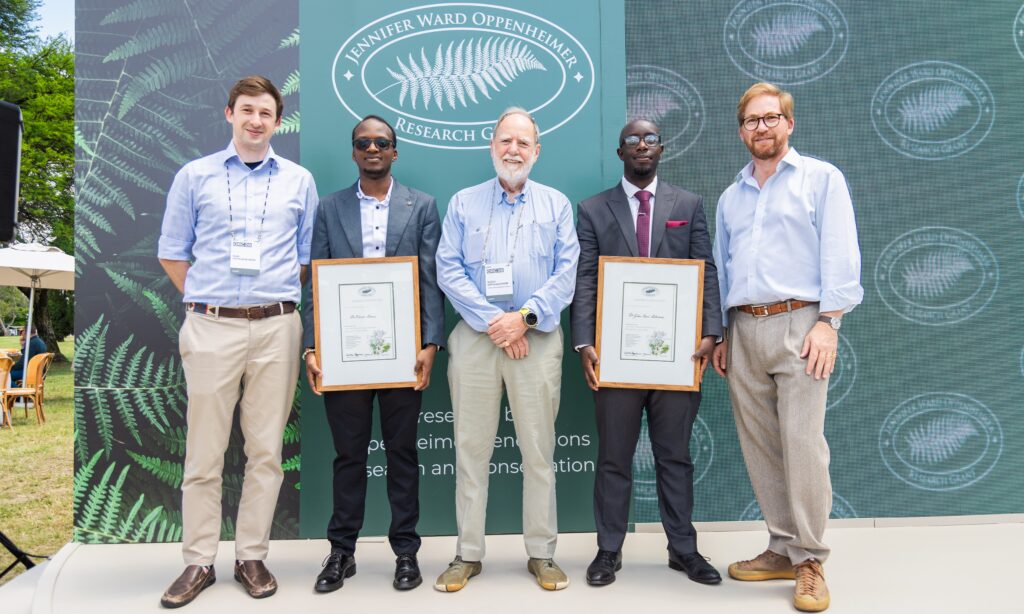
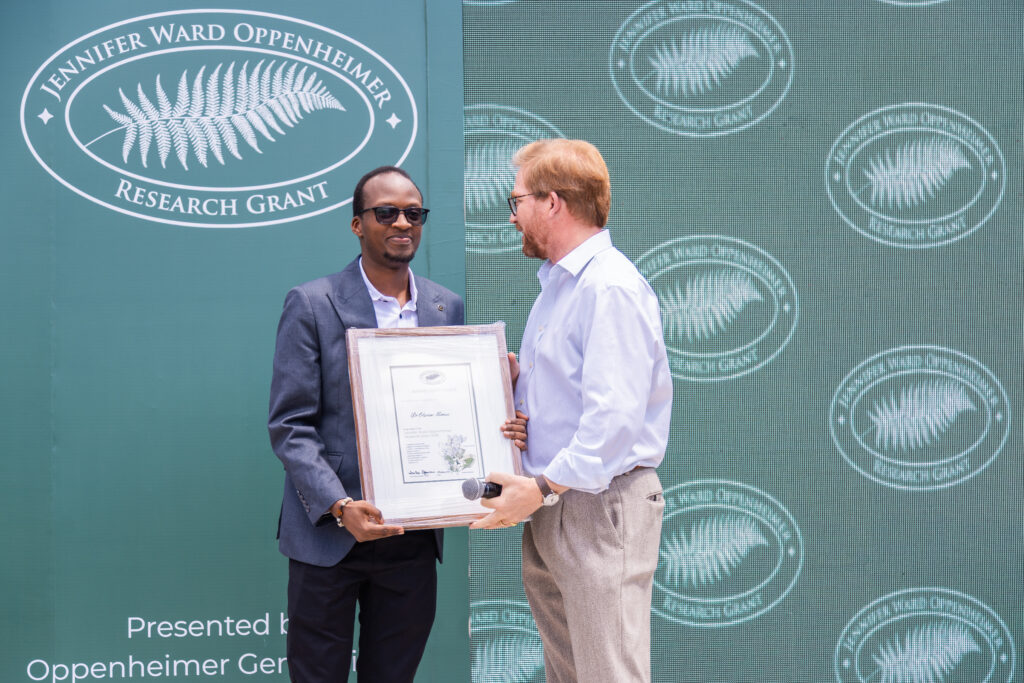
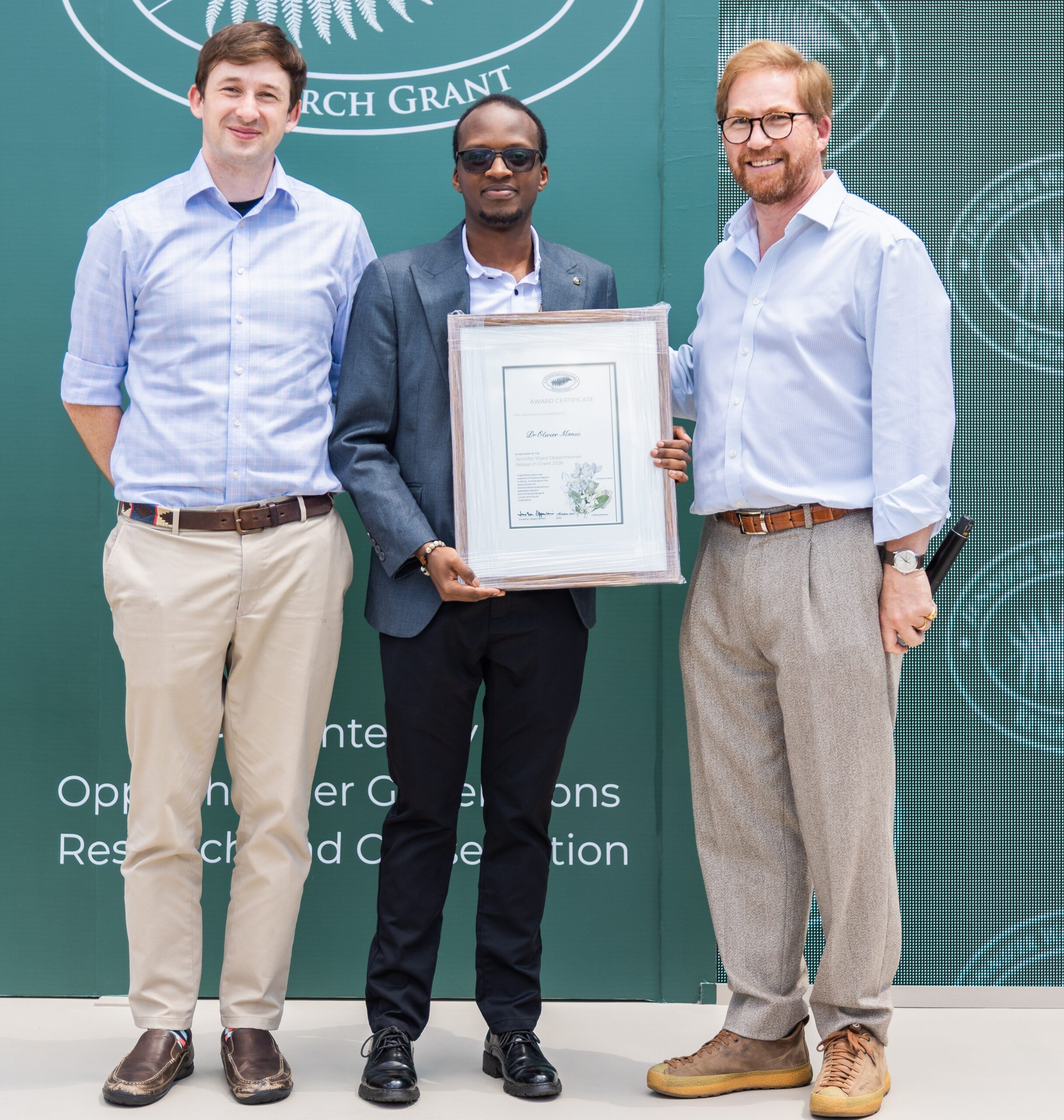
Dr. Olivier Jean Leonce Manzi (2nd L) was named alongside Ugandan microbiologist Dr John Paul Makumbi.
KIGALI – A Rwandan scientist studying the hidden physiological limits of Congo Basin trees has won a $150,000 (approx. Rwf221.4 million) research grant to investigate whether the region’s forests are truly resilient to rising heat and drought, or have simply not yet reached their tipping point.
Dr. Olivier Jean Leonce Manzi, a plant ecophysiologist and research fellow at the University of Rwanda, was named one of two joint winners of the 2026 Jennifer Ward Oppenheimer Research Grant.
The other winner is Ugandan microbiologist Dr John Paul Makumbi, who is using microbial DNA and machine learning to develop early warning systems for pollution and ecosystem decline in Africa’s freshwater systems.
The two scientists, both aged 33, were selected from 747 applications across Africa, with organizers awarding the grant to two researchers for the first time because their proposals were judged equally deserving and compelling.
Manzi’s award will fund up to three years of research into how close Central African tree species are to their hydraulic and thermal limits thresholds that could determine how much further the Congo Basin can withstand a warming climate.
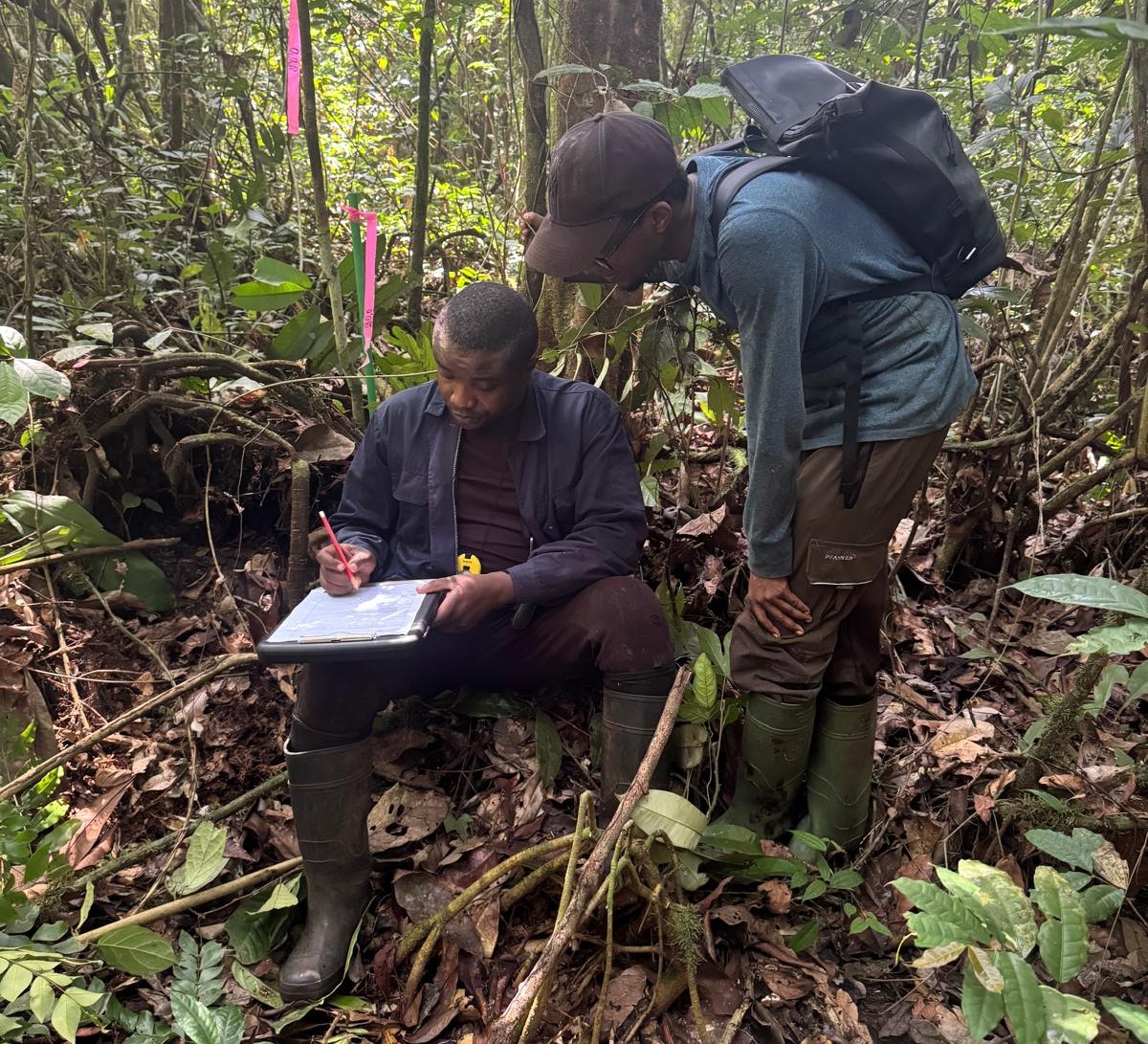
Dr Manzi and a colleague during a visit during his research.
Across the vast green expanse of the Congo Basin, trees have continued to grow, reproduce and store carbon even as the world around them has become warmer.
In parts of the Amazon, prolonged heat and drought have already exposed how vulnerable tropical forests can become under climate stress. Central Africa, by comparison, has so far appeared remarkably resilient.
That resilience has left Manzi, with an uncomfortable question of whether the forests are genuinely better equipped to withstand a warming world, or simply have not yet been pushed far enough to reveal their breaking point.
He wants to look beneath the forest canopy and measure something that cannot be seen from satellite images or noticed when a tree finally dies. He wants to establish how close Central African trees are to the physiological limits imposed by heat and drought.
A Question of Resilience
Dr Manzi measuring leaf water potential during his research.
One explanation for the Congo Basin’s relative stability is that its forests have generally not experienced droughts as severe or prolonged as those affecting parts of Amazonia.
During the 2015–2016 El Niño, for example, tropical Africa experienced extreme heat and drought, but the impact on African forests was generally smaller than in the worst-affected parts of the Amazon.
There may also be a biological explanation that African forests have evolved through relatively dry and variable climates, potentially favoring more drought-tolerant species.
Many are also dominated by large, old trees that have already survived decades of warming. But Manzi warns that these explanations do not resolve the central uncertainty.
“Either African forests are intrinsically more resistant, or they have simply not yet been pushed hard enough to reveal their vulnerability If the latter is true, their apparent resilience could amount to “borrowed time” as climate stress intensifies,” Manzi says.
Finding the Limits Before Trees Begin to Die
 Manzi’s research will investigate how close Central African tree species are to their hydraulic and thermal limits.
Those limits matter because forest decline may begin long before widespread dieback becomes visible. Trees operating close to their thresholds could experience slower growth, reduced recruitment and increased mortality as temperatures rise and drought intensifies.
Large canopy trees are particularly important because they store substantial amounts of carbon.
“If many dominant tree species are already operating close to their hydraulic or thermal limits, it would mean that the apparent stability of the Congo Basin is more fragile than we currently think,” Manzi explains.
The project could therefore provide an early warning of vulnerability that conventional observations of forest cover may not reveal.
Duncan MacFadyen, Head of research and conservation at Oppenheimer Generations, says the proposal addresses a major gap in understanding the Congo Basin, the world’s second-largest tropical forest, which remains comparatively understudied and underfunded.
The JWO Research Grant will provide $150,000 for up to three years of independent, African-led research to the winner.
From Rwanda to the Future of African Forests
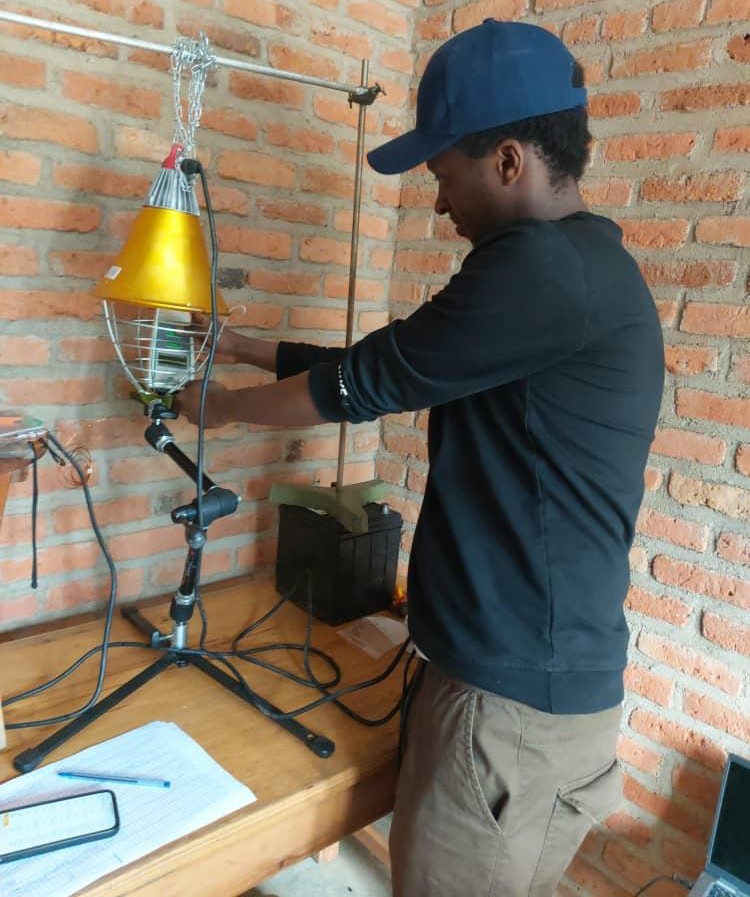
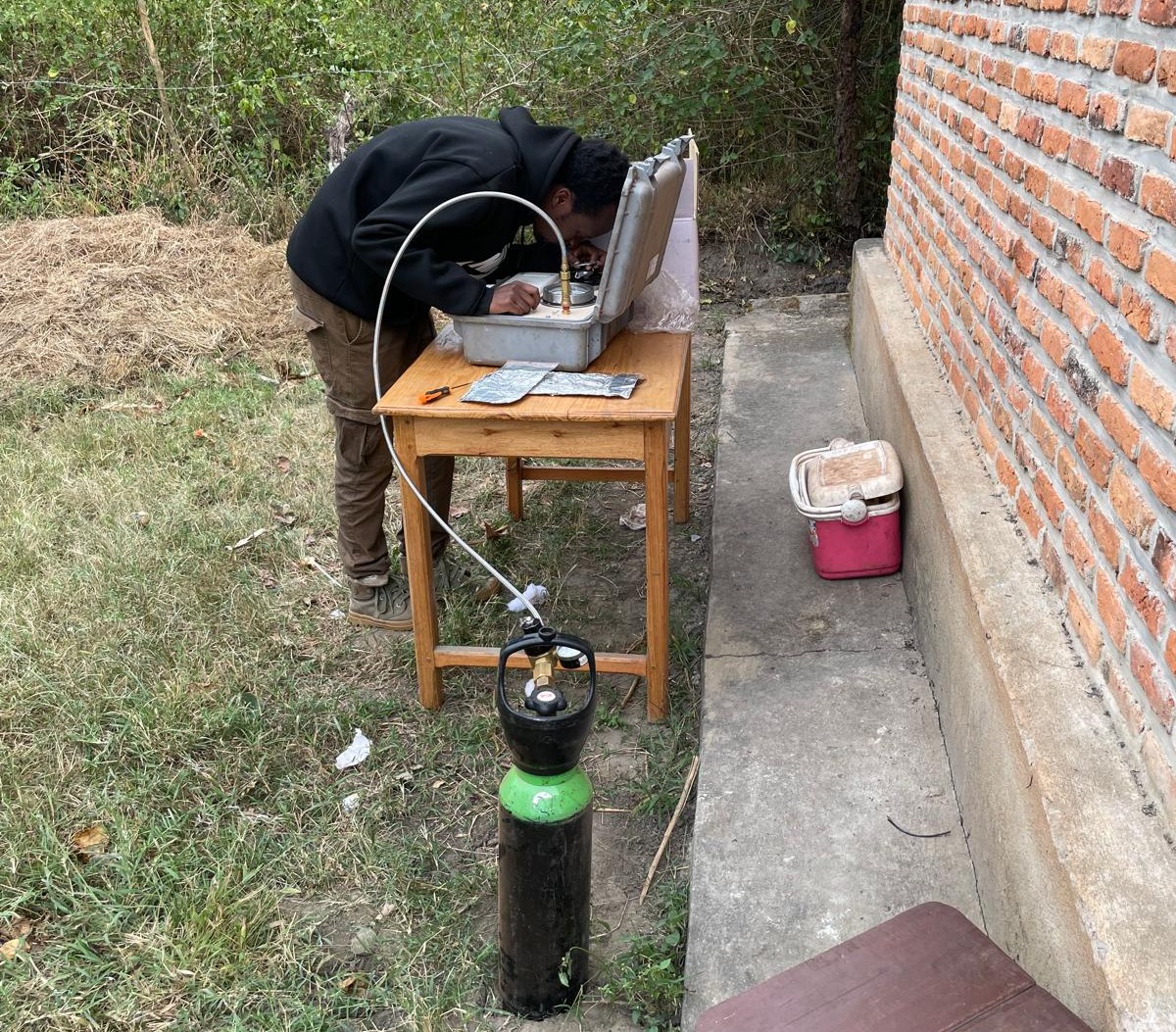
Dr Oliver Manzi measuring heat tolerance.
The research also has practical implications for countries such as Rwanda, which are investing in forest restoration and landscape rehabilitation.
“A tree planted today may still be standing in 2050, 2100, or even beyond but restoration should consider not only whether a species can survive under today’s conditions, but whether it can withstand the climate expected decades from now,” Manzi says.
Understanding which native species have wider thermal and hydraulic safety margins could help countries select trees better suited to future heat and drought.
“The goal should be to restore ecosystems that will still function decades from now, not only forests that look successful immediately after planting,” Manzi warned.
The research will be led from a Rwandan institution and is expected to train five MSc students and technicians, strengthening African scientific capacity while generating data for global climate and ecological research.
That African Ownership Strategy
 For Manzi, the research is also about changing who defines the questions that shape Africa’s environmental future and who produces the evidence needed to answer them.
“African scientists and institutions should not simply be seen as providers of field sites or data for research agendas developed elsewhere,” he says.
His ambition is to generate evidence from African species and African environments that can improve climate models, conservation planning and restoration decisions on the continent and beyond.
And if the research shows that Central African forests are closer to their limits than previously understood, Manzi says the message to policymakers should be not to wait until widespread forest decline becomes visible before acting.
The Congo Basin may still be standing but the question Manzi now wants to answer is how much further it can stand as the planet gets hotter.