



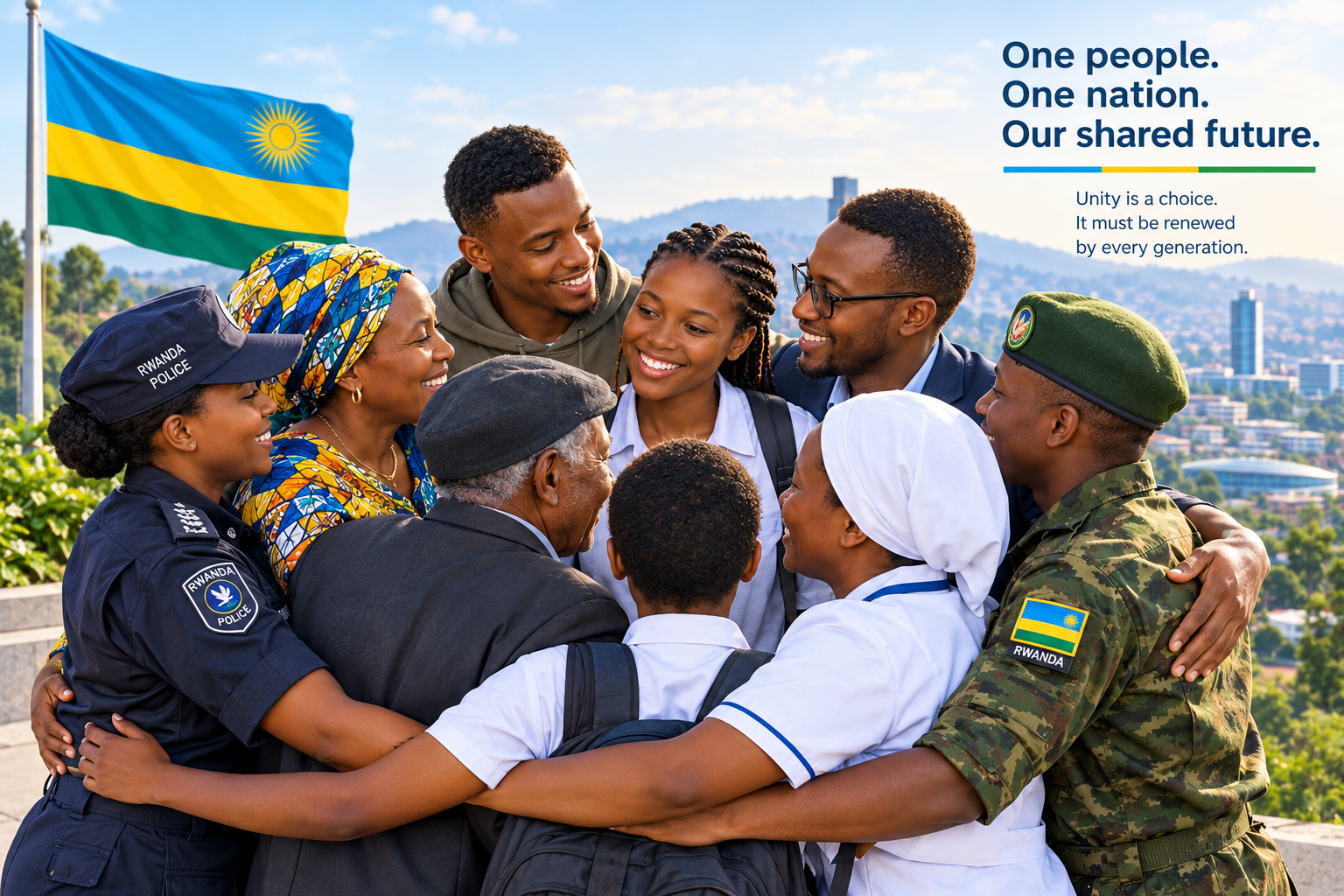
Rwanda cannot survive without the unity of its people
Observed every October, Rwanda’s month of unity and resilience is more than an annual commemoration. It is an important national opportunity to look at how far the country has come in rebuilding trust, strengthening social cohesion and sustaining the values that underpin Rwanda’s post-genocide recovery.
The month gives Rwandans an opportunity to reflect on the country’s history, look at the progress made in rebuilding a united society and confront challenges that could undermine the gains achieved over the past three decades.
The 1994 Genocide against the Tutsi left Rwanda deeply divided and devastated. Rebuilding the country therefore required more than physical reconstruction. Unity and reconciliation consequently became central to Rwanda’s recovery.
A society cannot sustainably reconcile by forgetting its past. At the same time, remembrance must help prevent the recurrence of violence rather than perpetuate hatred and division.
Hence, one of the most important functions of the unity and resilience month is to keep Rwanda’s history part of the national conversation without allowing history to be a permanent source of division.
This is why these conversations remain important, particularly for younger generations who did not experience the genocide themselves.
As the distance from 1994 grows, there is a greater responsibility to ensure that young Rwandans understand both the consequences of division and the importance of protecting the country’s social cohesion.
Reconciliation is a process that evolves with society. New generations emerge, communities change and new social, economic and political pressures develop. Maintaining unity therefore requires continuous reflection on whether existing approaches remain effective.
A central question is not simply whether Rwanda has become more united, but what is sustaining that unity and where vulnerabilities remain. This is where the month becomes particularly significant. It creates space to
