



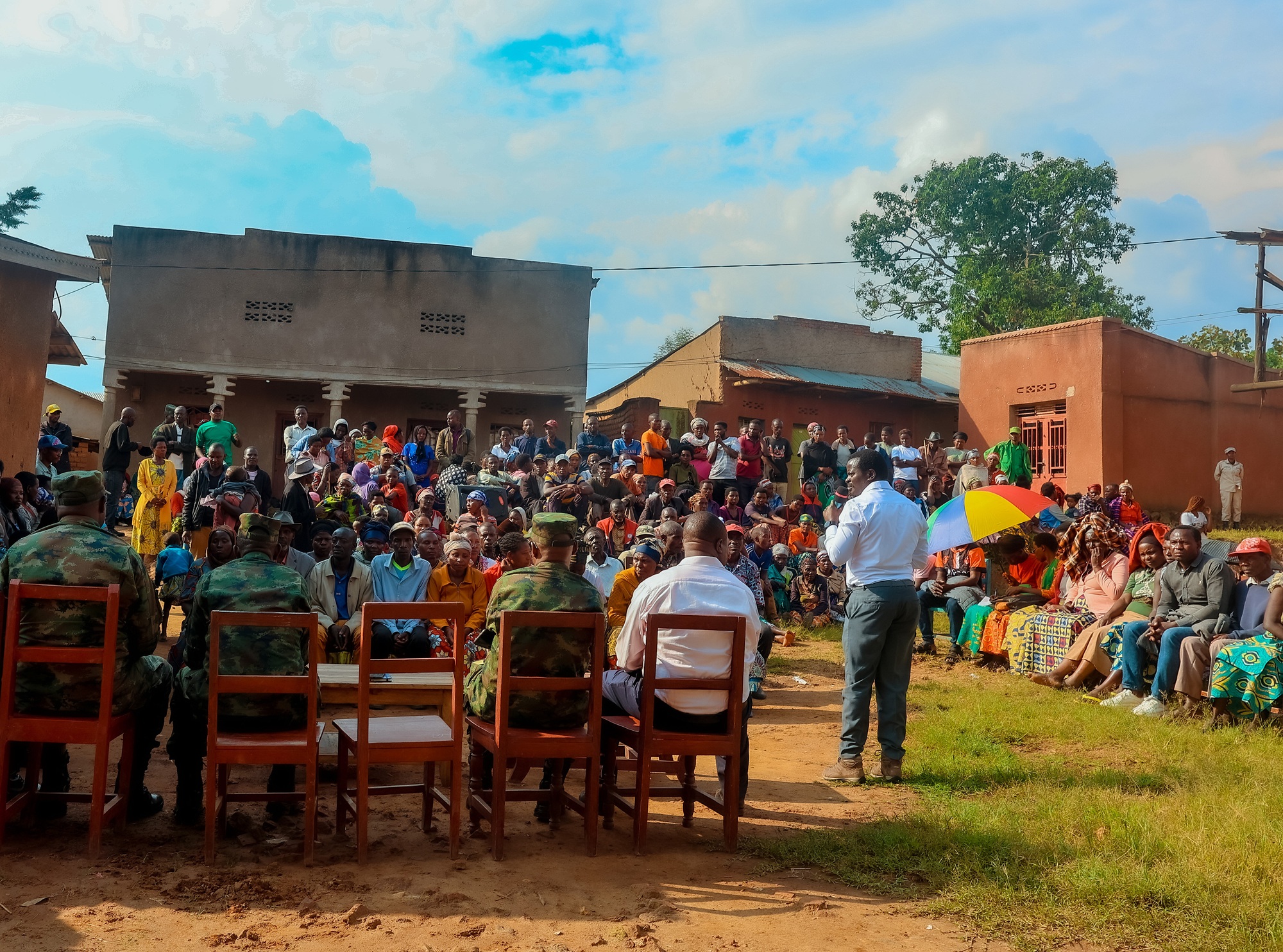
This is a cell meeting between officials from the sector and village. Such meetings are a very normal occurence
KIGALI — Rwanda plans to reorganise local government staffing, creating new positions in some areas while eliminating or merging others as part of changes affecting districts, sectors and cells.
The proposed changes would introduce new responsibilities in citizen services, agriculture, economic development and social protection, while removing positions considered redundant or whose duties can be handled by other staff or digital platforms.
A government document titled Summary of Changes Made in Proposed Organisational Structures of District, Sector and Cell outlines the changes. It does not provide a consolidated national total of positions to be created or abolished.
In rural districts, the document lists approximately 28 existing positions for removal, reduction or absorption into other roles, including positions whose responsibilities would be transferred to other employees. This figure should not be interpreted as the number of people who will lose their jobs.
Two new positions at cell level
At cell level, the number of positions would increase from two to four.
The existing structure comprises the Cell Executive Secretary and the Socio-Economic Development Officer (SEDO).
The proposed structure would add a Citizen Service Delivery Officer and an Agriculture and Animal Resources Officer.
The SEDO position would be renamed Economic and Human Capital Development Officer, with responsibilities covering economic development and human capital.
The government document proposes these changes for cells in rural districts and secondary cities and satellite cities.
Sectors to have specialised teams
At sector level, the proposed structure would establish two specialised teams to handle economic development and human capital and social protection.
The Economic Development Team would have five staff members responsible for agriculture and natural resources, land and infrastructure, veterinary services, and business and cooperative development, under a team leader.
The Human Capital and Social Protection Team would have three staff members covering social protection and human security, public health, hygiene and sanitation, and education.
The two teams would have eight staff members combined.
The office of the Sector Executive Secretary would have six positions, including the executive secretary, a Governance and Specific Programs Officer, a Civil Registration and Notary Officer, a Planning, Monitoring and Evaluation and Data Management Officer, an accountant, and a secretary responsible for the front desk.
The proposed structure also introduces a Governance and Civil Registration Specialist who would report directly to the Sector Executive Secretary and handle administrative duties when the executive secretary is absent.
The Finance and Administration Officer position would be removed, with its responsibilities transferred to the accountant. The Data Management Officer would be renamed Planning, Monitoring and Evaluation and Data Management Officer.
The proposed staffing arrangement would bring the total number of positions at sector level to 14.
District departments to be merged
At district level, the restructuring would combine departments with related responsibilities and remove positions whose functions overlap with those of other employees.
In rural districts, the Corporate Service Division Manager position would be removed because its responsibilities are considered to duplicate those of the District Executive Secretary.
Other positions listed for removal include Constituency Affairs Officer, Receptionist, Billing Officer, Land Valuation Officer, Information Technology/Management Information Systems Officer and an Archives position under the Infrastructure One Stop Centre.
The document also proposes reducing the number of Land Surveyor and Geographic Information System Officers from two to one and Land Administrators from two to one.
Some responsibilities would be transferred to other staff. For example, the functions of the Information Technology/Management Information Systems Officer would be handled by the Network and System Administrator, while land valuation would be undertaken by private land evaluators.
Billing functions that are available through the IREMBO digital services platform would no longer require a dedicated position.
Economic development and social protection units to be merged
The Business Development and Employment Unit would merge with the Agriculture and Natural Resources Unit to form a new Economic Development Unit.
The proposed unit would have six positions, including a director and officers responsible for business development and employment, agriculture, forestry and natural resources, animal resources, and small and medium-sized enterprises and cooperatives.
The change would remove several existing positions, including Startup Development Officer, Employment Promotion Officer, Investment Promotion and Financial Services Officer, Irrigation Officer, Cash Crops Officer and Environment Officer. Their responsibilities would be assigned to staff in the new unit.
The restructuring would also merge the Social Development, Health and Education units into a single Human Capital and Social Protection Unit.
The new unit would have five staff members, including a Social Protection and Human Security Specialist, a Gender, Family Promotion and Social Inclusion Specialist, a Public Health, Hygiene and Sanitation Specialist, and an Education Specialist.
Existing positions in social protection, disaster management, disability inclusion, health promotion, hygiene and sanitation, and community-based health insurance would be removed or absorbed into the new structure.
Two education positions — Secondary and Voluntary Counselling and Testing Education Officer, and Nursery, Primary Education and Adult Literacy Officer — would be combined into one Education Specialist position.
Other proposed changes include removing the Budget Officer, whose duties would be handled by accountants, and the Local Revenue Inspector, whose responsibilities would be transferred to the Local Revenue Accountant.
The Gender and Family Promotion Officer would move to the Human Capital and Social Protection Unit, be upgraded to specialist level and become the Gender, Family Promotion and Social Inclusion Specialist.
The changes come as Rwanda’s 2026 local government elections will run from October 24 to December 15, 2026, organized by the National Electoral Commission (NEC). The phased democratic process begins with direct village-level voting for executive committees and scales up through cell, sector, and district tiers.
It culminates in late November with the election of District Mayors and Vice Mayors, alongside representatives for youth, women, and disability councils.
All candidates must run as independent individuals rather than on political party platforms. Over 70,000 electoral volunteers will oversee the decentralized voting cycle across the country.
The proposed structure for secondary cities and satellite cities includes a new City Planning and Infrastructure Development Division, comprising an Urban Planning and Development Unit and an Infrastructure One Stop Centre.
The document proposes four senior engineering-level staff for the urban planning unit and seven staff for the Infrastructure One Stop Centre.
Other proposed additions include a Communication Specialist, a Hospitality and Tourism Promotion Officer, and a Sports and Recreation Officer. The number of Land Administrators would increase from one to two.
The document’s summary and organisational charts differ on some staffing numbers for these units, so the final headcount will need to be confirmed.
Implementation timeline
The document presents the new structures as proposals rather than confirmed final arrangements.
Information previously obtained by Kigali Today indicates that the new staffing arrangements at cell level are expected to be in place by February 2027, with implementation extending to district level by July 2027.
The overall effect on employment will depend on the final approved structures and how existing staff are reassigned. The proposed removal of a position does not necessarily mean the employee occupying it will be dismissed, as the document repeatedly provides for transferring responsibilities to other staff.
