



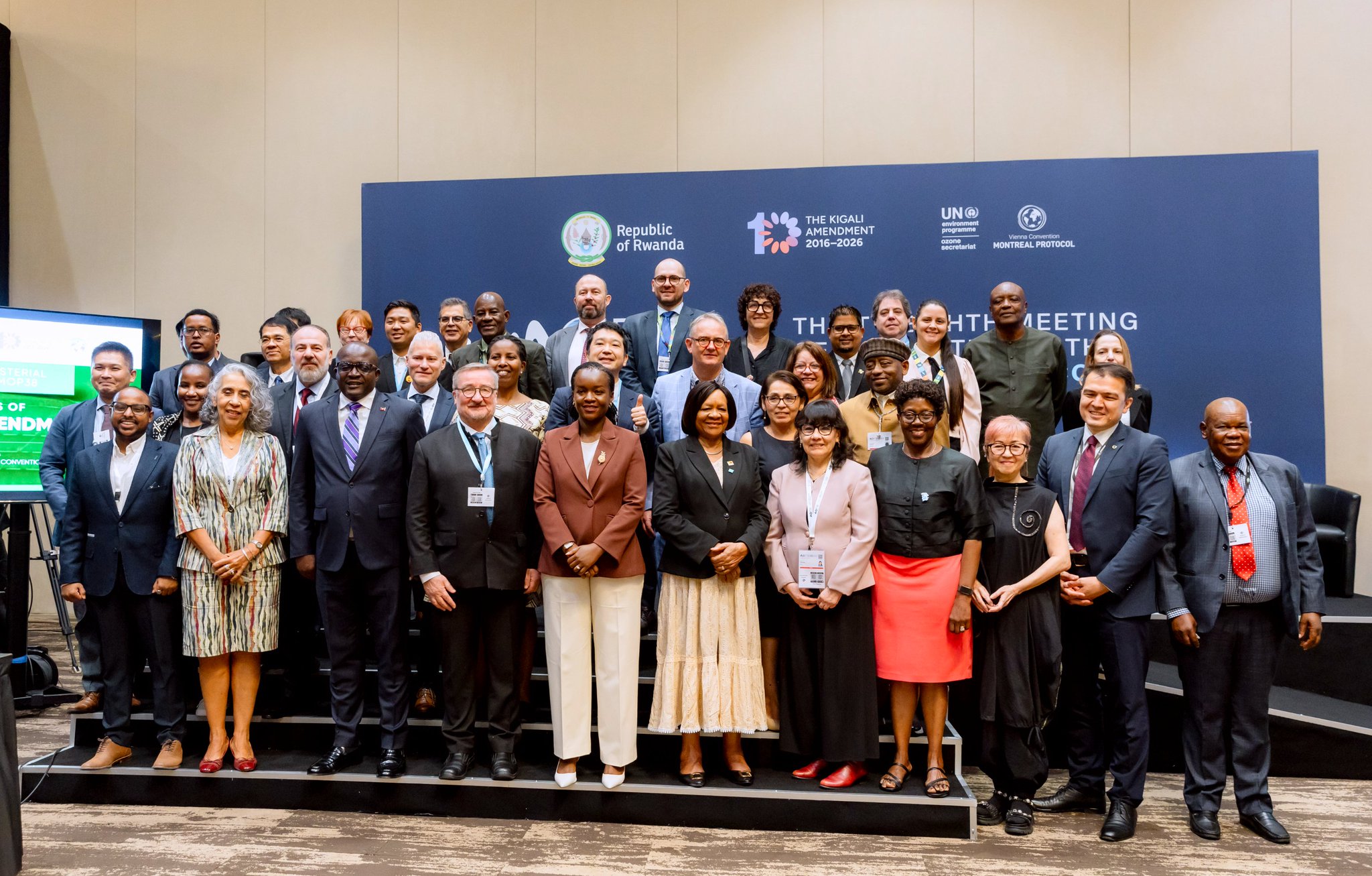
This was during Kigali Protocol meeting last week
KIGALI — As world leaders and climate negotiators gather in Türkiye for COP31, the United Kingdom is putting its climate partnership with Rwanda in the spotlight, highlighting projects ranging from sustainable cooling to wetland restoration and climate finance.
The British High Commission in Rwanda has been engaged in online coverage of the partnership in recent weeks, using videos, photographs and other content to showcase practical projects supported by the UK.
Much of the attention has focused on the 10th anniversary of the Kigali Amendment to the Montreal Protocol and the 38th Meeting of the Parties to the Montreal Protocol, held in Kigali earlier this month.
The UK has highlighted the Africa Centre of Excellence for Sustainable Cooling and Cold Chain, known as ACES, as one of the clearest examples of what the Kigali Amendment can deliver in practice.
The centre is a UK-funded partnership with the Rwandan government that focuses on cleaner and more efficient cooling and cold-chain systems.
Cooling is becoming increasingly important as temperatures rise and demand for refrigeration and air conditioning grows.
But conventional cooling equipment can consume large amounts of energy and rely on refrigerants with high global warming potential.
The Kigali Amendment, agreed in Rwanda in 2016, seeks to phase down hydrofluorocarbons, or HFCs, powerful greenhouse gases widely used in cooling equipment.
The UK has described ACES as a model for how countries can combine climate action with practical economic and development needs.
The centre works on training technicians, certifying equipment and developing cold-chain systems that can support farmers, food producers and health services.
Its work also addresses post-harvest losses and the need to maintain reliable temperatures for products such as vaccines.
From Kigali to COP31
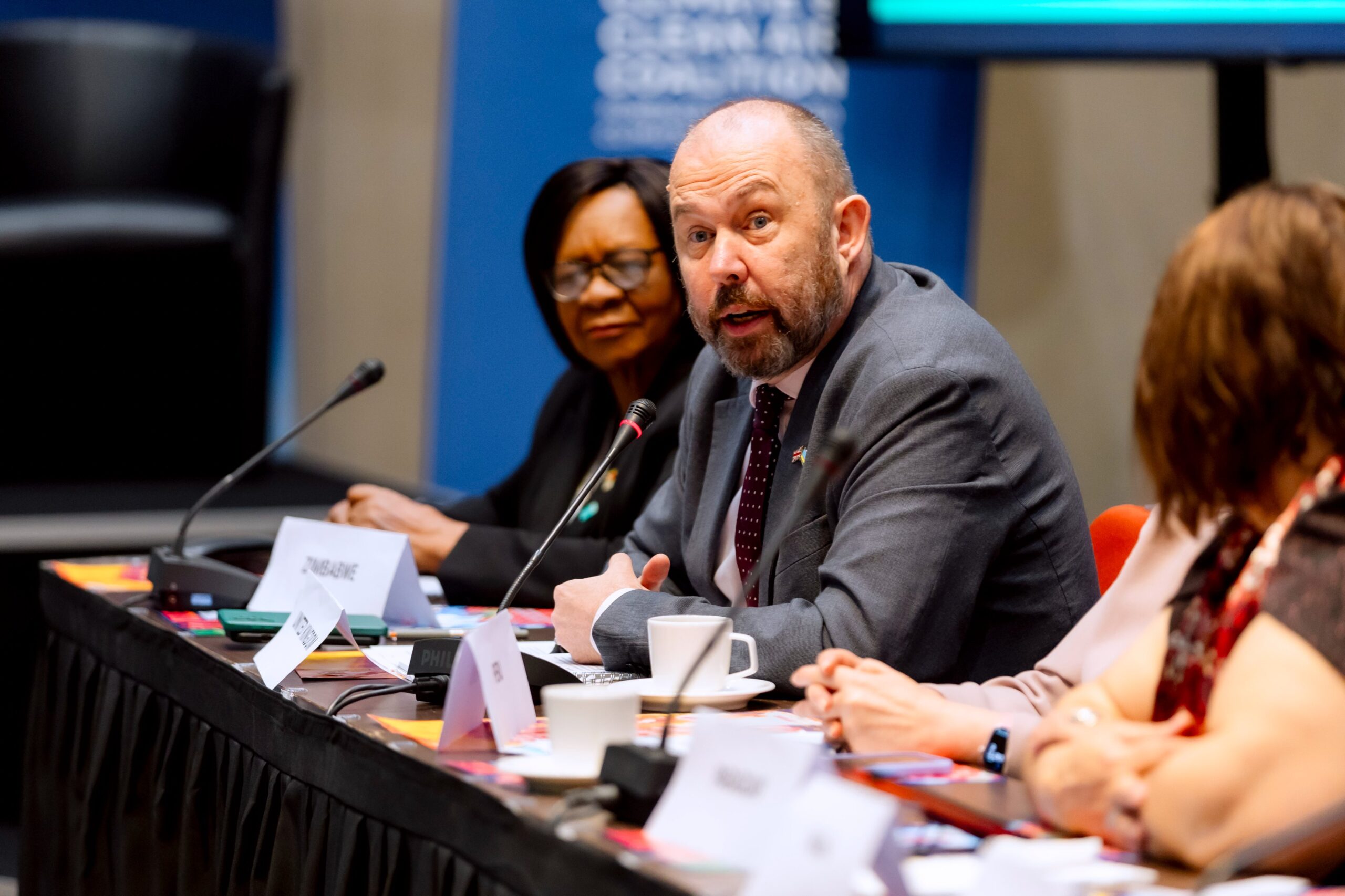
The British High Commission’s recent posts have coincided with two major international climate moments.
MOP38 in Kigali marked 10 years since the adoption of the Kigali Amendment.
The meeting also focused heavily on the financing required to help developing countries implement the agreement.
The Multilateral Fund is estimated to require between $1.23 billion and $1.69 billion for the 2027–2029 period.
The UK has used the anniversary to underline the importance of financing countries that are being asked to move towards cleaner cooling technologies.
In one video posted from MOP38, a UK climate official explained the history of the Montreal Protocol and the evolution of the Kigali Amendment, while highlighting Rwanda’s role in sustainable cooling through ACES.
Another post described ACES as a “shining example” of sustainable cooling innovation.
The UK and Rwanda, together with Brazil, are also co-champions of the Friends of the Kigali Amendment initiative, which seeks greater ambition and implementation of the agreement.
The focus is increasingly shifting from agreeing climate targets to making those targets work on the ground.
A bicycle-powered cooling lesson
The UK mission has also used more accessible demonstrations to explain the challenge.
On November 9, Development Director Billy Stewart appeared in a video at ACES, pedalling a bicycle-powered cooling system.
The demonstration was designed to show how much energy can be required to produce something as simple as a cold drink.
The message was straightforward.
As demand for cooling expands, countries need systems that consume less energy and use refrigerants with lower environmental impacts.
For Rwanda, the issue has implications well beyond air conditioning.
Reliable cooling is essential for agriculture, food storage, transport, health services and other parts of the economy.
The UK sees ACES as a regional hub that can help Rwanda and other African countries develop the skills and systems needed to meet that demand.
The centre has also been involved in partnerships with Rwanda’s Ministry of Agriculture, including work on rehabilitating cold rooms and expanding sustainable cold-chain systems.
Climate finance and nature
The British High Commission’s recent climate messaging has also extended beyond cooling.
On November 9, UK officials visited Nyandungu Eco Park in Kigali to highlight the connection between climate action and nature restoration.
The restored wetland is home to hundreds of bird species and has received support through UK climate and nature finance.
The visit was timed with the opening of COP31 and was used to illustrate the importance of restoring ecosystems while building more resilient cities and communities.
The UK has also supported programmes designed to improve access to weather and climate information, allowing communities to prepare earlier for floods, droughts and other climate-related shocks.
These projects form part of a broader partnership focused on helping Rwanda mobilise finance for green growth and climate resilience.
Rwanda is particularly vulnerable to floods, landslides and droughts, which can damage infrastructure, agriculture and livelihoods.
The UK has therefore focused part of its support on strengthening institutions, developing projects that can attract investment and creating mechanisms that can bring public and private capital into climate action.
This includes work involving the Rwanda Green Fund, blended finance, green bonds and carbon markets.
A longer-term partnership
The current focus builds on a broader UK-Rwanda climate partnership.
In March, Kigali hosted a UK-Rwanda Climate Partnership Conference under the theme “Catalysing Green Investment in Africa”.
The conference brought together experts and policymakers around the challenge of turning climate commitments into investable projects.
About £20 million in UK investment has been linked to climate-resilient systems and initiatives including ACES.
The British High Commission is also recruiting a Climate Programme, Policy and Partnership Manager in Kigali to work on climate finance, resilience and green growth.
The position, advertised in late October, is part of the mission’s Growth, Climate and Human Capital Group.
The recruitment underlines that the partnership is not limited to individual projects.
It is also aimed at building institutional capacity to manage climate finance and develop longer-term cooperation.
Rwanda as a climate innovation hub
The UK government’s recent messaging presents Rwanda as more than a recipient of climate support.
It presents the country as a place where climate solutions can be developed, tested and potentially scaled across Africa.
ACES is at the centre of that approach.
The sustainable cooling initiative connects the Kigali Amendment’s global climate objective with everyday issues such as food security, healthcare and energy use.
Nature restoration projects such as Nyandungu add another dimension, linking climate resilience with urban development and biodiversity.
As COP31 gets underway, the UK is using these examples to make a broader point: climate commitments matter most when they produce practical changes in people’s lives.
For Rwanda, the partnership provides access to finance, technology and expertise.
For the UK, it offers an opportunity to demonstrate how international climate cooperation can move from pledges to projects.
And for both countries, the challenge is increasingly about scale — ensuring that initiatives developed in Rwanda can reach more communities and contribute to the wider African response to a warming planet.
