


 German entrepreneurs in Rwanda are worried about their businesses because their employees are having difficulty traveling to Germany. This is because Rwandan nationals currently have to apply for Schengen visas in Kenya.
A group of German entrepreneurs in Rwanda has criticized the visa application process for Rwandan citizens in a letter to the German Foreign Office (Auswärtiges Amt).
At present, it is not possible to obtain a visa for the Schengen area in Rwanda.
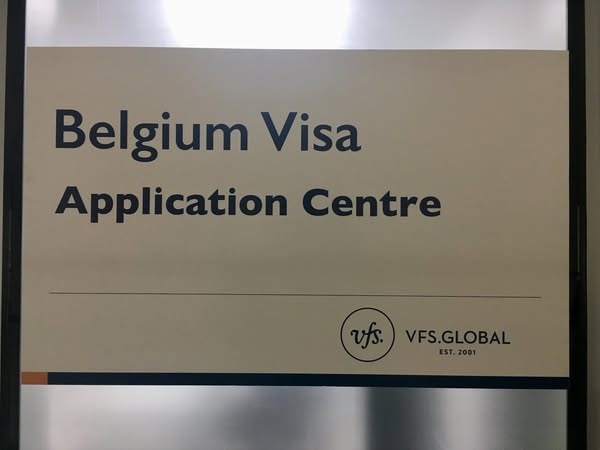
After the expulsion of all Belgian diplomats from Rwanda—who were previously responsible for Schengen visa processing—applicants now have to travel to the Belgian embassy in Nairobi, Kenya.
The signatories of the letter complain that the relocation of the application process entails significant time and financial burdens:
“For our business and cooperation models, which depend on regular personal exchange between Rwandan and German partners, this development has serious consequences. In many cases, business trips—and thus business relationships—become economically unviable or even impossible.”
The signatories are also concerned about the political tensions between Rwanda and Belgium.
In the letter, obtained by Table Media, the group is appealing to the Foreign Office to ensure that Schengen visa applications can once again be processed in Kigali.
“We regret that the breakdown of diplomatic relations between Rwanda and Belgium is impacting visa applicants,” a spokesperson said.
“The Foreign Office continuously evaluates the situation and is exploring more customer-friendly solutions to ease the visa process for the affected group.”
The 15 signatories are primarily companies from the IT sector. The Federal Association of IT SMEs (BITMi), the Federal Association of Medium-Sized Businesses (BVMW), and the German-African Business Association also signed the letter.
“Due to cost pressure and the still-existing shortage of skilled workers, German IT companies often depend on international cooperation,” said BITMi President Oliver Grün in response.
“What we need are efficient—not discouraging—visa procedures that continue to enable economically important cooperation in our sector.”
According to industry association Bitkom, Germany could face a shortage of more than 660,000 IT professionals by 2040.
Rwanda is considered a promising partner for the sector: the country aims to become a regional IT hub and relies in part on foreign companies to achieve this.
The signatories argue that a simplified visa process is a fundamental prerequisite for successful Africa policy:
“It is contradictory for Germany to emphasize economic partnership with Africa while effectively denying Rwandan partners access through cumbersome visa procedures,” said Claudia Voß, Deputy Managing Director of the German-African Business Association.
“This undermines the goals of Germany’s Africa policy. A swift solution is now necessary—otherwise, we risk losing the trust of our local partners as well as future opportunities.”

Christian Knoop
Christian Knoop, Managing Director of the German IT company TestSolutions which opened an office in Kigali three years ago is among the signatories who expressed a similar view and stated that if Germany is serious about a lived partnership with Africa, it needs robust and reliable structures.
“A functioning visa process in Kigali would do far more for a partnership on equal footing than the next development policy ceremony in Berlin,” Knoop said.
Knoop revealed that investors are already experiencing delays and rejections of visa applications that have prevented colleagues from Rwanda from participating in important client meetings or professional conferences in Germany.
Knoop stated that for the companies affected, this is damaging to business and undermines the trust of international partners that has been built over many years.
“Practical barriers like the visa process must urgently be reconsidered,” he said.
Visas have long been a stumbling block in European-African relations. Businesspeople and academics on both continents complain that restrictive visa policies hinder exchange and collaboration.
According to research by Ethiopian migration scholar Mehari Taddele Maru, the rejection rate for African Schengen visa applications rose from 18 percent in 2014 to 30 percent in 2022—well above the average rejection rate of 17.5 percent.

“These high rejection rates and the restrictions on African applicants have a negative impact on Europe’s efforts to promote strong private-sector partnerships between the continents,” Maru commented.
He sees an urgent need for reform of the EU visa policy to ensure fairness and accessibility for all applicants: “A fairer and more inclusive visa system, aligned with the overarching goals of the Europe-Africa partnership.”

1 comment
How are you
Comments are closed.