



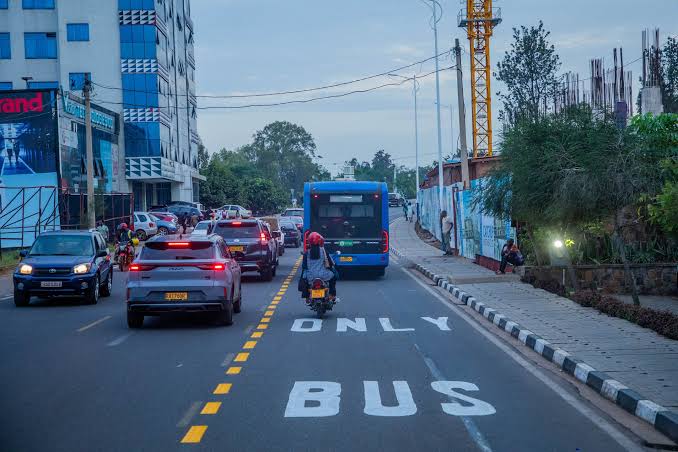
A bus-only lane in Kigali
KIGALI — The number of people using public transport in Rwanda has increased by 15 percent since March 2026, as government measures aimed at cushioning citizens from soaring fuel prices and improving urban mobility begin to yield results.
Prime Minister Dr. Justin Nsengiyumva announced the figures during a press briefing on Saturday, June 6, 2026, where he outlined the government’s response to rising global fuel prices and their impact on Rwanda’s economy.
The measures were introduced in March following sharp increases in international petroleum prices linked to the conflict in the Middle East.
Like many developing economies that rely heavily on imported fuel, Rwanda has faced growing pressure from rising energy costs.
According to Dr. Nsengiyumva, strengthening public transport has become one of the government’s key strategies to reduce fuel consumption while ensuring citizens continue to travel affordably.
“The number of people using public buses has increased by 15 percent, and we will continue putting in place measures that encourage even more people to use public transportation,” he said.
The increase builds on broader reforms that have transformed Kigali’s public transport system in recent years.
By end of 2025, Public buses carred about 280,000 passengers on weekdays and approximately 180,000 passengers during weekends.
Data shows ridership on the bus increased by significantly shortly after the introduction of dedicated bus lanes across the city.
People are using kess of the motorcycles and personal vehicles, actually preferring the bus because it quicker as the busses don’t stop. People get work in minutes.
The government’s latest transport reforms, introduced in April 2026, include dedicated bus-only lanes operating during peak hours between 6:00 a.m. and 10:00 a.m. and again from 5:00 p.m. to 9:00 p.m.
The changes have reduced waiting times for commuters to as little as five minutes during rush hours.
The Prime Minister said the government has also expanded the public transport fleet and route network to provide commuters with reliable alternatives to private vehicles.
“We have invested more in public transport by increasing the number of buses and expanding routes so that Rwandans can continue carrying out their daily activities without being overly affected by rising fuel costs,” he said.
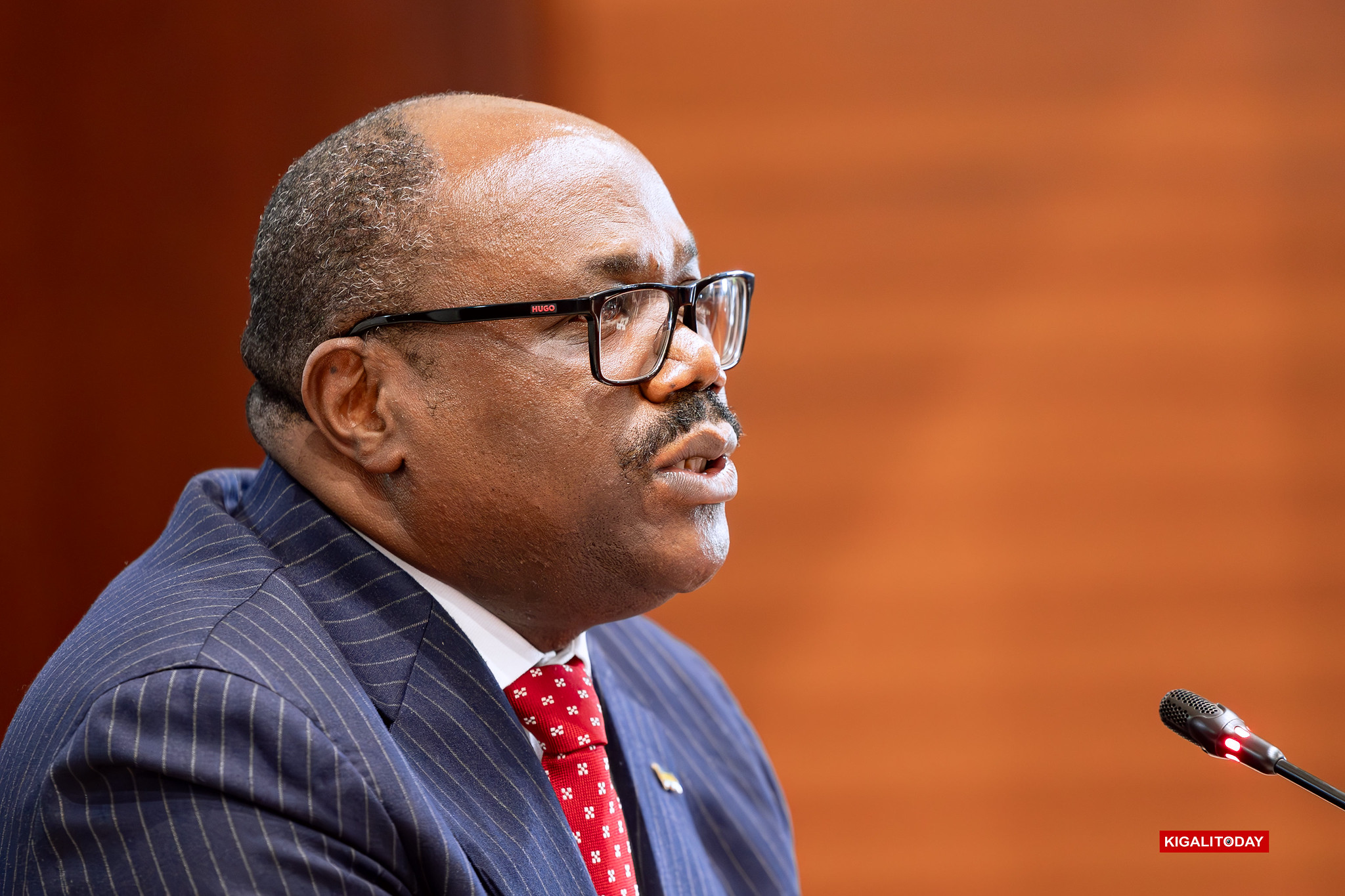
Prime Minister Dr Justin Nsengiyumva speaking June 6
Rwanda’s public transport fleet currently consists of about 500 buses operating across Kigali and other parts of the country.
The fleet is also being modernized through pilot projects involving fully electric passenger shuttles serving strategic corridors, including routes linking hospitality facilities and Kanombe International Airport.
Despite the progress, walking remains the dominant mode of transport for many residents. Available labour force data indicate that about 61 percent of employed Rwandans walk to work, while approximately 26 percent rely on public transport and 13 percent use private vehicles.
Government Moves to Cushion Fuel Price Impact
Fuel prices have continued to rise despite government intervention.
On June 5, the Rwanda Utilities Regulatory Authority (RURA) announced that petrol would remain at Rwf2,938 per litre, while diesel increased by Rwf700 to reach Rwf2,927 per litre.
Dr. Nsengiyumva said the increase reflects developments on international fuel markets but emphasized that the government has introduced subsidies to shield consumers from the full impact.
According to the Prime Minister, diesel currently benefits from a government subsidy equivalent to 18.26 percent. Without that intervention, diesel would be retailing at Rwf3,581 per litre.
“The price announced already includes government support. Without that subsidy, consumers would be paying significantly more,” he said.
The government is also subsidizing public transport fares to prevent rising fuel costs from being passed directly to passengers.
For example, a bus journey between Nyabugogo and Musanze would cost Rwf4,281 without government support. Instead, passengers continue to pay Rwf3,821, with the government covering the difference.
“In practical terms, the government contributes Rwf406 every time a passenger purchases a ticket on that route,” Dr. Nsengiyumva explained.
Long-Term Vision
The latest measures form part of a broader effort to modernize Rwanda’s transport system and reduce dependence on imported fossil fuels.
Authorities are preparing to introduce hundreds of additional electric buses over the coming years as part of the country’s green mobility strategy.
Kigali is also advancing plans for an urban cable-car system expected to become one of the first projects of its kind in Africa, further expanding mass transit options for the growing city.
Dr. Nsengiyumva assured citizens that the government would continue implementing measures aimed at protecting household incomes and maintaining economic stability amid global uncertainties.
Since March 2026, petrol prices in Rwanda have increased by 47.7 percent, rising from Rwf1,989 to Rwf2,938 per litre. Over the same period, diesel prices have climbed by 50.3 percent, from Rwf1,948 to Rwf2,927 per litre.
As fuel costs continue to rise, the government is betting that improved public transport, targeted subsidies, and investment in cleaner mobility solutions will help cushion citizens while supporting Rwanda’s long-term economic and environmental goals.
