



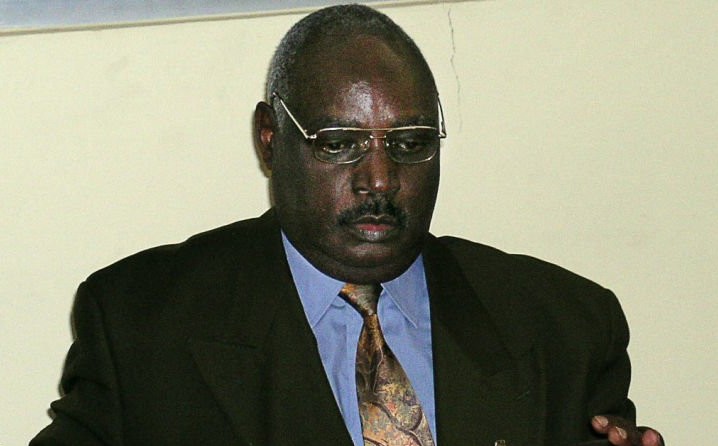
FILES- This file picture shows Protais Zigiranyirazo, brother-in-law to former Rwandan president Juvenal Habyarimana, appearing in Court on October 3, 2005 for the beginning of his trial at the Rwanda war crimes tribunal in Arusha. The UN tribunal hearing cases from the 1994 Rwandan genocide has freed Protais Zigiranyirazo on November 16, 2009 who had been sentenced to 22 years. Protais Zigiranyirazo, had been found guilty of organising a massacre of 1,000 people. But the appeals court judge said had been serious errors in his trial and his conviction in 2008 violated “the most basic principles of justice”. The International Criminal Tribunal for Rwanda (ICTR), based in Tanzania, was set up to try high-profile genocide cases.AFP PHOTO/KENNEDY NDAHIRO (Photo credit should read KENNEDY NDAHIRO/AFP via Getty Images
KIGALI – The city of Orléans, France, has revoked permission for the burial of Protais Zigiranyirazo, a former Rwandan official famously known as “Mr Z” and the brother-in-law of former President Juvénal Habyarimana, citing his alleged role in the 1994 Genocide against the Tutsi.
Zigiranyirazo, who died in Niger on August 3, was scheduled to be buried in Orléans on Thursday, August 28. The plans were halted after the city council, led by Mayor Serge Grouard, learned of his contested past.
In a strongly-worded statement issued on Tuesday, the municipality stated that Zigiranyirazo “is recognized for having played a direct and decisive role in the genocide perpetrated against the Tutsis in Rwanda.” It declared that burying him in a public cemetery was “incomprehensible given the severity of the acts he is accused of.”
The city’s decision was driven by two primary concerns: a “serious risk of public disorder” during the funeral and the fear that the grave could “become a gathering place or a site of glorification for the perpetrators and accomplices of the genocide.”
The burial permit was officially canceled, with the city stating it had been “issued without knowledge of the deceased’s past.” Zigiranyirazo’s family has two months to appeal the decision.
A Contested Legacy
“Mr Z,” the brother of former First Lady Agathe Habyarimana, was a powerful prefect and businessman during the former regime. His planned burial sparked immediate condemnation from survivors’ groups.
Ibuka France, the leading memorial association for the Genocide against the Tutsi, welcomed the city’s decision. They noted that while the International Criminal Tribunal for Rwanda (ICTR) had acquitted Zigiranyirazo on appeal in 2009, it was “on strictly procedural grounds and not following a substantive debate” on the facts of the case. The ICTR had initially sentenced him to 20 years in prison in 2008 for crimes related to the genocide.
The case highlights the ongoing sensitivities surrounding the legacy of the genocide and the figures implicated in it, even three decades later. For many survivors and their descendants, the prospect of a key accused figure being buried without contention in a European city was a profound insult to the memory of the over one million victims.
The move by the Orléans city council is seen as a significant stance against genocide denial and the potential memorialization of accused perpetrators on European soil.
