




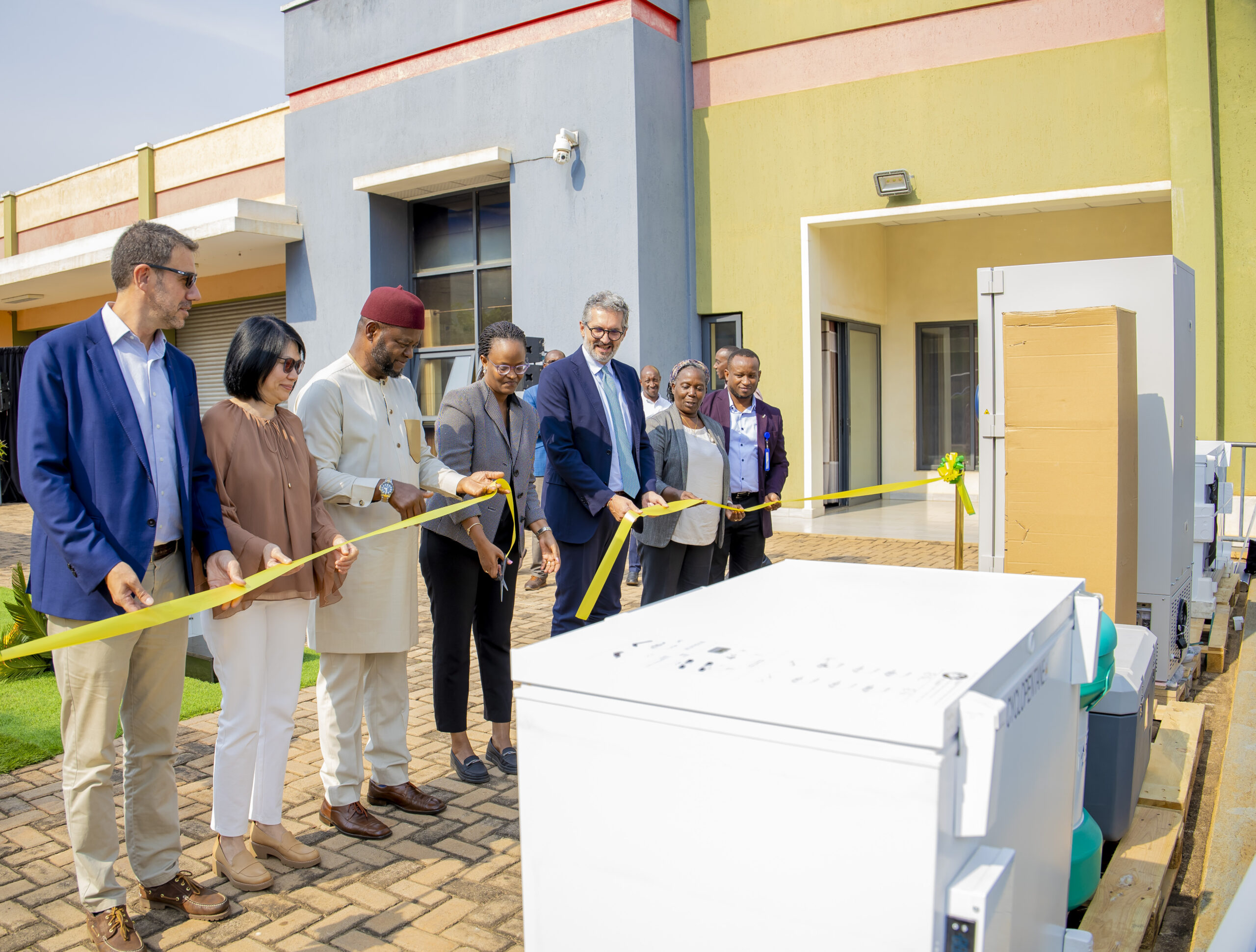
 Rwanda has received over 600 units of cold chain equipment through a partnership between the United Nations (UN) and the Mastercard Foundation, strengthening the country’s ability to respond to public health emergencies.
The handover took place at the Rwanda Biomedical Center’s vaccination warehouse in Masoro, Kigali. The equipment includes ultra-low temperature freezers, medical-grade refrigerators, cold boxes, icepacks, and multipurpose tents, all designed to store and transport vaccines, medicines, and other medical supplies at the right temperature, keeping them safe and effective—even in remote or hard-to-reach areas.
This initiative is part of a USD 50 million global commitment by the Mastercard Foundation to support rapid responses to infectious disease outbreaks, with USD 15 million allocated to WFP and USD 35 million to UNICEF for logistics, cold chain infrastructure, and community health support.
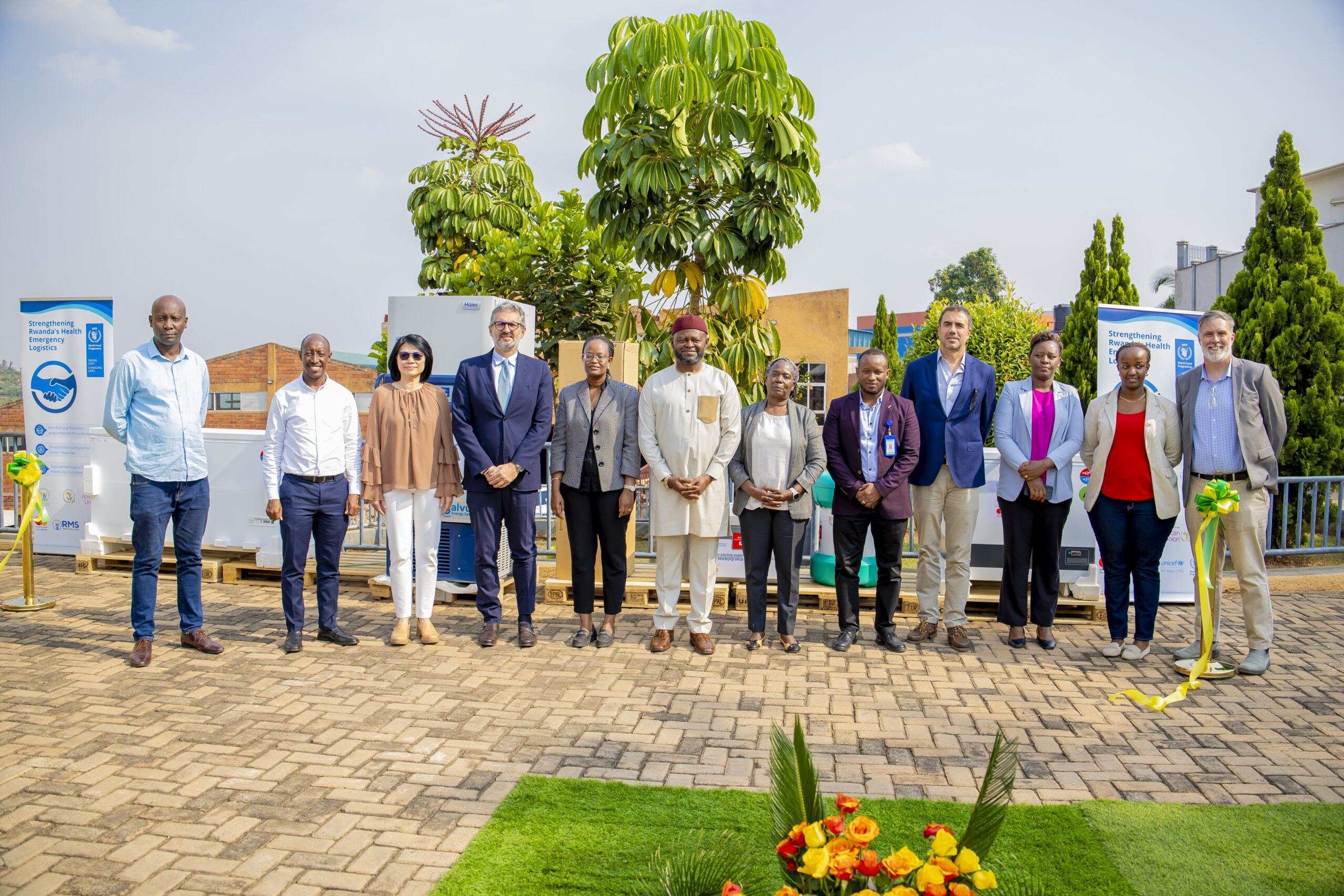
The handover ceremony was attended by officials from the Ministry of Health, Rwanda Medical Supply (RMS), Rwanda Biomedical Center (RBC), UNICEF, WHO, and WFP. The equipment will be deployed nationwide, ensuring vaccines and medical supplies reach health facilities quickly and safely.
Diana Mutoni, Deputy CEO of Rwanda Medical Supply, said:
“This initiative not only strengthens our medical supply chain but also builds on our proven leadership and coordination capabilities, as seen during the Marburg virus disease outbreak, reinforcing our dedication to protecting the health and well-being of all Rwandans.”
Andrea Bagnoli, WFP Rwanda Country Director, described the handover as:
“Practical, timely, and essential. This equipment will help Rwanda respond faster, store safer, and reach further in times of public health emergencies.”
Bee Hong Ong, UNICEF’s Representative – Officer in Charge in Rwanda, affirmed:
“UNICEF stands ready to support the Ministry of Health with the in-country logistical support required for deployment of the equipment to health facilities countrywide — further strengthening Rwanda’s public health preparedness.”
Ozonnia Ojielo, UN Resident Coordinator in Rwanda, praised the collaboration:
“This partnership is a model of effective collaboration between international agencies and the Government of Rwanda. We commend the Ministry of Health for its swift action and leadership, and we look forward to building on this success through the new UN Sustainable Development Cooperation Framework.”
Dr. John Nkengasong, Executive Director of Higher Education, Collaboratives and Strategic Initiatives at the Mastercard Foundation, added:
“The Mastercard Foundation is proud to partner with WFP and UNICEF in their response to disease outbreaks, recognizing that safeguarding the health, safety, and livelihoods of vulnerable communities is essential for building resilient and equitable societies.”
Beyond infrastructure, the initiative has strengthened community-level health systems. Over 55,000 community health workers were trained in risk communication, infection prevention and control, mental health support, and continuity of essential health and nutrition services, reaching an estimated 4.5 million people across 15 priority districts in Rwanda.
The partnership demonstrates how global cooperation can strengthen national health systems and ensure Rwanda is better prepared for future health emergencies.