




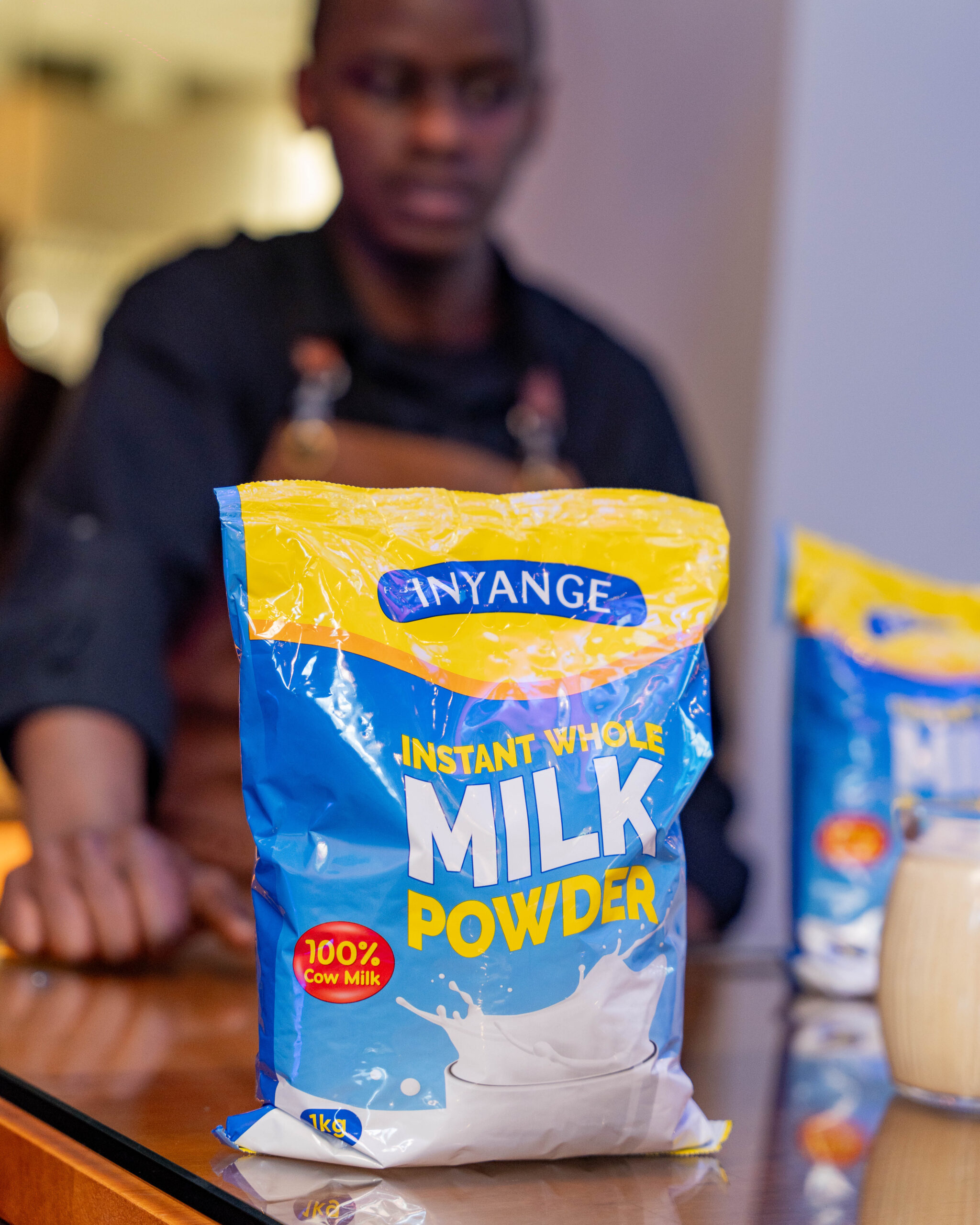
Kigali, Rwanda — Inyange Industries has launched a new instant powdered milk product for local consumption, marking a major step toward Rwanda’s goal of self-sufficiency in dairy production and reduced dependence on imports.
The company, which produces 50 tonnes of milk per day, unveiled the product at its Kigali plant on Thursday.
The new product complements the industrial-grade powdered milk already produced by Inyange and supplied to Africa Improved Foods (AIF) for fortified food processing — a key component in Rwanda’s efforts to combat malnutrition and stunting.
A Move Toward Self-Reliance:

Alexis Kabayiza
Officiating the launch, Alexis Kabayiza, Technical Advisor to the Minister of Trade and Industry, said the new development aligns with Rwanda’s national industrialization and export promotion strategy.
“This is a major step toward reducing dependence on imported consumer goods,” Kabayiza said. “Having this milk on our market adds value to locally made dairy products and demonstrates Rwanda’s capacity to produce what it consumes.”
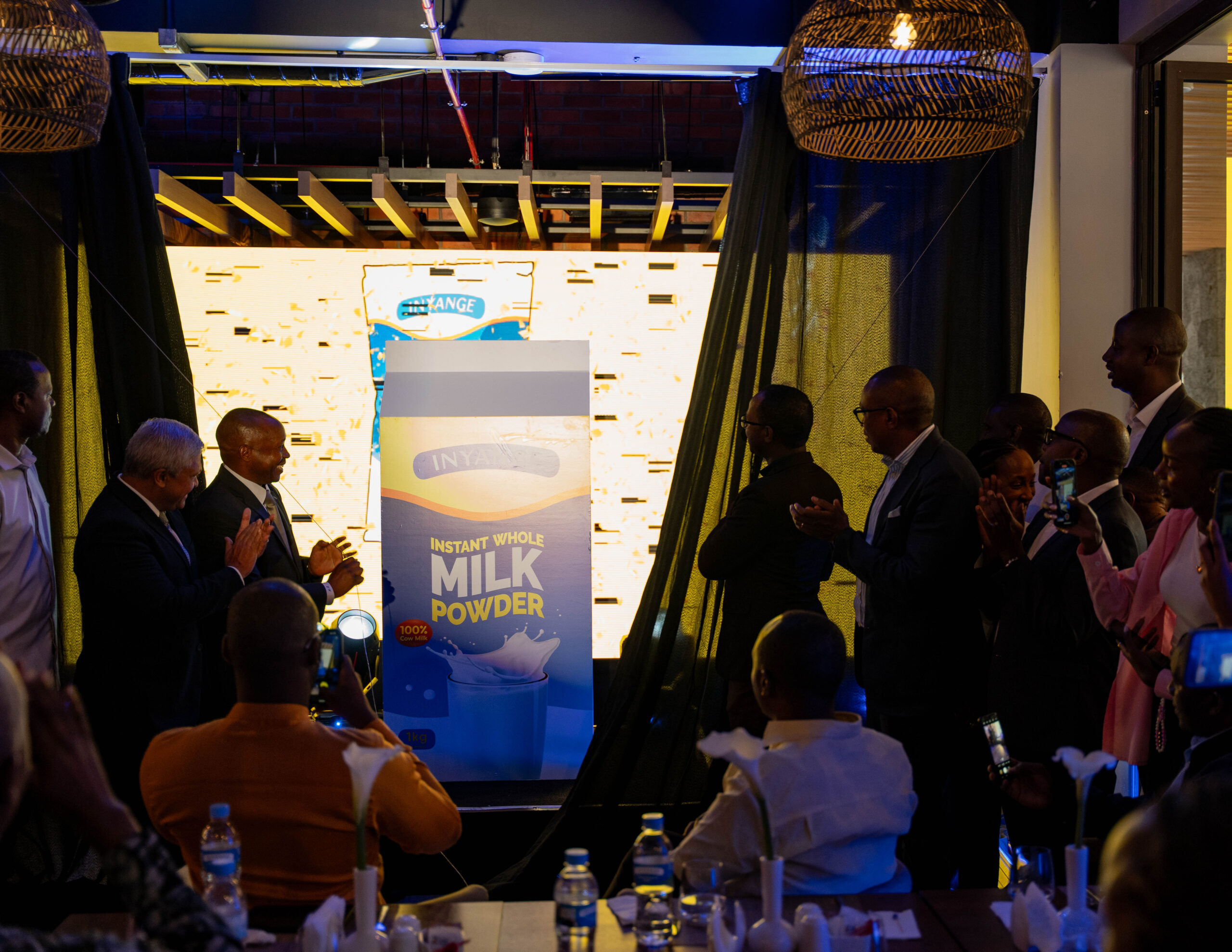
The product unveiling officiated by the Ministry of Trade and Industry alongside NCBA Rwanda and Inyange Industries officials
He added that the government remains committed to supporting such private-sector initiatives to strengthen industrial capacity and promote the Made in Rwanda agenda.
“Our target is self-reliance. We’ve learned valuable lessons from relying on imports — so we should celebrate Inyange Industries for setting this precedent,” Kabayiza said.
Trade Context: Bridging Rwanda’s Deficit:

Rwanda continues to face a structural trade deficit, with imports totaling $6.88 billion in 2024, compared to exports of $3.17 billion— a shortfall of $3.71 billion.
While exports grew by 27.4%, the demand for capital goods, energy, and industrial inputs continues to drive high import volumes. Initiatives like Inyange’s local milk production are seen as critical to narrowing this gap by substituting imports with locally made goods.
“This is the beginning of a journey to ensure no one imports milk products again,” Kabayiza said. “We must take pride in consuming what we produce.”
Industry Leaders Welcome Milestone:

James Kagaba
James Kagaba, Managing Director of the Inyange Milk Powder Plant, said the new product will significantly benefit Rwanda’s entire milk value chain — from farmers to retailers.
“We’ve worked hard to ensure quality in all our milk products,” Kagaba said. “With our production capacity, we can now fully satisfy national demand and support every player in the dairy value chain.”
NCBA Bank: A Partner in Dairy Growth:

Maurice Toroitich
Maurice Toroitich, Managing Director of NCBA Bank Rwanda, said the bank is proud to have partnered with Inyange from the start to bring the idea to fruition.
“It’s fulfilling to see this journey from concept to reality,” Toroitich said.
“Our farmers and transporters will be the biggest beneficiaries, and this move will strengthen the entire dairy sector.”
He also encouraged Rwandans to prioritize locally produced goods over imported brands like Nestlé’s NIDO, which remains widely consumed despite its high cost.
“I have nothing against Nestlé,” he said with a smile, “but I hope we’ll start seeing less NIDO around now that we have Inyange’s powdered milk on our shelves.”
Toroitich added that promoting local products is key to achieving Rwanda’s Vision 2050 goals and building a resilient, competitive economy.
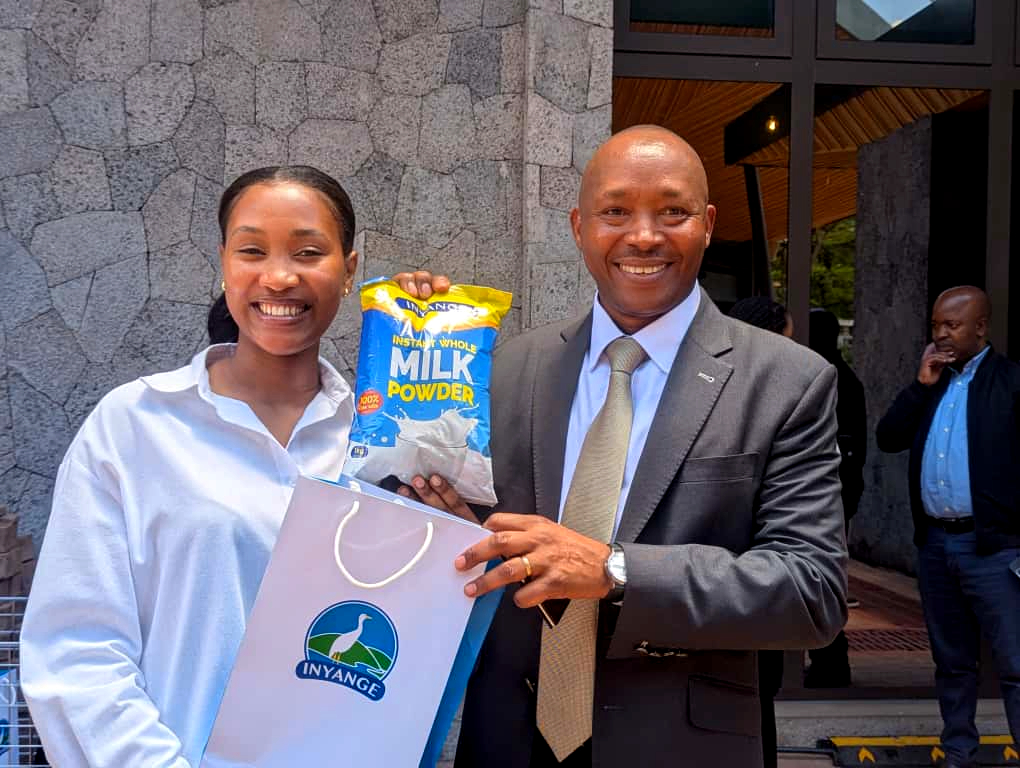
Maurice Toroitich (right) shows off his first Inyange instant powder package
Distributors Welcome Local Supply:
Marie Germaine Nyiranshuti, an Inyange distributor from Gasabo District, said the launch responds directly to market demand.
“Customers have long asked for locally made powdered milk,” she said. “This will cut my import costs, reduce prices for consumers, and ensure timely delivery — unlike imported products that take weeks to arrive.”

Marie Germaine Nyiranshuti
A Step Toward Industrial Transformation:
With the launch of instant powdered milk, Inyange Industries reinforces its role as a key player in Rwanda’s industrial and agricultural transformation.
The move not only strengthens the domestic dairy market but also aligns with national efforts to boost exports, substitute imports, and enhance food security — one glass of milk at a time.




1 comment
I am very happy because this product our country grow every year
Comments are closed.