


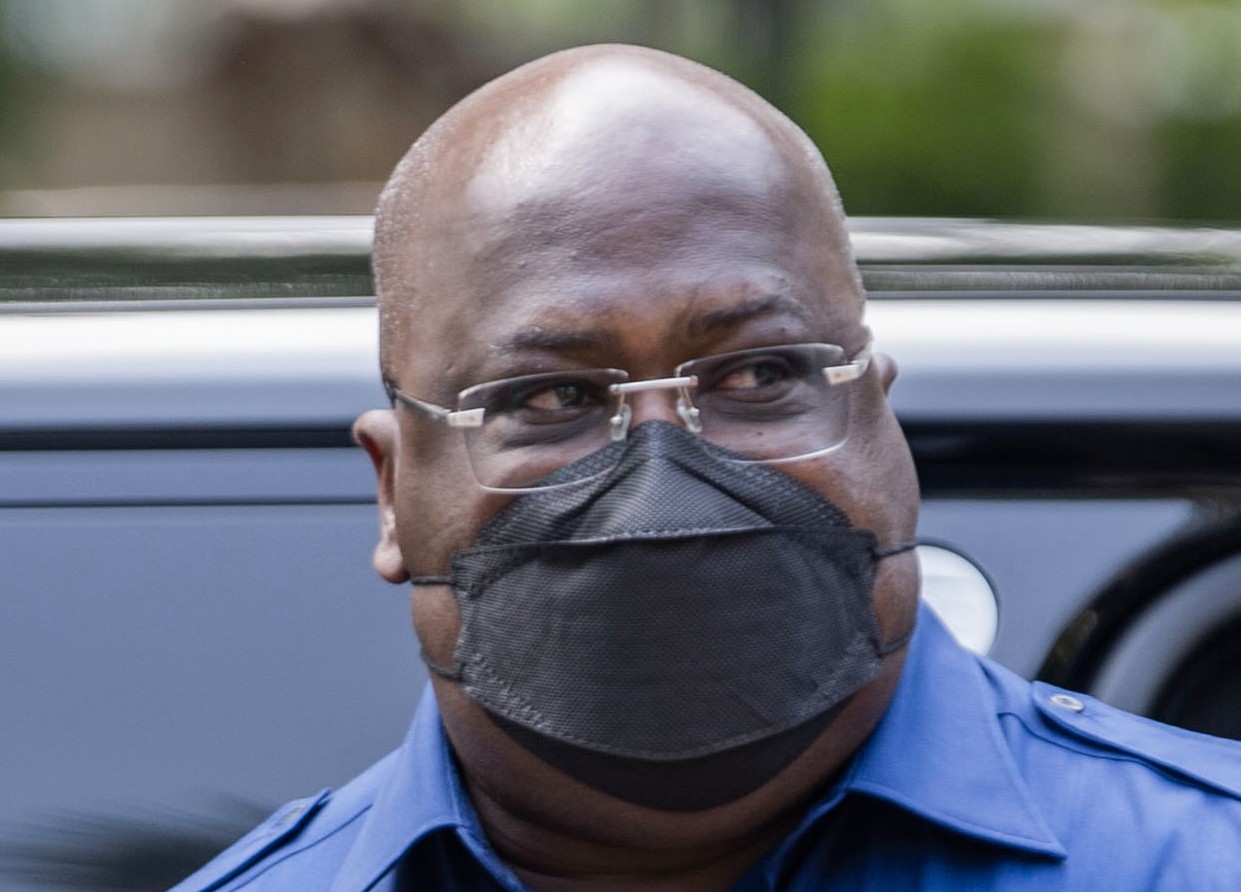
DR Congo President Felix Tshisekedi
Kigali — Rwanda has issued a forceful response to Democratic Republic of Congo (DRC) President Félix Tshisekedi’s accusations at the Global Gateway Forum in Brussels, calling his remarks false, inflammatory, and politically motivated.
The sharp exchange followed a tense moment during the international summit, where Tshisekedi accused Rwanda of supporting the AFC-M23 M23 rebel movement in eastern Congo and undermining regional peace.
Rwanda has dismissed those claims as baseless and a deliberate distortion of facts.
Shortly after the Brussels forum ended, President Paul Kagame appeared to respond indirectly through a cryptic but pointed post on X (formerly Twitter).
“If one makes an issue of noise of an empty drum, they also have a problem! Better to let it pass or walk away from it !!!” he wrote.
The remark was widely interpreted as a retort to Tshisekedi’s statements. Kagame’s choice of words — “empty drum” — quickly went viral across social media, seen as a reflection of Rwanda’s stance that the DRC president’s accusations lack substance.
Rwanda’s Full Rebuttal
Later, Rwanda’s Minister of Foreign Affairs and International Cooperation, Olivier Nduhungirehe, released a detailed statement rejecting Tshisekedi’s remarks and turning the responsibility for peace back toward Kinshasa.
In a message posted on X, Nduhungirehe wrote:
“No, you are completely wrong. The only person who can stop this escalation is President Tshisekedi — and HIM ALONE.
He can do so by putting an end to his belligerent attitude, including his public threats to invade Rwanda or bomb Kigali, not to mention the disgraceful insults he has directed at President Kagame.
He can do so by stopping his support for the genocidal FDLR, expelling them from his army, and neutralizing them as required by the Washington Peace Agreement.
He can do so by disarming the criminal Wazalendo militia — a group he created, armed, and financed — which has become notorious for spreading hate speech and persecuting Congolese Tutsi.
He can do so by ceasing to rely on Burundian soldiers and foreign mercenaries, formerly Romanians and now Colombians, in clear violation of an OAU resolution of 1977 and a 1989 United Nations Convention.
He can do so by stopping the daily bombardments carried out by his fighter jets and attack drones in eastern DRC, including in Banyamulenge villages and densely populated areas, in violation of both the Washington Peace Agreement and the Doha Declaration of Principles.
Finally, he can do so by ending this ridiculous political spectacle that consists of abusing the platform of a major economic partnership forum — such as the Global Gateway Forum — to hurl shameless accusations and lies against a Head of State, before pretending to be a victim of a conflict that he himself has provoked.”
Nduhungirehe’s statement represents one of the strongest public rebukes by Rwanda in recent months.
It accuses Tshisekedi not only of verbal hostility but also of actively undermining peace efforts through military and political decisions in the DRC.
Tshisekedi’s “Peace of the Brave” Appeal
In Brussels earlier, President Tshisekedi portrayed his comments as a peace appeal rather than provocation.
“At no time have I shown a belligerent attitude,” he said.
This is actually false. President Tshisekedi has on several occasions threatened to invade Rwanda and remove President Kagame’s government.
In late December 2023, at the height of the Congolese election campaign, Tshisekedi told the nation: “If you continue to destabilize eastern Congo, I will ask parliament to declare war on you. We will march on Kigali.”
He added: “If Rwanda continues to attack us… I will request the parliament to declare war on Rwanda.”
“We won’t occupy Rwanda… but we will return them to their senses.”
On his justification and mandate, Tshisekedi added: “The Congolese people have given me the mandate to use all means to protect our country… and if it takes to go to war, I will.”
In March of the following year, Tshisekedi had a interview on Top Congo FM, a private radio station in Kinshasa, where he said: “At the slightest skirmish, if they kill a Congolese citizen or seize another locality in Congo, I will convene both chambers in Congress, as required by the Constitution, and I will ask for authorisation to declare war on Rwanda.”
Then in November the same year, President Tshisekedi was even more blunt. The Congolese leader said he needs Constitution reform to get enough time for preparing ‘regime change’ in Rwanda.
“You can count on me, I will change the Rwandan regime. I will succeed if I am given the chance to change the Constitution,” Tshisekedi vowed on November 17 in Lubumbashi.
Rwanda has repeatedly rejected any links to the M23, maintaining that the DRC’s alliance with the FDLR — a group composed of elements involved in the 1994 genocide against the Tutsi — is the true source of instability in the region.
Regional and Diplomatic Tensions
The latest developments comes just months after the signing of the Washington Peace Agreement, which committed both governments to end hostilities, disarm armed groups, and resume political dialogue.
The agreement was reinforced by the Doha Declaration of Principles, aimed at guiding long-term regional stabilization. This one is between the AFC-M23 rebellion and the Kinshasa Government.
The latest is that the DRC refused, at the last minute to sign a regional economic co-operation agreement with Rwanda last week. Kigali says it is just one of the continuous games by Kinshasa.
