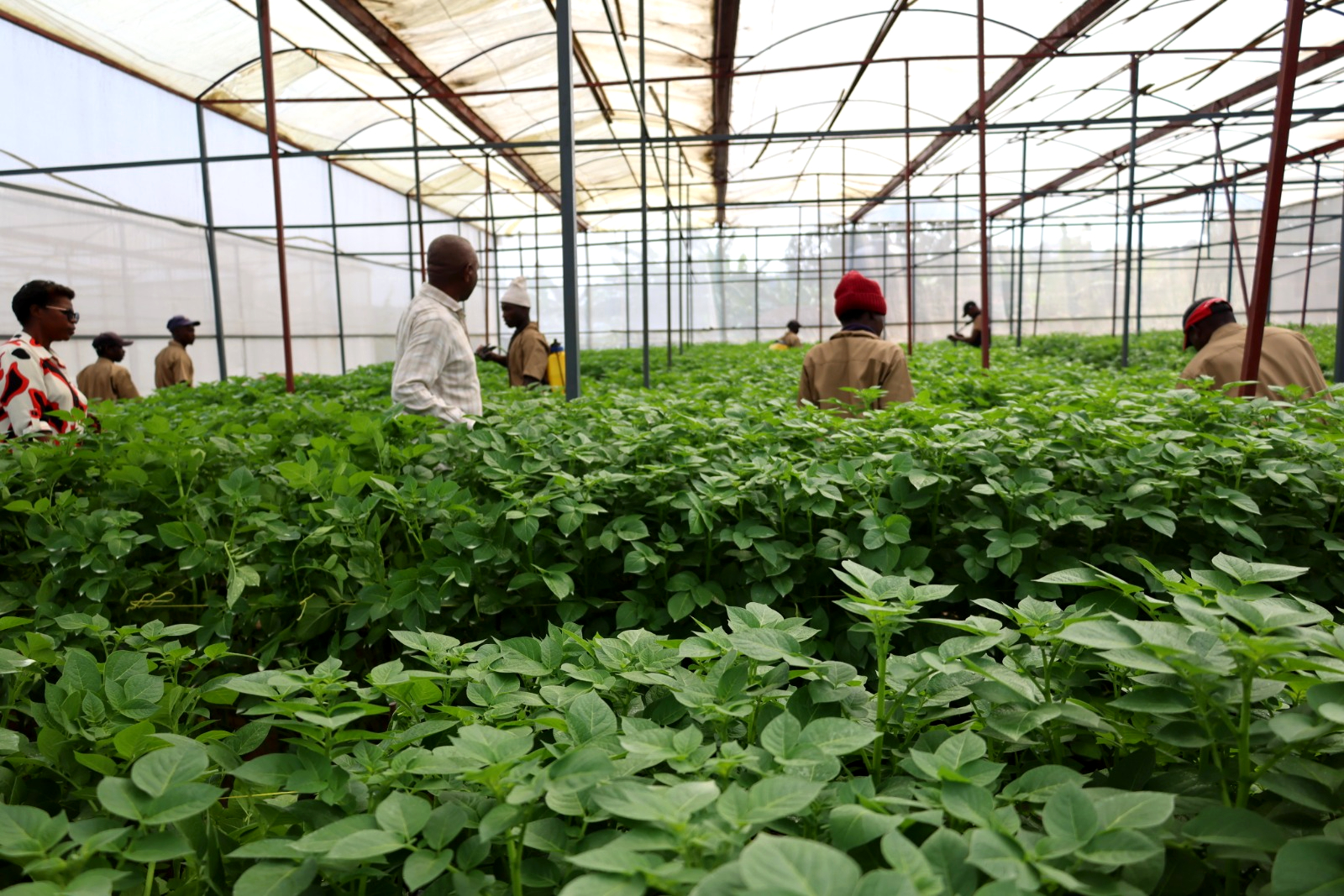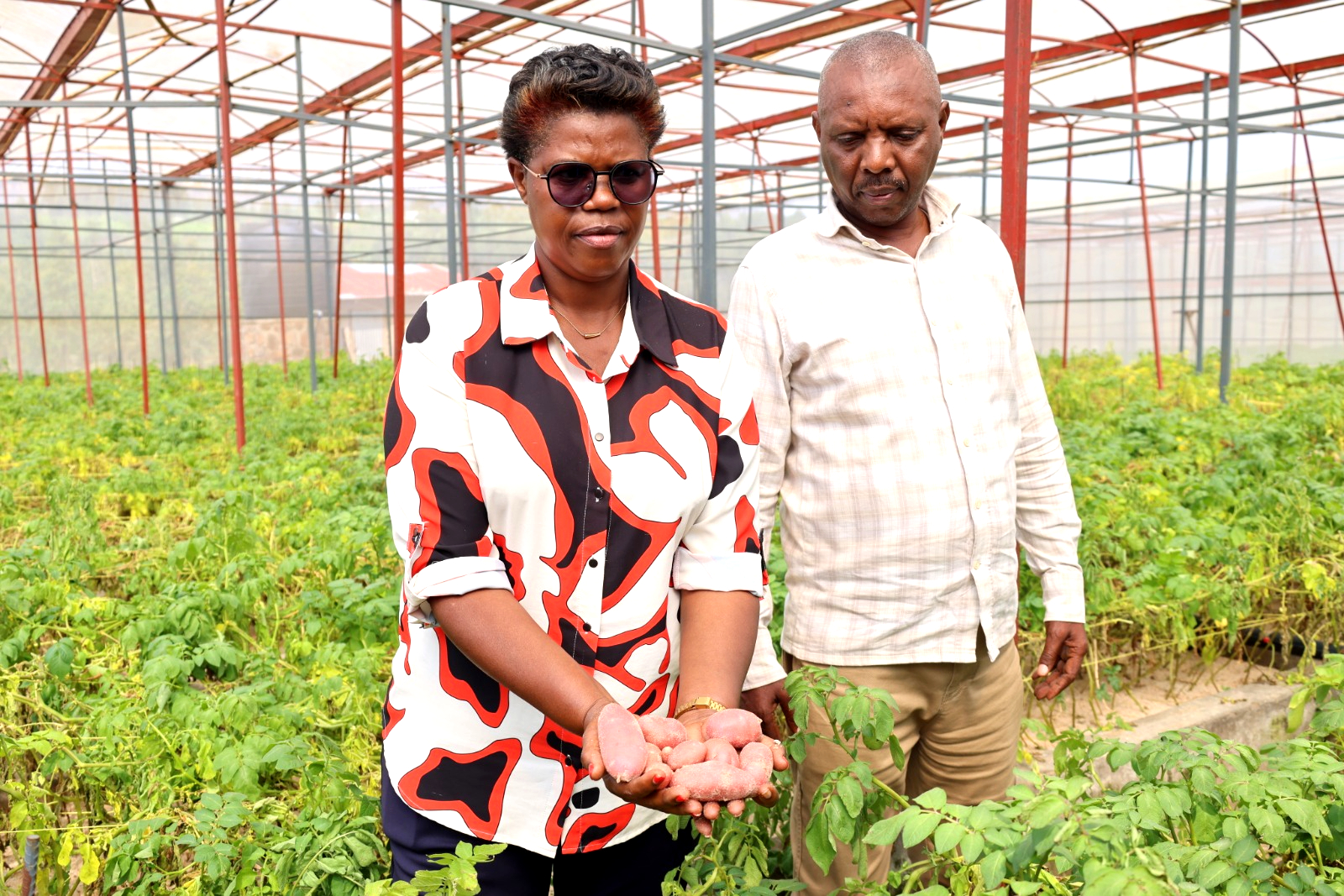
Philomene and her spouse Athanase (right)
A new technique for commercially growing potato plantlets is set to reduce farmers’ demand for seeds and increase food security in regions where families rely on Irish potatoes for survival.
Irish potatoes are commonly consumed as a staple food in many Rwandan homes, but the market demand for good, disease-resistant seeds remains a challenge for farmers, especially in the south and north of Rwanda where they are largely grown.
This issue is compounded by fluctuating prices, mainly due to the constrained lack of quality seeds—a concern farmers often cite as the reason behind shortages and food price inflation.
In Byimana Sector, Ruhango District, Athanase Ndagijimana and his wife, Mukamusoni Philomene—a business couple based in Muhanga District—have ventured into using Sandponic Technology to solve this challenge. They use certified plantlets provided by the Rwanda Agriculture Board (RAB).
Despite the structured multiplication procedure, the couple is growing and multiplying five different types of plantlets to prove that this technology can serve as a benchmark for replication across Rwanda.
The Seed Multiplication Process in Rwanda
In Rwanda, the multiplication of potato seeds follows a structured process to ensure high-quality seed production:
1. Pre-basic Seed Production: This is done in controlled environments (greenhouses or labs) and involves using tissue culture to produce disease-free plantlets (in-vitro).
2. Basic Seed Production: The plantlets are transplanted in screenhouses or isolated open fields, producing small tubers called minitubers.
3. Certified Seed Multiplication: Minitubers are grown in open fields under strict monitoring. The seeds are multiplied for two to three generations and are inspected and certified by Rwandan Inspectorate institutions before being distributed to farmers for consumption and commercial production.
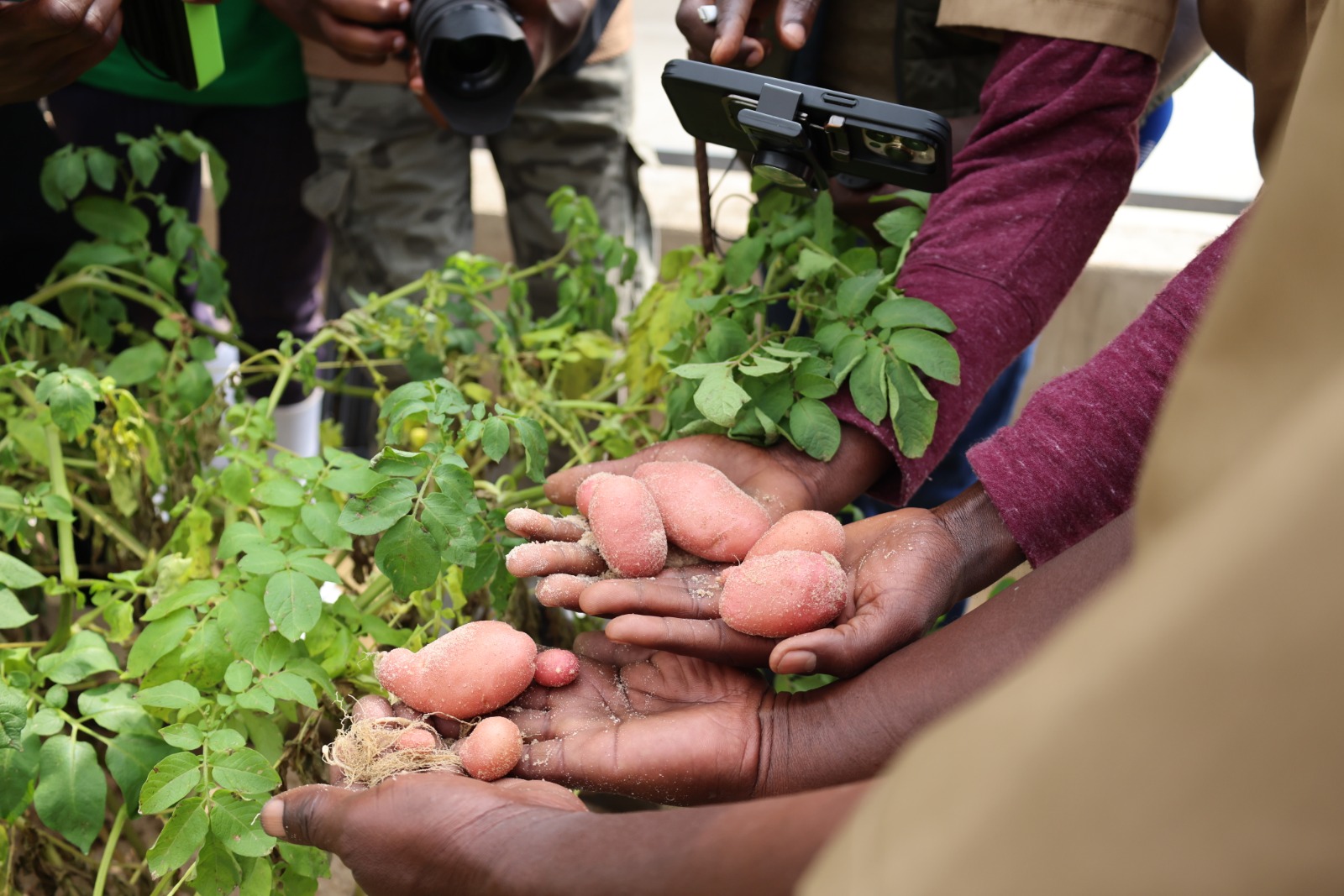
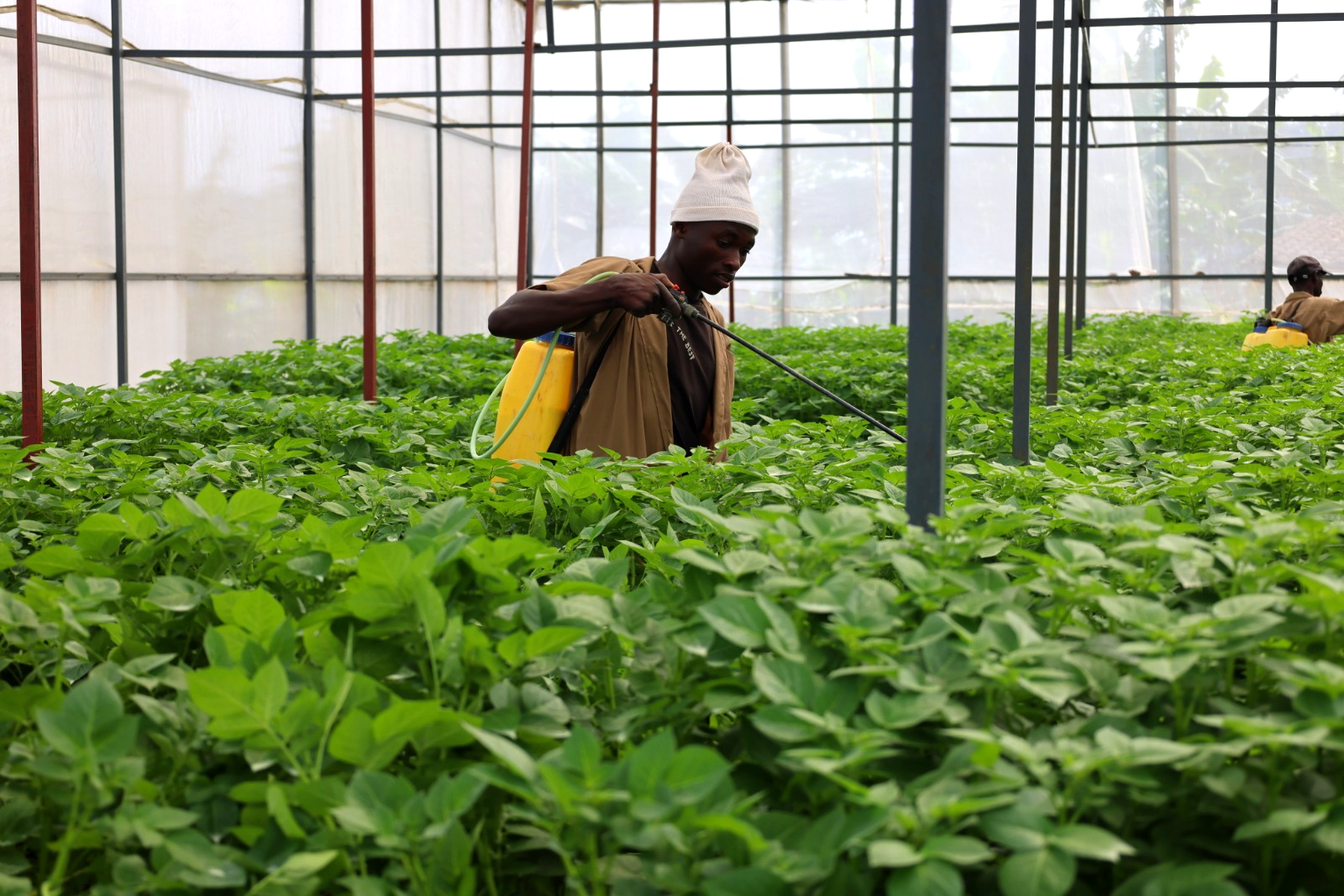
Irish potatoe plantlets multiplied by Mukamusoni using Sandponic Technology
Investment and Technology
Ndagijimana, who learned about this technology through exposure as a member of the Private Sector Federation (PSF), realized the idea was good but required substantial investment.
His wife therefore applied for matching grant of Rwf203.8 million through the Commercialization and De-Risking for Agricultural Transformation Project (CDAT) with a CDAT grant of Rwf70M and the rest contributed by the beneficiary.
“Using the Sandponic Technology helps improve yields and reduce disease spread. This will address the farmers’ seed shortage and also increase food security in the province,” Ndagijimana stated.
The Rwf300 billion, World Bank-funded CDAT project, which aims to develop agriculture and livestock in Rwanda, has set aside Rwf15 billion in matching grants to support farmers (especially women) in implementing bankable projects and ideas.
CDAT helped Mukamusoni build a modern screenhouse, a specialized method of seed multiplication carried out in a protected and safe environment, which plays a crucial role in her production system and superior to open-soil farming or traditional hydroponics.
“My husband and I developed a project focused on mutual and community growth. We found that investing in potato seed production was the best way to develop ourselves while also empowering other people,” Mukamusoni explained.
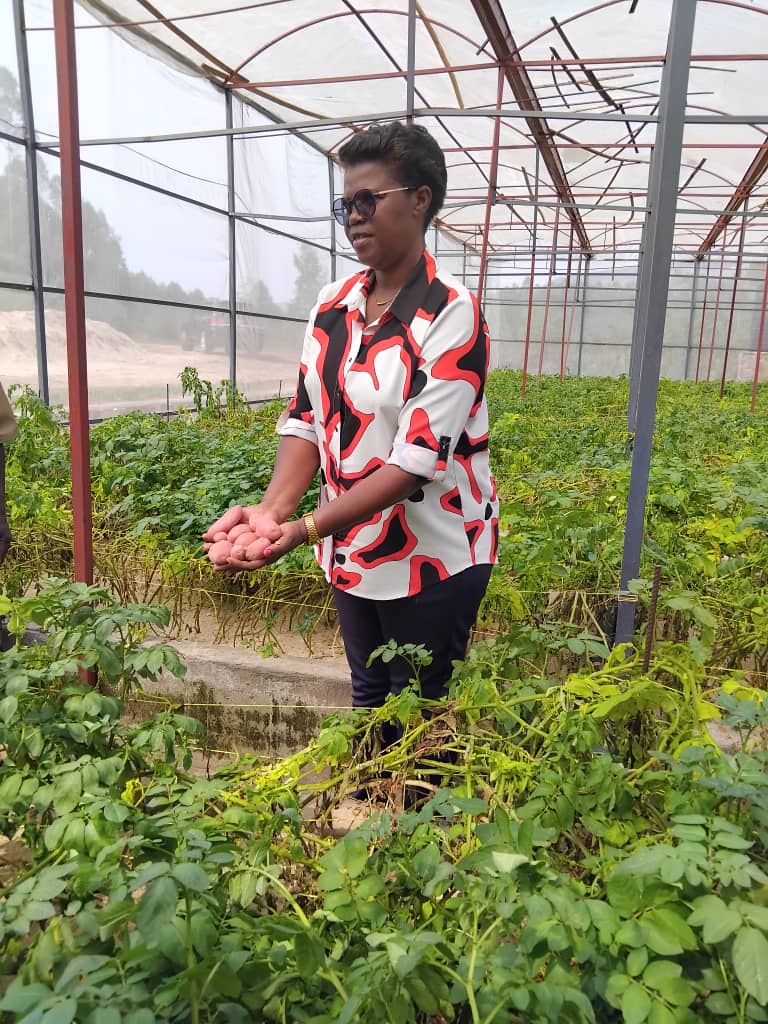
Mukamusoni Philomene in her CDAT co-funded screen house
This success has given the couple confidence in their harvest and their ability to supply farmers in the northern and southern regions, even though they currently cannot satisfy the full market demand.
One year into the business, Ndagijimana, the farm manager, says their first harvest produced about 320,000 potato minitubers, which, despite earning them approximately Rwf47 million, was insufficient for the market.
“I supplied one of our clients with 300,000 plantlets, but he wanted ten times more, and we couldn’t meet the demand. This alone signals that we have to produce more to meet the market need, which is already huge in the northern and southern regions,” he said.
Future Plans and National Impact:
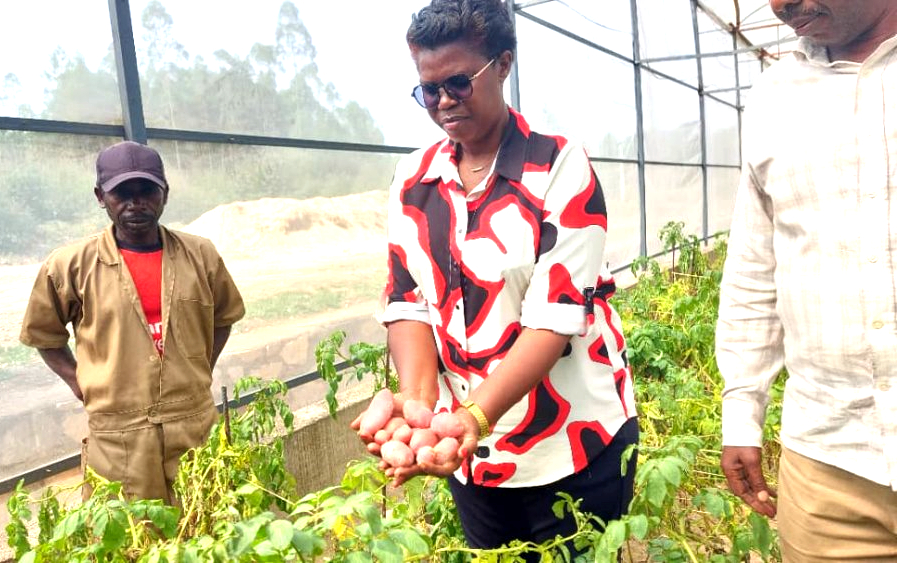
Philomene (middle) and her farm manager (left)
So far, they have 80,000 seedlings in sand pits and expect to harvest 400,000 potato seedlings, which sell at Rwf150 per piece, potentially earning them over Rwf60 million.
With this lucrative business, the couple plans to reach **three million plantlets and is investing further in an Irish potato multiplication laboratory (located in the Northern Province) to fully capitalize on farmer seed demand.
“The lab project is now at 50 percent completion. We have one structure built and are waiting for the equipment to start producing more plantlets for Rwandan farmers and beyond,” he reported.
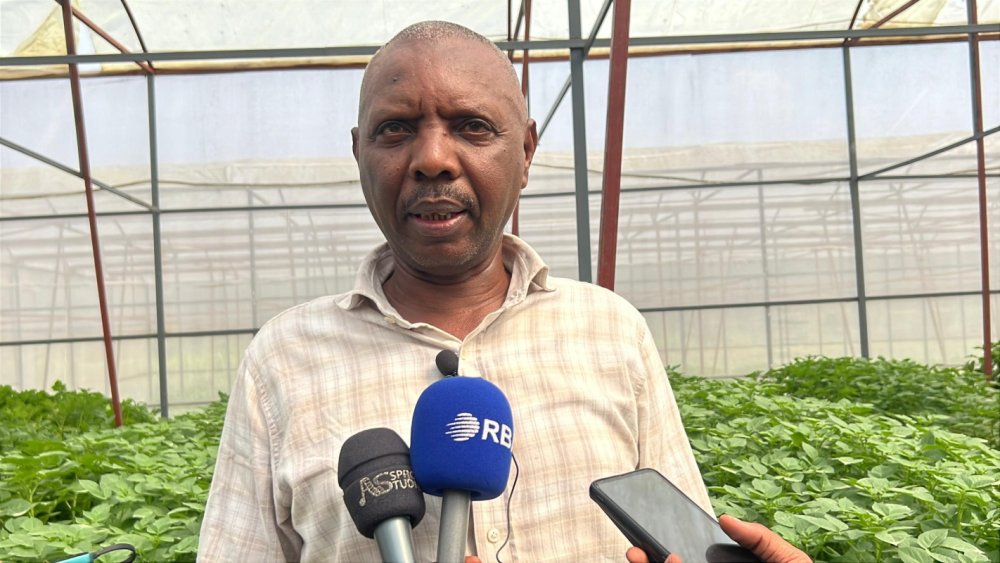
Athanase Ndagijimana, the project manager of the Potato Farming Using Sandponic Technology in Byimana sector
To reach this goal, Ndagijimana urges that plantlet subsidies currently provided to cooperative farmers should also be extended to private farmers to reduce production costs and the final selling price.
Bonfils Olivier Mugambira, CDAT’s Access to Finance Specialist, said the couple’s project is a great opportunity for replication because Irish potato farmers will be able to obtain trusted, pest-free potato seeds and easily increase production and food security.
“This is the only screenhouse project funded by CDAT, and its success will be a proof of concept and an opportunity in the Southern Province, where we have many farmers in Nyamagabe and Nyaruguru,” he stated.
 This week, Prime Minister Dr. Justin Nsengiyumva’s agriculture and livestock report to Parliament confirmed that, in collaboration with the private sector, the government has focused efforts on promoting domestic seed multiplication, reducing importation costs, and achieving a zero seed import agenda.
This strategy has led to the elimination of the budget used to import seeds, allowing funds to be redirected toward helping farmers identify suitable land and the best seeds to grow. For context, in the 2016/2017 fiscal year, Rwanda imported more than 2,360 tons of cereal and legume seeds, valued at over $5.4 million.