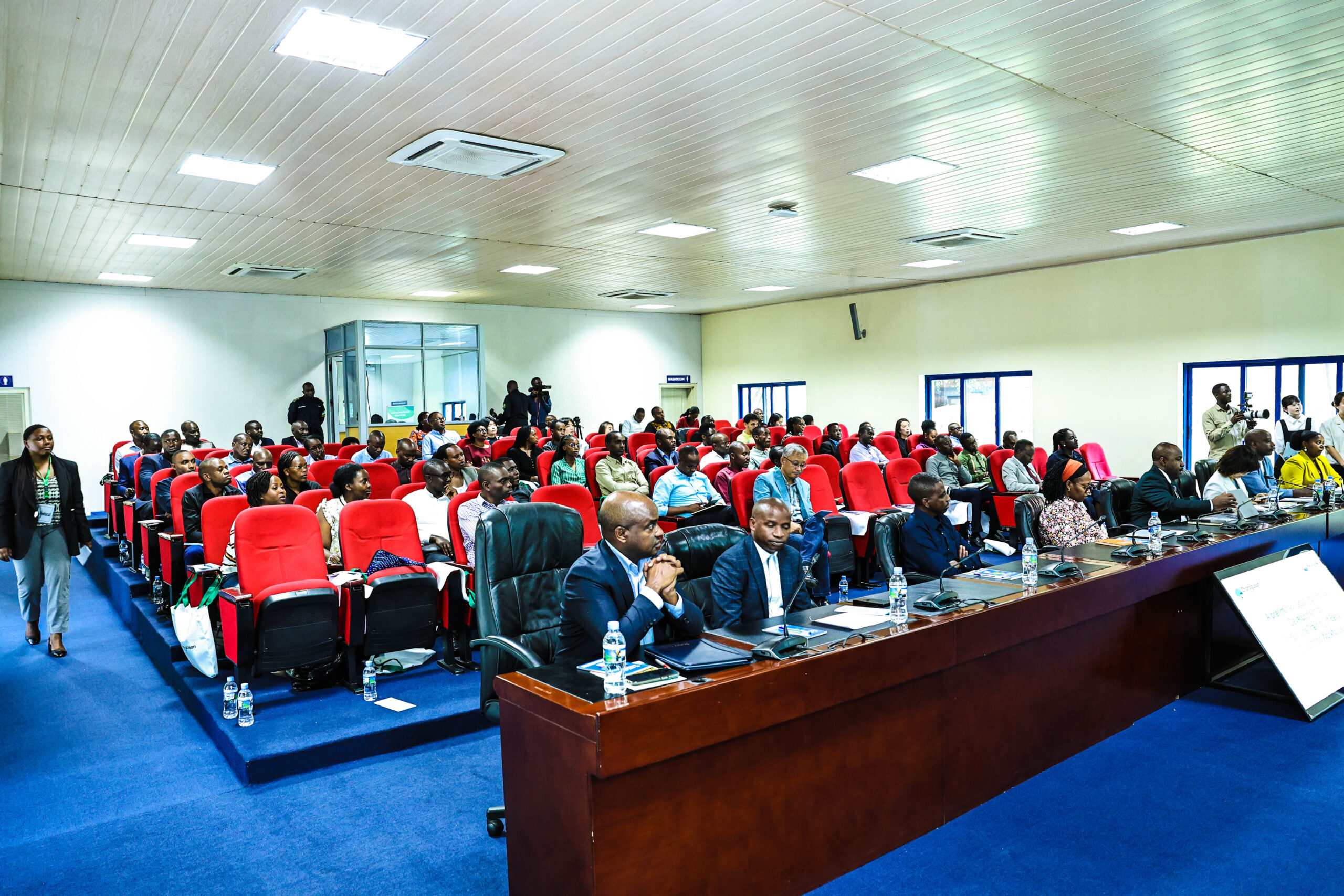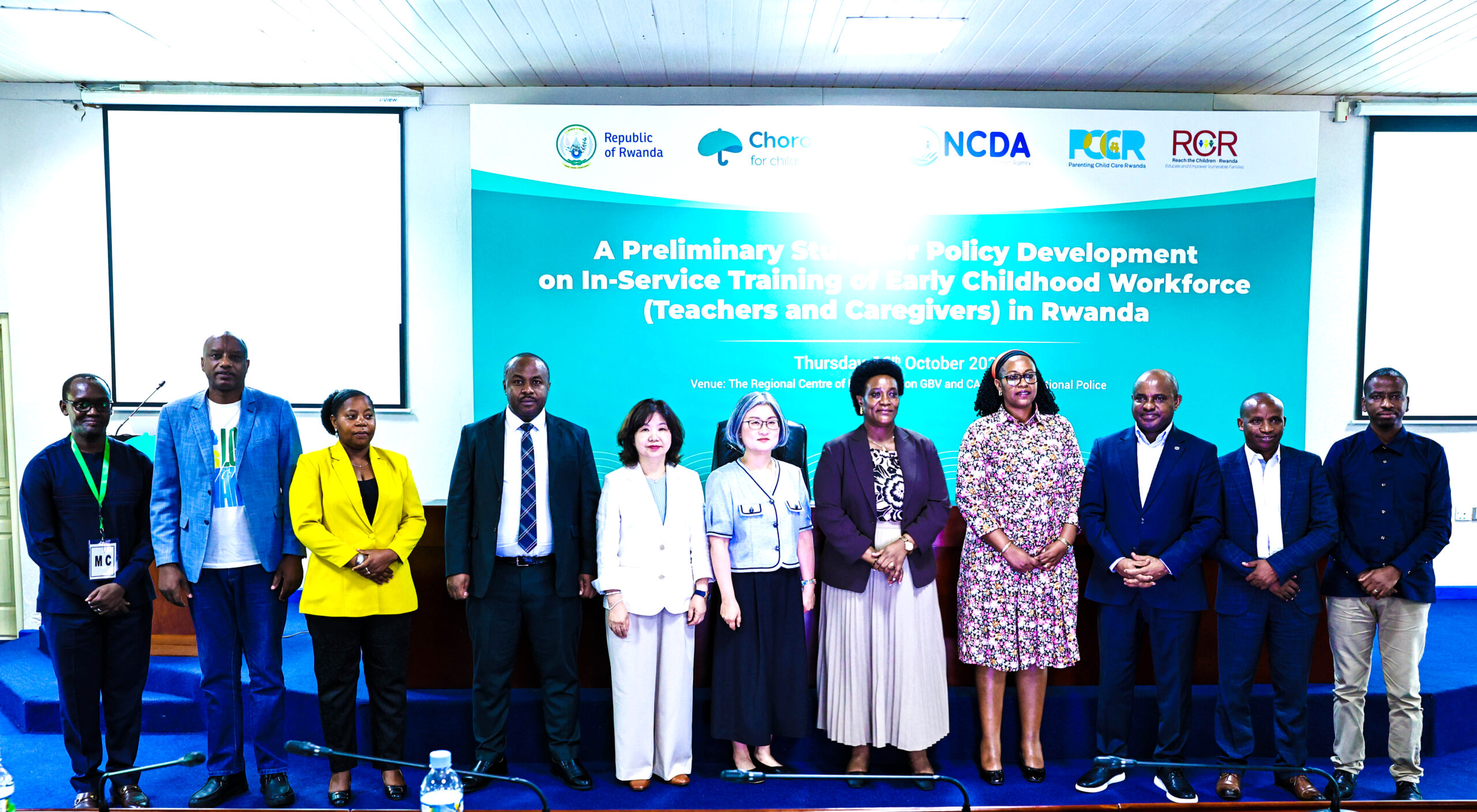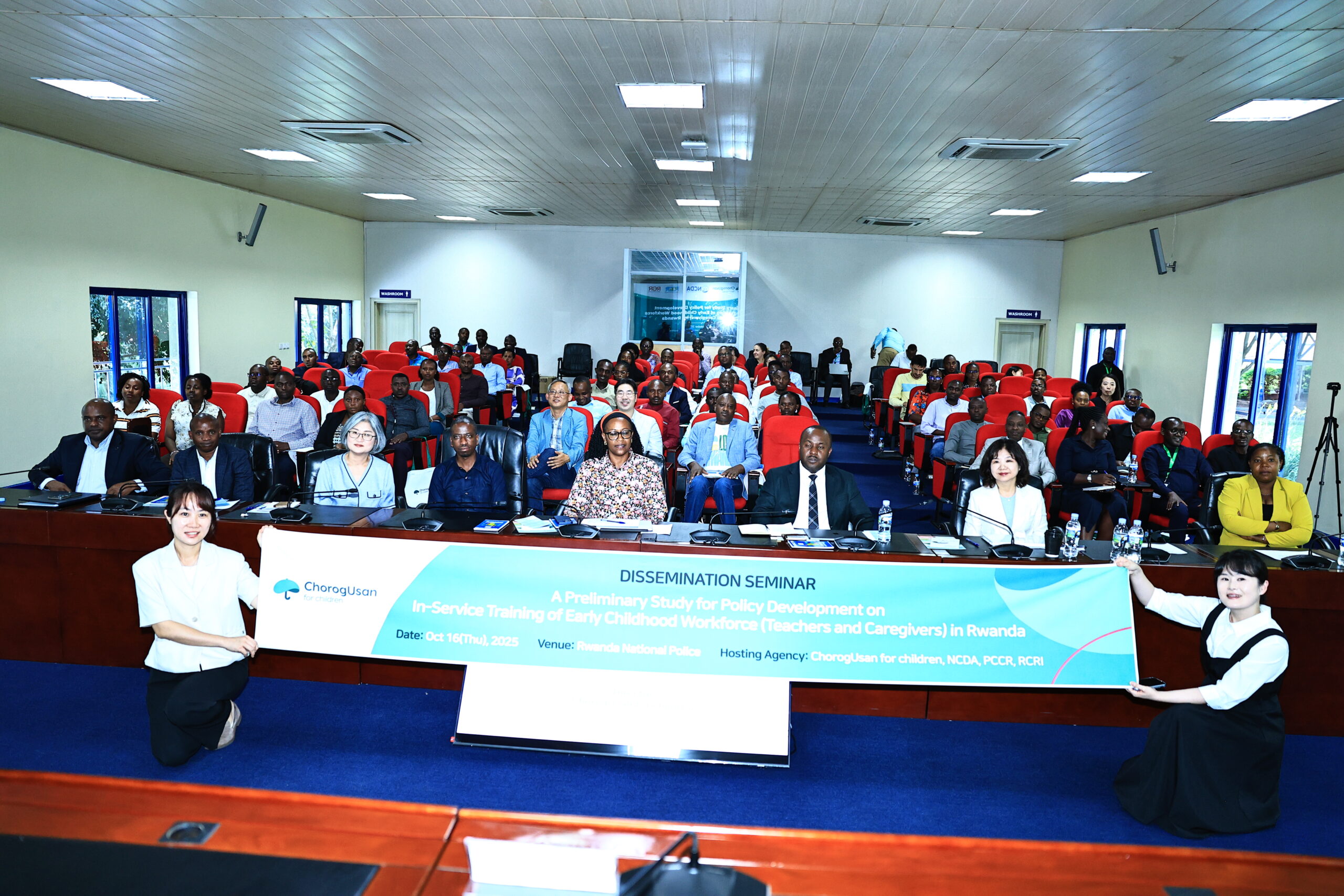
Participants at the study dissemination seminar
A new study by South Korea’s ChorogUsan for Children has urged the Rwandan government to take full leadership and financial responsibility for Early Childhood Development (ECD) programs, emphasizing the need for sustainable, nationally coordinated training and management of teachers and caregivers.
The research found that while most ECD workers have undergone some in-service training, the system remains largely dependent on NGOs and lacks consistency, funding, and motivation incentives.
For instance, the study shows that in the past three years (2022–2024), 77.6% of ECD teachers and 87.7% of caregivers participated in in-service training, while 2 out of 10 teachers had no training.
It also reveals sustainability gaps, with NGOs and the government bearing the main responsibility for funding. NGO partners cover 57.6%, local governments 44.4%, and central government agencies 41.8%.
Training costs are primarily covered by NGOs (63.5%), the government (49.7%), trainees (4.2%), and ECD centers (2.6%), with main trainers being partners (60.6%).
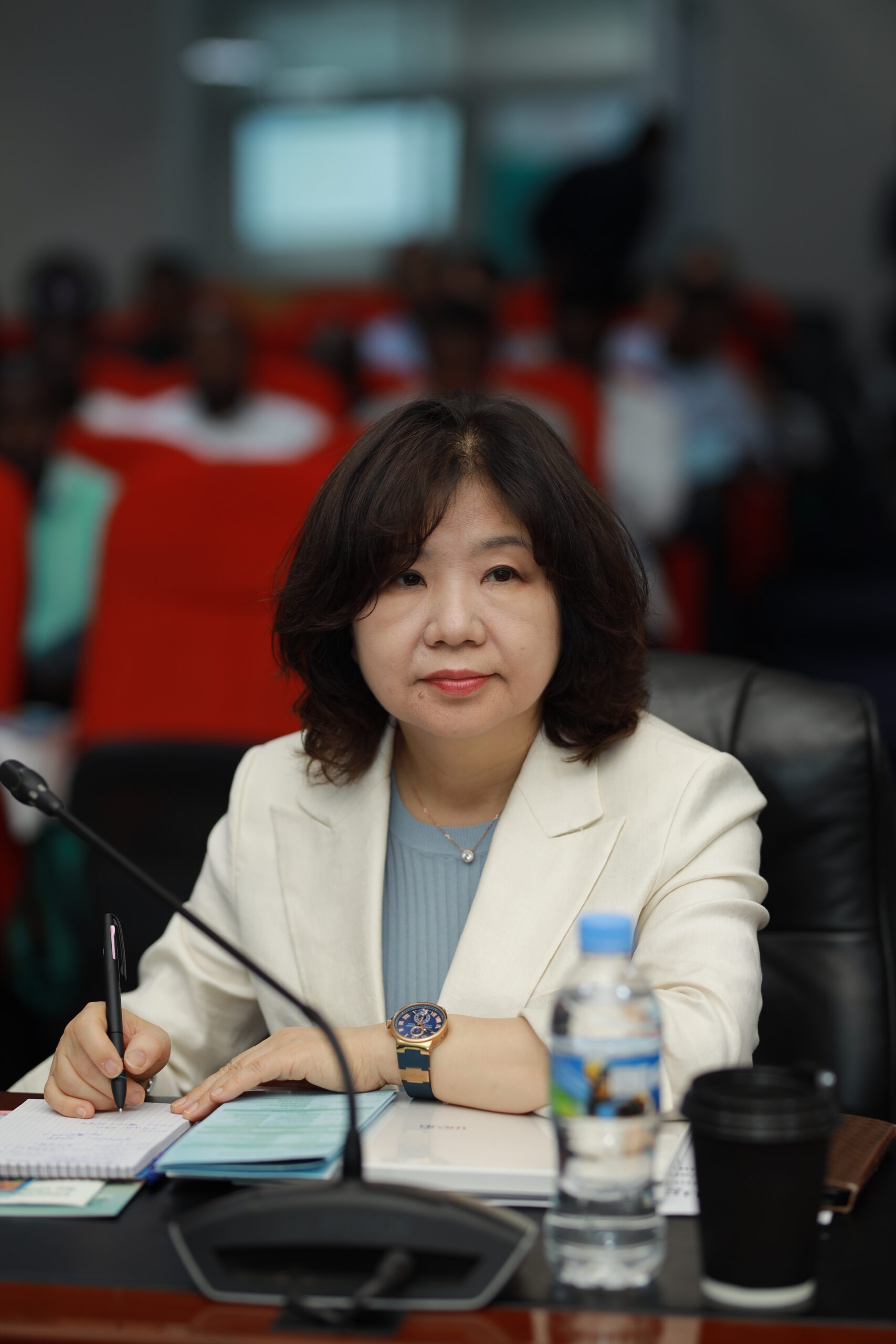
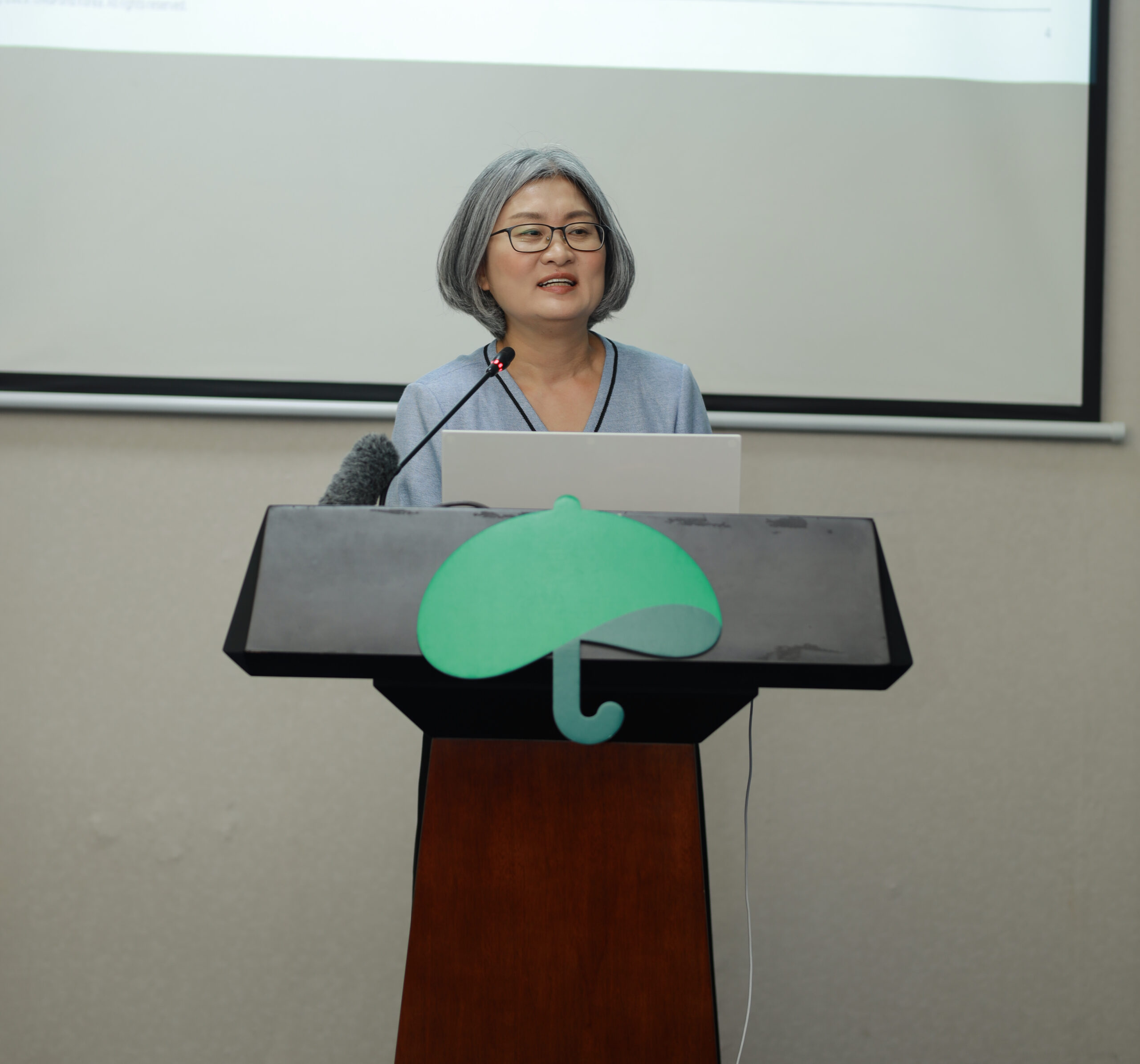
Professor Mugyeong Moon
While many trainees showed interest in attending and learning more, Professor Mugyeong Moon, the lead researcher from Seoul National University, recommended that top priorities for improving ECD in-service teacher training include diversifying training topics, developing tiered training content, and providing financial support for training.
On a policy level, Moon recommended mandatory in-service training for all ECD workforce, support for positive parenting for families with children aged 0 to 2, coordination of ECD in-service training by higher governance, collaboration within line ministries (Family & Gender, Education), strengthening the role of local governance, and calculating and securing budgets for training.
Prof. Moon stated that the findings are a wake-up call for Rwanda to improve and learn from models like the Korean one, which has centralized management of ECDs and motivated caretakers by giving them a higher status, despite their different roles.
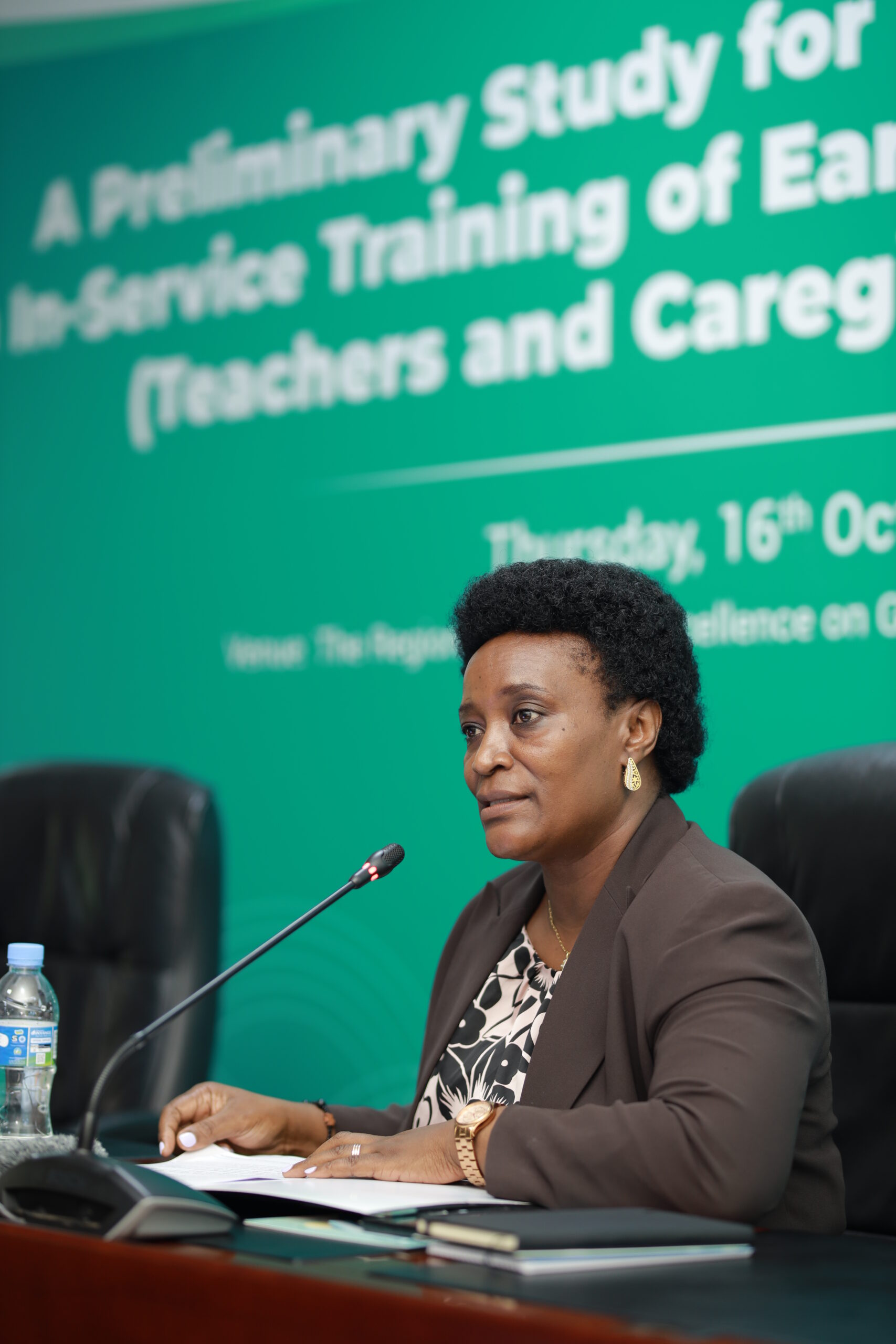
Minister Consolee Uwimana
Minister of Gender and Family Promotion, Consolee Uwimana, stated that the research shows areas that need to be addressed, especially the in-service framework to equip teachers and caregivers to provide comprehensive care.
“I call upon government institutions, local leaders, consultants, and development partners to use this evidence as a guide for action,” she said.
“Let’s continue to collaborate to design a coordinated, sustainable, and well-funded training system. It will benefit every ECD service provider and improve the quality of services for all Rwandan children.”
Move To Action:
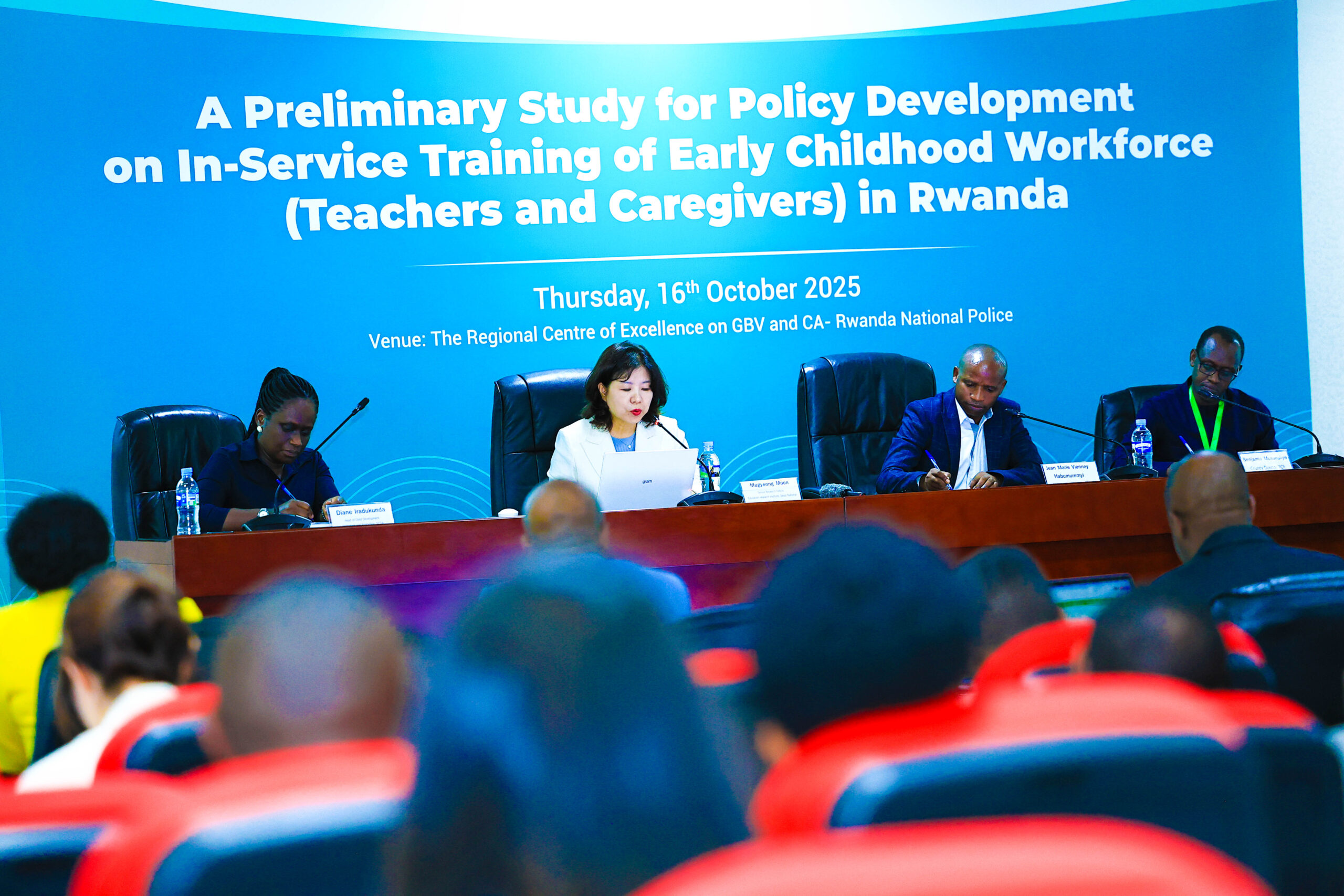
L-R: Diane Iradukunda, Professor Mugyeong Moon, Jean Marie Vianney Habumuremyi and Benjamin Musuhukye- the moderator of a panel discussion on how to implement the study findings
In a video message, ChorogUsan for Children Executive Chairman, Young-key Hwang, said the study provides quality insights for capacity building and hopes it will ultimately lead to changes in the lives of children in Rwanda. It is an opportunity to turn these insights into meaningful action where every child can achieve their full potential.
Commenting on the Current Status of ECDs in Rwanda, the Deputy Director General of the National Child Development Agency (NCDA), Gilbert Munyemana, said they are developing a new strategy that will align with the Second National Strategy for Transformation (NST2) targets, especially in reducing stunting.
The University of Rwanda – College of Education, School of Education (CoE) representative, Assistant Lecturer Asterie Nyirahabimana, said it is important to invest in ECD skills development to improve early childhood education. She revealed that so far, 554 graduates are serving the sector, part of the efforts to enhance quality skills development.
Her counterpart, Assistant Professor Jean Marie Vianney Habumuremyi, stated that the college is transitioning from theoretical to practical training. The CoE is constructing a demonstration center to serve as a model for other ECDs and partners to learn from and conduct trainee practice to gain further knowledge of on-ground operations.
Regarding the shortage of skills, Diane Iradukunda, the NCDA Head of Child Development, Protection, and Promotion, suggested that there is already action underway to create short mobile-based courses for continued learning on the job to match caretakers’ passion with skill sets.
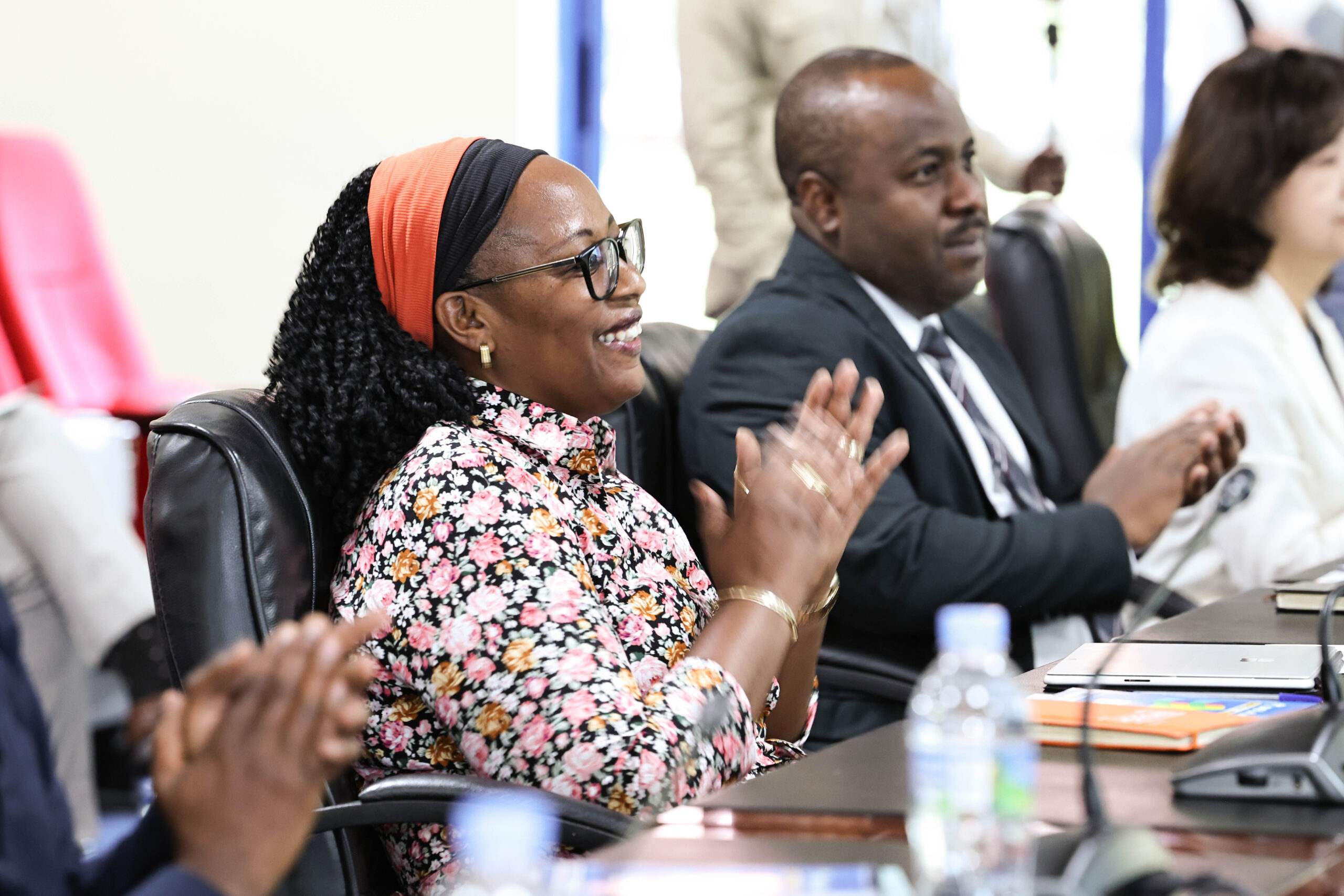
Assumpta Ingabire (left)
To address the issue of motivating caregivers, Assumpta Ingabire, NCDA Director General, stated that this is something that will be considered.
Jin Kim, Director ChorogUsan for Children said that the study will be used to improve their operations in Rwanda and committed to supporting Rwanda’s ambition to enhance the ECD program, which currently requires more private sector investment to increase the country’s human capital.
Jin Kim making closing remarks at the end of the seminar