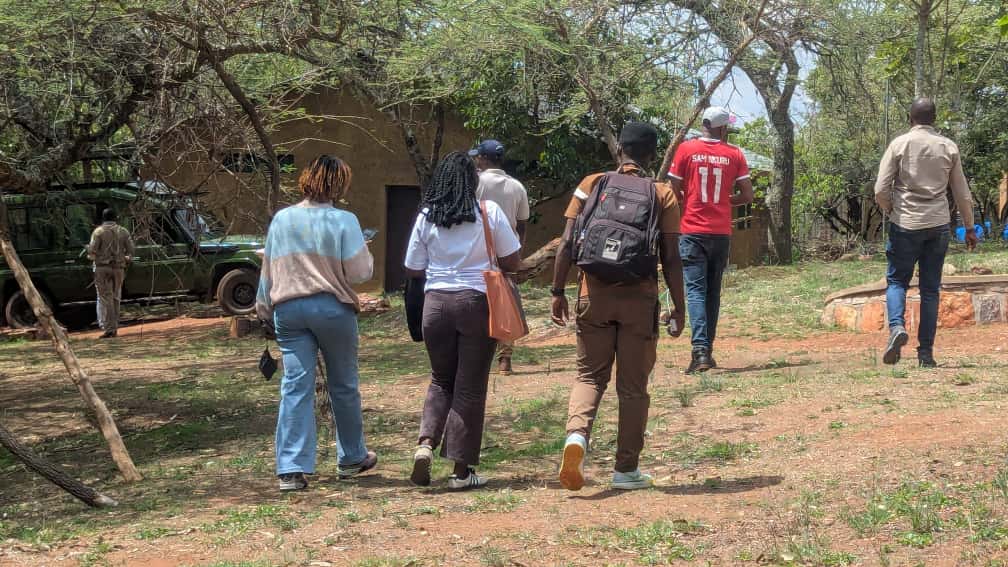




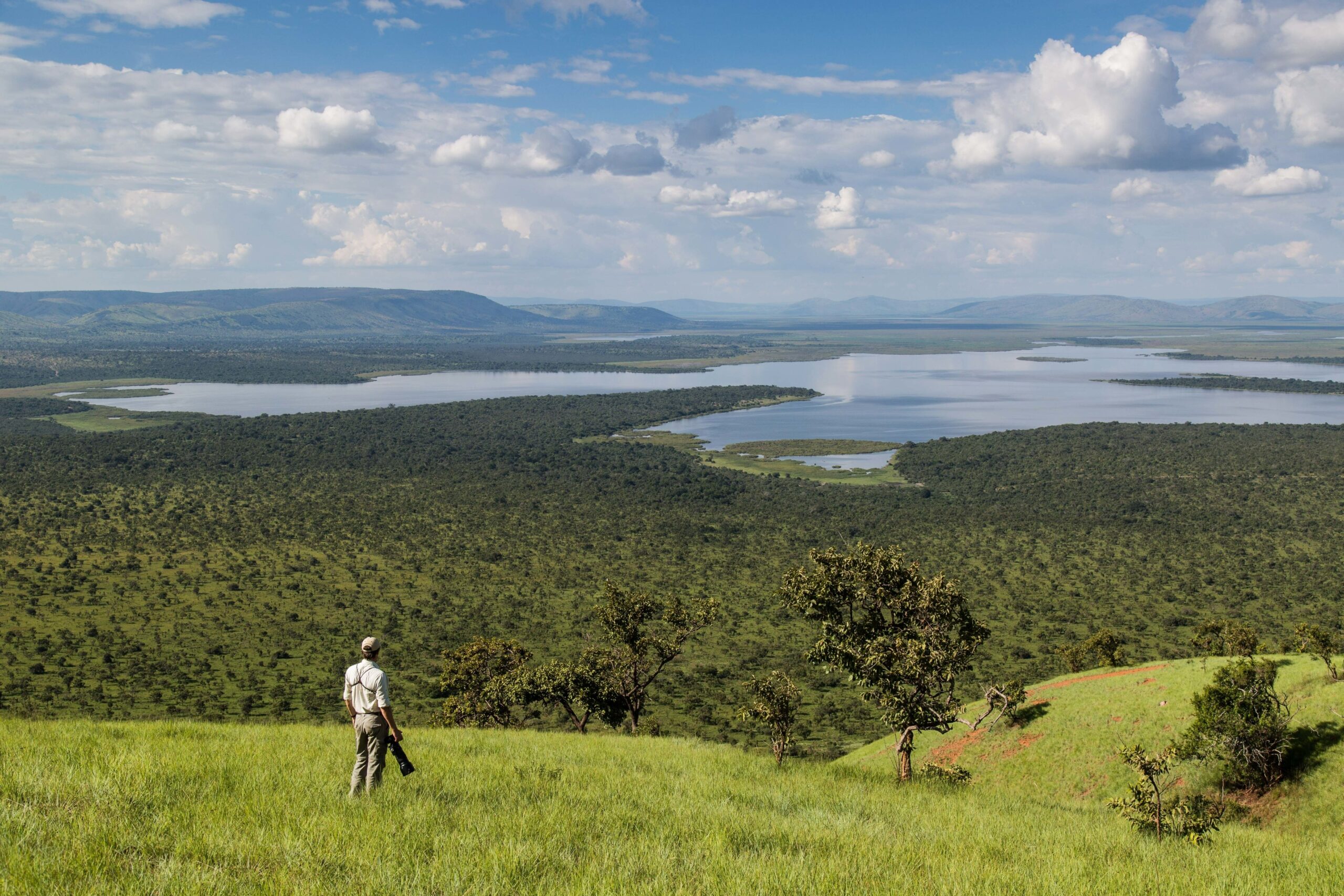
A tourist in Akagera National Park. The park received 54,141 in 2023 as tourism and travel rebounded in 2023.
Akagera National Park has unveiled an ambitious plan to become profitable for the first time in its modern history by 2028, banking on rising visitor numbers, strengthened conservation, and Rwanda’s global tourism push under the “Visit Rwanda” brand.
Since the Rwanda Development Board (RDB) and African Parks entered a joint management agreement in 2010, Akagera has undergone one of the most dramatic park recoveries on the continent.
But financially, the park has remained dependent on donor support.
Akagera has spent $50.1 million in operational and capital investments since 2010, while generating $32.1 million in revenue over the same period—leaving a significant funding gap covered by local partners such as Bralirwa and Access to Finance Rwanda, along with international philanthropies.
Park officials believe that equation is about to change.
“We expect Akagera to break even or make a profit by 2028,” said Jean Paul Karinganire, Funding and Reporting Manager at Akagera National Park. “We are on a steady trajectory, but this will require increasing our annual visitors to 65,000 by 2027 and ensuring tourists stay longer,”
A High-End Tourism Pivot:
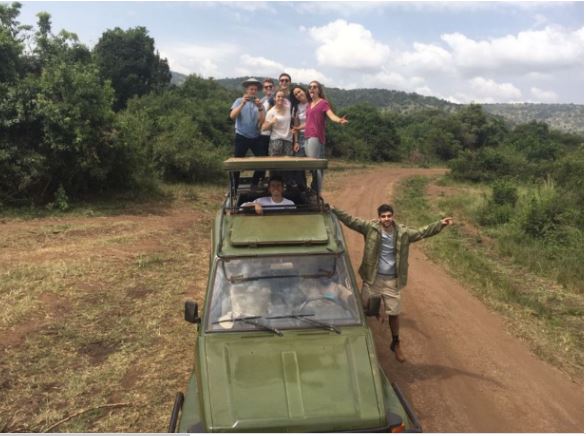
Rwanda’s global tourism partnerships are already shifting the numbers.
After the Arsenal FC sponsorship in 2018, Akagera saw a rise in UK visitors. The later partnerships with Paris Saint-Germain and FC Barcelona expanded into French- and German-speaking markets, attracting more European tourists.
This international exposure supports Rwanda’s broader strategy to position itself as a high-end tourism destination, where visitors spend more and stay longer.
With an average spending of $200 per person, officials believe revenue could grow to $7.6 million by 2028—enough to push the park into profit for the first time.
The total number of paying visitors since 2010 has reached 470,622, with Rwandans making up 45% of these visits. Annual visitor numbers have remained stable with no decline since 2021, and Akagera continues to enforce its ecological limit of 62,000 visitors per year.
Conservation Wins Drive Revenue Growth:
A key factor behind Akagera’s recovery has been security and conservation. The return of lions in 2015 and rhinos in 2017 boosted the park’s status as Rwanda’s only Big Five destination.
Revenue rose from a modest $203,000 in 2010 to $4.7 million in 2024, reflecting the strong link between wildlife recovery and tourism performance.
At the national level, Akagera has contributed $8.3 million in taxes and security fees between 2010 and 2025. Another $4.7 million has been directed to community revenue-sharing schemes and special grants.
The park has also injected $5.7 million into local communities through salaries and procurement across the three districts surrounding the park.
Fishing: A Small but Reliable Revenue Stream:
Fishing in Akagera’s lakes—home to tilapia, catfish, and long fish—provides an emerging livelihood option for communities and an additional income stream for the park.
While it currently accounts for only 4% of annual revenue, its importance was highlighted during the COVID-19 pandemic, when fishing income temporarily surged to 13% and 9% of park revenue between 2020 and 2022.
Challenges of Poaching and Human–Wildlife Conflict:
Despite progress, Akagera continues to battle poaching and persistent human–wildlife conflict, especially in Nyagatare District. Baboons, buffaloes, rhinos, and hippos frequently damage crops and disrupt communities—problems Karinganire links partly to historical downsizing of the park’s boundaries.
“This is a national issue and it is still under discussion to find ways of mitigating it,” Karinganire said.
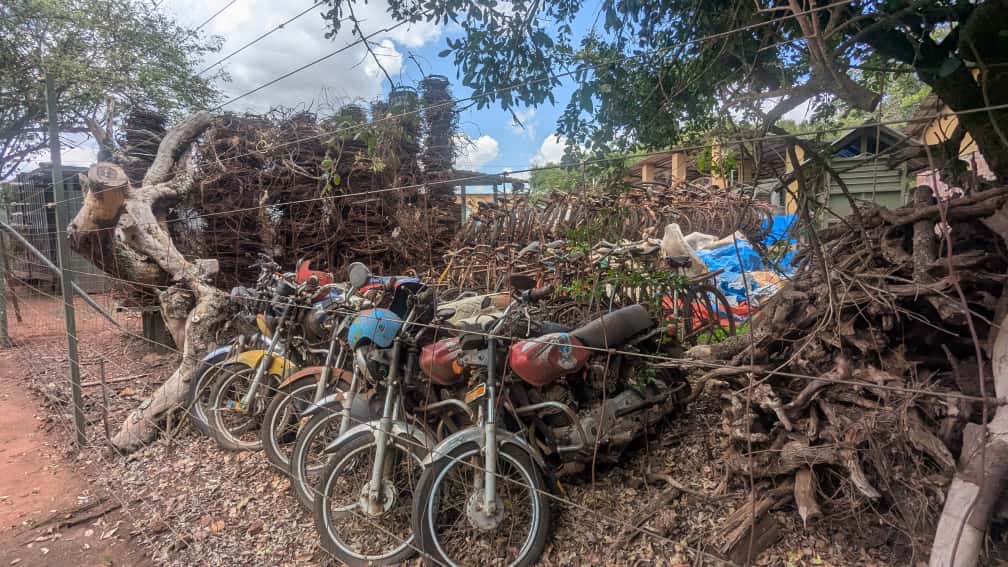
Inside the park, one can see a pile of confiscated snares, motorbikes, bicycles used for transport, and rudimentary tools used in poaching wild animals in Akagera National Park.
At least 2,000 snares were confiscated in 2013, and the number has reduced to less than 100 snares due to beefed-up security, ranger patrol measures, and the construction of a 120km electric fence, according to Jean Paul Karinganire, Funding and Reporting Manager for Akagera National Park.
The park official says that poaching of the big five has drastically reduced, with a few remaining instances of poaching for survival practices within communities surrounding the park.
Looking Ahead to 2030:
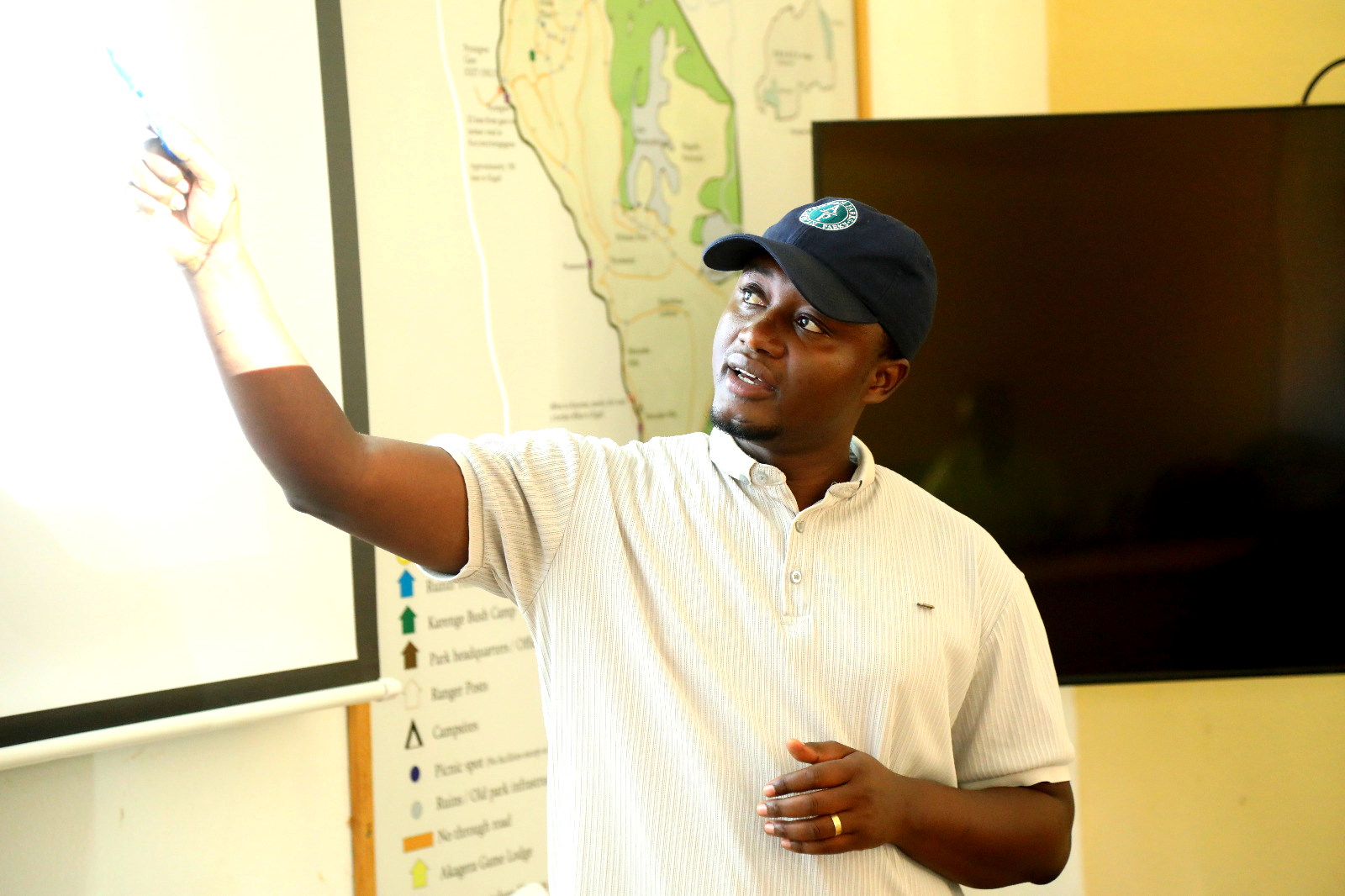
Jean Paul Karinganire
The park’s management contract with African Parks expires in 2030, giving both sides five years to solidify Akagera’s financial sustainability.
If visitor numbers continue their upward trend and the park successfully implements its “longer stay” strategy, officials believe Akagera can become the first African Parks–managed site in Africa to fully fund its own operations.
For Rwanda, the park stands as a test case for how conservation, tourism, and community development can reinforce each other—and whether a protected area can thrive commercially while keeping its ecological integrity intact.