




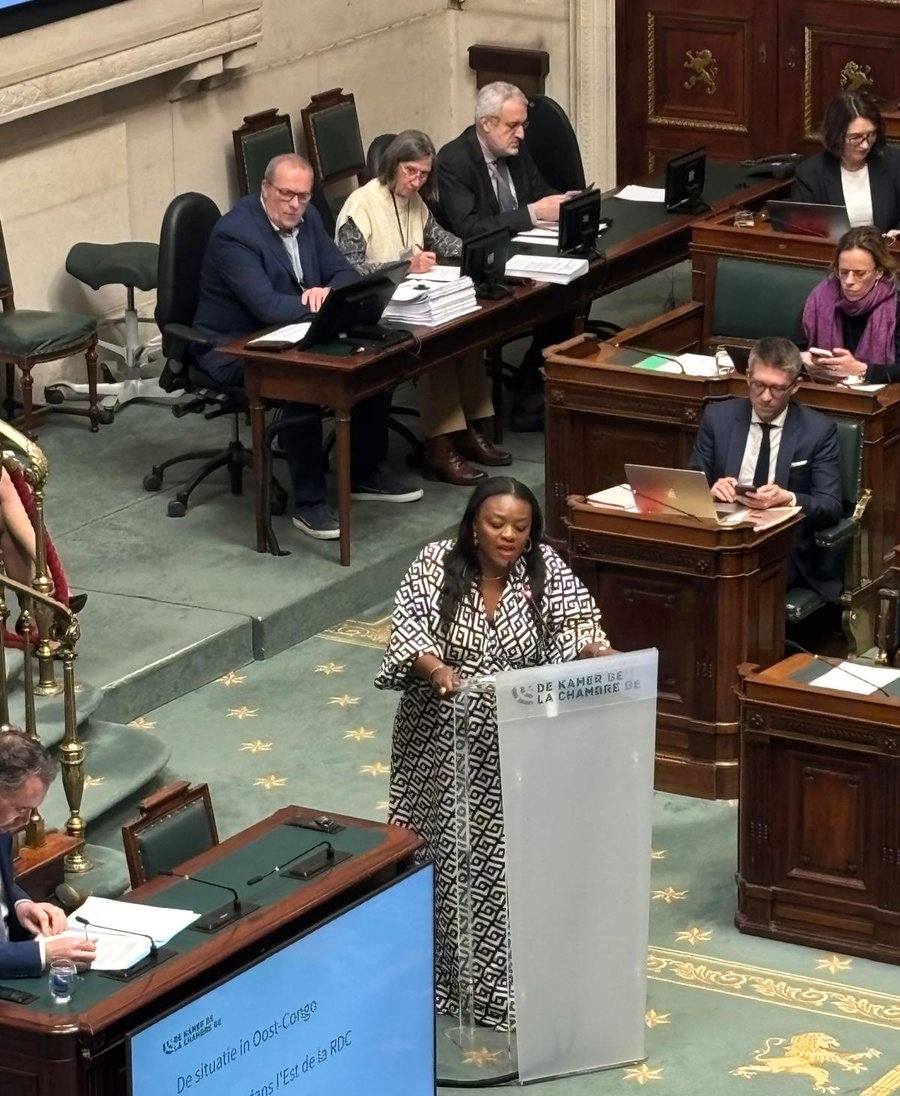
Lydia Mutyebele Ngoi
On the evening of December 11, 2025, Belgian Federal Deputy Lydia Mutyebele Ngoi reignited an online storm with a message about the escalating crisis in eastern Democratic Republic of Congo (DRC).
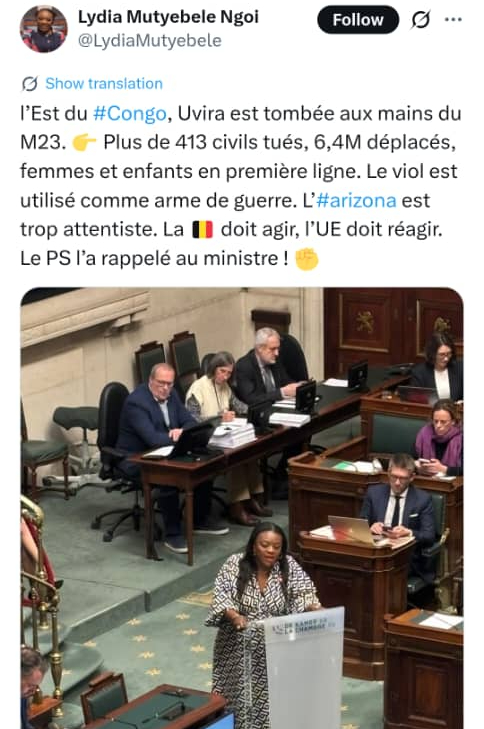
In her post on X, she claimed that Uvira had fallen to M23 rebels, citing civilian deaths, mass displacement, and sexual violence.
Ngoi wrote: “Uvira has fallen into the hands of the M23, with more than 413 civilians killed, 6.4 million displaced, with women and children on the front line. Rape is being used as a weapon of war. The Arizona government is too passive. Belgium must act, the EU must react.”
Her post drew sharp criticism both online and from political observers.
Critics accused the MP of amplifying unverified battlefield claims, oversimplifying a complex regional conflict, and using the crisis for domestic political points within Belgium, where debates over foreign policy and the role of the “Arizona” governing coalition are increasingly heated.
One of her most notable critics was Alain Destexhe, former Belgian senator and Secretary-General of Médecins Sans Frontières in the early 1990s, who wrote, “Belgium must act. We are no longer in colonial times, madam.”
“Belgium has no lessons to give. The best thing is for it to keep quiet,” he also disclosed to her.
Voices from the DRC and Uvira also pushed back against Ngoi’s claims. Han’s Ilunga M, reporting from Uvira, asked
, “I am in Uvira — who made this count? Why lie to this extent? It is true that the situation is tense, but please stop with this demagoguery.”
Similarly, Stavros Papaioannou wrote, “Liar. No one has counted the dead, and since there were no battles in the city, your numbers are a lie.”
Other commenters suggested Ngoi redirect her energy in the right direction or differently.
For instance, an account named Charles M urged her to pressure President Félix Tshisekedi to convene a national dialogue, describing it as the “only non-military alternative to silence the guns.” He added, “We must face the facts: salvation will come from dialogue among Congolese themselves.”
Ngoi’s post highlights how digital platforms have become battlegrounds for shaping narratives on conflicts far from Europe, where political, humanitarian, and local voices collide over facts, interpretation, and priorities.
